• ALLTHATSINTERESTING.COM
    9 Interesting Historical Events You Never Learned About In School
    Every history student is familiar with pivotal events like the Revolutionary War, both world wars, the Apollo 11 landing, and the fall of the Berlin Wall some of the most crucial moments in history.However, many lesser-known but equally interesting historical events have been left out of textbooks. While they may not have been as heavy or dramatic as wars or monumental discoveries, they played a significant role in shaping history.Library of CongressFrom the Wall Street bombing of 1920 (pictured) to the Lost Colony of Roanoke to the mysterious Tunguska Event, these are some of the most interesting historical events ever to unfold.For instance, while most know that the United States fought alongside its allies in World War I, few are aware that a single telegram prompted the United States to join the war. And how many can name the first baby of European descent born in the Americas? In these cases and others, hundreds of remarkable historical events were set in motion by smaller, often overlooked moments.Explore nine of the most interesting historical events youre unlikely to find in your textbooks.Interesting Historical Events: The Lost Colony Of RoanokePublic DomainThe baptism of Virginia Dare, the first child of English parents born in North America.In 1585, the colony of Roanoke was founded, in what is presently Dare County, North Carolina.The colony was founded as one of the first attempts to establish a permanent English settlement in the New World.Queen Elizabeth I sanctioned the mission, granting a charter to Sir Walter Raleigh to establish a colony. Raleigh was supposed to discover all the remote heathen and barbarous lands, and bring riches from the New World back to England. He was also supposed to establish a military base, to counteract the activity of the Spaniards, who were also set on pillaging resources from the Americas.After a few initial exploratory expeditions, during which contact with two native tribes had been made, and a few bases had been established, Raleigh dispatched 115 colonists to establish a colony on the Chesapeake Bay. The colonists were lead by John White, a friend of Raleighs who had been on one of the previous expeditions to Roanoke.The colony was established and peace was made between the settlers and the Croatoan people. A baby was even born to Whites daughter, the first child to be born in North America, named Virginia Dare.As the year wore on, however, the settlers realized they were running out of supplies. John White, who had been named governor, elected to sail back to England, to replenish the supplies.Upon his arrival, though, it became clear that he wasnt going to get back to Roanoke anytime soon. A major naval war had broken out, and Queen Elizabeth commanded that all ships be used to confront the Spanish Armada.For three years, White fought in the war. Then, he was finally permitted to return to his colony.Public DomainWoodcut depicting White finding the CROATOAN post carving.But when he returned, the colony was nowhere to be found. Heres where this becomes one of historys most interesting events.Not a single person remained at the colony, though there was no sign of any struggle to indicate they had been raided. In fact, all of the houses had been taken apart, signaling that there had been no rush to leave.Before he left, White had instructed the colonists that if they were ever in danger, or forced out or attacked, that they should carve a Maltese cross onto a tree or a fence post. All that was left behind was the word CROATOAN which was carved into a post of the fence that had been built around the village. The letters C-R-O were also found on a nearby tree. To this day, the mystery of the Lost Colony of Roanoke, as it has come to be known, is yet unsolved.Most historians believe that the colonists, running desperately low on supplies, turned to a local Native American tribe, the Croatoan people, for help, and eventually moved into their society. This theory holds the most merit, as it accounts for the word carved into the tree, as well as for the dismantled homes.Other historians have proposed some less likely scenarios, such as Spanish invasion, murder by other Native American tribes, and even mystical explanations for the disappearance, though, of course, none of them have been proven.The Horrific Jonestown Massacre, One Of Modern Historys Most Disturbing EventsDavid Hume Kennerly/Getty ImagesDead bodies lie around the compound of the Peoples Temple cult after the more than 900 members of the cult, led by Reverend Jim Jones, died from drinking cyanide-laced Flavor Aid. November 19, 1978. Jonestown, Guyana.In 1955, Jim Jones founded the Peoples Temple in Indianapolis, Indiana.The sect was originally established to preach against racism and teach Christian ideals, though most would argue that the end result was ultimately the creation of a socialist cult.The Temple moved from Indianapolis to San Francisco in the 1970s, after the integrationist ideals proved to be too progressive for the midwestern city. However, San Francisco didnt prove to be that much more accepting. While in California, the Peoples Temple was accused of financial fraud, physical abuse, and mistreatment of children.Paranoid, Jim Jones then moved the Peoples Temple somewhere he thought hed be free of prosecution from outsiders: South America. Jones settled his organization in Guyana, a small country on the northeastern coast of the continent. He called his settlement The Peoples Temple Agricultural Project, but the people called it, Jonestown.Jonestown quickly became a benevolent communist community, run by Jones alone. He wanted to construct a model community and wanted everyone to live as perfect examples of socialism. In short, he believed he was creating a utopia for his people.However, the utopia soon became a nightmare. Members worked in the community for strict 10 and a half hour days, getting only an hour for lunch.Exposure to current events was limited, and often warped by Jim Jones interpretation of them. Jones also requested that he be referred to as Dad or Father by all of the towns residents, adults and children alike.Punishment for not following these rules was severe.Over time, Jones managed to put all of the Jonestown residents under his spell, convincing them that he was the authority on all things and that to achieve what they wanted they had to follow his lead.Wikimedia CommonsThe entrance to Jonestown in Guyana.Jones often scared the members into believing that Jonestown was under constant threat of attack. In response, he often held meetings, known as White Nights, where he told them that the only way out was to flee, fight, or commit suicide. Fortunately for the members, the attacks were merely figments of Jones imagination.Until November 17, 1978.Congressman Leo Ryan from California announced that he would visit Jonestown and conducting an investigation into the reported mistreatment of American citizens there. Along with a group of aides, he traveled to Guyana and attempted to gain access into Jonestown.Jones people ambushed the group at their airstrip, killing Ryan and four others while wounding the rest.The attack that Jones had been preaching about had come. After the airstrip attack, Jones called everyone to the Jonestown pavilion and told them once again that they could flee, fight, or die.Then, he revealed a giant tub of grape kool-aid, laced with cyanide and potassium chloride. The children were poisoned first, then the adults, resulting in the deaths of over 900 people in whats known as the Jonestown massacre. After everyone had died, Jones shot himself in the head, ending one of the most horrific yet darkly interesting historical events of the 1970s.Until September 11, 2001, this was the largest mass-casualty involving American citizens the world had ever seen.The post 9 Interesting Historical Events You Never Learned About In School appeared first on All That's Interesting.
    0 Reacties 0 aandelen 12 Views
  • ALLTHATSINTERESTING.COM
    How Many People Did Stalin Kill? Inside The Horrific Death Toll Of The Soviet Dictator
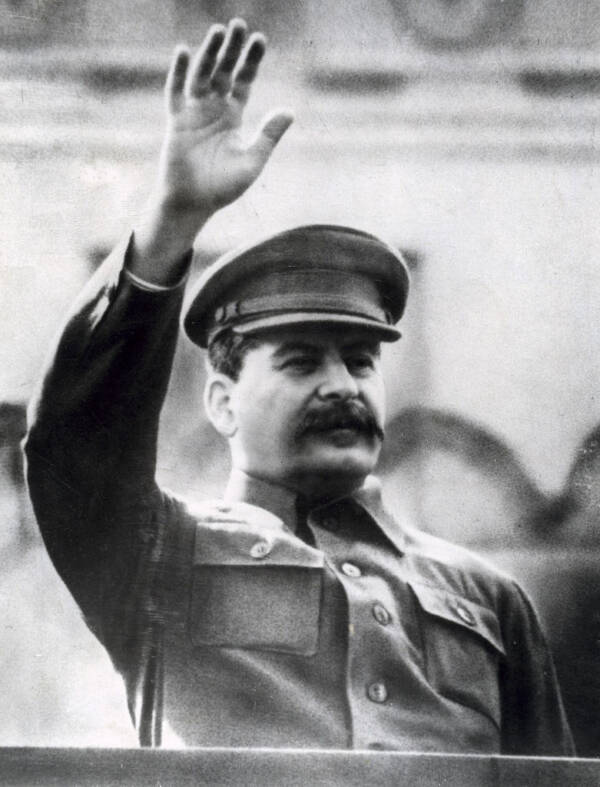
    From the 1920s through his death in 1953, Joseph Stalin ruled the Soviet Union through fear and violence. He instituted punitive policies that resulted in devastating famines, sent his enemies to prison camps, and executed those he believed opposed him.So, how many people did Joseph Stalin actually kill?The number is difficult to determine. No neat and tidy sum encapsulates the terror of the Stalin years, which means that many historians have had to cobble together facts from available sources. But various estimates have emerged.According to historians who studied Soviet archives before and after the fall of the Soviet Union, Joseph Stalin likely killed between six million and 20 million people. However, given the widespread and often unrecorded deaths of the Stalin years, its certainly possible that that number is even higher.Joseph Stalins Path To PowerPublic DomainBy 1941, when his photo of Joseph Stalin was taken, millions had already died from famine, exile, and executions.Born as Ioseb Besarionis dze Jughashvili on Dec. 18, 1878, in Gori, Georgia, Joseph Stalin seemed an unlikely candidate to become a Soviet dictator. Small, with a pockmarked face and deformed left arm, Stalin spent his early years under the thumb of his violent, alcoholic father.But the future dictator found his calling when he started reading Karl Marx while enrolled at Tiflis Theological Seminary. Inspired by Marxs message, Stalin left school in 1899 and embarked on a meteoric rise as a revolutionary.The man met the moment. Having renamed himself Joseph Stalin or Man of Steel, Stalin joined the Bolshevik party, became close with Vladimir Lenin, and helped organize strikes and demonstrations. When Lenin took power following the Russian Revolution in 1917, Stalin clung to his coattails, becoming the General Secretary of the Communist Party in 1922.And when Lenin died in 1924, Joseph Stalin assumed power and made himself dictator by the end of the decade. Gazing out over the Soviet Union, he became determined to industrialize his country and build a fully developed economy no matter the cost. How Many People Did Stalin Kill?From 1929 until Joseph Stalins death in 1953, millions of people died in the Soviet Union as a result of his policies. So, how many people did Stalin kill? Though the exact numbers are open for debate, historians generally focus on three areas: famines, executions, and prison camps. Beginning in the 1930s, for example, Joseph Stalin instituted his collectivization policy, which sought to replace small farms with state-run collectives. As reported by The New York Times in 1989, Soviet historian Roy Medvedev estimated that these policies resulted in nine million to 11 million of the more prosperous peasants driven from their lands and another two million to three million arrested or exiled, many of whom died as a result. Medvedev also noted that six to seven million likely died during the famine that emerged from Stalins collectivization policies. However, Timothy Snyder, an American historian who published a book in 2010 that analyzed the question of how many people Stalin killed, argued in The New York Review Of Books that just five million died as a result of Stalins famines between 1930 and 1933.Either way, Stalins policies triggered extremely brutal famines, especially in Soviet-controlled Ukraine. Ukrainians dub the famine of 1932-1933 Holodomor which means murder through starvation and see it as a purposeful genocide. Wikimedia CommonsVictims of the famine in Ukraine, which Ukrainians see as a deliberate genocide.When Stalin announced his plans for collectivization, many Ukrainian farmers resisted. The Soviets responded by punishing farmers for not reaching quotas by taking their crops and killing or deporting thousands upon thousands. As a result, millions starved to death.Stalin himself in a conversation with Winston Churchill allegedly claimed that some 10 million kulaks were killed at his command.Some of the starving were in such a bad way that they had begun to stink already, one survivor testified in Congress in the 1980s. You would see them walking about, just walking and walking, and one would drop, and then another, and so on it went.Stalin also infamously executed or imprisoned his enemies. During the Great Purge also called the Great Terror between 1936 and 1938, the Soviet dictator executed as many as one million people. He also sent millions more to Soviet gulags. Medvedev estimates that some four to six million people were sent to such camps, many of whom didnt return (including Mevdedevs father). Snyder, on the other hand, believes that approximately one million lost their lives in the gulags.Library of CongressMale prisoners at a gulag in Siberia.The prisoners who died starved to death, were worked to death, or were summarily executed. As such, it can be difficult to determine the exact number of people who died in the gulags. Whats more, according to Stanford Universitys Hoover Institution, several historians of Stalins gulags have documented how the camps routinely released prisoners who were near death to artificially reduce their official mortality statistics. So, how many people did Stalin kill? Medvedev, without access to official archives, estimated in 1989 that Stalin killed 20 million people. Snyder, with access to Soviet sources, put that number closer to six million in 2010. Other historians largely before the fall of the USSR have guessed that Stalin could have killed millions more. Some guess that as many as 60 million may have died under Stalins rule. That raises achilling question. Was Joseph Stalin the deadliest dictator in history?Was Stalin Historys Most Murderous Dictator?Tragically, Joseph Stalin was not the only murderous dictator of the 20th century. But while he likely killed more than Germanys Adolf Hitler who oversaw the deliberate extermination of 11 million people, including six million European Jews, in the Holocaust Stalin did not kill the most people in the 20th century. That dubious title belongs to Mao Zedong. According to The Washington Post, his Great Leap Forward policies between 1958 and 1962 resulted in the deaths of at least 45 million people. Public DomainMao Zedong in 1963. Historians estimate that 45 million died over the course of four years under his Great Leap Forward policies.Other dictators from the 20th and 19th centuries have much lower but still horrifying death rates. King Leopold of Belgium, for example, was the responsible for the deaths of between eight and 10 million people in the Belgian-controlled Congo. Pol Pot, determined to turn Cambodia into an agrarian Utopia, killed an estimated one-and-a-half to two million people through his forcible policies nearly a full quarter of Cambodias population. As such, when it comes to questions about how many people Stalin killed, the true answer may never be known. Certainly, the Soviet dictator killed millions probably more than Adolf Hitler. And he seemed to understand the limits of humankind when it came to comprehending such mass death.One death is a tragedy; one million is a statistic, he declared.Though its difficult, its also crucial to view data about how many people Stalin killed with great empathy. Whether he killed six million or 60 million, each life meant something. They were not statistics they were human beings, murdered at the hand of a Soviet dictator.After reading about how many people Joseph Stalin killed, delve into the story of how the dictator tried to assassinate John Wayne. Or, learn about the tragic life of Stalins son, Vasily Stalin.The post How Many People Did Stalin Kill? Inside The Horrific Death Toll Of The Soviet Dictator appeared first on All That's Interesting.
    0 Reacties 0 aandelen 12 Views
  • ALLTHATSINTERESTING.COM
    The Incredible Life Of Hugh Glass, The 19th-Century Frontiersman Whose Story Inspired The Revenant
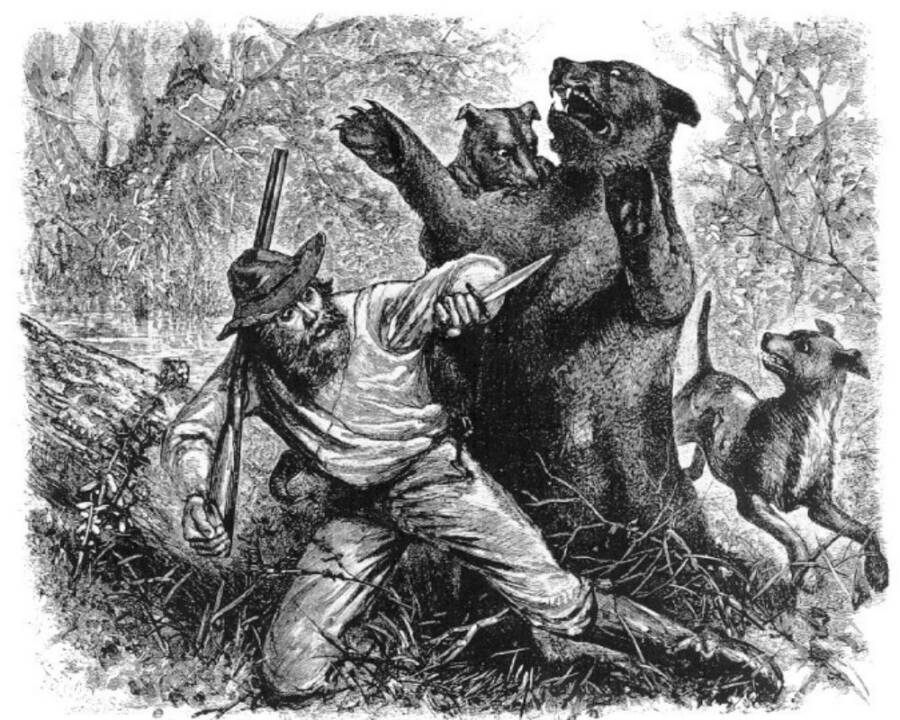
    The two men who had been ordered to watch over Hugh Glass knew it was hopeless. After single-handedly fighting off a grizzly bear attack, no one had expected the fur trader to last five minutes let alone five days. But there he was, lying on the banks of the Grand River, still breathing.Wikimedia CommonsA newspaper illustration of Hugh Glass fighting off the grizzly bear that attacked him.Aside from the rise and fall of his chest with each labored breath, the only sign of life from Glass was the occasional movement of his eyes. He would look around every so often, though there was no way for the other men to know if he recognized them or if he needed something.As he lay there dying, the men became increasingly paranoid, knowing they were encroaching on the land of the Arikara tribe. They didnt want to risk their lives for someone who was slowly losing his.Finally, fearing for their safety, the men left Hugh Glass to die, taking his gun, knife, tomahawk, and fire-making kit with them after all, a dead man needs no tools.Of course, Hugh Glass wasnt dead yet. And he wouldnt be for quite some time.Pirates And Pawnees: The Early Life Of Hugh GlassPublic DomainA sketch of Hugh Glass from c. 1830.Long before he was left for dead on the banks of the Grand River, Hugh Glass was a force to be reckoned with. According to the Museum of the Mountain Man, he was likely born to Irish immigrant parents in Pennsylvania around 1783. Little is known about his early life, but according to those who knew him, he was working as a sailor by 1817.The memoirs of George C. Yount, a fellow fur trader who worked alongside Hugh Glass, are believed to be credible. Per Yount, Glass claimed that a ship he was on was seized by the infamous pirate Jean Lafitte around 1820. Glass was given the choice to join Lafitte or die and he chose a pirates life.He reportedly served under Lafitte for a year or two before escaping to the shores of what is now Galveston, Texas. Once there, Glass was captured by the Pawnee tribe, with whom he lived for several years. Some tales about his life even claim that he married a Pawnee woman.Wikimedia CommonsThe newspaper advertisement that led to Hugh Glass joining Ashleys Hundred.Then, in 1822, Glass learned of a fur-trading venture.Per the South Dakota Office of Tourism, a newspaper advertisement placed by General William Henry Ashley called for 100 men to ascend the river Missouri to explore uncharted lands on the American frontier and trap animals for their fur. Glass eagerly signed up to become one of Ashleys Hundred a decision that would cement his name in history.Inside The Grizzly Bear Attack That Inspired The RevenantThroughout 1822 and 1823, Ashleys Hundred trekked up the Missouri River, hunting and trading furs as they went. Along the way, they had a violent encounter with members of the Arikara tribe. Several of the traders were killed, including a man named John Gardiner. Glass wrote a letter to Gardiners family to share the sad news:My painfull duty it is to tell you of the deth of yr son wh befell at the hands of the indians 2d June in the early morning We traded with them as friends but after great storm of rain and thunder they came at us before light and many were hurt. I myself was shot in the leg. Master Ashley is bound to stay in these parts till the traitors are rightly punished.Just a few months later, in August 1823, Glass had his infamous run-in with a grizzly bear. While hunting with a group of about 15 other men, Glass accidentally surprised the bear and her two cubs. The creature charged, knocking Glass to the ground and mauling him.Wikimedia CommonsAn illustration of Hugh Glass being mauled by a grizzly bear from a 1922 newspaper.Some versions of the story state that Hugh Glass fought the bear off on his own, while others tell of his fellow trappers coming to his rescue. Either way, Glass barely survived the ordeal. His injuries reportedly included a broken leg, a ripped scalp, a punctured throat, and deep gashes on his back that exposed his ribs. Nobody in the party believed that Glass would live for more than a few hours, yet they strapped him to a makeshift gurney and carried him along with them anyway. The critically injured man surprised them all by surviving through the night and the following day. Soon, however, they realized that the added weight was slowing them down in an area that they very much wanted to get through as quickly as possible.They were still in Arikara territory, and they wanted to reach their destination swiftly to avoid another attack. According to Encyclopedia Britannica, the group still anticipated that Glass would die soon, so they decided to leave two men behind with him who would catch up after burying his body. Wikimedia CommonsAn Arikara man wearing the skin of a bear. 1908.These two men were John Fitzgerald and a teenager named Bridges, who some historians believe was actually famous mountain man Jim Bridger. However, when Glass was still clinging to life five days later, they decided to abandon him. They took his weapons and tools, leaving him helpless in the wilderness.But Glass managed to survive and he made it his lifes mission to seek revenge on the men who had left him to die.Hugh Glass Ultimate Quest For RevengeWhen Hugh Glass regained consciousness, he quickly realized hed been abandoned. Based on his knowledge of his surroundings, he believed he was about 200 miles from Fort Kiowa, where he would be able to get help.Crawling at first, then slowly beginning to walk, Glass made his way toward the fort. He ate what he could find. This mostly consisted of berries, roots, and insects, but occasionally he came across the remains of buffalo carcasses that had been ravaged by wolves.Roughly halfway to his destination, he ran into a tribe of Lakota, who were friendly toward the fur traders. There, he managed to bargain his way into a skin boat.Alfred Jacob Miller/Wikimedia CommonsFur traders often made peace with local Native Americans, though they frequently battled with some tribes, such as the Arikara.He reached Fort Kiowa around six weeks after the bear attack. Once he had rested and purchased supplies on credit, Glass set out once more to rejoin Ashleys Hundred. When he eventually caught up with them, everyone was shocked to see him alive. Fitzgerald had left the group to join the U.S. Army, but Bridges was still with them. It was time for Glass to act on his desire for revenge.However, when Glass confronted Bridges, he supposedly forgave the teenager. He realized that it was Fitzgerald who had convinced the boy to leave him behind.Glass then set out to find Fitzgerald and forgave him as well. Fitzgerald was protected by the Army, so Glass couldnt harm him without facing punishment himself. Fitzgerald was reportedly forced to return Glass shotgun, though.His mission to track down Bridges and Fitzgerald complete, Glass continued working as as fur trader for the next 10 years. He escaped two more violent run-ins with Native Americans and even another stint alone in the wilderness after he became separated from his trapping party during an attack. In 1833, however, Glass finally met the end hed been evading for so long. According to the National Park Service, while on a trip along the Yellowstone River with two fellow trappers, Hugh Glass found himself under attack by the Arikara once again.This time, he was not so lucky.Wikimedia CommonsA memorial sculpture to Hugh Glass is erected in Lemmon, South Dakota, where he was attacked by the bear.Hugh Glass epic tale was so incredible that it caught the eye of Hollywood and was transformed into the 2015 Oscar-winning film The Revenant starring Leonardo DiCaprio. Today, a monument stands along the southern shore of the Grand River near the site of Glass famous attack, reminding all who pass of the man who took on a grizzly bear and lived to tell the tale.After reading about Hugh Glass and the real story behind The Revenant, check out the life of Peter Freuchen, another bear-wrestling badass. Then, read about the Montana man who was attacked by a grizzly bear twice in one day. The post The Incredible Life Of Hugh Glass, The 19th-Century Frontiersman Whose Story Inspired The Revenant appeared first on All That's Interesting.
    0 Reacties 0 aandelen 11 Views
  • WWW.DUALSHOCKERS.COM
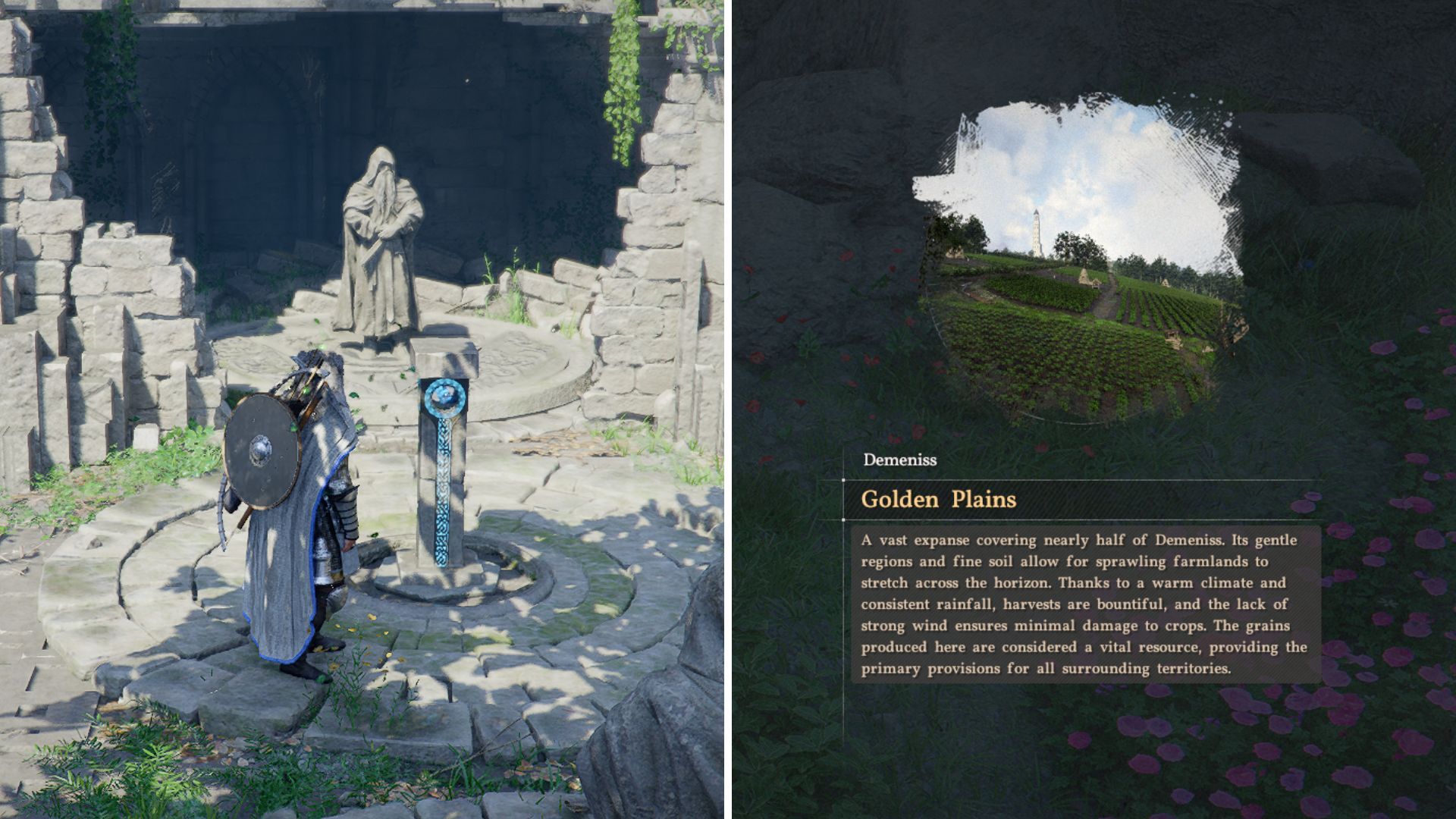
    Solving the Golden Plains Ruins Puzzle in Crimson Desert
    Crimson Desert's open-world is stunning, vast, and overflowing with secrets to discover and mobs of enemies to conquerbut traversing this massive continent isn't always easy.
    0 Reacties 0 aandelen 11 Views
  • WWW.DUALSHOCKERS.COM
    10 Great Cozy Games That Are Fun from the Start
    Its a little difficult to quantify fun when it comes to cozy games. After all, not everyone plays them to have fun; sometimes you play them to relax or turn your brain off rather than engage in something specifically enjoyable. Of course, relaxing is pretty fun in itself, hence our conundrum. Rather than focusing on whether cozy games are fun, it might be more productive to consider how quickly these games become fun.
    0 Reacties 0 aandelen 12 Views
  • WWW.MASHED.COM
    Beef Tallow Vs Lard: The Differences In Nutrition You Need To Know
    Beef tallow has surged in popularity, but what about lard? We take a look at the nutrition info of both animal proteins to see how they differ from one another.
    0 Reacties 0 aandelen 11 Views
  • WWW.THEKITCHN.COM
    I Tried Caraway's Brand-New Trash Cans My Honest Thoughts
    Its the epitome of style and function.READ MORE...
    0 Reacties 0 aandelen 11 Views
  • WWW.BGR.COM
    Why Samsung Cited 2001: A Space Odyssey In A Legal Fight With Apple
    In 2011, Samsung used Stanley Kubrick's film, 2001: A Space Odyssey, as part of a legal argument with Apple over the design of its latest device.
    0 Reacties 0 aandelen 12 Views
  • WWW.BGR.COM
    Amazon Is Discontinuing Support For These Older Kindle Models
    Kindles have been around since 2007, giving readers a more convenient and reliable way to consume their favorite books. Now, it's time for some to upgrade.
    0 Reacties 0 aandelen 12 Views
  • TECHCRUNCH.COM
    Meta debuts the Muse Spark model in a ground-up overhaul of its AI
    This is the first model Meta has released under its Superintelligence Labs, led by former ScaleAI CEO Alexandr Wang.
    0 Reacties 0 aandelen 12 Views