• YUBNUB.NEWS
    LIVE NOW: NASA Officials Provide Flight Day 5 Status Update for Artemis II Mission
    [View Article at Source]NASA officials provide the latest status update on the Artemis II mission at 6:30 p.m. ET on April 5 as the crewReid Wiseman, Victor Glover, Christina Koch, and Jeremy Hansenapproaches
    0 Comments 0 Shares 35 Views
  • YUBNUB.NEWS
    Senator Dave McCormick Weighs in on Amazing Rescue of Downed F-15 Airman in Iran A Remarkable Operation That Only America, Only the American Military, and the American Intel Community Could Pull Off (VIDEO)
    Senator Dave McCormick on Fox News Sunday with host Shannon Bream. 4/5/26 Senator Dave McCormick was on Fox News Sunday with host Shannon Bream to talk about the amazing rescue of a downed
    0 Comments 0 Shares 22 Views
  • YUBNUB.NEWS
    Report: Harmeet Dhillon to Receive Promotion at DOJ
    On Sunday, the Daily Wire dropped an exclusive report by Mary Margaret Olohan reporting that the current chief of the Department of Justice (DOJ) Civil Rights division, Harmeet Dhillon, is to be promoted
    0 Comments 0 Shares 35 Views
  • YUBNUB.NEWS
    REPORT: High-Profile DOJ Official Expected To Receive Promotion
    Harmeet Dhillon, who currently serves as Assistant Attorney General for the Civil Rights Division at the U.S. Department of Justice, is expected to receive a promotion to the position of Associate Attorney
    0 Comments 0 Shares 22 Views
  • ALLTHATSINTERESTING.COM
    What Happens When We Die? What It Feels Like, What Happens To Your Body, And More
    What happens when you die is perhaps one of the greatest mysteries on Earth, simply because none of us know the answer and yet all of us will experience death eventually.Humankinds great thinkers have been pondering this question for millennia. And in 1994, an orthopedic surgeon named Tony Cicoria may have come close to solving this great mystery when he was struck by a nearly-fatal bolt of lightning in upstate New York. Cicoria felt himself fly backward and the next thing he remembered was turning around to see his body lying on the ground behind him.For a moment, Cicoria reported, he stood there and watched a woman perform CPR on his body before he floated up a flight of stairs to watch his children play in their rooms.Then I was surrounded by a bluish-white light, Cicoria recalled, an enormous feeling of well-being and peace The highest and lowest points of my life raced by me. I had the perception of accelerating, being drawn up Then, as I was saying to myself, This is the most glorious feeling I have ever had slam! I was back.PixabayAll of the worlds civilizations throughout human history have contemplated what happens when we die, both scientifically and spiritually and the answers have varied quite a bit.According to Dr. Sam Parnia, who has studied near-death experiences for years, Cicorias encounter was not an uncommon one. Death is a process, Parnia added. it is not a black and white moment.In recent years, doctors like Parnia and close-call survivors like Cicoria have helped deepened humanitys understanding of what happens when we die.What Science Says About What Happens When You DieWhile we may not fully understand the feeling of dying until we experience it for ourselves, we do know what happens to our bodies right before and after death.At first, according to Dr. Nina OConnor, a persons breathing will become irregular and unusually shallow or deep. Their breath can then begin to sound like a rattle or a gurgle, which happens because the person isnt able to cough up or swallow secretions in their chest and throat. All of it comes from the process of the body slowing and shutting down, she says. This sound has been fittingly called the death rattle.Then, at the moment of death, every muscle in the body relaxes. This may cause the person to moan or sigh as any excess air is released from their lungs and into their throat and vocal cords. David Howells/Corbis via Getty ImagesCorpses decay at the worlds first body farm at the University of Tennessee.Meanwhile, as the body relaxes, the pupils dilate, the jaw may fall open, and the skin sags. If the person has any urine or feces in their body, these will then be released too.But as Parnia suggested, death doesnt happen in an instant and some researchers assert that our brains can operate up to ten minutes after our hearts stop beating.Within the first hour after death, the body begins to experience the death chill or algor mortis. This is when the corpse cools from its normal temperature to the temperature of the room around it.After a couple of hours, blood will begin to pool in the areas of the body that are closest to the ground due to gravity. This is known as livor mortis. If the body stays in the same position for several hours, these body parts will start to look bruised while the rest of the body grows pale. Limbs and joints will then begin to stiffen within a few hours after death during a process called rigor mortis. When the body is at its maximum stiffness, the knees and elbows will be flexed and the fingers and toes may appear crooked. But after around 12 hours, the process of rigor mortis will start to reverse. This is due to the decay of internal tissue and it lasts between one and three days. During this reversal, the skin begins to tighten and shrink, which can create the illusion that the persons hair, nails, and teeth have grown. This skin tightening is also responsible for the illusion that blood has been sucked from the corpses, which in turn inspired some of the vampire legends of medieval Europe that we still know today.What Physicians Say It Feels Like When We DiePixabayAccording to some physicians, death can feel like either a great depression or the need to poop.Aside from the science of death and decomposition, humans have always also sought to know what the sensation of dying feels like. Because most of us, unlike Cicoria, wont ever have a near-death experience, we are simply left wondering: What does it feel like to die?And according to general practitioner Dr. Clare Gerada, death can sometimes feel like having to use the bathroom.Most people will die in bed, but of the group that dont, the majority will die sitting on the lavatory. This is because there are some terminal events, such as an enormous heart attack or clot on the lung, where the bodily sensation is as if you want to defecate.If a person doesnt die from a terminal event, however, and instead passes on more slowly from a long-term illness or old age, dying may feel a bit like depression. Toward the end of their lives, people tend to eat and drink less, which results in fatigue and a lack of energy. This causes them to move, talk, and think slower. Dr. OConnor adds that the physical fatigue and weakness [of people near the end] is profound. Simple things, like getting up out of bed and into a chair could be exhausting that could be all of someones energy for a day.But because its so often difficult or impossible for dying people to express how theyre feeling during the event, the question of how it feels when we die remains largely shrouded in mystery.What Happens To Your Body After You Die?While the more ineffable matters of what it feels like to die may always be fuzzy, whats very clear is what happens to the body in a practical sense after death. But how we handle our dead bodies and what ceremonies and rites we perform still varies greatly around the world.Typically in the West, bodies are embalmed after death. The process of embalming dates back to the ancient Egyptians and even earlier when some cultures mummified their dead in the hopes that their soul could one day return to the corpse. Aztecs and Mayans likewise had a history of mummifying their dead, as did many of the worlds most studied civilizations in the pre-modern era.But as for modern, Western practices, embalming in the United States only became popular during the Civil War as a means of transporting fallen soldiers back to their families to be buried.Modern embalming is a meticulous process. As soon as a doctor has certified that a person is dead, the body is transported to a coroner who may request a postmortem examination. This process requires a pathologist to complete an external and internal examination. For the internal examination, the pathologist removes every organ of the body, from the tongue to the brain, and then inspects them and places them back in the body.Next, the body is drained of all its fluids, which are replaced with a preservative like formaldehyde. Meanwhile, the throat and nose are packed with cotton wool.The mouth is stitched or glued closed from the inside. The hair is washed, the nails are cleaned and cut, and cosmetics are applied to the face and skin. Plastic caps are applied under the eyelids to help them hold their shape.Finally, the body is dressed and placed in a coffin. From here, it can be buried or cremated, depending on the persons preference, culture, or religion.In many non-Western cultures, in fact, death rituals are very different from what most of us might be familiar with.Sijori Images/Barcroft Images/Getty ImagesWhat happens after you die is a question with a unique answer in the Toraja culture, in which they dress up long-deceased family members and walk them around.This is especially true for the Toraja people of Indonesia. They believe that the dead are never really gone, so people are not so quick to dispose of their loved ones bodies.When a Toraja person dies, their family cares for their body until a proper funeral can be prepared which can take weeks to months or even years.During this time, the deceased is treated as if they are simply sick instead of dead. Once the funeral is finally ready, the Toraja village honors the dead with prayers, dancing, and animal sacrifice before they take the body to its tomb. However, the body is not left in its tomb forever. Every one to three years, the Toraja people exhume their loved ones, wipe them clean, dress them in new clothes (and sunglasses), and walk them around so that they can do things like introduce them to any new family members. Jews, on the other hand, do not embalm their loved ones and instead bury them quickly after they are declared dead. Rabbi Corey Helfand says, [According] to the texts we read in Genesis, with Adam coming from the Earth, we give our bodies back to the Earth and to God thats why we bury our dead.Jews are thus typically buried naked, wrapped in a cotton sheet, and laid in a plain pine coffin so that the body may decompose naturally. Muslims do the same with their dead, burying them without a coffin in some cases.Public DomainA depiction of death personified and holding a sword, circa 1500, taken from Book of Hours, containing prayers and rites.Medieval Christians, on the other hand, lived their lives considering and preparing for death, mostly because they were surrounded by it. Without modern medicine, there were high rates of infant mortality and disease, while famine and war were also rampant. This was the age of the Black Death, after all. Christian Europeans (and Americans) thus still tend toward death rituals that are more highly prepared and orchestrated in terms of things like coffins and funerary rites.Meanwhile, the ancient Egyptians believed that the dead had to first pass through the underworld before they could rest in the afterlife. But the journey to the afterlife was riddled with obstacles, so the ancient Egyptians buried their loved ones with scrolls inscribed with spells to protect and guide them to their final resting place. Archaeologists have even found maps of the underworld in tombs meant to direct the dead in the afterlife.What Really Happens After You Die From People Whove Been ThereSetting aside what happens to the deceaseds body after they die, what happens to them, to their very being and their soul? While the worlds cultures and religions can offer some possible answers, so can survivors of near-death experiences. In 1988, actress Jane Seymour went into anaphylactic shock. As her body began to shut down, her mind stayed aware. I had the vision of seeing a white light and looking down and seeing myself in this bedroom with a nurse frantically trying to save my life and jabbing injections in me, and Im calmly watching this whole thing, she said, describing a scene common in reports from those who have almost died. Dr. Sam Parnia recorded this phenomenon with multiple survivors during his 2014 study of near-death experiences. One patient could recall what was happening in the hospital for a full three minutes after his heart had stopped. The man described everything that had happened in the room, but importantly, he heard two bleeps from a machine that makes a noise at three-minute intervals, said Parnia. So we could time how long the experience lasted for. He seemed very credible and everything that he said had happened to him had actually happened.While not every survivor that Parnia spoke with had an out-of-body experience, as many as 40 percent of them do recall having some sort of awareness when they were declared clinically dead. Even after flatlining, many survivors recall seeing a bright, welcoming light, or their deceased relatives, or the doctors and nurses working on them in the hospital. Whats more, many of the people who experienced consciousness after death remember not wanting to return to their bodies. However, many scientists remain skeptical of these reports and attribute them to everything from lucid dreaming to a lack of oxygen in the brain. While more research needs to be done before we know for sure what happens when we die, perhaps it is at least comforting to think that our consciousness floats on as our bodies expire.After learning about what happens when we die, read up on the most unusual deaths in history. Then, check out these haunting photos of people right before they died.The post What Happens When We Die? What It Feels Like, What Happens To Your Body, And More appeared first on All That's Interesting.
    0 Comments 0 Shares 20 Views
  • ALLTHATSINTERESTING.COM
    The Mysterious Life Of Pontius Pilate, The Roman Governor Who Ordered Jesus Christs Crucifixion
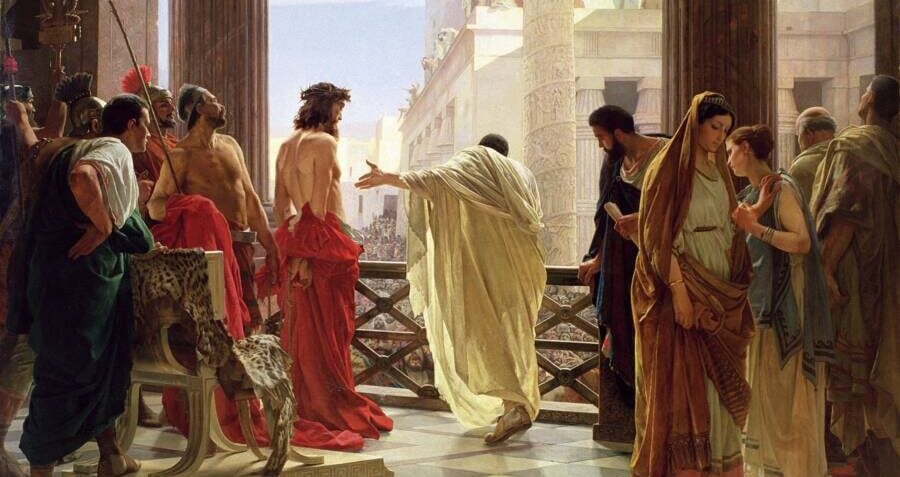
    Pontius Pilate was the Roman governor of Judaea, now modern-day Palestine and Israel, for roughly 10 years. Best remembered by history for his role in the crucifixion of Jesus Christ, Pilate is a historical figure otherwise shrouded in mystery.Conflicting historical and biblical accounts of Pilate paint him as either a ruthless tyrant uninterested in the laws and sensitivities of his subjects or an unsure and frustrated leader and even the circumstances surrounding his fateful condemnation of Jesus Christ are somewhat murky.This is what we know about Pontius Pilate, the man who infamously sentenced Jesus to death.Pontius Pilate As The Governor Of JudaeaPublic DomainEcce Homo (Behold the Man) by Antonio Ciseri, c. 1860-1880.Pontius Pilate was the fifth governor of Judea from 26 C.E. to 36 C.E. under the rule of Roman Emperor Tiberius. But the historical record of Pontius Pilates life before he became governor is scant.History reports that some scholars believe he was born in Italy and came from an equestrian family part of the Roman nobility. Still, this is all informed guesswork.From there, its believed he may have joined the military, largely based on Pilates name. The word Pilatus means armed with a javelin, suggesting Pilate may have served in the military as a skilled javelin thrower.On the basis of information about other [Roman] governors and about how the Roman imperial system maintained control, we can reasonably guess that Pilate probably had some sort of military career in which he most likely distinguished himself in some way as an officer, wrote New Testament scholar Warren Carter in his book Pontius Pilate: Portraits of a Roman Governor. We can also be fairly confident that he belonged to the upper stratum of Roman society, that his family was wealthy.According to historian Daniel R. Schwartz in his book Anchor Bible Dictionary, Pilate was appointed a prefect. This was a high-ranking role that involved supervising a regions finances and military, as well as acting as chief justice and head of civil service. Because he was the Roman representative of a Jewish-majority area, Pilate shared duties with an elite Jewish council called the Sanhedrin.During his ten years in this role, Pilate collected taxes and oversaw Judeas construction projects. However, he is most infamous for his role in maintaining law and order in the region.Historical Concerns About Pilates Rule Over JudaeaAlthough Pontius Pilate held power alongside a Jewish council, historians agree that he had a turbulent relationship with those whom he governed.According to Flavius Josephus, a Roman-Jewish first-century historian, in his book The Wars of the Jews, Pilate once angered the local Jewish population by ordering that images of Caesar be placed in Jerusalem. As Paul L. Maier translated in The Roman Governors, Josephus wrote that Pilate intended to subvert the Jewish customs by introducing into the city busts of the emperor that [stemmed from] military standards when our law forbids the making of images. When the people protested, spending five days rioting against the images, Pilate is said to have ordered his soldiers to surround them and threaten them with death if they did not stop protesting. When the Jews said theyd rather die than see their laws broken, he relented and had the images removed. Additionally, Josephus writes that Pilate offended the Jews once more by using Temple funds to build aqueducts to Jerusalem. When a mob formed to confront Pilate, he allegedly had his troops brutally beat them until they dispersed or died.The Gospel of Luke also recalls an instance of brutality in Pilates rule, stating:Some of those in the crowd informed Jesus that Pilate had slaughtered some Galilean Jews while they were offering sacrifices at the temple, mixing their blood with the sacrifices they were offering.Evidently, historical accounts depict Pilate as a harsh and sometimes cruel ruler willing to use force to keep the people of Judaea in line. But many biblical texts show Pilate in a more sympathetic light, despite the fact that Pilate was the one who sentenced Jesus to death and some Christian churches even recognize the Roman prefect as a saint.The Trial And Crucifixion Of Jesus ChristSvabo/Alamy Stock PhotoA statue of Pontius Pilate and Jesus in Rome.According to the Gospel, the Sanhedrin had Jesus arrested because they felt threatened by his teachings, alleging he claimed be the King of the Jews, which would have been considered both blasphemy and treason.Soldiers took Jesus to Pontius Pilate for judgment, but Pilate was reluctant to convict him. The Gospels depict Pilate as being conflicted and indecisive in contemplating Jesus fate. What charges are you bringing against this man? he asked the Sanhedrin.If he were not a criminal, the Jewish council replied, we would not have handed him over to you.Not seeing any legal grounds to sentence Jesus to death, Pilate attempted to defer the responsibility, telling the Jewish elders, Take him yourselves and judge him by your own law. But they refused. After all, Pilate was the only one with the authority to order the death penalty, and they wanted Jesus executed. According to the New Testament, worn down by their insistence, Pilate eventually gave in to the demands of the Jewish authorities and ordered that Jesus be crucified. Its said that at that point, Pilate literally washed his hands before the Jewish council, denying his responsibility and instead blaming the Jews. As Matthew writes:When Pilate saw that he was gaining nothing, but rather that a riot was beginning, he took water and washed his hands before the crowd, saying, I am innocent of this mans blood; see to it yourselves.'Later, Pilate is said to have ordered that Jesus of Nazareth, King of the Jews be inscribed on Jesus cross. While some think this was meant to mock Jesus, others believe he meant it in earnest and that he really did come to view Jesus as the King of the Jews.Pontius Pilates Mysterious Final YearsWellcome ImagesPontius Pilate attempting suicide after being disgraced.According to the Letters of Herod and Pilate, a collection of letters some believe to be the real correspondence between Pontius Pilate and King Herod, Pilate was reportedly tormented by guilt after Jesus crucifixion at Golgotha.In one letter, Pilate speaks of meeting a resurrected Jesus and repenting for his role in Jesus death. But we, when we saw him, all of us fell upon our faces before his feet. And I said with a loud voice, I have sinned, O Lord, in that I sat and judged thee, who avengest all in truth. And lo, I know that thou art God, the Son of God, and I beheld thy humanity and not thy divinity. But Herod, with the children of Israel, constrained me to do evil unto thee. Have pity, therefore, upon me, O God of Israel!And although many scholars doubt the authenticity of these letters, these texts do explore one theory about what happened to the governor after Jesus crucifixion: that he converted to Christianity and became a devout follower of Jesus.According to other, more reliable historical accounts, Pilate lost his position after he reportedly massacred a group of Samaritans who had been trying to ascend a mountain in search of sacred relics they believed Moses had buried there.Other Samaritans complained about Pilates excessive use of force to Vitellius, the Roman governor of Syria, who held a higher political position. Hearing these disturbing complaints, Vitellius sent Pontius Pilate back to Rome to discuss his actions with the Roman emperor himself.The record of Pilates life generally ends here, and historians arent sure if he made it back from Rome. If he did, the emperor likely removed him from his post or he retired, as he never returned to rule over Judaea.While some sources say Pontius Pilate converted to Christianity, others suggest his ending was darker. Some believe Roman Emperor Caligula had Pilate executed, or that Pilate was exiled and died by suicide.With very few historical texts to rely on, the truth of this elusive historical and religious figure has largely been lost to time.After reading about the life of Pontius Pilate, dive into this historical investigation into who wrote the Bible. Then, read about the nine worst Emperors of ancient Rome.The post The Mysterious Life Of Pontius Pilate, The Roman Governor Who Ordered Jesus Christs Crucifixion appeared first on All That's Interesting.
    0 Comments 0 Shares 33 Views
  • ALLTHATSINTERESTING.COM
    How Many People Did Ted Bundy Kill? Inside The Stories Of His Victims
    Much of the world knows the name Ted Bundy, the infamous serial killer who murdered dozens of young women across America in the 1970s.But while his story is well-known, the same is not the case for Ted Bundys victims. How many people did Ted Bundy kill? Who were they? And how did it happen?The answers even 30 years after Bundys execution remain murky. He confessed to 30 murders, but his true body count is thought to be much higher possibly 100 or more.Bettmann/Contributor/Getty ImagesOnce he eventually went to trial, the haunting stories of serial killer Ted Bundys victims and the truth about how many people he killed while terrorizing America between 1974 and 1978 finally came out.With recent advances in DNA profiling, its even possible that some cold cases can still be solved. But for now, when it comes to knowing how many people Ted Bundy killed, we only have his word.Here are the women that we know Ted Bundy preyed upon, and the tragic stories behind their deaths.Ted Bundys Victims In Washington And OregonTed Bundys infamous series of brutal murders are believed to have begun in Seattle, Washington in 1974. Not long after earning his bachelors from the University of Washington in 1972, he committed his first confirmed murders.And while some believe that a 14-year-old Bundys first victim was a girl named Ann Marie Burr who vanished in 1961, the first of Ted Bundys victims thats been confirmed is Karen Sparks.January 1974: Karen SparksThe first of Ted Bundys victims is widely believed to be 18-year-old Karen Sparks. Also known as Joni Lenz in Bundy literature, the UW student was attacked in her sleep on January 4, 1974.After sneaking into her basement bedroom, Bundy beat Sparks with a metal rod torn from the bed frame and then forced it into her vagina.She was one of the lucky ones: She survived, but spent 10 days in a coma and suffered permanent brain damage from the attack. She woke up with no memory of her brutal beating.February 1974: Lynda Ann HealeyFacebookLynda Ann Healy in 1969.Bundys next victim was 21-year-old Lynda Ann Healey. Healey was a popular student at UW and gave weather and ski reports at a local radio station. Her colleagues found her disappearance extremely suspicious.Police found blood on Healeys bedsheets and pillow, but not enough to indicate that she had bled to death, and no indication as to where she could have gone. Her nightgown hung in the closet with a ring of dried blood around the neck, but some of her clothes, her pillowcase, and her backpack were missing.It seemed that whoever had bludgeoned her had crept into her room also in the basement, and accessible via the extra key that she and her roommates kept in their mailbox knocked her unconscious, removed her pajamas and dressed her in fresh clothes.Three days after her abduction, according to The Stranger Beside Me by Ann Rule, a male voice called 911: Listen. And listen carefully. The person who attacked that girl on the eighth of last month and the person who took Lynda Healey away are one and the same. He was outside both houses. He was seen. Police never got the callers name.Healeys disappearance was the first sign for police that something sinister was occurring, but it would take them a long time to suspect Bundy. Fourteen months after her disappearance, her skull and jaw bones were found on Taylor Mountain, about an hours drive from her home.March 1974: Donna Gail MansonFacebookTed Bundy incinerated Donna Mansons skull in his girlfriends fireplace.Donna Gail Manson, a 19-year-old student at Evergreen State College south of Seattle, disappeared on her way to a campus concert. Her body was never found, but Bundy later claimed he burned her skull in the fireplace of his girlfriend, Elizabeth Kloepfer.Of all the things I did to Liz, Bundy later confessed to Detective Robert Keppel, this is probably the one she is least likely to forgive me for. Poor Liz.April 1974: Susan Elaine RancourtLike all of Ted Bundys early victims, the 18-year-old Susan Elaine Rancourt disappeared on a college campus this time at Central Washington State College, east of Seattle.Like many of his other victims, Rancourt was studious (a biology major with a 4.0 grade point average), and driven (she worked two full-time jobs one summer to pay for her tuition). Unlike many of his other victims, she was blonde-haired and blue-eyed (Bundys previous victims were brunettes).At 8 p.m. on April 17, Rancourt put a load of laundry in the washing machine and headed to her regular dorm advisors meeting. She planned to see a German film with a friend afterwards, but no one saw her after the meeting. Her clothes remained in the washing machine until a frustrated student took them out and put them in a heap on the table.Her disappearance prompted a massive search with no results.Only later, evidence mounted that Rancourt was one of Ted Bundys victims, did other students recall an eerie detail from the night Rancourt disappeared: They had been approached by a man named Ted who had his arm in a sling.May 1974: Roberta Kathleen ParksFacebookRoberta Kathy Parks in 1974, shortly before her murder by Ted Bundy.Roberta Kathleen Parks was the first known Ted Bundy victim in Oregon. The student disappeared somewhere between her dorm room at Oregon State University and a coffee shop where her friends were waiting to meet her.Investigators later discovered her skull, among many others, at Taylor Mountain in Washington.June 1974: Brenda Carol Ball And Georgann HawkinsFacebookGeorgann Hawkins (bottom row on the right) was a cheerleader at Lakes High School in Lakewood, Washington.In June 1974, Bundy struck twice: on June 1 and again on June 11. Details gathered by the police showed a striking similarity: a man displaying some kind of handicap asking for help.Witnesses last saw 22-year-old Brenda Ball at 2 a.m. outside the Flame Tavern south of Seattle, talking to a man in a sling. Others remembered a man on crutches struggling with a briefcase near the University of Washington the night sorority girl Georgann Hawkins vanished.It took time for Seattle police to make the connection between this handicapped stranger and accounts from women in Ellensburg, where Susan Rancourt disappeared two months earlier. There, witnesses remembered being approached by a man struggling with a stack of books.July 1974: Janice Ann Ott And Denise Marie NaslundFacebookTed Bundy abducted both Janice Ott (left) and Denise Naslund from Lake Sammamish State Park on July 14, 1974.The list of Ted Bundys victims grew again in July 1974 with the murders of Janice Ott and Denise Naslund. Bundy kidnapped both women on the same day from Lake Sammamish State Park in Issaquah, about a 20-minute drive east of Seattle.The brazen abductions happened in broad daylight. Later, witnesses reported that a man with his left arm in a sling had approached them, introduced himself as Ted, and asked for help rigging his sailboat to his car. One young woman initially obliged, but grew hesitant when she approached his brown Volkswagen Beetle with no sailboat in sight.Oh. I forgot to tell you. Its at my folks house just a jump up the hill, he said in a slight British accent. When he motioned to the passenger door, she bolted. A little while later, she saw another woman walking beside the man toward the parking lot, deep in conversation.With this, the police finally had something tangible: The woman described the man as having sandy blond hair, 510, 160 pounds. And he had a brown VW Bug. They commissioned a sketch of the suspect.The police had no idea just how close they were to Ted Bundy: He worked on Seattles suicide hotline and the Seattle Police Department even nominated him to be the director of the Seattle Crime Prevention Advisory Committee.His colleague, Ann Rule, even reported her suspicions about Bundy to the police after seeing the sketch.Although the authorities noted that Ted Bundy did, in fact, drive a bronze Volkswagen Bug, no one followed up.Ted Bundys Victims In Utah, Colorado, And IdahoAfter Ott and Naslund vanished from Lake Sammamish, the disappearances of young women in the Pacific Northwest abruptly stopped.Having been accepted into the University of Utah as a law student, Bundy arrived in Salt Lake City in August 1974. It did not take long for him to pick up old habits.October 1974: Nancy Wilcox Bundys attacks continued in October 1974. First, on October 2, 16-year-old cheerleader Nancy Wilcox went out to buy a pack of gum and vanished. Witnesses later thought theyd seen her riding in a Volkswagen Bug.Rhonda Stapley: The Survivor Who Kept Her SilenceA 2016 Dr. Phil interview with Rhonda Stapley.Then, on October 11, Bundy approached Rhonda Stapley. Stapley was a first-year pharmacy student waiting for a bus to take her back to the University of Utah when Bundy offered to give her a ride in his trademark Volkswagen.Bundy took her to Big Cottonwood Canyon where he repeatedly strangled and raped her. The only reason she got away is that Bundy turned his back on her, giving Stapley a chance to run for her life and escape by jumping into a nearby river.But instead of contacting the authorities, Stapley hid her story for nearly 40 years in fears of being blamed and ridiculed. She didnt tell anyone until 2011.As she later recalled in an interview, I was afraid that people would treat me differently if they knew what happened. I wanted to put it behind me and get on with my life, pretend it never happened.Melissa Ann Smith And Laura Ann AimeFacebookMelissa Smiths father was the local police chief. She was killed by Bundy, who likely posed as a police officer when he abducted her.One week later, Melissa Ann Smith, 17, vanished. The daughter of a police chief, Smith disappeared after meeting a friend at a pizza parlor. She planned to walk home, pick up some clothes, and then head to a friends house for a slumber party. But she never made it home. Her body was found nine days later in Summit Park, in the mountains east of Salt Lake City.On Halloween, Bundy struck again. Seventeen-year-old Laura Ann Aime disappeared on the night of October 31 after leaving a cafe. Her family didnt realize she was missing for another few days. Hikers found her frozen body in the mountains about a month later.November 1974: Carol DaRonch And Debi KentNovember 8, 1974 would prove to be crucial for the eventual capture and conviction of Bundy.First, posing as a police officer named Roseland, Bundy approached Carol DaRonch at the Fashion Place Mall in Murray, Utah. He told the 18-year-old girl her car was broken into and she needed to go to the police station.Trusting his story, DaRonch willingly got into his car. But she quickly noticed something was wrong they didnt drive toward the police station, and Bundys friendly demeanor quickly shifted to a cold absence. When she asked him what he was doing, he didnt answer.Although he managed to force her wrist into a pair of handcuffs and threatened her with a gun, DaRonch broke out of the car and ran for her life. She found refuge with a couple driving nearby, who brought the distraught DaRonch to a police station. She couldnt find Roselands face in any of their books of mugshots.Carol DaRonch recalls her encounter with Ted Bundy.A few hours later, Bundy approached 17-year-old Debi Kent after a performance of a high school play in Bountiful, Utah. This time, he succeeded in abducting the young woman.Kents parents refused to turn off their homes porch light ever since the disappearance. We always left the porch light on when they went out at night and the last one home always turned it off, Kents mother said in a 2000 interview. I will never turn it off. As long as Im here, I will never turn it off.But despite kidnapping and killing Kent, Bundy left behind a clue in the parking lot a key that matched the handcuffs that DaRonch escaped with earlier that day.Although the police were unable to connect Bundy to Kent and other similar kidnappings, DaRonch would play a central role in Bundys 1976 conviction when her testimony identified him as the man who kidnapped and assaulted her. He was sentenced to prison in Utah for a minimum of one and a maximum of 15 years.January 1975: Caryn Eileen CampbellFacebookTed Bundy killed Caryn Campbell while she was enjoying a weekend getaway with her fianc in Aspen, Colorado.Bundy wasnt arrested for the DaRonch kidnapping until October 1975, giving him ample time to continue killing. After a pause in his activities perhaps DaRonchs escape rattled him the serial killer resumed his spree in January 1975.This time operating in Colorado, Bundy kidnapped 23-year-old Caryn Campbell in a hotel in Aspen. The registered nurse was in town to ski and attend a medical convention, and on the night of January 12 she left her fianc and his children in the hotel lobby to grab a magazine from their room. She vanished without a trace.March 1975: Julie CunninghamJulie Cunningham, a 26-year-old Colorado ski instructor, went to meet her roommate at a local bar. Bundy approached her and pretended to ask for help with his crutches before kidnapping her.April 1975: Denise Lynn OliversonAfter a fight with her husband in Grand Junction, Colorado, 24-year-old Denise Oliverson jumped on her bike and headed for her parents house. She never made it investigators later found her bicycle under a viaduct.Wikimedia CommonsThe Volkswagen Bug that Ted Bundy used to abduct his victims.May 1975: Lynette CulverOne of Bundys youngest victims, Culver was just 12 years old when Bundy abducted her in Pocatello, Idaho on May 6. He had spotted her earlier that day on the playing field of Alameda Junior High. He raped her, murdered her in a hotel bathtub, and threw her into a river. Her body has never been found.June 1975: Susan CurtisFacebookFifteen-year-old Susan Curtis was killed by Bundy while attending a Mormon youth conference.Like many of Bundys victims, Curtis disappeared from a college campus. Only 15, Bundy abducted her as she left a Mormon youth conference at Brigham Young University. She lived in the same neighborhood and attended the same school as Debi Kent.In his glut of violent murders, Bundy almost forgot about Susan. In fact, she was the last person that Bundy confessed to killing when he abruptly asked for a tape recorder on the way to his execution. Her body has not been found to this day.Ted Bundys Victims In FloridaIn August of 1975, law enforcement finally caught up to Bundy: Police discovered masks, handcuffs, and blunt weapons in Bundys car during a routine traffic stop.Suspicious but lacking evidence, they placed him under surveillance. They tracked down Bundys Volkswagen Bug, which he had sold to a teenage boy, and found physical evidence tying him to several of the missing women. Then, his escaped victim Carol DaRonch identified him from a lineup on October 2.The events that followed are almost too ridiculous to be true: Bundy was convicted for the DaRonch kidnapping and sentenced in June 1976, escaped a year later by jumping out of a second-story courthouse window, was recaptured six days later, and then escaped from prison by cutting through a hole in the ceiling on December 30, 1977.Bundy proceeded to hop around from Colorado to Chicago to Michigan, to Atlanta, and ultimately to Florida, where his gruesome crimes would continue.January 1978: Margaret Elizabeth Bowman And Lisa LevyFacebookLisa Levy (left) and Margaret Bowman were brutally murdered by Ted Bundy while sleeping in their Florida State University sorority house.Once in Florida, Bundy committed his most violent crime yet. Filled with an undeniable urge to kill, he broke into a Florida State University sorority house where several young students slept in the wee hours of January 15. In less than 15 minutes, Bundy turned the sorority house into a living hell.He snuck into the bedroom of 21-year-old Margaret Bowman and bludgeoned her to death with a piece of firewood. He then proceeded to the room of Lisa Levy, 20. He beat her, strangled her, tore off one of her nipples, bit deeply into her left buttock, and raped her with a bottle of hairspray.Karen Chandler And Kathy KleinerUnsatisfied, Bundy went to attack Bowmans and Levys housemates, Karen Chandler and Kathy Kleiner.Kleiner would later recall seeing a black mass. I couldnt even see that it was a person. I saw the club, saw him lift it over his head, and slam it on me Thats what I remember most: him lifting the club and bringing it down on me.Kathy Kleiner shares her story.Bundy may have added Chandler and Kleiner to his list of victims if not for the headlights that flashed through the windows of the sorority house. Their sorority sister, Nita Neary, had just arrived home. Neary would go on to provide eyewitness testimony against Bundy.Although the sorority girls escaped with their lives, both Chandler and Kleiner suffered permanent injuries. Stunned at the intensity of the attack, paramedics even mistakenly told Kleiner that someone had shot her in the face.Despite the life-scarring encounter, Kleiner went on to marry, start a family, and refused to let herself be defined as the girl who survived a serial killer. If anything, Kleiner says the experience made me stronger, and it gave me more to live for, and it taught me nobodys going to put me down.Cheryl ThomasBut Ted Bundy still wasnt done with his Florida rampage. After failing to kill his victims, he proceeded to break into the nearby apartment of 21-year-old FSU student Cheryl Thomas. Although Thomas escaped with her life because her neighbor heard the noise, she suffered permanent deafness and an end to her dance career.February 1978: Kimberly Leach, Bundys Last VictimAcey Harper/The LIFE Images Collection/Getty ImagesPortrait of 12-year-old Kimberly Leach, who was a victim of serial killer Ted Bundy.With the police on his tail, Ted Bundy killed one last time, murdering 12-year-old Kimberly Leach. Bundy kidnapped Leach around her school in Lake City, Florida on February 9, 1978. The poor girl was going to meet a friend and head to class together. Two months later, her body was found 35 miles away in Suwannee River State Park.How Many People Did Ted Bundy Kill? The True Number Of Victims Emerges At TrialDespite the appalling violence of his murderous spree in Florida, Bundy was captured by sheer chance.A police officer named David Lee noticed Bundy driving erratically on February 15 and pulled him over, discovering that his Volkswagen Beetle was stolen. More importantly, he also found Bundy in the possession of the IDs of several women.This was the end for Ted Bundy. His arrest led to his conviction. Sentenced to death three times, the next several years saw a slow trickle of confessions that confirmed what police had long expected, along with some surprises. In 1989, Ted Bundy was executed by electric chair.Wikimedia CommonsTed Bundy admitted to killing 30 women, but he was only convicted of killing three.While the serial killer confessed to murdering 30 women, we may never know just how people Ted Bundy killed. Some even suspect he began murdering women and girls as a teenager.Ted Bundys victims that we do know of were young women in the prime of their life. Considering his heinous crimes, the judge presiding over Bundys case summed up the killer aptly: extremely wicked, shockingly evil, and vile.After reading about Ted Bundys victims and how many people Ted Bundy killed, learn about Bundys wife Carole Ann Boone. Then, read the story of Bundys daughter Rose.The post How Many People Did Ted Bundy Kill? Inside The Stories Of His Victims appeared first on All That's Interesting.

    0 Comments 0 Shares 33 Views
  • WWW.MASHED.COM
    Costco Members Have Noticed A Drop In Quality For This Kirkland Signature Freezer Favorite
    Costco has an enviable freezer section, but not all of its products are winners. The quality of one Kirkland Signature item has reportedly taken a nosedive.
    0 Comments 0 Shares 21 Views
  • WWW.BGR.COM
    Modern Computer Monitors Ignore This Myth About The Human Eye, And So Should You
    The long-standing belief about monitor limits and the human eye isn't as clear-cut as it seems. The real explanation changes how you see refresh rates.
    0 Comments 0 Shares 20 Views
  • WWW.BGR.COM
    What Does 'Evo' Mean On LG OLED TVs?
    LG OLED evo TVs are one of the most trusted TV brands on the market with verification and certification for its color quality and stunning contrast ratio.
    0 Comments 0 Shares 33 Views