



WWW.THECOLLECTOR.COM
How the Medieval Religious Movement of the Lollards Laid the Seeds of the Reformation
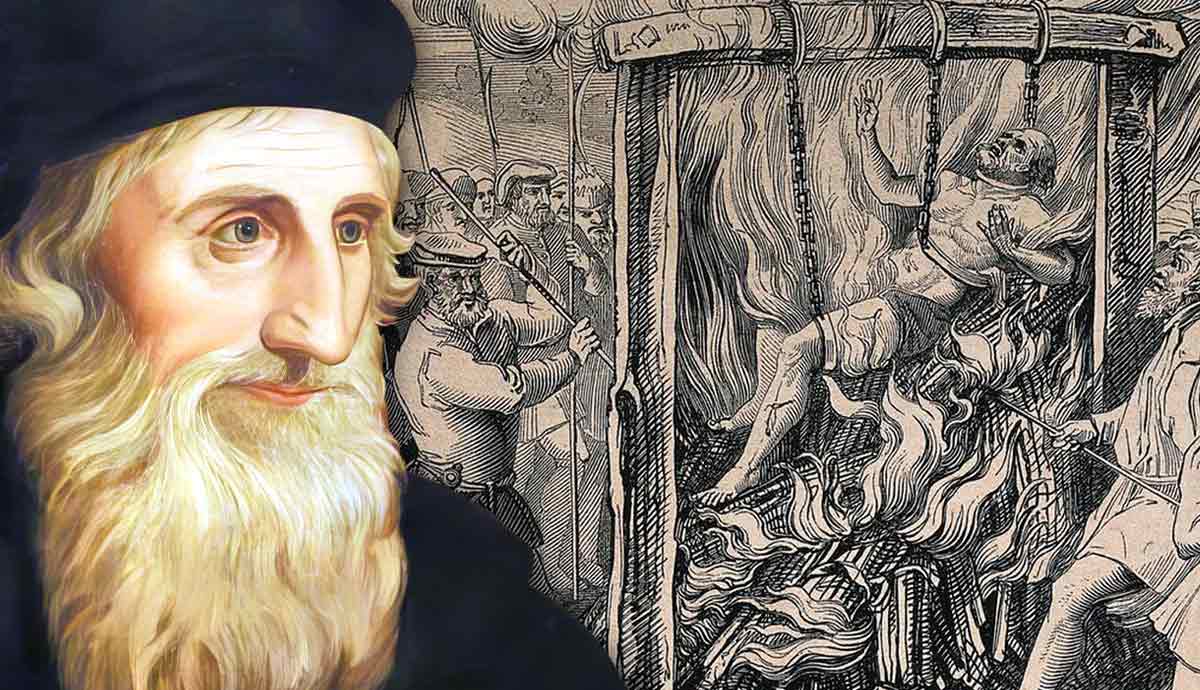
The Lollards, a proto-Protestant movement that developed in the mid-14th century in England, would hold sway on the teachings of the Protestant and Catholic Church for the next two centuries. Calling for the reform of Western Christianity, the Lollards were one of the first Protestant movements in the world, and their efforts undoubtedly contributed to the philosophy of later figures such as Martin Luther. Read on to find out all about the history of Lollardy in later medieval Europe.The Origin of the LollardsJohn Wycliffe, by Thomas Kirby, 1828. Source: Art UKWhile John Wycliffe is credited with starting the Lollard movement in the 14th century, where did his ideas actually originate from?It was through Wycliffes teachings and philosophy that the Lollard movement sparked. Wycliffe was a scholar at Oxford University, and he believed that everybody should have access to the teachings of the Bible, not just those who could read Latin.As such, Wycliffe began the arduous task of translating the Bible into vernacular English, thus making it accessible for more and more people, who could understand its teachings and read it for themselves.Because of this, people who could read and understand Englishsuch as townspeople, merchants, and others lower down the social classes than the clergycould now have access to the teachings of the Bible, instead of hearing it from a Catholic priest.The Catholic Church looked down upon this practice, even before it condemned Wycliffe as a heretic. But perhaps the biggest reason for the Lollards being seen as a disruptive group was due to their involvement in the Peasants Revolt of 1381.Lollardy and the Peasants RevoltRichard II meeting the rebels during the Peasants Revolt, by Jean Froissart, c. 1500. Source: BnFDuring the reign of King Richard II of England, many common people had had enough with the kings incessant taxes and marched to London to protest them.Unfortunately for the Lollard movement, one of the leaders of the Peasants Revolt was a known Lollard, John Ball. Ball had been preaching against the Catholic Church for at least a decade before Wycliffe began developing the early stages of Lollardy, but because he agreed with much of Wycliffes teachings, he was grouped in with him as a Lollard.When Richard IIs forces brutally put down the Peasants Revolt, Ball was seen as a ringleader of the cause, and as such, was hanged, drawn, and quartered, with his body parts being displayed across 14 different parts of the kingdom. This may have seemed like a nail in the coffin for Lollardy, but it was far from over.Wycliffes Next StepsMaster Jan Hus before the Council of Constance, by Vaclav Brozik, 1883. Source: Wikimedia CommonsA year after the Peasants Revolt, Wycliffe was dismissed from his position at Oxford University and deemed a heretic by the Catholic Church at the Council of Constance.Instead of ending the movement completely as the Catholic Church had hoped, Lollardy grew amongst the common people; the Church had spurred the movement on, changing it from a heretical branch of Catholicism to a full-blown underground religious movement.The English-printed Bible was distributed throughout the kingdom among Lollards, and it was at this point that it really began to take off.Political Rebellion and LollardyJohn Badby being burned in a barrel, from Foxes Book of Martyrs, 1563. Source: Wikimedia CommonsFollowing Wycliffes death in 1384, Lollardy did not die with him. On the contrary, it seemed to gain more traction than ever, and began to worry English monarchs by the turn of the 15th century.In 1401, during the reign of Henry IV, a new law was enacted that essentially redefined the term heresy. Previously, heresy was defined as an error in theological belief, but this new law, called De heretico comburendo, equated heresy with sedition (speaking out) against public rulers. As such, Lollardy was driven underground.However, it was the burning of John Badby in 1410 that, much like the dismissal of John Wycliffe, helped to grow the movement even more. Badby was a tailor from the West Midlands and an open Lollard. Once again, this went to show how common tradespeople were adopting Lollardy from a theological point of view. Bandby refused to denounce his Lollardy, citing his denial of transubstantiation (the Catholic belief that the bread and wine at Communion are the literal flesh and blood of Christ).When Badby was burned at the stake for his views, he became two things: the very first Lollard martyr, and the first layman in English history to suffer capital punishment for the crime of heresy.Lollardy in the Medieval English CourtThe burning of Sir John Cobham, Lord Oldcastle, a Lollard and follower of John Wycliffe, in London in 1418. Source: Wikimedia CommonsBadbys brutal execution only served to inspire the growth of Lollardy, but not just among the common people many nobles were taking it up, too.While there had been some names mentioned in the chronicles of Henry Knighton and Thomas Walsingham as early as the reign of Richard II (137799), as Lollards, there was little concrete evidence to say that they were. Some of the men mentioned included Thomas Latimer, William Nevil, John Clanvow, Lewis Clifford, John Trussell, Richard Storey, Reginald Hilton, and Sir John Peche.These men were known as the Lollard Knights, and the evidence for this was that there was some Lollard-inspired language in their wills, such as how they wished to be buried in the earth to return from whence they came.However, there was no hint of these men being Lollards during their lifetime. They were senior figures in the court of Richard II, who had executed and condemned Lollards, and this language could simply be a coincidence.By the time John Oldcastle came along, the view was completely different.The Oldcastle RevoltLollards Prison in Lambeth Palace overlooking the River Thames, photographer unknown, 1887. Source: Wikimedia CommonsJohn Oldcastle, a close and personal friend of King Henry V (r. 141322), was brought to trial in 1413 after evidence of his Lollard beliefs had been uncovered.While he was being held in the Tower of London as both a religious and a political prisoner while awaiting his sentencing, he managed to successfully escape, and even began to organize an insurrection with a long-term plan of kidnapping Henry V.The rebellion was ultimately a failure, and Oldcastle was captured and summarily executed. When it was deemed by the Crown and the Church that Lollards would go so far as to make their movement political and personal as well as religious, persecution of the Lollards became even more severe. It is not wrong to suggest that Lollardy in the early 15th century was seen in as negative a light in England as groups such as ISIS and Al-Qaeda are today.Lollardy and the ReformationThomas Cranmer, by Gerlach Flicke, 1545. Source: Art UKBy the time the Reformation had reached English shores at the turn of the 16th century, Lollardy was firmly absorbed into the English iteration of the Protestant movement.Because Lollardy had been an underground movement since Henry IVs reign, it is hard to pinpoint where Lollardy formally ended and when it simply became a part of the English Reformation.Theologically, Lollardy and Protestantism were similar enough to be absorbed together, as they were championing the same larger causes, such as the reformation of the Catholic Church and doctrine within the Church.Interestingly, critics of the Protestant Reformationin particular, men like Thomas Moreequated Protestants with Lollards, which went to show how seriously anti-Lollard rhetoric was used and taken in England during the Reformation. On the other hand, one of the key leaders of the English Reformation, Archbishop Thomas Cranmer, referred to Lollardy in his sermons in a positive light.Because Lollardy had evolved in the two centuries since Wycliffs teachings, it is also hard to ascertain whether late Lollardy and early Protestantism could be lumped together.The Later Lollard YearsMary I of England, by Antonis Mor, 1554. Source: Wikimedia CommonsThe persecution of Lollards was also recorded in the early 16th century, suggesting it was still seen as its own movement. For example, in the Diocese of London, there are records of 310 Lollards being prosecuted or forced to denounce their faith between 1510 and 1532, while in the Diocese of Lincoln, 45 cases were heard against Lollardy in 1506-07.Unsurprisingly, Bloody Mary, better known as Queen Mary I of England (r. 1553-58), was a key figure in the persecution of the Lollards, who fell under the Revival of the Heresy Acts of 1554.Representations of Lollardy in ArtA fox preaching to the gullible fowl, a misericord (1491-94), in the quire at Ripon Cathedral. Source: Wikimedia CommonsDue to the heretical nature of Lollardyor at least heretical by the standards of the later medieval Catholic Churchthey became a target for negative representations in artwork.Lollards were seen, in modern terms, as turkeys voting for Christmas. Representations of Lollards and Lollardy in general can typically be seen in old churches, sculpted into woodwork. A common depiction is a fox dressed as a monk or a priest preaching to geese. In other words, the fox (a Lollard preacher) is an evil being, while the innocent geese (common people) think that they are a true preacher (like a priest or a monk), and have their best interests at heart.Another way that this art is interpreted is that the fox, with its wily words, grace and eloquence, is easily able to draw in its audiencegeese and chickensbefore violently snatching them to devour them.Final ThoughtsHenry VIII, by Hans Holbein the Younger, 1540-47. Source: Liverpool MuseumsThe Lollards were more than a typical heretical movement, as many modern historians lump them in as. They were also more than simply a precursor to the Reformation.The Lollards should be looked at as perhaps the biggest inspiration behind the English Reformation, because without Lollardy, Protestantism would never have taken off in the way that it did under Henry VIII in the 16th century.Calling for the reform of the Catholic Church centuries before the Reformation landed on English shores was arguably the beginning of the downfall of trust in the Catholic Church in England, when people began to see the Church overreaching its power.Combine this with brutal executions of Lollards, who ultimately became martyrs, and the Lollard movement was one of the most influential religious movements in English religious history.
0 Commenti
0 condivisioni
2 Views








 English
 Arabic
 French
 Spanish
 Portuguese
 Deutsch
 Turkish
 Dutch
Dutch
 Russian
 Romaian
 Portuguese (Brazil)
 Greek
Greek