Why the Catholic Church Tried to Erase the Scandalous Pope Benedict IX From History
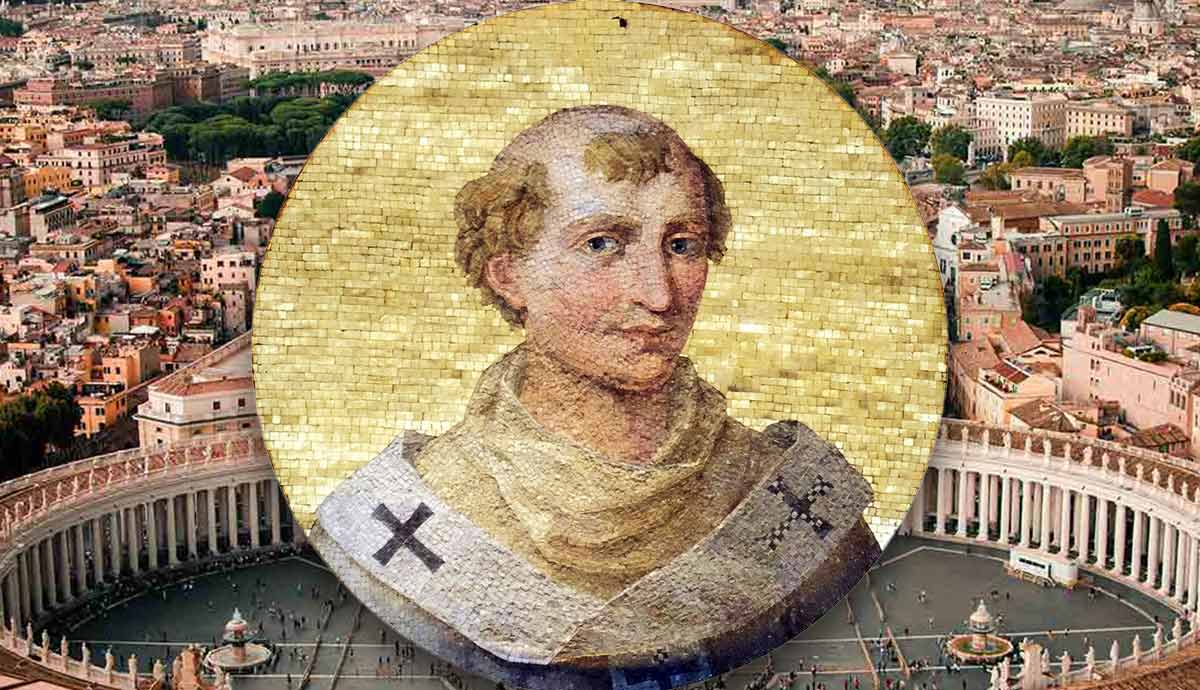
During a period known by later historians as the Saeculum Obscurum (the Dark Age), the Papacy was in a time of crisis. Following the Carolingian Empires disintegration, the Holy See became entangled in the petty politics of the Roman nobility. This period was dominated by those who saw the Papacy as a way to enrich themselves and their families. Through much of the 10th and 11th centuries, the Counts of Tusculum had a firm grip on the Papacy. From this ambitious family came one of the most scandalous popes in church history, Benedict IX.The Young PopePope Benedict IX, 19th-century portrait. Source: Wikimedia CommonsTheophylact was young when he became pope in 1032 and took the name Benedict IX, but it is debated exactly how young. Rodulfus Glaber claims in his Historium Libri Quince (The Five Books of the Histories) that Benedict was only ten years old when elevated, but that is most likely a gross exaggeration. While his birth year is not known exactly, he was likely born around 1012, making him about 20 years old when he became Pope. Still young, but not a child.He was a nephew of the two previous popes, Benedict VIII and John XIX. His father, Alberic III of Tusculum, was said to have secured the position for his son solely through bribery. Vast sums of gold and silver were handed out in order for young Theophylact to be chosen as pope.It is important to know that this occurred before the process of the conclave as we understand it today existed. The pope was not chosen by the cardinals of the Church. Rather, it was a delicate negotiation between the nobility of Rome, the people of Rome, and other interested parties such as the Holy Roman Emperor.A Scandalous PontificatePope Victor III, 1879. Source: Wikimedia CommonsBenedict did not appear to have the constitution of a holy man. Desiderius of Monte Cassino (later Pope Victor III) says that his time as pope consisted of rapes, murders, and other unspeakable acts. Saint Peter Damian said of Pope Benedict IX that he routinely engaged in sodomy, bestiality, and orgies. Ferdinand Gregorovius, in his work History of the City of Rome in the Middle Ages, called Benedict a demon from hell in the disguise of a priest.Whether there is some truth to these accusations or they were simply an attempt to smear a political opponent is difficult to know for certain. What we can say for certain is that there was enough discontent during his rule that there was an attempt on Benedicts life in 1036 by a faction of the Roman nobility. The assassins tried to kill him in St. Peters Basilica, but he survived the attempt and fled the city.ExileCrown of Emperor Conrad II, the Iron Crown of Lombardy. Source: Wikimedia CommonsUnfortunately for Benedict, the situation was not much better outside Rome. Northern Italy was in open rebellion against the Holy Roman emperor, turning the whole area into a war zone.Benedict was on the run until 1037, when he had an audience with the emperor, who had just recently put down the Italian rebellion, and with the Emperors military support, he was returned to Rome to resume his pontificate.But the emperor did not do this for free. The first thing that Emperor Conrad had Benedict do upon returning to Rome was to excommunicate Heribert, the archbishop of Milan, who had led the Italian rebellion against him.Far from being the undisputed master of the Catholic Church like he is today, the pope in the 11th century was one of many power centers in the Christian world, and often had to take orders.First ReturnThe Vatican today, photo by Caleb Miller. Source: UnsplashOnce again secure in the city, Benedict resumed business as usual. However, for Benedict, that business was less holy than might be expected for the Pope.In the words of Ferdinand Gregorovius, for the next seven years, he was unceasingly occupied in plundering, murdering, and otherwise oppressing the Roman people.Eventually, another faction formed against Benedict, and he was once again expelled from the city in 1044. Lest you think the Roman nobility suddenly began to care about morality, it was far more likely that Benedict overstepped his bounds and upset the delicate balance of feudal power. In any case, Benedict was again driven from Rome, but this time the Romans installed a new pope in his place, Sylvester III.Sylvester is often listed as an antipope as Benedict was not formally deposed from the Papacy, though Sylvester held Rome and appeared to exercise power as de facto Pope, if not de jure. In any case, Benedict was not away for long. He fled to his familys power base of Tusculum and, within 50 days, he returned to Rome with an army at his back and retook the Papacy.Sylvester fled to Sabina, still claiming to be the true pope.Selling the PapacyPope Gregory VI, 1493. Source: PicrylIn 1045, shortly after his return to the Papacy, Benedict began to have doubts about the clerical life he saw before him. At this point, he was still a young man, approximately 33 years old, and a woman (whose name was not written in the historical record) had stolen his heart, and he wanted to marry her. That woman just so happened to be his cousin.With all of his doubts, he went to his godfather, John Gration. Benedict asked his godfathers advice, and after careful deliberation, John suggested that Benedict could resign from the Papacy. But that would leave the question of who would replace Benedict.Benedict made it known that he would like to be repaid for his expenses, and John dutifully provided Benedict with an estimated 2,000 pounds of gold.Having sold the papal crown for a kingly sum of money, Benedict went to live the debaucherous life of a young nobleman in the countryside. In the words of Desiderius of Monte Cassino, Devoted to pleasure he preferred to live rather like Epicurus than like a bishop he left the city and he took himself to one of his castles in the country.The Council of SutriEmperor Henry III, 11th century. Source: Wikimedia CommonsThe new pope took the name Gregory VI, and immediately found himself having to deal with the antipope Sylvester III, who had never given up his claim to be the true successor of Peter.Shortly into his retirement, however, Benedict found himself questioning his decision to resign the papacy. Perhaps secular life wasnt all he had hoped it would be, or perhaps he missed the power he once held. Perhaps his money had simply run out. His cousin may have also rejected his marriage proposal, invalidating the whole reason he sold the Papacy in the first place.For whatever reason, Benedict reasserted his claim to the Papacy. This left his godfather having to deal with a second antipope.Different factions in Rome were pledged to all three papal candidates, and violence between them was becoming endemic. Something needed to be done to restore order to the chaos that was engulfing the center of Catholicism.Enter Holy Roman Emperor Henry III, who crossed the Alps and entered Italy in 1046 to restore order.He held the Council of Sutri to resolve the question once and for allalthough Gregory was the only claimant to show up to receive the emperors judgement.Henry declared that Sylvester and Benedict were both illegitimate, but so was Gregory, as he had only ascended to the See of Rome through open simony. All the papal candidates thus declared illegitimate, Henry named the German bishop of Bamberg, Suidger, Clement II.Second ReturnRobes of Pope Clement II. Source: Wikimedia CommonsUnfortunately for the stability of the Papacy, Clement died after less than a year.Benedict was accused of poisoning Clement, but that is most likely not the case. Clement was old when he became pope, and he had been traveling, so it is entirely possible he died of natural causes.In any case, Benedict seized the opportunity presented by the Pontiffs premature passing and marched on Rome. He took the city and ruled it as de facto pope for eight months before he was again driven out of the city by a detachment of the emperors troops.Recent history repeated itself, though, and his successor, Damasus II, only reigned for less than a month before he died of fever on August 9, 1048. However, Benedict was either unwilling or unable to take advantage of the chaos this time.Later LifeAbbey at Grottaferrata. Source: Wikimedia CommonsSo, what did Benedicts post-papal life look like?There are two divergent traditions on the direction of Benedicts later life. One is that he remained the pleasure-seeking hedonist, never giving up his claim to the Papacy.However, according to Luke, the seventh abbot of Grottaferrata, Benedict desired repentance in his later life. The Abbot said, He who then presided over the Apostolic See, a mere youth, was a slave to pleasure, and through human frailty had fallen into sin. At last, turning from passion and seeking absolution for what he had done amiss, he wished to have our father to reconcile him and intercede for him.Furthermore, until 1713, it was attested that there was a piece of artwork in the abbey that shows a cowled monk holding in his hand a tiara which he was presenting to our Lady. Beneath was an inscription, Benedictus IX, suggesting that Benedict did renounce his claim to the Papacy and lived out his life in Grottaferrata.Did Benedict show true repentance for his actions, or was this all wishful thinking by those who knew it would make a great story? As with so many questions in history, we will never truly know.LegacyPopes Mitre, 19th century. Source: Wikimedia CommonsThe story of Benedict IX and his many times as pope is a microcosm of the trouble with the Papacy itself in the 10th and 11th centuries. Rather than a source of spiritual authority and guidance, the office of the Bishop of Rome was coveted for its secular power.The pope was a king like any other in Europe, thanks to the Papal States, that chunk of central Italy that was gifted to the pope by Charlemagne and remained under Papal authority until the unification of Italy in the mid-19th century. In the Medieval Period, land was wealth, and securing a relative or an ally as the Pope was an excellent way to enrich your family.Because of the unique nature of succession to the office, the seat could change hands multiple times, leading to fierce battles over which family or faction would be able to siphon off the wealth of the Papal States into their own coffers. In addition to the chaos this caused, it meant that men were elevated to the Papacy who were more preoccupied with excess than the Eucharist.Monument to the popes buried in the Vatican. Source: Wikimedia CommonsWhile the legacy of the Saeculum Obscurum in general, and Benedict IX in particular, could have been the dissolution of the Papacy as an institution, that is not what happened.By being at the absolute nadir of Papal history, Benedict directly influenced a series of reforms by later popes. The chaos of his reign made it absolutely clear that something needed to change. In 1059, the College of Cardinals was established and designated as the sole electors of the pope in an attempt to remove the influence of the Roman nobility. There was a crackdown on simony, the act of buying or selling office, a huge problem in the Church, and brought into focus by the absurdity of the Papacy itself being sold.So, while the Catholic Church may wish to forget that Benedict IX was once pope, he had a huge impact on how the Church became what it is today. By embodying everything that a pope should not be, he made the case for reform impossible to ignore.









 English
 Arabic
 French
 Spanish
 Deutsch
 Turkish
 Dutch
Dutch
 Italiano
 Russian
 Romaian
 Portuguese (Brazil)
 Greek
Greek