• Reddit addresses bot problems, ID verification
    Reddit officially addresses bot problems, ID verification stance Reddit CEO Steve Huffman caused a stir when he told a tech show that the platform was considering some form of ID verification to combat bots. Now Huffman has officially addressed the issues in a message to Reddit users posted right on the platform itself. Huffman says...
    0 التعليقات 0 المشاركات 88 مشاهدة
  • The best power station deals in the Amazon Big Spring Sale: New lows on Jackery, Anker, and Bluetti
    Best Amazon Spring Sale portable power station deals 2026: Anker, Bluetti, and Jackery Get $1,000+ off Anker right now.  By ...
    0 التعليقات 0 المشاركات 77 مشاهدة
  • 35 deals under $50 that are live during Amazons Big Spring Sale
    35 best Amazon Spring Sale deals under $50: Amazon devices, earbuds, video games Check out the best budget-friendly finds from Amazon's first major sale of 2026.  By ...
    0 التعليقات 0 المشاركات 88 مشاهدة
  • Melania Trump brings humanoid robots to the White House
    Robot escorts Melania Trump to White House tech function You wouldn't think that being able to stride through the White House's East Wing without stumbling would make headlines. But as Melania Trump made her way down the red carpet lined hallway to a classical music arrangement, the First Lady was flanked not by the typical Secret...
    0 التعليقات 0 المشاركات 79 مشاهدة
  • The 21 best deals under $25 in Amazons Big Spring Sale — save on Lego, Fire Sticks, and more
    21 best Amazon Big Spring Sale deals under $25 in 2026: Lego, Fire Sticks, and more Fire TV Stick 4K Plus, select Lego sets, and more are already on sale for under $25 at the retailer.  By ...
    0 التعليقات 0 المشاركات 93 مشاهدة
  • Amazon is clearing out last-gen tech for the Big Spring Sale: Save up to $300
    Best Amazon Spring Sale Save past-gen tech deals 2026: Apple and Sony on sale Apple's M4 MacBook Air is still in stock — and way cheaper than its M5 replacement. All products featured here are independently selected by our editors and writers. If you buy something...
    0 التعليقات 0 المشاركات 82 مشاهدة
  • The best Apple Watch deals to shop during Amazons Big Spring Sale — save on Series 11 and SE 3 models
    Best Amazon Big Spring Sale Apple Watch deals 2026: Save on Series 11 and SE 3 models The newest watches are included in the mix, as well as some steep discounts on last-generation models.  By ...
    0 التعليقات 0 المشاركات 93 مشاهدة
  • ALLTHATSINTERESTING.COM
    The Story Of Adolf Hitlers Death And The Calamitous Days That Preceded It
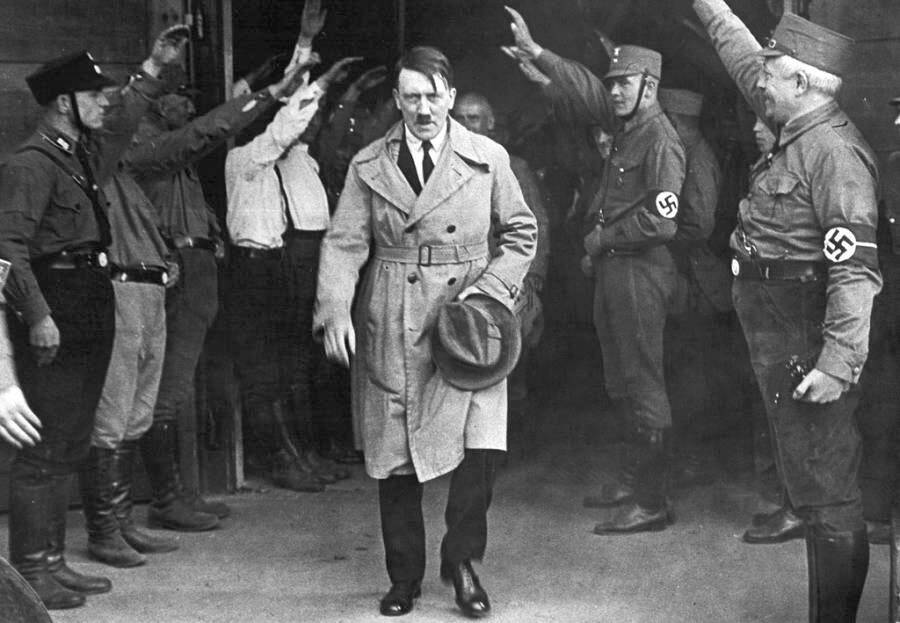
    Adolf Hitlers death brought an abrupt end to one of the darkest eras in human history. On April 30, 1945, the Fhrer took his own life in his Berlin bunker as the Soviets closed in ending the reign of the Nazis.Before his death, Hitler had seen himself as the savior of Germany. Following the countrys humiliating defeat in World War I, Hitler had promised to return Germany to a position of strength. The Great Depression, which hit Germany particularly hard, provided fertile soil for the Nazis rise to power.Corbis/Getty ImagesAdolf Hitlers death remains one of the most heavily examined moments in history. Here, Adolf Hitler is saluted by Nazi Party members after a 1935 speech.While writing Mein Kampf in 1924, Hitler claimed that Germanys problems could be pinned on two enemy groups: countries like France who exacted punitive measures after World War I and Jewish people, who polluted the purity of the so-called master race of white Aryans.Hitler rode a wave of domestic discontent to power and became Chancellor of Germany in 1933. Then, he quickly established himself as a dictator. His Nazi Party banned other political parties and suppressed all opposition.Wielding power, Hitler invaded Poland on September 1, 1939, triggering the outbreak of World War II in Europe. Over the next several years, he would invade other European countries, execute political rivals at home, persecute Germanys Jews, and plot the formation of horrific concentration camps. But by April 1945, the tides had turned. Germany was mere weeks away from defeat. And Adolf Hitlers death was just around the corner. The Days Leading Up To Adolf Hitlers DeathPublic DomainThe Soviet victory in the Battle of Stalingrad was a turning point for the Red Army. Germany would remain on the defensive until its defeat in 1945.In 1945, Germany was on its knees and few were surprised. The writing had been on the wall for two years, ever since the Soviet Union defeated the Germans at the Battle of Stalingrad in 1943. The next year, Allied forces landed at Normandy and began pushing the Nazis back toward Berlin.By July 1944, a handful of German military commanders were plotting to assassinate Hitler. By casting aside the dictator, they hoped to negotiate favorable peace terms. But their assassination attempt failed, and Hitler executed 4,000 Germans whom he believed were involved. As Soviet troops advanced toward Berlin in early 1945, other Allied forces were also closing in from the west. Meanwhile, Hitler seemed to vanish. American military forces initially believed that Hitler was hiding away in the Bavarian Alps at his fortress known as the Eagles Nest. U.S. ArmyAmerican troops posing at Adolf Hitlers retreat in the Bavarian Alps, known as the Eagles Nest.In March 1945, American forces in southern Germany heard reports that as many as 300,000 Nazi loyalists were hiding in the mountains, supplied by an underground weapons factory. Dwight D. Eisenhower, then serving as Supreme Commander of the Allied Forces, feared that they would carry out a guerrilla campaign and drag the war out for years rather than surrender.In reality, the Nazi propaganda machine was working overtime to hide the true whereabouts of Hitler as the war effort in Germany fell apart. Minister of Propaganda Joseph Goebbels took to the radio to declare that Hitlers Werewolves would defend the dictator to the death: We Werewolves consider it our supreme duty to kill, to kill, and to kill.Meanwhile, Hitler had never left Berlin: he had been hiding in his bunker for most of 1945. When Allied forces captured Wehrmacht officer Kurt Dittmar, he revealed that the Fhrer was still in Berlin. Eerily, he also predicted how Hitler would die: Hitler will either be killed there or commit suicide.In the coming days, Dittmars conjecture would prove to be true.The Invasion Of Berlin And Hitlers Move UndergroundGerman Federal ArchivesThe Fhrerbunker in Berlin, just before Soviets destroyed it in 1947.With the Red Army storming in from the east and other Allied forces moving in from the west, Adolf Hitler realized the war was lost.On January 16, 1945, Hitler retreated to his underground bunker, which stood more than 50 feet below the Chancellery in Berlin. Known as the Fhrerbunker, the 2,700-square-foot shelter had a well to provide fresh water and generators to supply electricity. From this hideaway, surrounded by luxurious furniture and expensive paintings, Hitler directed the war from underground. The reinforced concrete bunker withstood Allied bombing raids and protected Hitler and other important Nazi leaders like Joseph Goebbels.But it didnt protect Hitler from other issues like poor health and early aging. After years of warfare, Hitlers hair had turned gray. A tremor appeared on his left side and his eyesight had grown poor. Just 55, Hitler appeared much older. However, his appearance was soon the least of his concerns. By April 1945, the Wehrmacht had collapsed. The Red Army reached Berlin with a force of 2.5 million soldiers who were hungry to hunt down the man who was responsible for so much suffering.The end had finally come. His Final Days In The FhrerbunkerGerman Federal ArchivesAdolf Hitler meets with Admiral Karl Dnitz in the Fhrerbunker. Dnitz would briefly become the head of state of Germany after Hitlers death.Adolf Hitler dismissed the idea of trying to escape as Soviet troops entered Berlin. He feared capture more than death, especially since he had heard a rumor that the Soviets wanted to lock him in a cage and parade him through Berlin. The humiliation was more than he could bear.But the Soviets were getting closer. As the end of April drew near, the Red Army was within 300 yards of the Fhrerbunker.Still, Hitler fought on. He ordered German troops to fight to the death, issuing orders from the Fhrerbunker that promised a death sentence for any military commanders who retreated from the Soviet advance.But behind the scenes, Hitler recognized the hopelessness of the situation. On April 22, Hitler called two of his secretaries, Christa Schroeder and Johanna Wolf, into his office. He received us in his room looking tired, pale, and listless, Schroeder reported. Hitler told his secretaries, Over the last four days the situation has changed to such an extent that I find myself forced to disperse my staff. As you are the longest-serving, you will go first. In an hour a car leaves for Munich.Privately, the Fhrer began to put his affairs in order. But just before Hitlers death, he decided to marry his longtime mistress Eva Braun.The Fhrer Weds Eva Braun Just Before His DeathDeutsches BundesarchivEva Braun and Adolf Hitler at Berghof with his dog Blondi, who he killed in 1945.One day before Adolf Hitler died, the Fhrer decided it was time to get married. On April 29, 1945, he wed Eva Braun, his mistress of 16 years.Braun and Hitler had first met in 1929 when 17-year-old Braun was working in a Munich photography studio. Braun described the leader of the Nazi Party as a gentleman of a certain age with a funny mustache.Throughout their 16 years together, Hitler hid his relationship with Braun from the outside world. But she was still devoted to him. When Hitler survived an assassination attempt in 1944, Braun vowed, From our first meeting I swore to follow you anywhere even unto death I live only for your love.Keystone/Getty ImagesEva Braun watches over Adolf Hitler while he naps.Braun joined Hitler in his bunker in April 1945. With the Red Army steps away, the two exchanged wedding vows underground. Before their wedding, Hitler had initially ordered Braun to leave. But she refused and promised fidelity to him until the end. This wasnt surprising, especially since Braun had once told her friends, Better that ten thousand others die than he be lost to Germany.Braun would follow Hitler anywhere even into death. How Did Hitler Die? Inside His Decision To End His LifeNational ArchivesAdolf Hitler and Italian dictator Benito Mussolini in June 1940.With Braun by his side, Adolf Hitler learned about Benito Mussolinis execution and how his corpse was defiled by angry citizens. Vowing to avoid the same fate, the Nazi dictator was determined to die on his own terms: he would die by suicide and his remains would be burned.On April 29, Hitler began preparing for his death. He ordered his bodyguards to destroy his personal papers. He also told a doctor to test a cyanide capsule out on his beloved dog Blondi to make sure it worked. Not only would killing her confirm the pills efficacy for Hitlers suicide, but it would also ensure that Blondi would not fall into the hands of the Soviets after Hitler was gone. Still, after the dog died, Hitler was inconsolable. The next morning, April 30, a staff member overheard Braun crying, I would rather die here. I do not want to escape. By that point, escape wouldve been nearly impossible anyway the Red Army was nearly on top of the Fhrerbunker. Hitler ate his final meal pasta with tomato sauce as Goebbels tried to convince the Fhrer not to kill himself. Doctor, you know my decision, Hitler said to Goebbels. There is no change! You can of course leave Berlin with your family. Goebbels would not and neither would his family. Not long after Hitlers suicide, Goebbels and his wife would kill themselves and their own children as well. Hitler assembled his personal staff and shook everyones hand. Braun also said her goodbyes. To one of Hitlers secretaries, Braun said, Please do try to get out. You may yet make your way through. And give Bavaria my love.The Death Of Adolf Hitler And Eva Braunullsetein bild/Getty ImagesAdolf Hitler surveys the ruins of Berlin in late April 1945, shortly before he killed himself.While misinformation would later be spread about how Adolf Hitler died, he made no secret of his plans to end his own life. And according to witnesses, Hitler was also very specific about how he was going to kill himself.In a calm voice, Hitler told his valet, SS officer Heinz Linge, I am going to shoot myself now. You know what you have to do.Hitler then gave a Nazi salute and announced, It is finished, goodbye.Deep inside the bunker, Hitler and Braun locked themselves in a private room on the afternoon of April 30, 1945. Eva took a cyanide capsule and waited for it to kill her. Hitler also swallowed a cyanide pill then shot himself with a pistol. Outside the room, Hitlers loyalists waited for the gunshot. Suddenly there is the sound of a shot, so loud, so close, that we all fall silent, said Hitlers secretary Traudl Junge. It echoes on through all the rooms.When Junge entered the room with Linge, she said, I saw Hitler slumped by the table. I didnt see any blood on his head. And I saw Eva with her knees drawn up lying next to him on the sofa wearing a white and blue blouse, with a little collar: just a little thing.Shortly after Adolf Hitlers death, his Fhrerbunker loyalists carried their bodies to a small garden just outside the bunker. The sounds of battle surrounded them, including the sharp retort of Soviet small arms fire. As Hitler had ordered, his body would be burned and Brauns would be burned as well. Goebbels and Bormann doused the bodies in petrol. Alongside the bunker guards, they lit the pyre and quickly withdrew to safety. Hitlers inner circle wanted to completely destroy his body. Even though there was no chance that Hitlers enemies would kill him now, his loyalists didnt want Hitlers death or his remains to be used for propaganda purposes. But despite their efforts to burn the entire corpse, a small portion of Hitlers jaw with a few disease-ridden teeth remained.Documents would eventually reveal that Soviet troops indeed recovered Hitlers remains. But in the final days of war and for decades after rumors swirled that Hitler still lived.Why Rumors Endured That Hitler Survived The WarU.S. Army/Wikimedia CommonsA newspaper declared Hitler dead on May 2, 1945. But many details about how Hitler died remained under wraps.On May 1, 1945, Karl Dnitz, a German admiral who briefly served as the countrys head of state, prepared to address the German people on the radio and tell them about Adolf Hitlers death.But Dnitz was hesitant to tell the truth about how Hitler died. So instead of admitting that Hitler killed himself, Dnitz claimed that the Fhrer had died in battle, fighting at the head of his troops.Without a body and with little official word regarding Hitlers death, conspiracy theories quickly began to spread. Some claimed that Hitler had escaped and was living in a cave in the Italian Alps. Others reported seeing the dictator at a French casino. The Soviets added to the confusion by publicly stating in June 1945 that they had not found Hitlers remains suggesting to many that he still lived. And before long, many of the top brass of the Allied powers were suggesting that the Nazi dictator was still alive and had escaped to South America. From secrecy to disinformation, many people in power laid a fertile ground for disbelief in the official story which still lingers to this day.At one point, U.S. officials even tried to hunt down Hitler in Argentina, where he was once rumored to be living in an underground hideout. FBI Director J. Edgar Hoover personally investigated the report, finally concluding that no serious indication has been received that Adolf Hitler is in Argentina.In 2018, French scientists were finally able to prove that Hitlers death took place in 1945. By analyzing remains of the dictators teeth preserved by the Soviets the scientists conclusively identified the remains as authentic.Though more than seven decades have passed since Hitlers demise, it remains one of the most heavily examined and controversial deaths of all time.The details are ever more haunting when considering Hitlers horrific legacy. As one historian wrote, Never in history has such ruination physical and moral been associated with the name of one man.After learning about Adolf Hitlers death, read about the Hitler descendants who vow to end his bloodline. Then, take a look at some of the wildest conspiracy theories about Hitlers death.The post The Story Of Adolf Hitlers Death And The Calamitous Days That Preceded It appeared first on All That's Interesting.

    0 التعليقات 0 المشاركات 17 مشاهدة
  • ALLTHATSINTERESTING.COM
    The Story Of Mary Jane Kelly, Jack The Rippers Most Gruesome Murder Victim
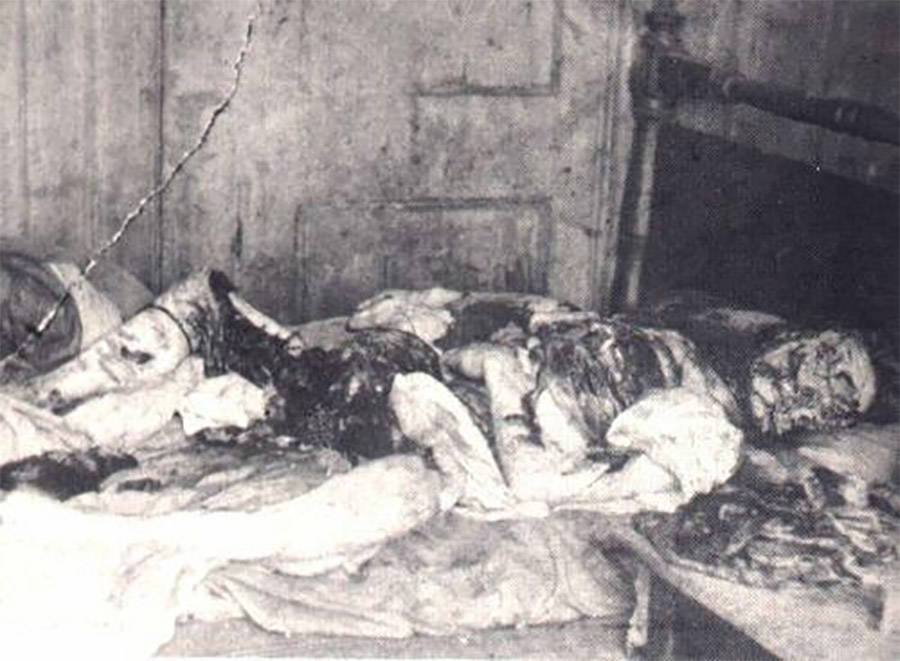
    Wikimedia CommonsThe mangled corpse of Mary Jane Kelly.Jack the Rippers last victim was as mysterious as the notorious serial killer himself. Mary Jane Kelly, generally considered the fifth and final victim of the Victorian serial killer, was found dead on November 9, 1888. But little of Mary Jane Kellys life is known and even then, it is nearly impossible to verify any of it.Even her name was something of a mystery. In addition to Mary Jane Kelly, she went by Maria Jeanette Kelly, Fair Emma, Ginger, Dark Mary, and Black Mary. There is little documentary evidence to confirm or disprove any claims about Kellys life, most of which come from her last lover, Joseph Barnett.What can be confirmed is that Mary Jane Kellys mutilated body was discovered in a room she leased on Dorset Street in East London in the Spitalfields area, a slum frequently occupied by prostitutes and criminals. She is considered the final canonical victim of Jack the Ripper, and her murder was certainly the most gruesome.Mary Jane Kellys Murky BeginningsMuch of the information on Mary Jane Kellys background comes from Joseph Barnett, her most recent lover before her death.He shared what Kelly had told him of her life, but that isnt saying much, given that Kelly herself was a rather untrustworthy narrator. Her stories are full of contradictions and embellishments, which have, over the years, been subjected to a long-running game of telephone. Still, Barnetts account of Kellys life is the only direct source of information on her.Public DomainAn illustration of Mary Jane Kelly in the November 24, 1888 edition of the Penny Illustrated Paper.According to Barnett, Kelly was born in Limerick, Ireland around 1863. She never gave the exact date of her birth, nor did she clarify if she was referring to Limerick, the city or Limerick, the county. In either case, the Kelly family moved to Wales when Mary Jane was a child.Her father was supposedly an ironworker named John Kelly, and details of her mother are unknown. One of six or seven siblings, she moved to Wales with her family when she was a child.To one acquaintance, Kelly claimed that her parents had disowned her why, no one knows but that she remained close to her sister. To Barnett, Kelly said her family had been moderately wealthy, and her landlord confirmed that she would occasionally receive letters from someone in Ireland.Kelly later moved to Cardiff, following the death of her husband, a coal miner with either the last name Davis or Davies. With no financial support, she lived with her cousin for a time and began selling herself on the streets. Then, in 1884, she made her way to London where, according to Barnett, she worked at an upscale brothel.Public DomainA November 17, 1888 Illustrated Police News sketch depicting the discovery of Mary Jane Kellys body.Conflicting claims also suggested that Kelly had been an intelligent and scholarly woman, while others insinuated that she may have in fact been illiterate.Even trying to get an understanding of what Mary Jane Kelly looked like can be difficult from a historical perspective. She was reportedly either blonde or red-headed, but given the nickname Black Mary, she could have just as likely had dark hair. That said, she also had the nickname Ginger, so it really isnt possible to say which was true.As author R. Michael Gordon writes in his book, Alias Jack the Ripper, A reporter from the Press Association said that a friendship with a French woman from the affluent Knightsbridge neighborhood was the catalyst that led to Kellys death.Kelly and the French woman would drive about in a carriage and made several journeys to the French capital, and, in fact, led a life which is described as that of a lady.'But for some reason, and its unclear why, Kelly wound up drifting into the dodgier East End.Mary Jane Kellys Relationship With Joseph BarnettMary Jane Kelly allegedly started drinking heavily once she moved to the East End and found herself living with a married couple for a few years. She left to live with one man and then another man.An anonymous prostitute reported that in 1886, Mary Jane Kelly was living at a Cooleys Lodging House, a cheap home where multiple people typically share rooms and common spaces, in Spitalfields when she met 28-year-old fish porter Joseph Barnett.Wikimedia CommonsThe room at 13 Millers Court where Mary Jane Kelly would meet her tragic end.She had only met Barnett twice when the two decided to move in together on April 9, 1887. They were kicked out of their first place in Little Paternoster Row, however, for not paying rent and for getting drunk, and moved to the fatal room on Dorset Street: 13 Millers Court. It was dirty and damp, with boarded up windows and a padlocked door.What happened after the move to Dorset Street is even murkier. Its said that Kelly was no longer prostituting herself, but when Barnett lost his job, she returned to it. When Kelly wanted to share the room with a fellow prostitute, she got in a fight with Barnett over it, and he subsequently left.Although Barnett no longer lived with Kelly, though, he did visit her frequently. And tragically, he had even been with her the night before her tragic demise thanks to Jack the Ripper, who had already murdered four women: Mary Ann Nichols, Annie Chapman, Elizabeth Stride, and Catherine Eddowes.The Gruesome Murder Of Mary Jane Kelly At The Hands Of Jack The RipperOn November 8, 1888, Barnett visited Kelly for the last time. He stayed with her for roughly an hour, between 7:00 p.m. and 8:00 p.m., while she was spending time with a friend named Maria Harvey. Barnett occasionally would give Kelly money during his visits, but on this night he had none to give.He and Harvey left the apartment around the same time, with Barnett returning to his lodging house to play cards until roughly 12:30 a.m. Shortly after, Mary Jane Kelly was seen at the Ten Bells public house with another woman, Elizabeth Foster, and she was later seen drinking with two others at the Horn of Plenty pub on Dorset Street.Her whereabouts for the rest of the evening are largely unknown. Some say they saw her drunk with another prostitute at around 11:00 p.m., and a neighbor claimed to see her with a short man in his thirties, while others said Kelly could be heard singing in the wee early hours the next morning.Sometime before noon on November 9, 1888, Kellys landlord sent his assistant to collect Kellys rent. When he knocked, she didnt respond. Looking through the window, he saw her bloody and mangled body.The police were notified, and once they arrived, the door was forced open. The scene was excruciating.Wikimedia CommonsPolice photograph of Mary Jane Kellys body.In the practically empty room, Mary Jane Kellys body was in the middle of the bed, her head turned. Her left arm, partially removed, was also on the bed. Her abdominal cavity was empty, her breasts and facial features were cut off, and she was severed from her neck to her spine. Her dismembered organs and body parts were placed in different areas around the room, and her heart was missing.The bed was covered in blood and the wall by the bed was splashed with it.Mary Jane Kelly was about 25 years old when she was murdered, the youngest of Jack the Rippers victims. She usually wore a black silk dress, and often a black jacket, looking shabby genteel in her attire, but generally neat and clean.She was buried on November 19, 1888, in East London at a cemetery called Leytonstone.After reading about Mary Jane Kelly, learn more about the victims of Jack the Ripper and meet some of the most compelling Jack the Ripper suspects, including Polish barber Aaron Kosminski.The post The Story Of Mary Jane Kelly, Jack The Rippers Most Gruesome Murder Victim appeared first on All That's Interesting.

    0 التعليقات 0 المشاركات 17 مشاهدة
  • ALLTHATSINTERESTING.COM
    The True Story Of Lewis Nixon And The Band Of Brothers He Served With During World War II
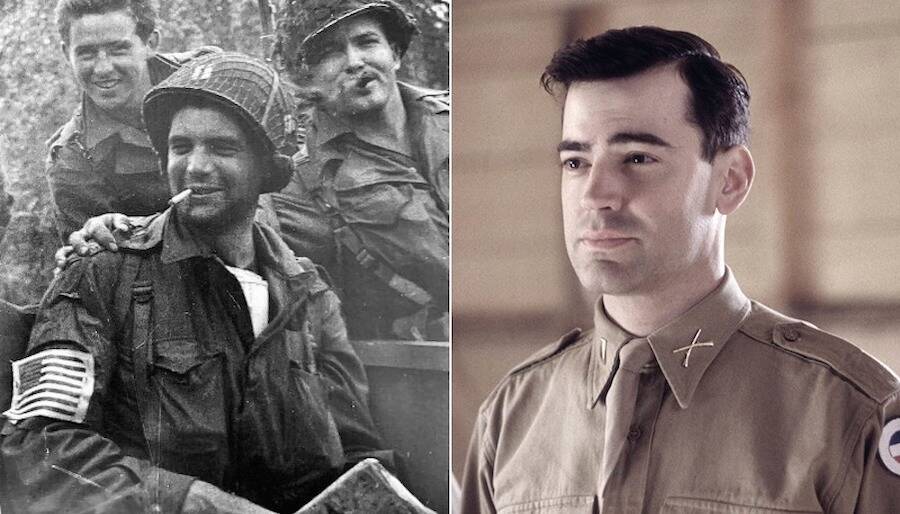
    Left: Pinterest; Right: DreamWorksActor Ron Livingston (right) portrayed Lewis Nixon (left, center) in Band of Brothers.Lewis Nixon III has become one of the most storied figures in the Allied invasion of Europe during World War II. A member of the 101st Airborne Division, he parachuted into Nazi-occupied France and joined assaults like the Battle of the Bulge and Operation Market Garden to help thwart the Axis in Europe.As chronicled in HBOs Band of Brothers, Lewis Nixon served under Richard Winters, whom he met in cadet school. They soon formed a close bond, even though they were quite different in some key ways. Nixon was a hard-drinking, well-traveled Ivy Leaguer, whereas Winters had never left Pennsylvania before Basic Training and never drank.But these dissimilar men endured some of the most harrowing battles in Europe and forged a friendship that lasted well after the war ended.I still regard Lewis Nixon as the best combat officer who I had the opportunity to work with under fire, said Winters. He never showed fear, and during the toughest times he could always think clearly and quickly.This is the true story of Captain Lewis Nixon III that Band Of Brothers only began to tell.Lewis Nixons Early LifeLewis Nixon was born on September 30, 1918, in New York City. He was the eldest of three children. His little brother Fletcher Ryer died as an infant in 1922, leaving only Lewis and his sister Blanche. Raised by Stanhope Wood Nixon and Doris Ryer, the two children traveled a lot and lived wealthy, privileged lives.Nixons grandfather was a shipbuilder and the first to bear his name. A love of the water seemed to run in the family, as Nixon was only seven years old when he competed in a model yacht regatta in Central Parks Conservatory Lake on May 22, 1926.When not in Manhattan, the bicoastal Nixon was in Montecito, California throughout his youth. He was also fortunate enough to travel across Europe before war fractured the continent, and experienced the cultures of Germany, England, and France before Adolf Hitler rose to power. Exceedingly smart, Nixon graduated from the Cate School in Santa Barbara before being accepted into Yale University. He studied there for two years, but life ultimately had other plans. Shortly after marrying his first wife, he enlisted in the U.S. Army in Trenton, New Jersey, on Jan. 14, 1941. His life would change forever.Easy Companys Band Of Brothers Prepare For WarBefore the year was up, the newlywed soldier underwent Basic Training at Camp Croft in South Carolina. While Richard Winters had done the same, the two would only meet in Army Officer Cadet School at Fort Benning in Georgia. Both men had become Second Lieutenants before temporarily parting ways.Nixon had been ordered to Fort Ord, California, to serve a Military Police unit. He reunited with Winters after volunteering to join the Paratroopers. Both were assigned to Company E, 2nd Battalion (or Easy Company) of the 506th Parachute Infantry Regiment at Camp Toccoa, Georgia where they met Herbert Sobel.As dramatized in Band of Brothers, Sobel was 1st Lieutenant and in command of Easy Companys airborne training. They were some of the first U.S. soldiers to receive it. Sobels strict leadership saw him demoted, while Winters was made First Lieutenant by October 1942 and Nixon made commander of 2nd Platoon.In September 1943, the 506th Parachute Infantry Regiment was deployed to Aldbourne, England, to prepare for the invasion of Normandy.Lewis Nixons Heroics In Nazi-Occupied EuropeThe Allied invasion of Normandy began in the early morning hours on June 6, 1944. Nearly 160,000 Allied troops would cross the English Channel into France beginning at dawn, with units like the 101st Airborne Division tasked to clear key landing sites to prepare for their arrival. Wikimedia CommonsU.S. troops landing on Utah Beach following Lewis Nixons retrieval of a key map detailing German positions.Winters parachuted into Normandy around 1 a.m. and lost his rifle in the process. He managed to locate his unit, however, when he learned that Easy Companys aerial headquarters had been shot down and he was now in charge. With 13 men, he led an assault on 50 Nazis firing artillery at key exits on Utah Beach.Known as the Brcourt Manor Assault, his approach would be taught at West Point for decades. It was here that he retrieved a map detailing German defensive positions on the coast. After parachuting into Normandy himself, Nixon located Winters and ran three miles to Utah Beach to run it up the chain of command.Without the service of these two men, countless additional Allied lives may have been lost during the Normandy invasion. Winters was promoted to Captain, while Battalion headquarters was so grateful for the intelligence that they deployed the first two tanks to land on Utah Beach to find and assist the 101st.Wikimedia CommonsEasy Company in Austria following the war.The effort to recapture Holland from the Nazis was christened Operation Market Garden and saw Easy Company parachute into the town of Son in September. It was here that Nixon was nearly killed when a stray bullet hit his helmet only to graze his head and exit from the other side.While Lewis Nixon would be promoted to Captain and Regimental S-2, his alcoholism saw him demoted before the war was over. He was notified by telegram that his wife was divorcing him and his hangovers became increasingly debilitating. As Winters recalled: Nixon was a hard man to get out of the sack in the morning. @EasyCompany506t/TwitterLewis Nixon with his beloved stash of Vat 69 whiskey.Nonetheless, Nixon served bravely in key skirmishes like the Battle of the Bulge in Bastogne, Belgium. He and Winters held Allied ground against 15 German divisions that had cornered the 101st Airborne for nearly a week in December 1944.After fighting across France, Holland, and Belgium, Easy Company had slowly begun to encroach on Germany. Lewis Nixon and Dick Winters arrived at the Kaufering IV concentration camp in Landsberg am Lech in Bavaria to witness the human atrocities with their own eyes on April 28, 1945.The 12th Armored Division had arrived a day prior, but Nixon, Winters, and the 101st Airborne Division were met by 500 charred corpses still riddling the grounds. Uniformed prisoners stumbled around on weakened feet, with Nixon and Winters requiring a few moments to realize what sort of facility they had uncovered.Aware of the incoming Allied troops, Nazi officers had torched the camp barracks and left their malnourished inhabitants to die. As chronicled in the Band of Brothers Why We Fight episode, the liberation answered a question Winters had often asked himself as survivors begged for help and pleaded to be rescued.Two days later, Adolf Hitler committed suicide in his Berlin Fhrerbunker. Eight days after that, Winters was promoted to Major and ordered to recapture Berchtesgaden, the dictators Eagles Nest in the Alps. Easy Company did just that on May 5, and even uncovered Hitlers stolen wine collection. Winters gave Nixon first choice of the discovery.The Postwar Life Of Lewis NixonLewis Nixon and Grace Umezawa married in 1956.While the war ended with Germanys surrender on May 7, Nixons battles continued. He was still struggling with alcoholism and remarried after returning to America only to suffer a second divorce. He found purpose in working for his familys Nixon Nitration Works in New Jersey, however, and married his soulmate, Grace Umezawa, in 1956.Until Lewis met and married Grace, he had never found or experienced true love, wrote Winters. It was only after his marriage to Grace that he found true happiness, peace within himself.Grace and Lewis Nixon spent the rest of their lives traveling around the world. There was one bond perhaps stronger than any other, however, a bond forged in the face of death. Nixon and Winters never lost touch with one another, and when Nixon died on January 11, 1995, at 76 years of age, it was Winters who delivered the eulogy.After learning about Lewis Nixon, read about how Olympic runner Louis Zamperini became a World War 2 hero. Then, learn about Judy the Dog the only animal to become a POW in World War 2.The post The True Story Of Lewis Nixon And The Band Of Brothers He Served With During World War II appeared first on All That's Interesting.

    0 التعليقات 0 المشاركات 19 مشاهدة