0 Σχόλια
0 Μοιράστηκε
50 Views
Κατάλογος
Elevate your Sngine platform to new levels with plugins from YubNub Digital Media!
-
Παρακαλούμε συνδέσου στην Κοινότητά μας για να δηλώσεις τι σου αρέσει, να σχολιάσεις και να μοιραστείς με τους φίλους σου!
-
WWW.IFLSCIENCE.COMTerry Pratchett's "The Last Continent" May Have Contained Subtle Alzheimer's Clues, 10 Years Before His DiagnosisResearchers analyzed the language used in Pratchett's novels, finding a subtle shift 10 years prior to his diagnosis.0 Σχόλια 0 Μοιράστηκε 50 Views -
WWW.IFLSCIENCE.COMHoia Baciu Forest: Why The "Bermuda Triangle of Transylvania Continues To Mystify And SpookWhy do so many people report strange goings-on in the "world's most haunted forest"?0 Σχόλια 0 Μοιράστηκε 50 Views -
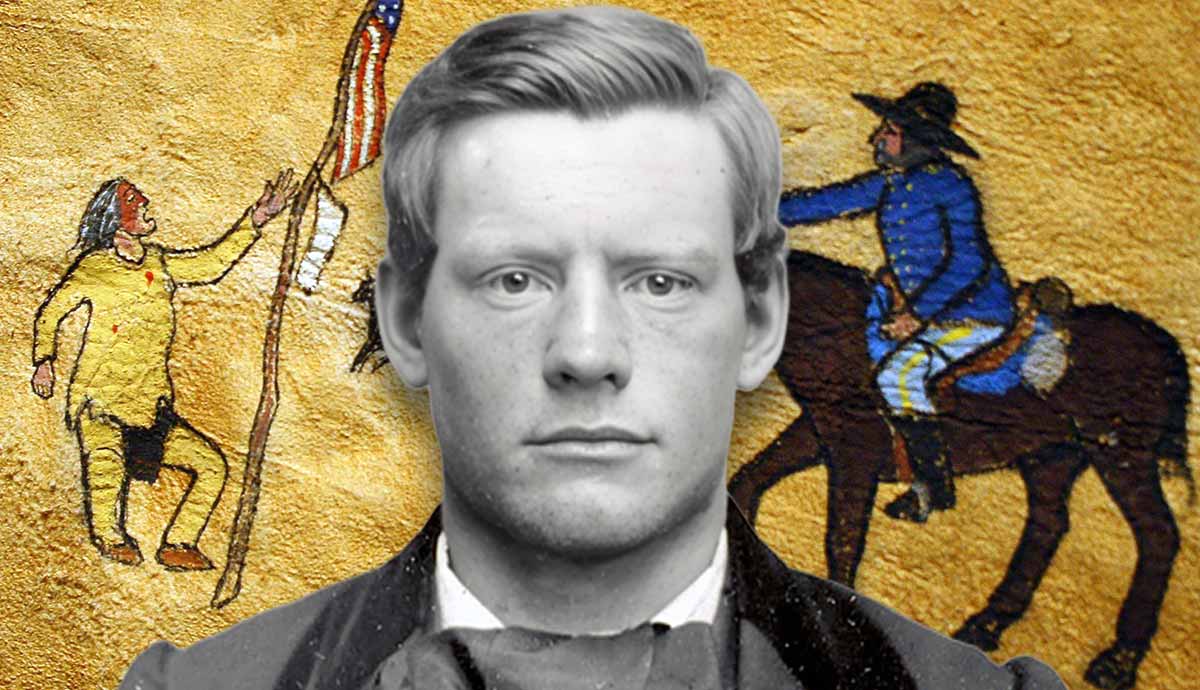
WWW.THECOLLECTOR.COMThe Admirable Bravery of Silas Soule, Who Sacrificed His Safety to Do the Right ThingSilas Soule was a member of the United States military when the army was undergoing a crisis of conscience. First facing the issue of slavery with his American brethren in the US Civil War and later tasked with subduing the American Indian, Soule was dedicated to his assignments but never ignored his ethics. An example of what was later termed a whistleblower, Soule sacrificed his safety in pursuit of human rights. He paid for his efforts with his life but is remembered by many as a hero who represents what it means to do the right thing.An Early Life of ActivismThis 1856 map demarcates free and slave states. Source: Library of Congress/Wikimedia CommonsBorn July 26, 1838, in Bath, Maine, Silas Stillman Soule was the second son of Amasa and Sophia Soule. Amasa was dedicated to the abolitionist cause from its early days in the United States. When Silas was just a teenager, his father moved to Kansas, along with his older brother, to support anti-slavery causes there. Silas became the man of the house, working factory jobs to help support his mother and younger siblings.The next year, the remainder of the Soule family moved to Kansas, where their home became a stop for the Underground Railroad. Silas was involved as an escort for the Railroad and, along with his father, became involved in the events that later became known as Bleeding Kansas. The Soule men were members of the Jayhawkers, an abolitionist militia group. Silas became an expert in hit-and-run guerilla warfare tactics, utilizing carbines that had been sent from pro-abolition groups in New England in crates marked Bibles. Still just a teen, Silas became a member of the Jayhawker Ten, also known as the Immortal Ten or Terrible Ten. These men were an elite militia group who conducted raids, liberated enslaved people, and freed jailed abolitionists. Silas was instrumental in the jail rescue of Dr. John Doy, a local physician and abolitionist who had been apprehended by pro-slavery advocates. With his Kansas Bible in tow, he even traveled to Harpers Ferry, West Virginia, in 1859 as part of a group attempting to rescue followers of the recently executed John Brown.A recreated blacksmith shop from a historic Colorado mining town. Source: Library of Congress/Wikimedia CommonsAfter his time in West Virginia, Silas became frustrated and disillusioned with the Jayhawker cause. John Browns followers had refused to be rescued, preferring to instead be martyred for their crimes. Silas believed they should have kept fighting. In addition, the Jayhawker Ten had come under increased scrutiny after the events at Harpers Ferry, and the Kansas authorities were looking for Silas. He decided to spend a year in Boston, where he worked as a printer and befriended poet Walt Whitman.In 1860, Soule found that the allure of the gold fields was an irresistible temptation. With his brother William, he headed west to Colorado to make his fortune. While he was not a successful miner, Silas worked briefly as a blacksmith. When the Civil War broke out, Colorado, which was not yet a state, created a pro-Union volunteer army, the Colorado First Regiment. Silas Soule was one of its first volunteers. His militia experience allowed him to rise quickly through the ranks, and he was a first lieutenant at the age of 22. After the Battle of Glorietta Pass, where Silass regiment prevented the Confederate army from moving west, the Colorado First Regiment was welcomed as an official US cavalry unit.A Different Focus for the ArmyA photo from the Camp Weld Conference in 1864, a peace conference with Cheyenne leader Black Kettle (seated, third from left) and his associates. Wynkoop and Soule are kneeling in front. Source: Wilbur Sturtevant Nye/Wikimedia CommonsSilas proved his worth as an army officer, and his regimental leader, Colonel John Chivington, recognized his bravery on numerous occasions. He was eventually promoted to captain and was placed in charge of Fort Lyon. As the Civil War began to wind down, especially in the West, the army began to focus on another objectiveassimilating Americas Indigenous peoples. Silas and his co-leader at Fort Lyon, Edward Wynkoop, believed that the local tribes should be treated with respect and fairness in these dealings, but they were in the minority among military officials. Soule and Wynkoop helped negotiate important early treaties with the Cheyenne and Arapaho people in Colorado.A Horrific MassacreSoule in uniform. Source: Denver Public Library/Wikimedia CommonsOn November 28, 1864, Colonel Chivington gathered his local regiments, including Company D, led by Soule, and ordered them to report. He claimed there had been word of a pending attack by Cheyenne and Arapaho warriors. As they approached the location, Silas realized that Chivington did not have accurate information about a supposed attack. The village in question was peaceful, settled near Sand Creek, and flying an American flag.The village was led by Black Kettle, whom Silas had met with only two months ago at the Camp Weld peace conference. The camp was made up of a majority of women, children, and the elderly. Soule brazenly challenged his superior officer, arguing that the camp was largely unarmed and not hostile. He called Chivington a coward and murderer, and in return, Chivington threatened to hang Soule and take command of his company. Still, Silas refused to continue. He ordered his men against participating, threatening to outright shoot anyone who followed Chivingtons order to attack. While Soules regiment hung back, the remainder of Chivingtons companies moved forward and attacked.A painting depicting Black Kettle at Sand Creek. Source: Stone Rabbit/Wikimedia CommonsApproximately 160 Cheyenne and Arapaho people were killed at Sand Creek, with about two-thirds of them believed to be women and children. Soule and his men were able to save a few. Not only did Chivingtons men kill, but they also committed atrocities such as scalping and mutilation. Soule recounted the chilling details of what he saw that day in a letter to Wynkoop on December 14. The correspondence included graphic and disturbing recollections, including, I tell you, Ned, it was hard to see little children on their knees have their brains beat out by men professing to be civilized.Painting of the Sand Creek Massacre by Frederic Remington. Source: Wikimedia CommonsMeanwhile, Chivington was writing letters of his own. He let his superiors in Washington, DC, know that his Colorado cavalry had just completed a battle against hostile Indians, winning an effective victory for the United States. He also mentioned that he had been having trouble with one of his captains, Silas Soule, calling him a greater friend to the Indians than the whites. Chivington told army leaders he would be keeping a close eye on Soule.Taking a StandSilas Soule on his wedding day in 1865. Source: Wikimedia CommonsSilas could not contend with what had happened at Sand Creek and how Chivington lauded the victory. In addition to contacting Wynkoop, he sent dispatches to his friend Walt Whitman and, most importantly, members of the US Congress. In January 1865, the War Department started an investigation into the armys actions at Sand Creek.Soule became one of the first to testify against Chivington as the inquest kicked off. He was threatened by those loyal to Chivington, but continued his work in supporting the investigation. Chivington retired from the army to avoid military court, and due to his impressive Civil War record, no criminal charges were brought against him. He had hoped to become involved in politics after his military service, but his new reputation as The Butcher of Sand Creek prevented these aspirations, and he never forgave Soule.A marker in downtown Denver denotes Soules murder. Source: Mfindley/Wikimedia CommonsSilas Soule found brief happiness in the time after the massacre and investigation. He left the army at the end of his contract and took a job overseeing military police in Denver. He remained friends with Wynkoop, and the two frequented a saloon called Cobrelys Halfway House. The middle daughter of the saloon owner caught Silas eye, and the two were married. His new wife, Hersa, was known for her intelligence, quick wit, and love of practical jokes. The two were married on April Fools Day, 1965.On April 23, Silas and Hersa were walking home from visiting friends when shots rang out nearby. Silas, as part of his duties, felt obligated to investigate. He entered a nearby alley, walking right into a trap. He was shot and killed by two men who served under Chivington. Though the men were arrested, they later escaped custody and were never convicted for the murder. Rumors flew that Chivington hired the men to complete the job, but these were never proven.A Quiet LegacySoules gravesite in Denver, Colorado. Source: Thexhild via Wikimedia CommonsWhile relatively little has been published about Silas Soule and his life in comparison to many contemporaries, some are still working to keep his memory alive today. In 1999, the Sand Creek Massacre Healing Run was initiated by Cheyenne and Arapaho people representing their descendants who were slaughtered at Sand Creek. The final day of the 180-mile event is dedicated to Silas Soule and Lieutenant Joe Cramer, who also provided affidavits about the events at Sand Creek. In 2013, Otto Braided Hair, a Northern Cheyenne and event organizer, stated in a speech to participants: If not for them, there might not be any Cheyenne and Arapaho here today.0 Σχόλια 0 Μοιράστηκε 49 Views -
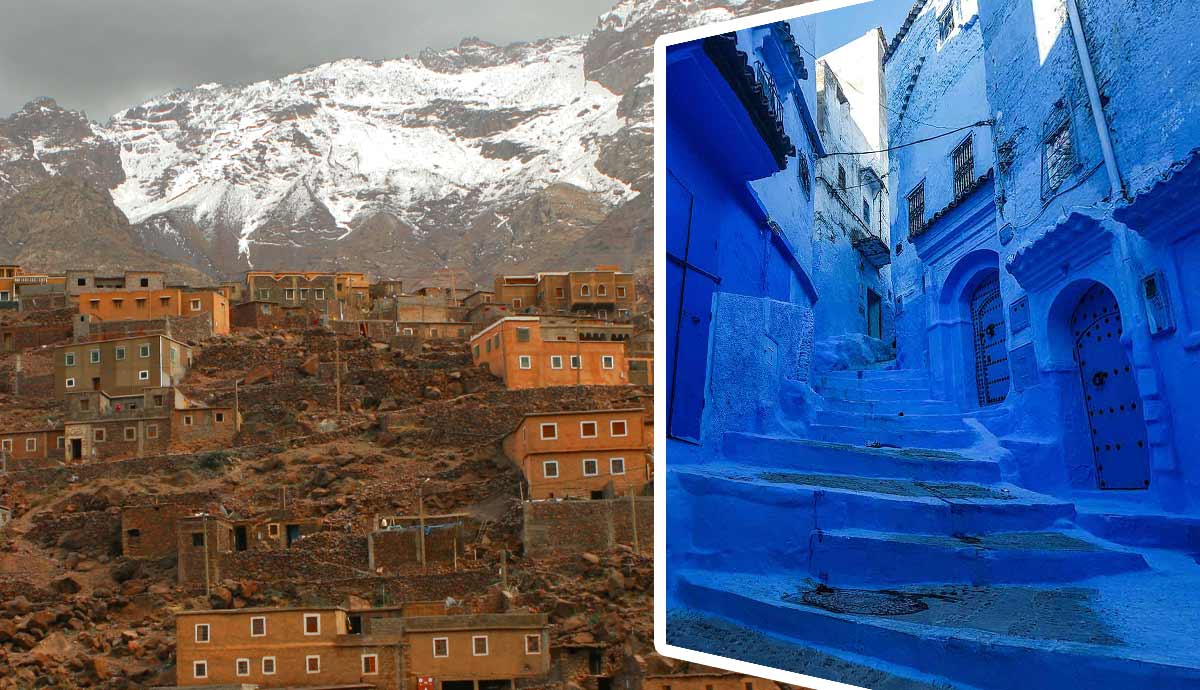
WWW.THECOLLECTOR.COM8 Unmissable Historical Sites You Must Visit in MoroccoMorocco is one of the most ethnically diverse countries in Africa. Its location, right at the confluence of its home continent with Europe, has meant it has been a veritable crucible of cultures for more than 2,000 years. While Morocco is relatively homogeneous in terms of religion, with most identifying as Sunni Muslims, it boasts a unique Berber heritage and a captivating fusion of Arab, sub-Saharan, and Western European influences.If you love history and cultural anthropology, youll find your Utopia here.A Snapshot of Moroccos HistoryModern-day gadgets VS ancient Berber attire, Morocco in a nutshell, photo by Yotut. Source: Wikimedia CommonsMorocco has been both a meeting point and a springboard for many cultures over the years. The Berbers or Amazigh, Moroccos indigenous people, have been the most consistent influence in shaping the countrys identity, although, nowadays, they are concentrated primarily in the Atlas Mountains and southern deserts.Once the Arabs arrived from the east, between the 7th and 8th centuries CE, the indigenous population held tight to their subsistent, agricultural lives, while the new migrants gravitated more toward city life and commercial enterprises (as they had done all over northern Africa). Some Berbers were enticed into the newer commercial settlements and eventually integrated well. Nowadays, the line between the two once opposing urban and rural cultures has blurred somewhat, yet the narrative of division persists quite a bit within Morocco.Moroccos Atlas Mountains are home to many traditional Berber villages, photo by David Denmnis. Source: Wikimedia CommonsThe Arabs developed existing trading settlements once they reached Morocco, and created much larger ones as well. All those fantastic souks youll undoubtedly want to visit in Fez, Marrakesh, Rabat, and Meknes were the consequences of their entrepreneurial talents.Long before the Islamic expansion, though, came the Roman one. The ancient empire first set foot in Morocco in the 1st century BCE, defeating the local Berber ruler Juba II and incorporating the land into the Roman Empire. They would eventually rule here for 500 years, building cities, aqueducts, and roads, and leaving impressive ruins like Volubilis and Lixus. By the time the Arabs arrived, the Romans had already retreated due to ongoing attacks by the Vandals.Yet Arab Islamic rule lasted the longest. They were the ones who came and never left, eventually shaping Morocco into the stunning melting pot of cultures we see today. Arab is the predominant and official language, but youll still meet Tamazight-speaking folks in more remote southern regions.Moroccos Influence on (and From) Western EuropeGranadas spectacular Alhambra Palace, photo by Kalboz. Source: FlickrThe intrepid Moors, a mix of Berbers and Arabs from North Africaprimarily Moroccowould go on to also play a huge role in shaping the history of Spain and Portugal. First, because cultural influence is never one-sided, and, second, because Europe and Africa are only separated by the Strait of Gibraltar, less than eight nautical miles (14km-9 mi) at its narrowest point.In 711 CE, led by the Berber general Tariq ibn Ziyad, the Moors paddled across the strait and set foot on Spanish soil. They began nearly 800 years of Muslim rule in the Iberian Peninsula, a period known as Al-Andalus (from where modern-day Andaluca gets its name). Bringing Islamic culture, science, art, architecture, and advanced agricultural practices, the Moors left an indelible mark on the region that is still so wonderfully visible today. The jaw-dropping Alhambra in Granada and the Great Mosque of Crdoba are just two examples.Reconquista de Toledo, tiled mural outside Plaza de Espaa in Seville, Andaluca, Spain, photo by CarlosVdeHabsburgo. Source: Wikimedia CommonsFrench colonialists would go on to rule over Morocco for a few decades (1912-1956) until the country eventually regained its independence. French was enforced as the national language and the French sought to Europeanize Morocco by gentle coercion rather than brute force. All this has resulted in the country feeling more like an Arabized European one than a bona fide African one. French is still widely spoken, and the local paella (especially on the northern coast) is as good as any youd find in Spain.The Most Fascinating Historical Attractions in MoroccoThe Grand Souq of Marrakesh, photo by Dan Lundberg. Source: FlickrA word to the wise: after two weeks in Morocco, one runs the risk of being mosqued out and souqed out. However, alternating between the countrys different types of historical attractions is a great antidote.To this end, note that this guide is not exhaustivefor every UNESCO-listed Medina featured, youll find at least two more. But this list should do the trick if youre planning a whirlwind trip and wish to soak up the magic of the best historical highlights.Lets start the way Morocco did: with the Romans.1. VolubilisThe ruins of Volubilis are what remains of a 2,000-year-old city considered one of the best-preserved Roman archaeological sites in North Africa. Source: Wikimedia CommonsOnce a thriving city at the edge of the Roman Empire, UNESCO-listed Volubilis featured grand basilicas, oversized arches, towering columns, and villas with stunning mosaics. The city was an olive oil production hub, which fueled the empires prosperity, and olive groves still dot the landscape. Be sure to locate the House of Orpheus, home to a beautiful mosaic of dolphins and mythical figures.Local guides, often enthusiastic university students, usually offer tours of the site and tend to hang out around the entrance. If you want a deeper experience, a guide can help you catch details you might otherwise miss.2. The Medina of FezThe Medina of Fez, likewise a UNESCO World Heritage site, is a gob-smacking maze of narrow, winding streets that transports you back centuries, photo by Sim Br. Source: Wikimedia CommonsFounded in the 9th century, the Medina of Fez is the most overwhelming old town you will likely ever visit anywhere. It is a sprawling, confusing, maze-like puzzle designed to confuse and repel invaders. It worked a treat. The ancient center boasts sensational architecture, defined by intricate blue and gold gates and beautifully tiled courtyards. It was and still is a hub for traditional crafts like pottery, leather-work, and weaving, with workshops lining the alleyways.The Medina also boasts historical landmarks like the Al-Qarawiyyin University, one of the oldest in the world. Exploring Fez is a sensory overload like no otherif you take a local guide nowhere else, take one here. Google Maps is no help!3. Chouarra Tannery, FezDeep in the Medina is one historical gem you cannot miss: the Chouarra Tannery, photo by Yeowatzup. Source: Wikimedia CommonsThe famous tanneries of Fez showcase a centuries-old craft thats still practiced today, including the use of pigeon droppings to soften leather and natural dyes derived from henna, saffron, and poppies. Found right in the heart of the Medina, these vibrant dye pits are filled with brightly colored vats, where leather is still softened, hand-tanned, and dyed by hand.The sight of workers wading through the vats, surrounded by the pungent aroma of tannins, is mesmerizing and utterly unforgettable. Not many are open to the public, so pop into the Chouara Tannery, the worlds oldest, to take a look-see and bag a nice souvenir.4. The Kasbah of Ait Ben HaddouA breathtaking earth and stone fortress nestled in the Atlas Mountains, Ait Benhaddou might look familiar to avid movie fans, photo by Cliff Williams. Source: Wikimedia CommonsThe iconic Ait Ben Haddou is a UNESCO-listed fortified village dating back to the 1600s. It was built as a prominent stop for traders, loaded with slaves, spices, and other goods, along a popular caravan route connecting the Sahara to Marrakesh. With its towering walls, narrow alleys, and crumbling towers, Ait Ben Haddou feels like youre stepping into a real-life desert movie setunsurprisingly, its been used as a cinematic canvas for many epic films and TV shows, from Lawrence of Arabia and Jesus of Nazareth to Gladiator and Game of Thrones.The desert area in this region is spectacular, and sitting in one of the handful of Berber cafes across from the citadel, sipping traditional mint tea, and watching life (and camels) go by is one of the most enjoyable experiences in Morocco.5. The Hassan II Mosque, CasablancaThe largest mosque in Morocco and the seventh-largest in the world, the Hassan II Mosque is the newest historical attraction in the country, photo by Andrew E. Lars. Source: FlickrWork on the Hassan II Mosque started in 1987 and was completed in 1993, thanks to the blood, sweat, and tears of over 10,000 craftsmen. It was built partially over the sea on a spectacular spot on the capitals Atlantic seafront. Its minaret reaches a towering 210 meters (689 feet) and is the tallest in the world. More than 25,000 worshipers are accommodated inside; 80,000 can fit in the outdoor courtyard. The prayer hall alone covers an area of 20,000 square meters (215,000 square feet).The jaw-dropping architecture reflects a unique blend of traditional Moroccan design with modern touches. There are glistening Italian Carrara marble floors, intricate zellij tilework, stucco, mahogany woodwork, and even a retractable roof. The floors are heated for winter comfort, and a laser system ensures precise alignment with Mecca.6. ChefchaouenInstagram may have flamed the prominence of Chefchaouen and its picturesque blue houses and streets, but the city has a slightly more illustrious past, photo by Mohammedlak. Source: UnsplashMoroccos Blue City is located in the northeast at the base of the countrys Rif Mountains. It is most famous for its dreamy, blue-painted buildings and narrow, winding streets that seem tailor-made for exploring (and photography).Chefchaouen was built in 1471 as a defensive military outpost to keep Portuguese invaders at bay. The city later became a refuge for Muslim and Jewish exiles fleeing Spain during the Reconquista. The towns distinct blue color, which graces its buildings and alleyways, is believed to have been introduced by Jewish refugees, meant to symbolize peace and spirituality. Over the centuries, the city became a prominent cultural and artistic hub, blending Berber, Arab, and Jewish influences.7. The Medina of MarrakeshThe Medina of Marrakesh, another of Moroccos UNESCO World Heritage sites, dates back to 1070 when the Almoravid dynasty established the city as its capital, photo by Yotut. Source: Wikimedia CommonsSurrounded by red sandstone walls, the Marrakesh Medina is a maze of narrow alleys, bustling souks (Semmarine and Teinturiers are the most enticing), and centuries-old buildings turned into traditional guesthouses (ryads) and museums. Youll find historical landmarks like the Koutoubia Mosque, the Jemaa el-Fnaa Square, and the Bahia Palace here.Marrakesh has been a cultural and commercial hub in Morocco for centuries and remains the most visited city in the country today. The square is jaw-dropping, especially at night. While this Medina is sensational, it is also relatively gentrified and heavily touristed. Dont misunderstandit is wonderfulbut if youd love to explore the oldest and most historic of the citys corners, ask your guide to show you around Bab Aylan.8. Jardin MajorelleYves Saint Laurents getaway haven in Morocco is a must for sartorial and botanical history lovers, photo by Viault. Source: Wikimedia CommonsFrench painter Jacques Majorelle designed this stunning, privately owned botanical garden and Art Deco villa in the 1920s. He was sent to Morocco by his doctor due to health reasons and was immediately smitten with the countrys cultures and colors. Majorelle created an ethereal oasis filled with exotic plants, fountains, and winding paths. The gardens signature Majorelle Blue, a striking shade, has become synonymous with the space.After the painters death, the garden fell into disrepair until it was restored in the 1980s by couture designer Yves Saint Laurent and his lifelong friend and business partner, Pierre Berg. They had visited Majorelle in the 1960s and snapped up the property as soon as it was up for sale.The two artists meticulously restored Majorelle, revitalizing its original design and preserving its unique collection of plants. For Yves, who had claimed to have drawn fashion inspiration from the garden, Jardin Majorelle became a place of soul-nurturing for the remainder of his life. Today, the gardens preservation is in the hands of the Yves Saint Laurent Foundation. The garden is a breath of fresh air in bustling and dusty Marrakesh, and the in-house museum is a fascinating and surprising historical legacy of the French icon.0 Σχόλια 0 Μοιράστηκε 49 Views -
ALLTHATSINTERESTING.COM9 Of The Worst Shark Attacks Ever Recorded: Real Stories From History That Make Movies Like Jaws Look TameShark attacks have long held a particularly terrifying place in history, pop culture, and the collective imagination. Thanks to accounts, both true and fictional, of peoples harrowing encounters with these animals, they scare so many of us like few other beasts ever have.Jaws, for one, certainly helped cement shark attacks in our nightmares and spread great fear about swimming in waters known to be home to sharks. But when the artifice of moviemaking is removed, how do real-life shark attacks tend to actually play out?From fatal attacks, to losing limbs, to gnarly bites, sharks attacks can take many forms all of them positively petrifying. From the 18th century to the present day, and from Australia to California, these are some of the worst shark attacks in recorded historyHistorys Worst Shark Attacks: The Harrowing Story Of The USS IndianapolisWikimedia CommonsThe USS Indianapolis was sunk in the final days of World War II.Today, the story of the USS Indianapolis is fairly widely known as one of the worst shark attacks in history, in part because it was alluded to in Jaws. The ship was sunk by two Japanese torpedoes while sailing near the Philippines on July 30, 1945, in the final days of World War II.While 900 of the 1,196 crew members survived the initial sinking, they then had to survive a whole new dangerous obstacle: the shark-infested waters they were now stranded in.Sharks were drawn to the wreckage of the Indianapolis by the noise and smell of blood from the crew members who had already perished. In order to survive, the remaining men had to be extremely careful to not attract more sharks.The crew members were likely being terrorized by oceanic whitetip sharks and possibly tiger sharks as well. Oceanic whitetips are known to be some of the most aggressive towards humans.Wikimedia CommonsRescued survivors of the sinking of the USS Indianapolis.Every now and then, like lightning, [a shark] would come straight up and take a sailor and take him straight down, Loel Dean Cox, a survivor of the incident, told the BBC in 2013. One came up and took the sailor next to me. It was just somebody screaming, yelling or getting bit.Cox also recalled that the sharks would often feed on the dead bodies of his fellow soldiers. He said he was constantly in fear because he could see shark fins in the water every few minutes.By the time a rescue crew finally came on August 2, only 316 crew members were left. A majority of the men died from dehydration and exposure, but approximately 150 of them were killed by the sharks.The post 9 Of The Worst Shark Attacks Ever Recorded: Real Stories From History That Make Movies Like Jaws Look Tame appeared first on All That's Interesting.0 Σχόλια 0 Μοιράστηκε 49 Views -
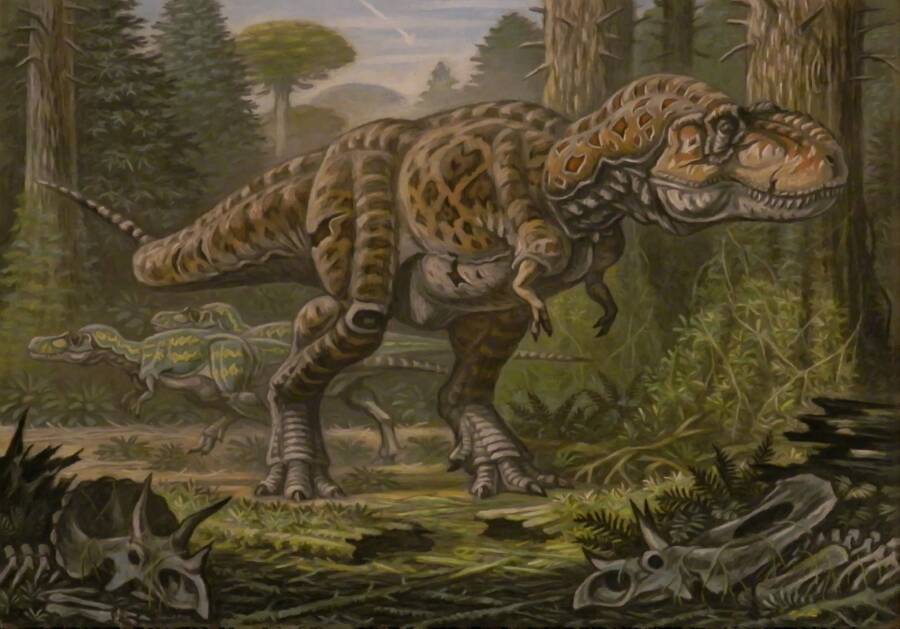
ALLTHATSINTERESTING.COMNew Research Suggests The T. Rex Had A Longer Lifespan Than Previously Believed And Didnt Reach Full Size Until 40 Years OldABelov2014/Wikimedia CommonsAn artists illustration of an adult T. rex.Much like trees, dinosaur bones contain concentric growth rings that can point to a fossils age. A recent study of the leg bones of the Tyrannosaurus rex revealed that some of these rings are easier to see than others and this discovery is completely rewriting the lifespan of the king of the dinosaurs.While previous analysis of T. rex growth rings suggested that the massive reptiles died by 30, scientists now believe they may have continued growing until they were at least 40 years old.Reevaluating The Lifespan Of The Tyrannosaurus RexIn the study, published in the journal PeerJ, lead author Holly Woodward of Oklahoma State University and her colleagues carried out the most comprehensive histological analysis of Tyrannosaurus to date. Previous studies had either missed or completely ignored the fainter rings in T. rex leg bones, some of which are only visible in cross-polarized light. Woodward said she nearly did, too.I sort of discounted it at first, she told Scientific American, until I started looking at all these specimens and seeing it in a lot of them.Although dinosaurs growth rings are similar to tree rings, they differ in one major way: A cross-section of bones only records the last decade or two of the animals life. Fortunately, Woodward and her team had access to 17 specimens of different ages, enabling them to create a new model that pulls data from each individual dinosaur. Woodward et al./PeerJ, 2026A view of the rings in a T. rex bone from the study.Best estimates from previous studies were that T. rex typically stopped growing around age 25, said Woodward in a statement. We came up with a new statistical approach that stitches together growth records from different specimens to estimate the growth trajectory of T. rex across all stages of life in greater detail than any previous study, explained mathematician and paleobiologist Nathan Myhrvold. Contrary to previous research results, it now seems that the T. rex had a slower, steadier growth period, rather than a rush toward adulthood. Even as recently as 2024, research suggested that the species had an explosive growth during teenage years, but that no longer stands uncontested.A four-decade growth phase may have allowed younger tyrannosaurs to fill a variety of ecological roles within their environments, said study co-author Jack Horner. That could be one factor that allowed them to dominate the end of the Cretaceous Period as apex carnivores.Other Revelations From The T. Rex StudyThis latest research also found that some specimens labeled as T. rex may be an entirely different, related species. One important finding of the study is that the growth curves of two of the more famous specimens, known by their nicknames Jane and Petey, are statistically incompatible with the others, Woodward said. Although growth records alone cannot establish whether they were separate species, the evidence suggests that intriguing possibility, among other possible explanations.Amphibol/Wikimedia CommonsA T. rex specimen known as Sue at the Field Museum of Natural History in Chicago.There are still some holes in the growth cycle of T. rex, especially since there are so few juvenile specimens in the fossil record. Still, the research represents a new pathway for other scientists to reevaluate the lifespans of different dinosaurs. Even after more than a century of study, Tyrannosaurus rex continues to surprise paleontologists, said Woodward. By combining expanded sampling, innovative statistics and careful bone analysis, Woodward continued, the new study offers a clearer, more accurate picture of Tyrannosaurus rex as a living animal, growing from juvenile to giant.After learning about the real lifespan of the T. rex, look through our list of 31 fascinating dinosaur facts. Or, discover what killed the dinosaurs.The post New Research Suggests The T. Rex Had A Longer Lifespan Than Previously Believed And Didnt Reach Full Size Until 40 Years Old appeared first on All That's Interesting.0 Σχόλια 0 Μοιράστηκε 49 Views -
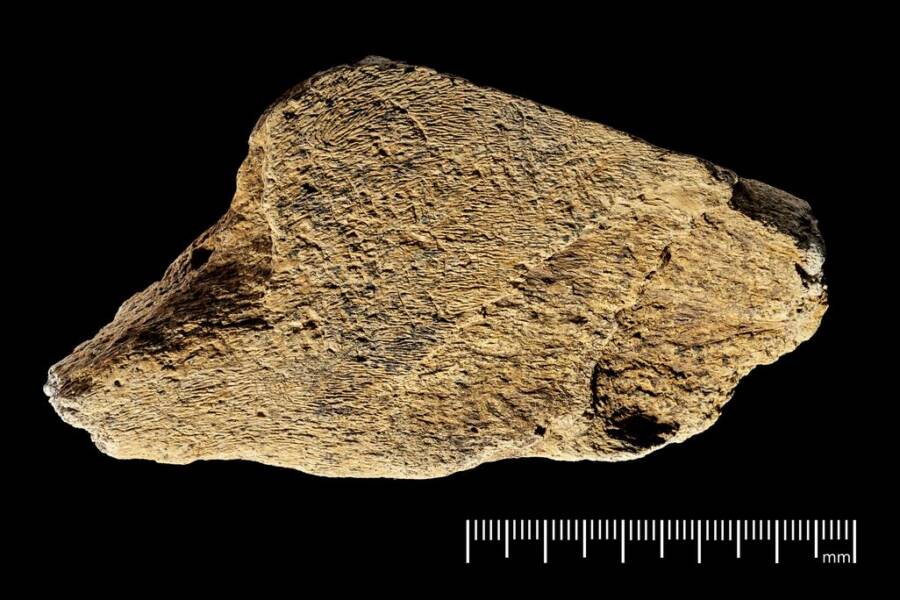
ALLTHATSINTERESTING.COM500,000-Year-Old Hammer Unearthed In England Proves To Be The Oldest Elephant Bone Tool Ever Found In EuropeTrustees of the Natural History MuseumThis elephant bone tool dates back almost half a million years, making it far older than any other similar artifact ever found in Europe.More than 30 years ago, archaeologists found a chunk of elephant bone while excavating a prehistoric site in southern England. This was somewhat unusual, aselephants and mammoths were rare in prehistoric England.But it wasnt until recently that researchers examined the bone more closely. Then, they realized that not only was it actually a tool, but it was almost a whopping half-million years old.Indeed, researchers believe that this bone hammer dates back about 480,000 years, and that it was likely once used to sharpen other tools. Its an incredibly rare artifact, and a fascinating window into the resourcefulness of prehistoric peoples in this region.Studying The 500,000-Year-Old Elephant Bone Tool Found In EnglandAccording to a statement from the Natural History Museum in London, the bone (likely elephant, though it could also be mammoth) was found in the early 1990s at an archaeological site in West Sussex, England. The discovery of such a bone was unusual though elephants and mammoths were plentiful in prehistoric Europe, they were rarely found in England but it was put aside. Now, however, researchers have taken a second look.NHM Photo UnitUpon closer inspection, marks can be seen on the bone that suggest it was used to sharpen other tools.Upon closer examination of the bone, which is about four inches long and one inch thick, researchers realized that it had once served an important purpose. After using 3D scanning and electron microscopes, they realized that the bone was covered with notches and impact marks, suggesting that it had been used as a hammer.This remarkable discovery showcases the ingenuity and resourcefulness [of prehistoric people], said Simon Parfitt of University College Londons Institute of Archaeology and a Scientific Associate at the Natural History Museum, as well as the lead author of a new study about the elephant bone thats been published in Science Advances.They possessed, not only a deep knowledge of the local materials around them, but also a sophisticated understanding of how to craft highly refined stone tools. Elephant bone would have been a rare but highly useful resource, and its likely this was a tool of considerable value.So how exactly did prehistoric people use the elephant bone tool?The Historical Context Behind The Elephant Bone Hammer Found In BoxgroveBoxgrove Project, UCLThe Boxgrove archaeological site in West Sussex, where the elephant bone tool was originally found in 1990.While examining the bone, researchers documented small pieces of flint embedded in its notches. Prehistoric people were known to use bone to sharpen stone tools like handaxes, and researchers suspect that the elephant bone hammer was used for the same purpose. It was probably a retoucher that prehistoric people used for knapping stone tools that is, striking them in order to sharpen them.Given that elephant bone is especially strong, this would have been a valuable tool to have. But its somewhat of a mystery where and how prehistoric people in England whether Neanderthals, Homo heidelbergensis, or other would have acquired it.Elephants and mammoths were common sights in continental Europe in prehistoric times, but they were rarely seen in England. Whats more, the elephant bone tool from West Sussex is almost 500,000 years old and only a small number of the elephant bone tools found in Europe are older than 43,000 years old. Researchers have never found elephant bone tools in Europe older than 450,000 years, and these were found farther south.As such, the elephant bone tool found in Boxgrove offers several different insights about the prehistoric people who once wielded it. Not only were they sophisticated enough to use it as a tool, but they were also resourceful enough to get their hands on it in the first place.Our ancient ancestors were sophisticated in their use of tools, said Silvia Bello, a Merit Researcher at the Natural History Museum and a co-author of the elephant bone study. Collecting and shaping an elephant bone fragment and then using it on multiple occasions to shape and sharpen stone tools shows an advanced level of complex thinking and abstract thought. They were resourceful gatherers of available materials, and savvy about how best to use them.After reading about the 500,000-year-old elephant bone tool found in England, discover the stories of some of the most incredible prehistoric animals to ever walk the Earth, from the terror croc to the saber-toothed tiger. Then, learn about the elephant bird, the extinct 1,700-pound creature that was the largest bird to ever live.The post 500,000-Year-Old Hammer Unearthed In England Proves To Be The Oldest Elephant Bone Tool Ever Found In Europe appeared first on All That's Interesting.0 Σχόλια 0 Μοιράστηκε 49 Views -
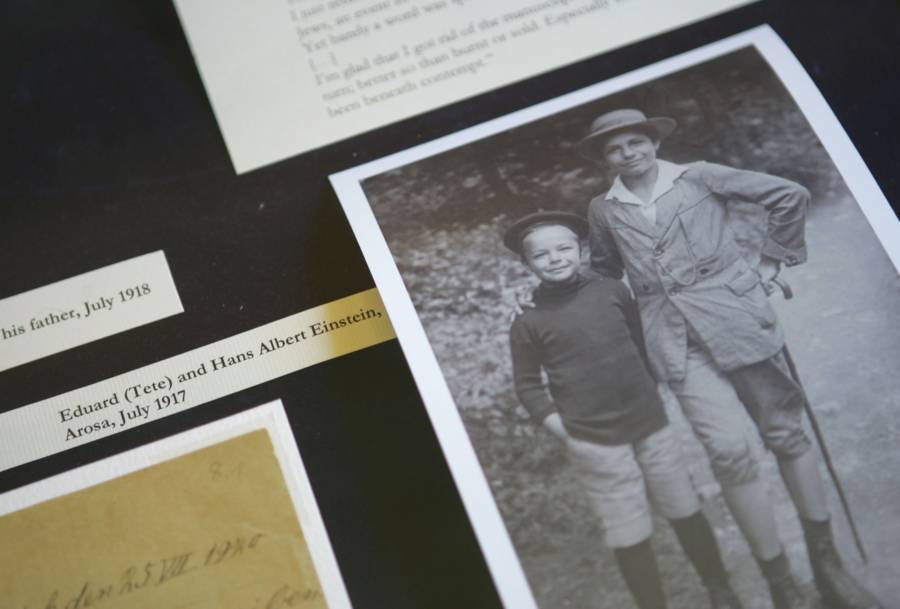
ALLTHATSINTERESTING.COMEduard Einstein: The Story Of Albert Einsteins Son Who Spent His Life In Insane AsylumsDavid Silverman/Getty ImagesAlbert Einsteins two sons, Eduard and Hans Albert, in July 1917.Albert Einstein is one of the most famous scientists in history and his name has become a household term synonymous with genius. But although almost everyone has heard of the physicist and his remarkable work, few know about the tragic fate of his son, Eduard Einstein.Eduard Einsteins Early LifeEduard Einsteins mother, Mileva Mari, was Alberts first wife. Maric was the only female student who studied physics at the Zurich Polytechnic Institute where Einstein also attended in 1896. He soon became smitten with her, despite the fact that she was four years older than he.The two married in 1903 and their union produced three children, Lieserl (who vanished from history and may have been given up for adoption), Hans Albert, and Eduard, the youngest, who was born in Zurich, Switzerland on July 28, 1910. Einstein separated from Maric in 1914 but kept up a lively correspondence with his sons.Although Maric would later lament that her famous husband had put his science before his family, Hans Albert recalled that when he and his brother were young, father would put aside his work and watch over us for hours while Maric was busy around the house. Little Eduard Einstein was a sickly child from the start and his early years were marked by bouts of illness that rendered him too feeble to take trips with the rest of the Einsteins.Einstein despaired over his son even after he had abandoned the household, writing fearfully in one 1917 letter to a colleague My little boys condition depresses me greatly. It is impossible that he would become a fully developed person.The coldly scientific part of Albert Einstein wondered if it wouldnt be better for him if he could depart before coming to know life properly, but in the end, paternal love won out and the physicist vowed to do whatever he could to help his sickly son, paying for and even accompanying Eduard to various sanatoriums. Wikimedia CommonsEduard Einsteins mother, Mileva Mari, was Albert Einsteins first wife.Eduards Mental Illness WorsensAs he grew older, Eduard (whom his father affectionately dubbed tete, from the French petit) developed an interest in poetry, piano-playing, and, eventually, psychiatry. He worshiped Sigmund Freud and followed in his fathers footsteps by enrolling in Zurich University, although he intended to become a psychiatrist. By this time, Alberts fame had been solidly established. In one telling bit of self-analysis, Eduard Einstein wrote, its at times difficult to have such an important father because one feels so unimportant. Wikimedia CommonsAlbert Einstein at his Berlin office where he worked before growing anti-Semitism and the rise of the Nazis forced him to leave.The aspiring psychiatrist followed his fathers path once again when he fell in love with an older woman at the university, a relationship that also ended disastrously. It appears to be around this time that Eduards mental health took a severe turn for the worse. He was sent into a downward spiral that culminated in a suicide attempt in 1930. Diagnosed with schizophrenia, it has been speculated that the harsh treatments of the era worsened rather than eased his condition, eventually to the point where it impacted his speech and cognitive abilities.Eduards Family Emigrates To The United States Without HimAlbert, for his part, believed his sons condition was hereditary, passed down from his mothers side, although this scientific observation did little to assuage his grief and guilt. His second wife, Elsa, remarked that this sorrow is eating up Albert. The physicist soon faced more than issues surrounding Eduard. By the early 1930s, the Nazi Party had risen in Germany and after Hitler took power in 1933, Einstein could not return to the Prussian Academy of Sciences in Berlin, where he had been working since 1914. Einstein may have been one of the worlds most famous scientists, but he was also Jewish, a fact that his countrymen could not accept and forced him to flee to the United States in 1933.Getty ImagesAlbert Einstein with his son Hans Albert, who was able to seek refuge with him in America and later became a professor.Although Albert had hoped his younger son would be able to join him in America along with his older brother, Eduard Einsteins continually deteriorating mental condition prevented him from also being able to seek refuge in the United States. Before he emigrated, Albert went to visit his son at the asylum where he was being cared for one last time. Although Albert would keep up correspondence and would continue to send money for his sons care, the two would not meet again.As Eduard spent the remainder of his life in an asylum in Switzerland, he was buried in Hnggerberg cemetery in Zurich when he died of a stroke at age 55 in October 1965. He had spent over three decades of his life in the psychiatric clinic of Burghlzli at the University of Zurich.Next up, learn more about Eduard Einsteins famous father with these Albert Einstein facts. Then, see what the scientists desk looked like the day he died.The post Eduard Einstein: The Story Of Albert Einsteins Son Who Spent His Life In Insane Asylums appeared first on All That's Interesting.0 Σχόλια 0 Μοιράστηκε 49 Views -
ALLTHATSINTERESTING.COMThe True Story Of Bathsheba Sherman, The Murderous Ghost From The ConjuringBelieve it or not, Bathsheba Sherman, the fearsome demon that terrorized the Perron family in The Conjuring, was not an entirely fictional creation. Some believed she was a witch who worshipped Satan and was related to Mary Eastey, a woman who was hanged in the Salem Witch Trials. Others believe Sherman murdered children in 19th-century Connecticut.As for the actual historical records, they confirm that a Bathsheba Thayer was born in 1812 and would later marry a farmer named Judson Sherman in Connecticut before birthing a boy named Herbert.New Line CinemaBathsheba Sherman in The Conjuring.The legends, meanwhile, claim that she was later caught sacrificing her son to Satan with a sewing needle. Cursing all who would dare live on her land, she supposedly climbed a tree and hanged herself.According to paranormal investigators Ed and Lorraine Warren, Bathsheba Sherman promised to haunt anyone who would go on to occupy the land where her home once sat. The couple was contacted by the Perron family who had moved onto the property in 1971. Household items had begun to vanish and their children were supposedly visited nightly by a malevolent female spirit.Their eldest daughter, Andrea Perron, has since chronicled her traumatizing childhood in House of Darkness: House of Light. While skeptics say that the Warrens are mere profiteers of the unexplained, Perron has yet to waver from her story.But to separate fact from fiction when it comes to the true story of The Conjuring, one must return to the life of the real Bathsheba Sherman.The Legend Of Bathsheba ShermanBy all accounts, Bathsheba Thayer had a relatively contented childhood. She would grow into an envied beauty and tie the knot at 32 years old in 1844. Her husband ran a profitable produce business from his 200-acre farm in Harrisville, Rhode Island.But the community would soon see the newlywed wife as a threat.The Sherman Farm in 1885, in a colorized photograph.Bathsheba Sherman had been babysitting her neighbors son when the young boy mysteriously died. Local doctors established that the childs skull had been impaled with a small albeit fatal tool. Despite the fact that Sherman was the last to tend to the boy, the case never went to court and local women were enraged.According to legend, Bathsheba Shermans son would never celebrate his first birthday as his mother stabbed him to death a week after he was born. Her confounded husband is said to have caught her in the act and witnessed her vowing allegiance to the Devil before climbing the tree she would hang from in 1849.While some claimed they had three other children, no census records of this exist. Some remain convinced, however, that none of these siblings lived past seven. Ultimately, Bathsheba Shermans story remains largely unsourced, while records confirm Judson Sherman died in 1881.With Bathsheba Shermans tombstone in downtown Harrisville revealing her date of death as May 25, 1885, her alleged suicide in 1849 appears fabricated.Today, Andrea Perron is unconvinced that it was Sherman who terrorized her as a child, at all but the neighboring Arnold Estate matriarch who hanged herself in the barn in 1797, instead.The Perron Family Haunting And The True Story Of The ConjuringA financially-strapped truck driver, Roger Perron was overjoyed to close on the modestly-priced 14-bedroom farmhouse in 1970. The family moved in the following January. His wife Carolyn and their five daughters had transitioned into the new house well, until odd noises started emanating from empty rooms and items went missing.The Perron family (minus Roger).The children began to speak of spirits visiting them in the night. One was a boy named Oliver Richardson, who befriended Andreas sister, April. Cindy saw them too and reminded a saddened April that these spirits couldnt leave the house to play and were trapped indoors.My father just wanted them to go away, to pretend none of it was real, just a figment of our imaginations, said Andrea. But it started happening to him, too, and he really couldnt deny it anymore.Carolyn Perron was finding neatly-piled dirt in the middle of rooms she had just finished cleaning, with no one at home. Meanwhile, Andrea was being tormented nightly by a malevolent female spirit with a bent neck she believed had been hanged. Andrea believed it wanted to possess her mother to kill her and her siblings.Whoever the spirit was, she perceived herself to be the mistress of the house and she resented the competition my mother posed for that position, said Andrea Perron.When Carolyn Perron heard of this, she contacted a local historian who told her of Bathsheba Sherman and that she enjoyed starving and beating her farmhands. The records showed the Sherman Farm had been in the same family for eight decades and that many who lived there died oddly: drowning, hanging, murder.Bettmann/Getty ImagesLorraine Warren said it was Bathsheba Sherman who was haunting the Perron children.Convinced Bathsheba Sherman was haunting them, the Perrons contacted the Warrens. A self-taught demonologist and self-described clairvoyant, Ed and Lorraine, respectively, agreed with that assessment. The couple conducted a seance in 1974, during which Carolyn Perron allegedly got possessed and nearly died.From Bathsheba Sherman To The Perrons, Is The Conjuring Based On A True Story?According to Andrea Perron, her mothers body contorted into a ball. Her mothers scream led Andrea to believe she had died. She claimed that her mother was possessed for several minutes, and was slammed against the floor with her head. Her mother was temporarily unconscious before returning to her former self.I thought I was going to pass out, said Andrea. My mother began to speak a language not of this world in a voice not her own. Her chair levitated and she was thrown across the room.As chronicled in her book and the Bathsheba: Search for Evil documentary, Andrea Perrons father kicked the Warrens out for good after that. They returned only one more time to ensure Carolyn Perron had survived the seance. The Perron family was forced to live in the house until 1980 due to financial reasons.Jeremy Moore/YouTubeBathsheba Shermans tombstone inscribed her death on May 25, 1885.Ultimately, the presence of Ed and Lorraine Warren has become fodder for skeptics who may have good reason to dismiss them as frauds. The story in general has become streamlined and exaggerated in The Conjuring. The true story of The Conjuring remains unknowable, while Andrea Perron claims to remember every terrifying detail.The things that went on there were just so incredibly frightening, she said. It still affects me to talk about it today Both my mother and I would just as soon swallow our tongue than tell a lie. People are free to believe whatever they want to believe. But I know what we experienced.She claims the film took liberties, like adding blood or replacing the seance with an exorcism. Ultimately, its likely most would have never heard of Bathsheba Sherman without The Conjuring.Legend has it that she turned into stone when she died. Others blamed a rare type of paralysis, which, like most aspects of Bathsheba Shermans story, appears more likely than the supernatural.After learning about Bathsheba Sherman and the true story of The Conjuring, read about the real-life Conjuring house. Then, learn about the actual history behind Valak from The Nun.The post The True Story Of Bathsheba Sherman, The Murderous Ghost From The Conjuring appeared first on All That's Interesting.0 Σχόλια 0 Μοιράστηκε 49 Views