7 Fighting Disciplines That Influenced Bruce Lee and Jeet Kune Do
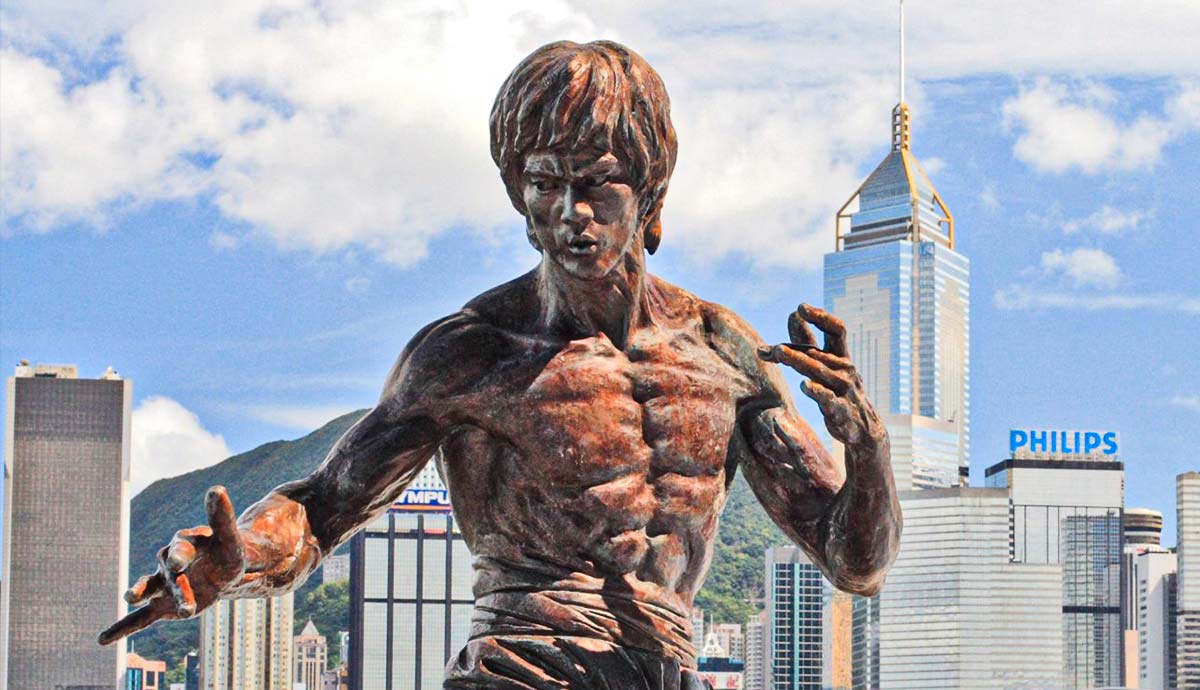
Few, if any, people are more synonymous with martial arts than Bruce Lee. Although he was an actor by vocation in his tragically short life, this in no way detracted from his prodigious martial arts skill. To say Lee trained diligently would be a massive understatement He practiced and learned from a variety of different styles to become the best martial artist he could be, and eventually of course, he created his own philosophy of fighting called Jeet Kune Do, or the Way of the Intercepting Fist, based on his experiences in fighting and learning what tactics were effective.Endless debates exist concerning the effectiveness of one fighting style or another, but Bruce Lee had a simple idea: Research your own experience. Adapt what is useful, reject what is useless, and add what is specifically your own.1. Wing ChunWing Chun training dummies in Ip Man Memorial Hall. Source: Wikimedia CommonsWing Chun is a Southern Shaolin-influenced martial art that was developed in the 1800s for use in tight quarters, like hallways, city streets, or the corridors of ships. Lacking the space for the broad movements of other styles, Wing Chun users focus on blows directed at the vertical centerline of the body, and defense focuses on redirecting momentum. Tight, low footwork helps to provide angles for deflection and openings. Wing Chun uses mostly hand techniques, with the occasional kick to the leg.Anyone who has seen a Wing Chun demonstration likely remembers one thing: blindingly fast punches. One particular trait that carries over involves feeling the force an attacker is exerting and responding accordinglysoft with hard and vice versa.Bruce Lee learned Wing Chun from the Ip Man, a famous martial artist in his own right.2. Boxing2024 Summer Olympics Boxing Mens 92+kg Final. Source: Wikimedia CommonsAs a complement to Wing Chuns speed and efficiency, Bruce Lees experience as a champion high school boxer served him well. He would often study tapes of different boxers if he couldnt get direct instruction, replaying them again and again to capture each nuance of the fighters motion. It may come as no surprise that one of the major inspirations for Lee was Muhammad Ali, formerly Cassius Clay.Alis famous float like a butterfly, sting like a bee adage promotes the idea of nimble and agile footwork to be used as needed at close distance, as well as the idea of head movement to evade a punch. This allows the fighter to remain on guard. Its own variant of punching adds powerful blows such as the hook to a fighters arsenal.Boxing is also an extremely cardio-intensive workout, and stamina is vital for any fighter to have if they are to last in competition or against a resilient opponent capable of putting up a prolonged fight. Some workouts in boxing, such as skipping rope, found their way into Bruce Lees warmup routine and he advocated heavily for a multitude of similar aerobic exercises.3. Olympic FencingSummer Olympics Fencing, 2012. Source: Wikimedia CommonsOlympic fencing, though it may have become sportified compared to its earlier roots, also had significant offerings for Jeet Kune Do. Olympic fencing derived from deadlier dueling weapons such as the smallsword, rapier, and saber. The possibility of lethal blows required a far more precisely timed and decided action: the stop-hit, or attacking into preparation. Rather than wait for a blow to gain momentum, the better counter is to attack during the interval when a fist or foot is primed.Similarly, it contributed training to improve reaction time for precision and dexterity. Fencing matches often last a matter of seconds, and the action is too fast sometimes to track reliably. Another significant aspect is the idea of dividing the body into quadrants, with two parrying hand positions in each quadrant. A reading of The Tao of Jeet Kune Do shows that Bruce Lee was influenced by fencing.4. JujutsuMartial Arts Sword Bouts, by Toyohara Chikanobu, 1888. Source: Ukiyo-e.orgJujutsu developed in Japan during the Sengoku Period as a martial art for samurai to use in battle. The surest way to kill an armored opponent was to be good at grappling: getting them to the ground and killing them before they could rise was a key part of samurai martial arts.Against an armored opponent, the only option was the aforementioned grappling or using armor-breaking weapons like the kanabo. These grappling techniques included throws, joint locks, and bone breaks, which were carried into unarmored jujutsu.Although Bruce Lee did not study jujutsu formally, he made it a point to learn what techniques from jujutsu he could use should an enemy get inside ones guard and at grappling range, where many traditional striking arts could fall short.5. TaijiquanBai Shuping practicing tai chi. Source: Wikimedia CommonsThe name of this martial art translates to Grand Ultimate Fist, although that seems a deceptive description if you just see the slow motion of people practicing it in the park. As one of the oldest internal Chinese martial arts, it brings together the importance of balance between internal and external power between soft and hard, and fluidity of movement.Taijiquan places a lot of emphasis on developing qi, the life energy of the body. From a practical martial arts standpoint, this means rootedness and efficient use of breath and biomechanics, i.e. generating power from the full kinetic chain starting at the feet. Using the minimum amount of effort to divert a blow from its target, transferring an attackers momentum to aid a throw, and similar soft techniques are the core of this style.6. SavateSavate practice. Source: Wikimedia CommonsSavate is a French martial art that developed in the 18th century. Although the common narrative is that it was derived from French sailors who learned fighting techniques from Southeast Asia, this is likely not correct. Instead, the French civilians created savate to take advantage of the effectiveness of kicking with a pair of sturdy shoes on. The word savate derives from a word meaning old boot. Savate does not exclusively use kicks: it is called French boxing for a reason.The targets for kicks in savate vary, but tend closer to the ground and often come from unexpected angles. It employs a lot of feints and requires solid leg mobility. The footwork in savate is a gliding motion similar to that seen in Japanese fencing. By keeping ones feet near the ground, it enables rapid change in the direction of movement: if, for example, one were advancing and needed to suddenly halt momentum and move to the left or the right, being able to plant the lifted foot more quickly prevents an awkward fall.Bruce Lee had no formal instruction in savate. Instead, he did the same as with his boxing instruction: self-teaching. Bruce Lee would study tapes, read books and articles and learn all he could on his own about the concepts of savate.7. KaliCollection of swords used in kali. Source: Wikimedia CommonsKali is a martial art created in the Philippines by the indigenous peoples who live there. It employs both empty-handed and armed techniques, rapidly switching between the two as a fight requires. Some of the weapons involved in kali include knives and short one-handed clubs. It, like Jeet Kune Do itself, encouraged the practice of implementing workable concepts from other systems. When the Spanish successfully colonized the Philippines in 1565, they subjugated the locals as European countries were wont to do, and they banned all but the ruling class from having or using weapons. This is when stick fighting was as refined as the sword, and other weapons were less available.What kali mainly does for Jeet Kune Do is make the fighter think more ambidextrously and independently. As opposed to defending with one side and attacking with the other, many techniques in kali employ attacks using two hands at once. Learning to move this way allows more fluid transitions from one side to the other.There is also the practical concern of dealing with weapons. In keeping with Bruce Lees goal of constantly refining the weaknesses of martial arts, he maintained the belief that many unarmed martial arts did not effectively address what to do against a weapon. In a fight to the death, weapons obviously could be involved, and would affect the range of motion. Bruce Lee learned some kali from Dan Inosanto.Why Did Bruce Lee Create Jeet Kune Do?Statue of Bruce Lee on the Avenue of Stars, Hong Kong. Source: Wikimedia CommonsBruce Lee wanted to create a martial philosophy that was based on practicalities rather than blindly following traditions or getting caught up in theory. In his writings and interviews, he expressed the idea that most of the traditional martial arts (i.e. the various schools of Chinese and Japanese origin) were too focused on students practicing and memorizing forms rather than sparring or actually pressure testing the movements to determine their effectiveness. They did not, according to Lee, take into account the realities of fighting the untrained, focusing purely on the replication of techniques.Bruce Lee also claimed that relying on the restrictions of a given style, no matter how theoretically effective in its own context, would have weaknesses. For example, however skilled someone might be at karate, they may not be as effective as they could be at grappling. Also, although anyone can train in any style, certain attributes lend themselves well to different methods of fighting.Learning from as many styles as possible at a conceptual level is the ideal way to excel as a martial artist in Lees fighting philosophyagain, not memorizing rote techniques, as learning multiple movements as a response to a single stimulus leads to indecisiveness. However, Bruce Lees eclectic approach to learning martial arts is what made him perhaps one of the most formidable martial artists of the 20th century, and his drive to excel inspired millions to take up the practice of martial arts.











 English
 Arabic
 French
 Spanish
 Deutsch
 Turkish
 Dutch
Dutch
 Italiano
 Russian
 Romaian
 Portuguese (Brazil)
 Greek
Greek