Why Botswana Is Known as the Most Peaceful Nation in Southern Africa
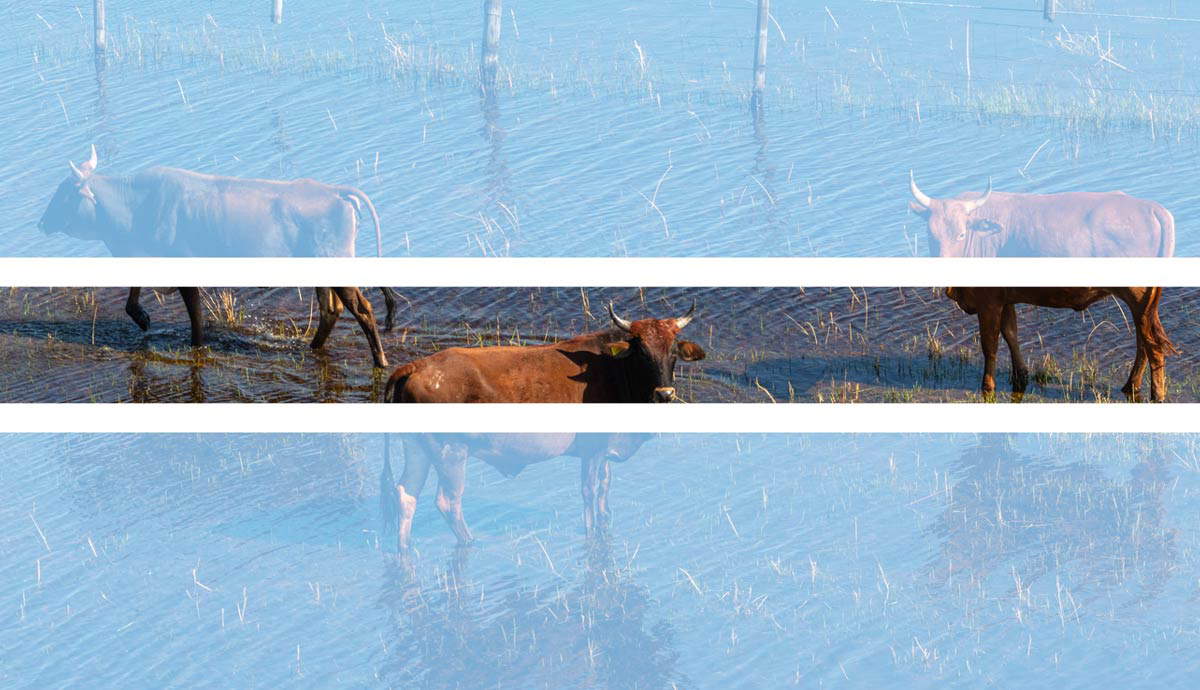
Unlike its neighbors on all sides, the landlocked country of Botswana has had a relatively peaceful history, free from the conflicts that ravaged the rest of Southern Africa. It is for this reason that Botswana earned the nickname The Peaceful Nation.Nevertheless, the country, home to around 2.5 million people, has not been without its difficulties in the past, characterized in part by colonial endeavors and the clash of cultures.An Ancient LandSan people in Botswana, photograph by Mopane Game Safaris, 2014. Source: Wikimedia CommonsThe land that is now Botswana has a history (and a pre-history) as old as humanity itself. One theory even suggests it was the birthplace of modern humans around 200,000 years ago. Evidence of the species that preceded Homo sapiens is also evident, with stone tools being found that date as far back as two million years.The early modern humans who inhabited the region originally were likely the ancestors of the KhoiSan* people. The San (known locally as the Basarwa) make up around 2.8 percent of Botswanas population today. Like so many Indigenous people, they have been subjected to displacement due to colonial and national ambitions, usually through mining.*The Khoekhoe and the San are often collectively referred to as the Khoi-San or Khoisan. The main difference between the two groups is their culture. While the Khoekhoe are pastoralists, the San (or Bushmen) live a nomadic lifestyle. The Khoisan were displaced by Bantu, and, later, European migrations.The San were joined by the Khoekhoe around 2,300 years ago. Around this time, agriculture was introduced, with the domestication of cattle soon to follow. The Bantu migrations signaled a major change in the area. First to reach what is now Botswana were the Khalagari (Kgalagadi) around 200 CE, and then the ancestors of the Tswana-speaking peoples a few hundred years later. These migrations also introduced copper and iron tools and tool-working to the region.From around 700 CE to around 1300 CE was the era of Toutswe societies, east of the Kalahari. The dry grassland was perfect for these settlements to thrive, and what caused the demise of this society is a subject of archaeological interpretation. The common belief is that the era came to an end as a result of overgrazing in combination with drought, disease, and famine.Cattle in the Okavango Delta, Botswana, photograph by Diego Delso, 2018. Source: Wikimedia CommonsThroughout the centuries, trade networks were built, and various groups and polities rose, competed with each other, and declined in power. Much of the trade was commanded by successive states, such as Mapungubwe (which declined at the same time as the Toutswe societies), Great Zimbabwe, and the Butua Kingdom, which were centered within present-day South Africa (in the case of Mapungubwe) and Zimbabwe. By 1600, successive Tswana migrations had had such an impact that the Tswana were present throughout virtually all of what would become Botswana. The Khalagari peoples accepted new rulership or moved westwards. There was little in the way of a defined national identity, and tribes split and merged frequently.In the early 19th century, the Difaqane, a violent upheaval in southeastern Africa, forced even more Tswana people into the Botswana region. Against the militant ambitions of the Ndebele, Kololo, Pedi, Ngoni, and the Voortrekkers, the Tswana people preferred to migrate north and westwards to avoid conflict.Contact With EuropeansThe Voortrekkers. Associated names: G. S. Smithard (18731919); J. R. Skelton (18651927). Source: Wikimedia Commons/Colvin, Ian (1909). South Africa. London: The Caxton Publishing Company, p. 290The first Europeans arrived in the Botswana area in 1816. Throughout the years that followed, the London Missionary Society, working with other missionary groups, spread Christianity throughout the region, building schools and teaching people to read and write. One such missionary was the famous explorer and pioneer David Livingstone, who arrived in Botswana in 1841 and established the first school. He also baptized the influential Bakwena chief, Sechele I, who went on to become a great proselytizer and ally of the British.Around this time, there was intense rivalry as the Tswana states of Ngwaketse, Kwena, Ngwato, and Tawana competed with each other for trade and dealt with non-Tswana invasions. This time of increased trade brought with it more Europeans and contact with Boers, from which conflict arose, mostly over cattle and land.A coalition of Tswana chiefdoms led by Sechele I found victory in 1852, defeating the Boers at the Battle of Dimawe. An agreement was reached in 1860, after which the Boers and the Tswana people found peace and engaged in fruitful trade.Meanwhile, the mining industry would usher in a new era in Southern Africa, first in the form of a short-lived gold rush near present-day Francistown in the east of Botswana and then in the form of emigration as Tswana people flooded to Kimberly in the British-controlled Cape Province to work in the diamond mines.The Bechuanaland ProtectorateStamp issued by the British Government in 1960. Source: Wikimedia CommonsBy the end of the 19th century, Botswana had several chiefdoms which co-existed in relative peace and prosperity. Together, these chiefdoms represented a largely unified culture with a common language and shared history. The Batswana people, as they were known, perceived threats from Boer encroachment and German colonization. In 1870, Batswana elders began lobbying for British protection. Growing in strength, this movement finally succeeded, and the Bechuanaland Protectorate was declared in 1885, covering much of present-day Botswana. In 1890, the borders were extended further north and agreed upon by Germany who had their colony in South West Africa to the west of Bechuanaland.The southern portion of the Bechuanaland became the Crown Colony of British Bechuanaland in 1885 and was annexed and incorporated into the Cape Colony in 1895. It now exists as part of South Africa. An unusual state of affairs existed as the colony was administered from the town of Mafeking, outside Bechuanalands borders. Mafeking ended up being part of South Africa.The British South Africa Company (BSAC), founded by colonial magnate Cecil John Rhodes, attempted to acquire the eastern portion of Bechuanaland, but these attempts were challenged by Tswana chiefs Bathoen I, Khama III, and Sebele I, who traveled to London to argue against the takeover. They were successful but had to allow the BSAC to build a railway through Bechuanaland to link up with Rhodesia, through which the British would colonize Rhodesia.Throughout its life, Bechuanaland was not the target of any major colonial control, at least in comparison with surrounding colonies. Divided into eight self-administering reserves, the Batswana were largely left to their own devices. For the British, Bechuanaland was a source of migrant labor and served as a transport link to Rhodesia.IndependenceSeretse Khama signing the oath of office to become Botswanas first president. To his right is his wife, Ruth Williams Khama, September 30, 1966. Source: Wikimedia Commons/Kutlwano MagazineIn the 1950s, the state of affairs in Bechuanaland began to change drastically as the Batswana people started a movement toward independence. A key moment was the marriage of Ngwato chief Seretse Khama to a white woman, Ruth Willams.South Africa, by this time, had implemented apartheid policies of segregation and banned multi-racial marriages. Although Bechuanaland was not within their jurisdiction, the South African government applied pressure on the British to take action. Fearing a breakdown in relations between Britain and South Africa and fearing that South Africa would act to annex Bechuanaland, the British exiled Khama and his wife from Bechuanaland. The couple lived in England for several years before being allowed to return in 1956 after Khama renounced his tribal throne.Khama re-entered politics in 1961 and founded the Bechuanaland Democratic Party (BDP), which won a landslide in the 1965 election. Khama became prime minister and pushed for independence from Britain.With the city of Gaborone designated as its capital, Botswana was granted independence on September 30, 1966, and Khama became the countrys first president.Surrounded by ChaosFlag of Botswana, by Cloudcounter. Source: Wikimedia CommonsIn the decades that followed, Botswana was surrounded by a region at war. In Angola and South West Africa, war raged as South Africa attempted to retain control of the latter and influence the politics of the former. In the unrecognized state of Rhodesia (now Zimbabwe), a white minority struggled to maintain its grip on power, and the country was mired in conflict until 1979. Meanwhile, to the south, apartheid South Africa attempted to gain political control over the entire region, fomenting and supporting anti-communist forces in their bid to wrest power.Surrounded by a sea of chaos, the outlook for Botswana was surprisingly positive. The country was impoverished and lacked infrastructure, but growth was fast. A national identity was forged, and the country received much foreign aid and investment. Botswana had the fastest-growing economy in the world from 1960 to 1980. One of the main factors was the discovery of diamonds shortly after independence. Nevertheless, the country was dependent on South Africa, as much of Botswanas labor force worked in South African mines.The ruling BDP was consistently re-elected, and with a strong bureaucracy, mostly free of corruption, the country became far more prosperous. There was, however, a growing divide between the rich and the poor, which fueled significant challenges from the left-leaning Botswana National Front (BNF).A New Era in Southern AfricaMap of Southern Africa. Source: Wikimedia CommonsWith the crumbling of apartheid and the shift to majority rule in South Africa, the whole Southern African region was affected. South Africa ceased military operations and relinquished its control over South West Africa in 1990. The nation of Namibia was born, while in South Africa, violence threatened to turn into civil war. Crisis, however, was averted, and amongst relative peace, the white minority handed over the reins of power to the African National Congress in 1994, and apartheid was officially abolished. With this came stronger ties between Botswana and South Africa, and both countries benefited as a result.Botswana TodayPresidents Cyril Ramaphosa of South Africa and Duma Boko of Botswana at the World Economic Forum. Source: Duma Gideon Boko on FacebookWhile the country has seen significant and almost consistent growth, poverty and unemployment remain an issue. On the back of these problems, the BDP lost the elections for the first time in 2024 when the left-leaning Umbrella for Democratic Change took over power.As with all countries in sub-Saharan Africa, Botswana has struggled with the HIV/AIDS epidemic, although incidence has been decreasing since 2010.From an economic perspective, there has been a need to diversify the economy. Botswanas success has been based largely on the diamond mining sector, but other industries have gained traction.Of note is the tourism sector, which has seen considerable growth over the past two decades. Although the COVID pandemic reduced revenue significantly, the industry has bounced back and is set to continue growing.Safari tourism is a growing industry in Botswana, photograph by AoneMokwena. Source: Wikimedia CommonsAlthough Botswana was part of the bloody dynamic that shaped the ethnography of the Southern African region, the country emerged relatively unscathed by the ethnic and political divides that shook the surrounding countries.Botswana is seen as a beacon of peace and a model of good governance and sound fiscal policy. As such, it is a rare gem on the African continent and one whose prospects fare much better than its peers.











 English
 Arabic
 French
 Spanish
 Portuguese
 Deutsch
 Turkish
 Dutch
Dutch
 Italiano
 Romaian
 Portuguese (Brazil)
 Greek
Greek