• YUBNUB.NEWS
    British Navys Response To Iran Delayed Since Repair Yard Only Works Nine-To-Five, Union Says
    The Royal Navys mission to intercept Iranian drone threats has stalled in port because the Portsmouth repair yard now operates on a nine-to-five schedule.The high-stakes mission to protect a
    0 Commentarii 0 Distribuiri 5 Views
  • YUBNUB.NEWS
    US Economy Could Be In Dire Straits As Hormuz Slams Shut
    Pain at the pump is here, and it could be here to stay.Brent crude, the oil blend that sets worldwide prices, has jumped 24% to over $90 a barrel since Operation Epic Fury began. The highest Brent price
    0 Commentarii 0 Distribuiri 5 Views
  • YUBNUB.NEWS
    How soon our leaders forget Irans terror
    [View Article at Source]Peace Through Strength, Americas Navy with LCDR Steve Rogers USN (Ret) When President Trump assumed office, he commissioned a review of the United States' policy towards
    0 Commentarii 0 Distribuiri 5 Views
  • WWW.THECOLLECTOR.COM
    How a High-Ranking Nazi Commander Became Known as the Savior of Paris
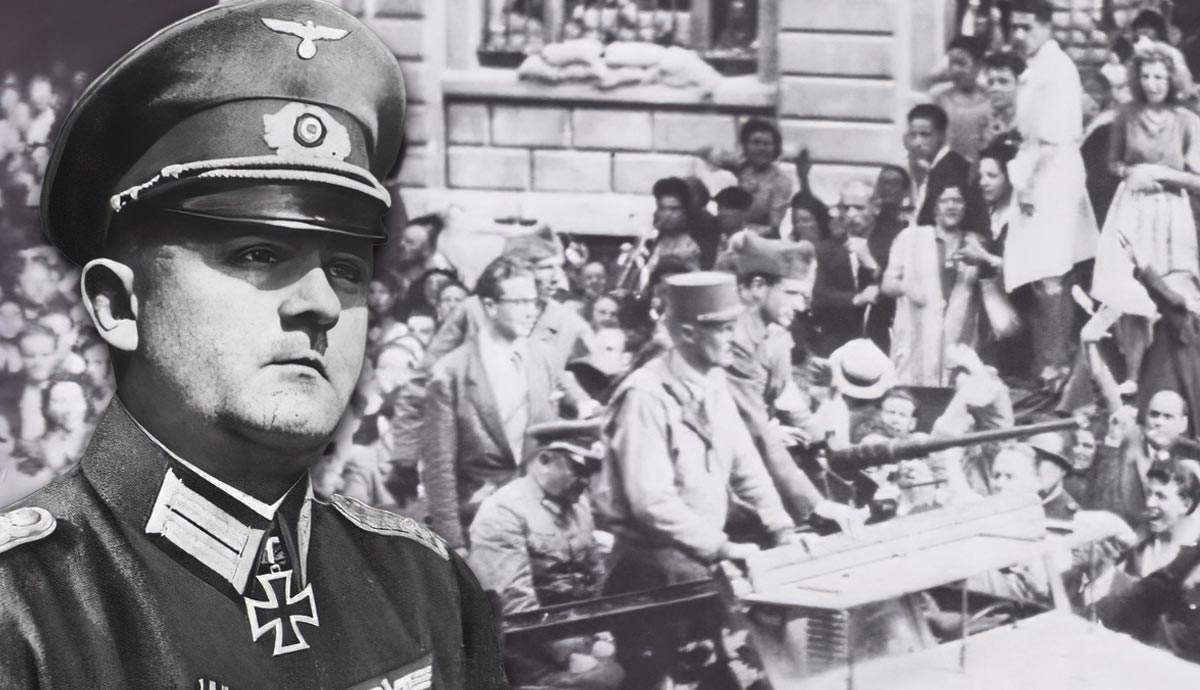
    Despite Dietrich von Choltitzs extensive career in the military, he is mainly remembered as the last commander of the Nazi forces in occupied France in 1944, who disobeyed Adolf Hitlers order to destroy the city of Paris. According to his memoirs, his disobedience was dictated by his affection for French history and culture and his belief that Hitlers mental state had deteriorated. However, there exist opinions that Choltitz did not have much control over the city due to the successful efforts of the French resistance. Was his memoir simply an attempt to reshape his image?Early Life & Military Career of Dietrich von CholtitzIs Paris Burning?, a film by Michel Landi, 1966. Source: PosteritatiDietrich von Choltitz was born on November 9, 1894, in modern-day Poland, in an aristocratic family of Prussian origins. Choltitz underwent military training and, in 1913, he joined the 8th Infanterie-Regiment Prinz Johann Georg N. 107 of the Royal Saxon Army in Dresden, Germany. With the beginning of World War I, he fought on the Western Front, participating in several key battles of the war: Battle of the Marne (September 612, 1914), First Battle of Ypres (October 19November 22, 1914), Battle of the Somme (July 1November 18, 1916), and Battle of St. Quentin (March 21April 5, 1918).After the end of World War I, Dietrich von Choltitz joined the German military of the newly established Weimar Republic. In November 1924, he was promoted to lieutenant and, in the spring of 1929, to Rittmeister, a rank equivalent to that of a captain.During the inter-war period, Dietrich von Choltitz demonstrated resilience, dedication, and leadership skills, which gained him wider recognition and fame. As a result, in 1937, he was appointed as major of the Nazi forces. Before the outbreak of World War II, Choltitz played a key role in the occupation of Sudetenland by Nazi Germany in September 1938.Soon, Choltitz was appointed as the commander of the 16th Air Landing Regiment in Sagan, tasked to prepare for the Nazi invasion of Poland in September 1939. He headed Nazi forces in key battles, including the Battle of d (September 68, 1939) and the Battle of the Bzura (September 919, 1939).Armored vehicles of the Division Leclerc fighting before the Opera, August 25, 1944. Source: Wikimedia Commons/National Museum of the US Navy, Washington DCThe decisive battle for Dietrich von Choltitz was the Battle of Rotterdam held between May 10 and 14, 1940. Following the air landing in the city, he demonstrated excellent military skills and capabilities in urban warfare, successfully securing crucial strategic locations for the Nazi forces advance.Then, Choltitz participated in the siege of Sevastopol from October 30, 1941 to July 4, 1942, though less successfully. His regiment faced strong resistance from Soviet forces. The siege proved to be a harsh and prolonged battle for the Germans, resulting in high casualty rates. In June 1944, Dietrich von Choltitz was transferred to the Western Front as head of the Army Corps tasked with curbing the Allied powers breakout from Normandy.The Liberation of ParisGeneral Charles de Gaulle during a triumphal procession down the Champs-lyses as part of the celebration of the liberation of Paris. Source: Wikimedia Commons/Imperial War Museums, LondonNazi Germany had invaded France in May 1940. France had been under Nazi occupation for almost four years when on August 1, 1944, Choltitz was promoted to General of the Infantry and appointed as the military governor of Paris, the capital city of France. Choltitz inherited limited resources and troops consisting of unmotivated and tired conscripts. On the other hand, the French resistance and the French communist party were rapidly gaining strength.By August 1944, the Allies had landed in Normandy and were advancing toward Paris, putting pressure on the German occupiers. The French Resistance, which had been organizing underground opposition since the Nazi occupation, saw an opportunity to take action. The situation became particularly tense when the French police went on strike against the Nazi occupation on August 19, 1944, marking the beginning of the French revolt. The French Forces of the Interior, a coalition of resistance fighters, launched attacks against German troops while awaiting the arrival of American and British forces, who were pushing the German army eastward.Several weeks earlier, Adolf Hitler ordered Choltitz to suppress any attempts of revolt and insurrection without pity. Already on August 20, 1944, Choltitz received a direct order from Hitler to cause the widest destruction possible of Paris, adding in a cable dated August 23 that Paris must not fall into the hands of the enemy, or, if it does, he must find there nothing but a field of ruins.At this time, the Supreme Commander of the Allied Expeditionary Force, Dwight Eisenhower, and Charles de Gaulle, the head of the French government in exile, did not plan to liberate Paris directly. Instead, they sought to encircle the city, forcing the Nazi forces to push back to the German border. The uprising, however, changed the circumstances. Larry Collins and Dominique Lapierre, authors of Is Paris Burning? (1965), recall President Eisenhowers words: Just the kind of a situation I didnt want, a situation that wasnt under our control, that might force us to change our plans before we were ready for it.Photo of Dietrich von Choltitz. Source: Wikimedia Commons/German Federal Archives, BonnOn August 20, Charles de Gaulle visited Eisenhowers headquarters in Granville, Normandy, to urge him to reconsider and liberate Paris sooner. De Gaulle feared that the communists might take control of Paris, and he saw the entrance of the Free French Forces under his leadership into Paris as a matter of national importance.Meanwhile, the situation in Paris was rapidly deteriorating. The ceasefire agreement negotiated by the Swedish consul in Paris appeared fragile and resistance fighters erected barricades and seized governmental buildings. However, despite their efforts, they had limited resources and could not liberate the city alone.Choltitz debatedHitlers directive to demolish the city. He hesitatedto carry out the order for several factors. Most importantly, a few weeks prior, Choltitz had visited the German Fhrer whose mind was in a deteriorated state. During this meeting, Choltitz became convinced that AdolfHitlers mental state was decliningand that Nazi Germany was losing the war.Ultimately, Choltitz opposed the directive to demolish Europes cultural and historical center, considering his limited capacity to cope with the resistanceand the advancing Allied forces.Choltitz sought help from Swedish Consul Raoul Nordling, a neutral diplomat who had already helped negotiate the ceasefire on August 20. Choltitz requested that Nordling send a telegram to the Allied powers urging them to move quickly into Paris.On August 25, 1944, the Free French Second Armored Division and the American Fourth Infantry Division entered Paris. The Nazi soldiers surrendered. Reportedly, Adolf Hitler called Choltitz the same day, asking angrily Is Paris burning? It wasnt.The next day, August 26, Charles de Gaulleled a paradefrom theArc de Triomphedown the Champs-lyses. Paris was liberatedand saved.Capitulation of the German forces in Paris signed by Dietrich von Choltitz, August 25, 1944. Source: Wikimedia Commons; with Photo of Dietrich von Choltitz, c. 1930-1938. Source: Wikimedia Commons/German Federal Archives, BonnAfter World War II, Dietrich von Choltitz was placed at Trent Park in London along with other high-ranking Nazi military personnel. He was eventually released in 1947 without being charged with war crimes. In Nazi Germany, the military tribunal accused Choltitz of treason and convicted him in abstention. However, with the assistance of his high-ranking military friends, the enforcement of the order was delayed until the end of World War II. Choltitzs family managed to escape execution or imprisonment.Due to his efforts in 1944, Dietrich von Choltitz became widely known as the savior of Paris. He passed away on November 4, 1966, in Baden-Baden, West Germany, at the age of 71.The Controversy Around the Figure of Dietrich Von CholtitzGeneral Dietrich von Choltitiz sitting behind General Leclerc after the liberation of Paris, August 25, 1944. Source: Wikimedia CommonsAfter his funeral, the Associated Press praised Dietrich von Choltitz as a central figure in saving Paris from destruction.Jean Edward Smith, biographer of President Dwight Eisenhower, stated:Paris was saved by the actions of several leaders, including Choltitz, who disobeyed the fhrers instruction to demolish the city; de Gaulle, who steadfastly exerted every ounce of influence as president of the provisional government to save Paris; and Eisenhower, who rejected textbook military doctrine and let common sense prevail.Indeed, World War II left most European cities in ruins, while Pariss historical treasures remained almost untouched when the war ended.In his memoirs, Dietrich Von Choltitz wrote: If for this first time, I disobeyed (an order), it was because I knew Hitler was crazy.For many, Choltitz was simply not capable of destroying the city as he lacked both manpower and material to cause such destruction. Moreover, the fact that Paris was a less critical strategic location and the citys early surrender saved it from mass destruction. Given his extensive military career, in which he had been involved in destroying cities like Rotterdam and Sevastopol without showing any sentimentality, Choltitzs actions regarding Paris appeared particularly surprising.ForLionel Dardenne, from the Museum of Order of the Liberation, Hes created a legend for himself. People make a place for themselves in history either by saving or destroying, he decided his myth would be that he saved the city.Self-proclaimed or otherwise, the truth about Dietrich von Choltitzs role in saving Paris likely falls somewhere in between.
    0 Commentarii 0 Distribuiri 5 Views
  • WWW.THECOLLECTOR.COM
    The Vessels That Changed the History of Naval Warfare
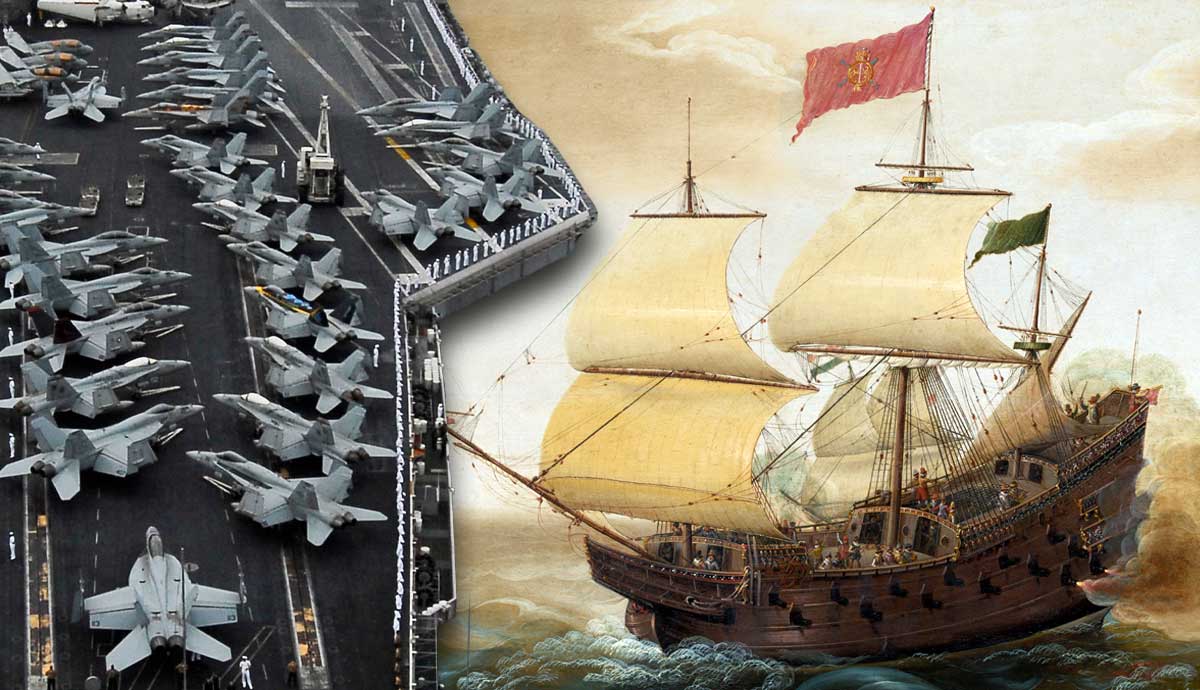
    The USS John C. Stennis and Spanish Galleon Firing Guns. Source: National Gallery of ArtThe race is a constant competition of building a better ship than your opponent. That edge could be in guns, armor, displacement, or engines. Gaining that edge did require sacrificing one of those points. Why? Because theyre weighty. Yet sometimes a design appears that forces a complete rethink, an operational change, or a sudden interruption.Changing the Medieval GameOlympias; a reconstruction of a Greek trireme, 1987, via Hellenic NavyIn the Classical Period, oar power ruled the waves. Heavily crewed Greek or Roman triremes dominated the Mediterranean. Imperial Romes fall changed all that. Sail superseded oars, especially in northern Europe. From the north came the Viking longship. This distinctive ship meant fear, as Viking warriors would not be far behind. Norse builders constructed these shallow-hulled vessels for surprise, speed, and reach.Longships proved superb in slipping up rivers, often deep inland. Vikings used the longship to glide along coastlines or beach themselves, foiling any pursuers. This ease of mobility allowed Viking raiders to strike targets of their choosing, giving them a psychological edge. No one knew where or when raids would occur.The longships clinker-built hull (overlapping boards for strength) carried the Vikings in all directions. Whether sailing to Great Britain, Greenland, or big Russian rivers, the Viking longship showed what a great naval design could do.From Coastal Efforts to Empire BuildingA Spanish galleon, via fundacionnaovictoria.orgAs the Middle Ages progressed, so did naval ship designs. Eventually, the Age of Exploration (1400s-1600s) and the Age of Sail (1570-mid 1800s) brought change. Gradual improvements meant better ships. As such, the first galleons came into use around 1570. These true-blue watercraft helped Portugal and Spain become world powers, building massive empires.Galleons performed a dual role in war and commerce. As an imperial backbone, the galleon brought wealth and goods to Europe. As a warship, the galleons speed, better sail arrangement, and broadside style gun arrangement made it a formidable opponent. Their broadsides devastated opponents trying to ram or board galleons.European powers, especially Spain, used the galleon for 150 years. Other countries with large commercial fleets, like England and the Dutch, copied the tried-and-true galleon design.The Industrial Age Creates a Naval ChangeThe CSS Merrimac and USS Monitor in 1862. Source: DM Digital MuseumFor centuries, wood and sail dominated ship construction. Starting in the 1850s, industrialization radically changed naval warfare. New technologies, like steam power and iron armor, made current navies obsolete, sparking an international arms race.These ironclads first referred to iron-covered or armored ships in the 1850s. This later evolved into true ironclads, as during the American Civil War. The first real ironclad battle occurred on March 8th and 9th, 1862, off Hampton Roads, Virginia. Though the U.S. Navy knew of the CSS Virginia, the Confederate ironclads effectiveness stunned them. The Virginia eliminated two warships and damaged a third on March 8th. The era of wooden warships officially ended.On March 9, the U.S. Navys response was the USS Monitor. Designed, built, and launched in 118 days, the Monitor had a low freeboard and a revolving twin-gun turret.The epic, point-blank clash between the two lasted three hours. Despite numerous hits, each boats armor prevented major damage. The inconclusive fight was a Union tactical victory-the blockade continued.Dreadnoughts As the Next StepThe HMS Dreadnought. Source: WikimediaNaval warfares next step came with the HMS Dreadnought. Launched in 1906, this new battleship type represented another break. Steam turbines and an all-big-gun armament design rendered previous mixed-caliber armament warships obsolete. Instead of four guns, the Dreadnought carried ten 12-inch guns in five twin turrets. The ships name even became a dictionary term for a 20th-century battleship!This arrangement maximized the Dreadnoughts broadside. Eight of the ten guns could be brought into use at any time, double that of any contemporary opponent. Like the ironclad, Dreadnought sparked an arms race in Europe, plus the Big Gun Era. For decades, the number of battleships reflected a nations big power status.Power Projection and DominanceUSS John C. Stennis. Source: U.S. NavyWorld War II would significantly change naval warfare, ending the battleships reign. The carrier-based attack of December 7, 1941, with the Pearl Harbor attack, sank 8 battleships. The following battles of Coral Sea and Midway happened hundreds of miles apart; neither fleet sighted the other. No gunfire was exchanged.Aircraft carriers first appeared during the Great War. During the interwar years, all the major sea powers experimented, especially the Imperial Navy. At these battles (and the 1940 Taranto attack), the smaller, cheaper airplanes controlled the battle. Carriers represented power projection, capable of attacking hundreds of miles away. Losses could be high, but still cheaper. Now, armor and firepower mattered less. And like the HMS Dreadnought, carriers started an arms race that continued post-war.
    0 Commentarii 0 Distribuiri 5 Views
  • WWW.THECOLLECTOR.COM
    How the Martellus Map Saw Africa and Europe During the Age of Exploration
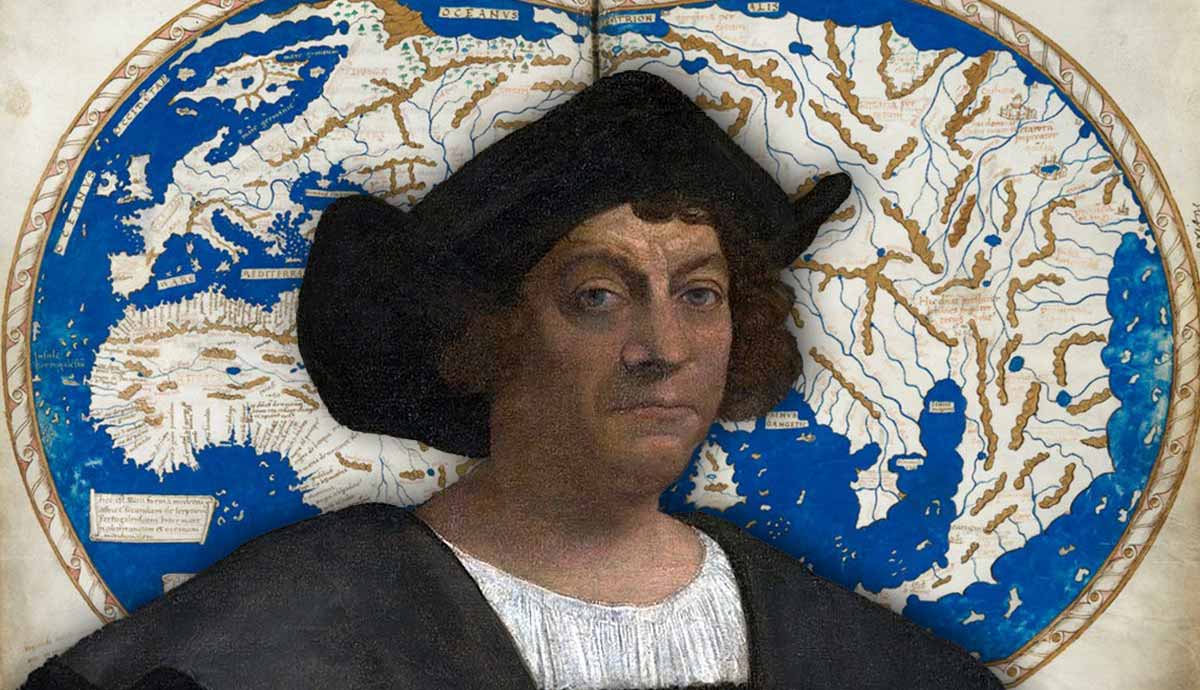
    Between the end of the Middle Ages and the beginning of the Modern Age, Western Europes understanding of the world beyond its borders started to change. Tales from travelers, pilgrims, and shipmasters radically altered the medieval picture of the globe. Meanwhile, the discovery of Ptolemys works gave a scientific basis to cartography. Active between the 1480s and 1490s, the German cartographer Henricus Martellus witnessed the beginning of the Age of Exploration that brought European explorers to Africa, Asia, and America. Today, his maps show one of the last views of the pre-Columbian world from Europes perspective.Who Was Henricus Martellus?Reproduction of the so-called Pianta della catena, a map of Florence in the 15th century originally designed by Francesco Rosselli, 1887. Source: Wikimedia Commons/Musei Civici Fiorentini, FlorenceLittle is known of the life of the cartographer who signed his maps as Henricus Martellus Germanus. We only know for certain that he was active between the 1450s and 1490s in Florence. Some suggest the name Henricus Martellus may be the Latinized version of Heinrich Hammer. While the signature indicates his German origins, no archival documents confirm this theory.Recently, research into the German community in Florence in the 15th century identified Martellus with Arrigo di Federico Martello, an employee of the Martelli family, linked to the influential Medici dynasty and patrons of the arts. A subsequent study, however, disproved this identification. To this day, his background remains unclear. It is likely, though, that he came from Nuremberg, at the time the center of the German Renaissance.When Martellus was based in Florence, all the leading cartographers based their work on Ptolemys Geography. An astronomer, mathematician, and geographer living in Alexandria during the 2nd century CE, Ptolemy remained largely unknown in Europe until the late 14th century. When the Byzantine humanist Manuel Chrysoloras arrived in Florence in 1397, he brought with him a manuscript of Geography, revolutionizing cartography.Map of Europe, Africa, the Mediterranean, and Asia, after Ptolemys Geography, by Nicolaus Germanus, c. 1460. Source: The New York Public Library Digital Collections; with Ptolemy, by Joos van Ghent and Pedro Berruguete, 1476. Source: Wikimedia Commons/Louvre Museum, ParisTranslated into Latin in 1406, Ptolemys work gave Europe a new view of the oikumene, or inhabited world, showing a more connected globe. By recording longitudes and latitudes for thousands of locations, he provided the necessary techniques to draw maps. He also showed how to reproduce the Earth on a flat surface. Like many other cartographers of his time, Martellus was deeply impacted by Ptolemys Geography, producing a series of manuscripts of the Alexandrine geographers opus.Martellus, however, did not just reproduce Ptolemys world map but updated it with a series of tabulae modernae, additional maps with the new geographical data coming in from the voyages of discovery funded by Portugal. Martelluss interest in keeping up to date with the latest data clearly emerges from his manuscript of Ptolemys Geography located at the National Library of Florence:In this very splendid manuscript are contained the Cosmography of Claudius Ptolemy with modern regional maps and all the ports and coasts, both those already known and those newly discovered by the King of Portugal.Martellus World: Europe & The Age of ExplorationThe planting of the cross by Bartolomeu Dias at the Cape of Good Hope in 1488, by F. Benda, c. 1750. Source: Wikimedia CommonsBy the time Martellus was working on his manuscripts and world maps, Western Europes view of the globe had radically changed. In the 13th century, the Pax Mongolica, a period of relative stability under the Mongol Empire, gave European travelers the opportunity, for the first time in centuries, to visit the East, expanding their geographical knowledge. Through travel accounts such as Il Millione (The Million), the travelogue compiled by Italian explorer Marco Polo, people became more familiar with China and other lands beyond India.Europes interest in the East was largely fueled by the popularity of spices. Used as a symbol of personal wealth, medicine, and cooking ingredients, spices became the worlds first globally traded product. Despite their craving for the exotic aromas, however, Europeans had only vague notions about the countries that produced them.Fra Mauros world map depicts Africa surrounded by water (shown at the top of the map), mid-15th century. Source: Wikimedia Commons/Biblioteca Nazionale Marciana, VeniceIn the 15th century, the emergence of the Ottoman Empire began to threaten Venices monopoly on the spice trade and access to the trading routes, prompting European merchants to look for ways to reach the lands where spices grew in abundance. According to Ptolemy, reaching Cathay (present-day China) by sailing around Africa was impossible, as he believed the Indian Ocean to be landlocked. The data collected by the newest explorations, however, contradicted this theory. A map compiled by Fra Mauro (pictured above) in the 1450s in Venice, for example, showed Africa surrounded by water.In the early 14th century, Prince Henry the Navigator of Portugal funded various expeditions on the western African coast. Then in 1488, Portuguese navigator Bartolomeu Dias circumnavigated the southern end of Africa for the first time. The Age of Exploration had begun. From Florence, Martellus followed the Portuguese maritime exploits, adding the newest geographical knowledge to his maps.The Martellus Map(s)Map based on Ptolemys cartographic data, c. 1480. Source: Firenze 1903Though Martelluss cartographic works are undated, scholars believe the map in the Insularium Illustratum at the Biblioteca Medicea Laurenziana (Florence) is his earliest surviving attempt to reproduce the globe on a surface.The Insularium Illustratum, meaning Book of Islands, was a popular genre in the late medieval and Renaissance periods. The one compiled by Martellus is the first to include islands outside the Mediterranean (Britain, Ireland, and Japan, among others) and a world map, a sign of the expanding horizon of 15th-century Western Europe.The world map in the Florence manuscript of the Insulatium Illustratum was likely designed around 1488, as attested by the toponym ilha de fonti (also known as Penedo das Fontes, or Rock of the Springs) in southern Africa, a name given by Barolomeu Dias to an island in Algoa Bay. Compared to the modern atlas, in Martelluss working map, the shape of Africa appears distorted, especially in the southern portion, which is drawn as an eastward jutting peninsula.The Martellus Map at the British Library, c. 1489. Source: British Library, LondonIn the copy of the world map in the Book of Island located at the British Library, Martellus modified the shape and position of Africa. Likely struggling to design a coherent image from the incomplete and conflicting information, Martellus drew the southern tip of Africa beyond the maps border.Three legends added on the continent again attest to Martelluss efforts to keep up to date with the Portuguese expeditions. This is the modern true shape of Africa according to the map of the Portuguese, from the Mediterranean Seas to the southern ocean, reads the first one. This mountain, which is called Monte Negro, was reached by the fleet of [John] the second King of Portugal; the fleet was commanded by Diego Co, who to commemorate the fact, set up a prominent marble column with a cross on it, comments a second legend referring to Diego Cos 1484-86 voyage.Martelluss emphasis on the greater accuracy of the cartographic data obtained by the Portuguese navigators is an implicit critique of Ptolemys perception of the world. In nearly all maps compiled in this period, the Ptolemaic system is shown alongside the new data, a testament to the coexistence of ancient and modern that is a key feature of Renaissance culture. In this sense, the cartographic works of Matellus (among others) provide a crucial glimpse into pre-Columbian Europes ever-shifting view of the globe.Africa & Europe in the Martellus MapsThe Martellus Map at Yale, c. 1489. Source: Yale University LibraryBesides the British Library manuscript, Martelluss individual world map located at Yale University is of particular interest. Designed around 1491, when Christopher Columbus had yet to cross the Atlantic to land on a previously unknown continent, the Yale map has considerably darkened over the centuries, making the text contained in the legends illegible. In 2014, however, a team led by historian Chet Van Duzer was finally able to decipher the maps information using multispectral cameras.Even before Van Duzers project, the Yale map (like the British Library copy) exaggerated the extent of Eurasia, a clear indication of Martellus Eurocentrism. The focus on Portuguese cartographic data regarding the African continent also reveals Europes obsession with finding a new route to the spice-growing lands in the East, a source of wealth that would derive from a combination of spices, gold, coffee, cotton, and slavery.Van Duzer and his team also found that the German-born cartographer likely based his depiction of Africa on the so-called Egyptus Novelo map. Found in three manuscripts of Ptolemys Geography, the Egyptus Novelo used data from an African source: the geographic knowledge shared by the Ethiopian delegation at the 1441 Council of Florence, a meeting that was part of an ecumenical council aimed to end the East-West Schism between the Roman Catholic Church and Eastern churches.The Martellus Maps LegacyPortrait of a Man, Said to be Christopher Columbus, by Sebastiano del Piombo, 1519. Source: Wikimedia Commons/Metropolitan Museum of Art, New York CityResearch on Martellus cartographic work shows he was still active in the 1490s, when Christopher Columbus made his first voyages across the Atlantic. However, Martellus does not mention Columbus, nor does he use data from his travels. Still, scholars believe the Genoese explorer was familiar with Martellus maps and consulted them while planning his expeditions.According to Chris Van Duzer, the Martellus maps influence on Columbuss understanding of the world emerges from a study of the writing by the navigators son, Ferdinand. In particular, Ferdinands description of Cipangu (present-day Japan) matches its configuration in Martelluss works. In no other surviving maps from the Age of Exploration, explains Van Duzer, is Japan shown as in the German cartographers map.In this sense, the Martellus maps embody the world as seen by the Europeans in the 15th century, before the discovery of a landmass across the Atlantic. Instead of showing the American continent, Martellus depicted an enormous peninsula south of present-day Malaysia. This so-called Dragon Tail is a source of debate among scholars. Some identify it with a portion of South America. Others put it down to the inexact geographical knowledge circulating at the time.The 1507 Waldseemller Map. Source: Library of Congress, Washington DCIn the 1970s, Arthur Davies even used the presence of this westward jutting peninsula to claim that the map was not the work of Martellus, but it was made by Columbuss brother, Bartholomew. According to Davies, Bartholomew distorted the map to persuade the Spanish monarchs to fund Christopher Columbuss plan to reach the East by sailing westward across the Atlantic. While this theory is undeniably fascinating, it has since been disproven.In the early 16th century, Magellans circumnavigation and Vespuccis voyages confirmed that Columbus had not reached the East but discovered a new continent: America. In 1507, cartographer Martin Waldseemller, influenced by Martellus works, designed the first world map referring to the New World as America.

    0 Commentarii 0 Distribuiri 5 Views
  • The Riftbreaker's explosive blend of co-op base building and Diablo-style action is free to try right now
    The Riftbreaker's explosive blend of co-op base building and Diablo-style action is free to try right now A gorgeous blend of base building and ARPG, The Riftbreaker manages to bring its numerous component parts together into a slick and rewarding co-op game with plenty of polish. It just got a whole lot bigger with the launch of the clinical-sounding 'World Expansion IV' update, which...
    0 Commentarii 0 Distribuiri 7 Views
  • OpenAI is delaying its adult mode for ChatGPT
    OpenAI is delaying its "adult mode" for ChatGPT Last fall, OpenAI, the parent company of ChatGPT, promised that it would enable an “adult mode” for verified users of the service sometime in the first quarter of 2026. Today, we learned that the service has been delayed.In a brief roundup, independent journalist Alex Heath revealed on...
    0 Commentarii 0 Distribuiri 7 Views
  • 0 Commentarii 0 Distribuiri 5 Views
  • 0 Commentarii 0 Distribuiri 5 Views