• WWW.LIVESCIENCE.COM
    'Striking' footage captures the moment a red fox preys on a wolf pup a behavior never seen on film before
    Scientists in Italy captured a red fox entering a den as part of a project to understand wolf population dynamics in the country.
    0 Reacties 0 aandelen 14 Views
  • WWW.UNIVERSETODAY.COM
    Making New Solar Activity Connections From Old Data
    Its tough sometimes, living with a tempestuous star. Modern human civilization and technology lives at the whim of the Sun, as it sends solar storms and punishing coronal mass ejections our way. And while we understand the overall pitch of the 11 year solar cycle, it's hard to predict exactly what the Sun is going to do next. Now, a recent study has reached back and examined over a century of solar observations, in an effort to make more accurate near-term predictions of solar activity.
    0 Reacties 0 aandelen 14 Views
  • Don't Like Tartar Sauce? Here's What To Put On Your Filet-O-Fish Instead
    Don't Like Tartar Sauce? Here's What To Put On Your Filet-O-Fish Instead...
    0 Reacties 0 aandelen 37 Views
  • Ashes of Creation director Steven Sharif breaks silence in ongoing legal battle
    Ashes of Creation director Steven Sharif breaks silence in ongoing legal battle The legal battle around Ashes of Creation is unlikely to settle in any clear way soon, but we've just received a significant update courtesy of a fresh statement from Intrepid Studios founder Steven Sharif, who was also game director on the now-abandoned MMORPG. Lawsuits are ongoing in both directions, with...
    0 Reacties 0 aandelen 37 Views
  • Wikipedia is now a gacha card game, and I challenge you to face my ultra rare German cuisine deck
    Wikipedia is now a gacha card game, and I challenge you to face my ultra rare German cuisine deck Ok, so I don't mean to alarm anyone, but I think I just found my favorite game of 2026 so far. No, it's not the freshly released Marathon, despite my affinity for competitive shooters. It's not Mewgenics. It's not that viral horse game that dropped this week. It's Wikigacha, which turns...
    0 Reacties 0 aandelen 33 Views
  • An unannounced Hunter The Reckoning game has seemingly leaked, courtesy of Robocop Rogue City
    An unannounced Hunter The Reckoning game has seemingly leaked, courtesy of Robocop Rogue City A Robocop: Rogue City update that lasted just 31 minutes on Steam before it was reversed appears to have briefly replaced the entire game with another one. The build that appeared in its place, titled "Hunter," looks to be a very early build of a Hunter: The Reckoning game. Users that were...
    0 Reacties 0 aandelen 34 Views
  • WWW.THECOLLECTOR.COM
    What Stopped the Black Death From Spreading?
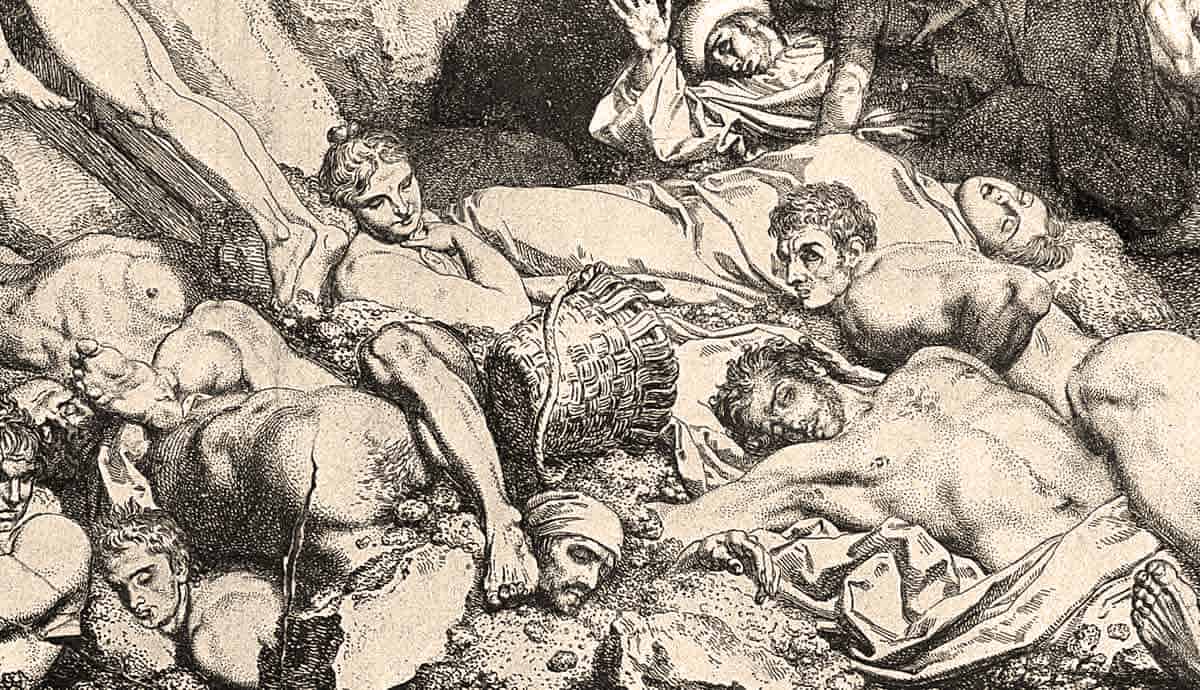
    The plague of Florence in 1348, as described in Boccaccios Decameron by Luigi Sabatelli. Source: Wellcome CollectionMany years before the world had modern medicine and clean hospitals, a debilitating plague spread across Europe. This was from the year 1347. The malady known as the Black Death caused millions of deaths during the first wave which lasted until 1351. According to many historical records, the germ is estimated to have killed between 25 million and 50 million people across Europe.Yersinia pestis was the name of the bacterium that caused the affliction. It lived in fleas hosted by black rats. The fleas in turn spread the disease to humans. Because the rats lived on trade ships, they spread the illness across different nations.The Involvement of GovernmentsThe Plague at Ashdod by Nicolas Poussin, 1631, in the Louvre Museum, ParisThose afflicted with the sickness had symptoms such as black boils and high fever, which sometimes led to death. It was in 1347 that the first disease-infested ships arrived in Western Europe through the port of Messina in Sicily. Although the ships from Caffa carried many infected bodies and people, they were allowed to dock at first. After the authorities realized the carnage onboard, they tried to send them away. But it was too late and the germ had already started to spread across the land. After the initial wave of 1347, leaders in different European cities began to notice that the sickness traveled with people and goods. Consequently, the city of Ragusa passed a law in 1377 intended to stop the spread of the disease.Woodcut of dying plague patients, 1532, via Wikimedia CommonsThe law required anyone coming from an area grappling with the ailment to stay on a nearby island for 30 days. The city officials called the duration a trentina. Soon after, the waiting time was changed to 40 days. The duration was called a quarantena. The English word quarantine was derived from that Italian word. Alongside similar rules, the city of Venice built special hospitals on islands such as the Lazzaretto Vecchio in 1423. The hospitals were used to keep the sick away from the general population. Across the continent, hygiene measures were taken to stop the spread. They included cleaning ships with vinegar, burning the clothes of infected people, and holding documents over smoke to disinfect them.Travel restrictions were also common. Many cities and regions banned or strictly limited the entry of people from plague-affected areas unless they had health certificates confirming that they were healthy or had completed quarantine procedures.There Were Social ChangesPlague in an Ancient City by Nicholas Poussin, 1650-1652, Los Angeles County Museum of ArtTo avoid getting infected, some people started to change how they lived. They stopped sharing beds with strangers and moved away from the crowded town centers to the countryside. Also, instead of living in houses made of wood and mud which easily hosted flea colonies and disease-infested rats, people started to build their homes with stone and brick. However, the trend was in part driven by fire safety precautions and legislations aimed at curbing catastrophic fires. This was especially true in the years following the Great Fire of London. The shift was an example of how a change in building architecture could save lives. It worked as rats found it harder to hide in stone walls than in straw roofs. Even though the black rat remained in Europe for a long time, the changes in housing helped reduce contact between humans and the fleas.The Rise of Acquired Immunity to the DiseasePeople fleeing from the plague, by F.L. Wilson, 1630, via Oxford UniversityOver time, genetic mutations in humans made them more resilient to the Black Death germ. Natural selection favored individuals with specific alleles, and as a result, subsequent generations displayed enhanced biological defenses. Despite the recurrence of the pestilence, deaths decreased as the vulnerable population died off. Because the people who were naturally more resistant to the disease survived the first wave, many of them were able to pass the disease-resistant genes to their children. As a result, the later outbreaks that occurred from 1360 onwards were less deadly compared to the first.Germ MutationA scanning electron micrograph depicting a mass of Yersinia pestis bacteria in the foregut of an infected flea.Past studies of bones belonging to the victims of the Black Death have unravelled changes in the genetic makeup of the bacteria that caused the sickness. It is thought that the changes caused the plague to lose its deadly properties. As a result, the germ was able to stay inside a host without killing the person. Essentially, the bacteria became a weaker version of itself over time.The lack of certain genes also allowed the germ to spread unnoticed. As a result, future infections caused fewer deaths. It was not until the 19th century that an effective elixir for the scourge was invented.
    0 Reacties 0 aandelen 16 Views
  • WWW.THECOLLECTOR.COM
    The 7 Greatest Generals of All Time Ranked by Impact
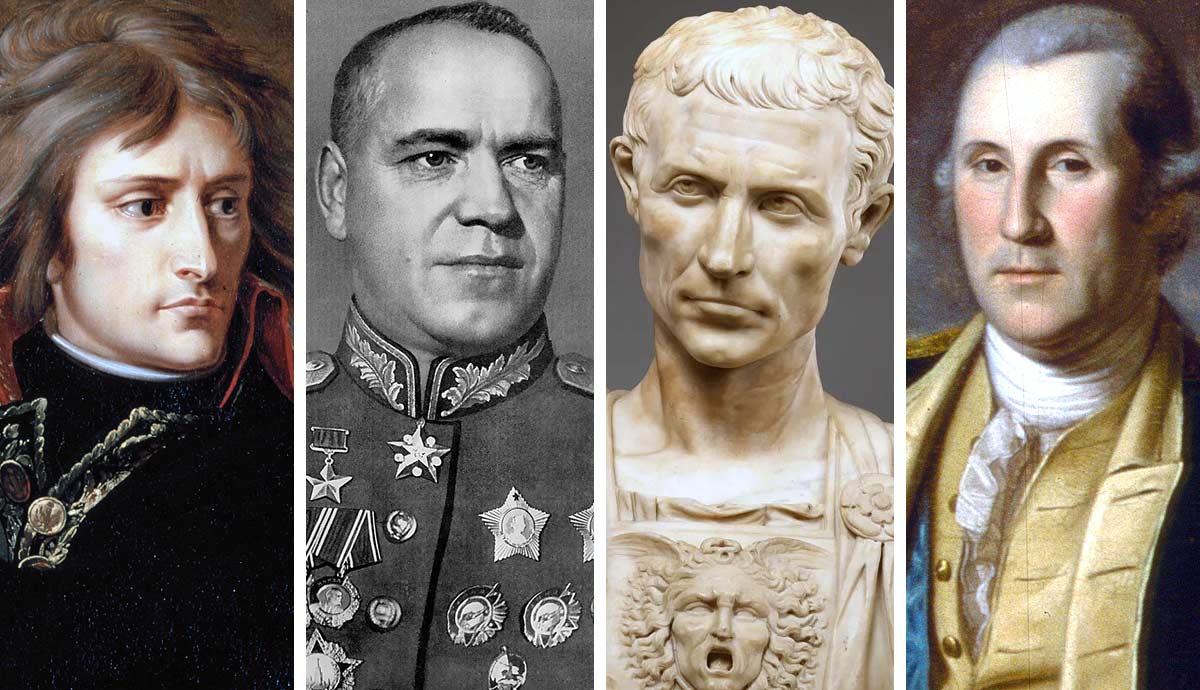
    Throughout the course of world history, talented generals have been celebrated for their prowess on the field of battle. Since victory on the battlefield does not guarantee long-term success, the true mark of greatness for a general is to achieve success in wars and campaigns that make a lasting impact on the history of the world.1. Khalid ibn al-WalidIllustration of Khalids victory at the Battle of Yarmouk in 636 CE, early 14th century. Source: Bibliothque nationale de France via Wikimedia CommonsThe Arab Conquests of the 7th century CE transformed the map of the world and marked the transition from Late Antiquity to the Early Medieval world. After the Arab tribes were united under the banner of Islam by the Prophet Muhammad, within a century of the Prophets death Arab armies created a vast empire across three continents from Portugal to Afghanistan.An important stage of the Arab expansion were the victories over Sasanian and Byzantine armies in Iraq and Syria in the 630s. These campaigns have traditionally been credited to Khalid ibn al-Walid, a talented military commander nicknamed the Sword of Allah.Born in the late 6th century into the Quraysh tribe that ruled Mecca, Khalid first entered the historical record when he defeated a Muslim army led by Muhammad at the Battle of Uhud in 625. After converting to Islam in around 629, Khalid led Muslim armies and participated in the conquest of Mecca at the end of the year.Following Muhammads death in 630, Khalid served under the caliphs Abu Bakr and Umar. After defeating a series of Arab rebellions to Muslim rule in the Ridda Wars, Khalid led victorious campaigns into Iraq (633634) and Syria (634638). His greatest tactical success came at the Battle of Yarmouk in 636, when he defeated a much larger Byzantine army by holding on to a strong defensive position while sending his cavalry to weaken the enemy ranks, eventually forcing it to rout. Despite his military prowess, Khalid fell from favor in the late 630s and died in 642 CE, though he remains a heroic figure in the history of Islam, and is recognized as one of the greatest military commanders in history.2. SubutaiSubutai, Chinese drawing, 16th century. Source: Wikimedia CommonsAfter Genghis Khan united the Mongolian tribes in the early 1200s, the Mongols burst onto the global stage and created the largest contiguous empire in world history, uniting East and West under the Pax Mongolica.While Genghis had many formidable warriors at his disposal, his most talented commander was Subutai, one of his four Dogs of War. A master of maneuver warfare, during the 1210s Subutai formed a legendary partnership with fellow general Jebe in campaigns against the Jurchen Jin and the Western Xia empires in northern China.In the late 1210s, Subutai held independent command against the Merkits, a Mongolian tribe who opposed Genghis rule and fled westwards towards Central Asia. After subduing the Merkits, Subutai participated in the conquest of the Khwarazmian Empire. Rather than returning east with Genghis, he and Jebe launched a famous Great Raid across the Caucasus into present-day Russia. The three-year campaign between 1220 and 1223 struck fear into the princes of Medieval Rus and brought valuable intelligence about Eastern European peoples.Following Genghis death in 1227, Subutai continued to serve with distinction under Great Khan gedei. In the early 1230s, he led a campaign in northern China that resulted in the extinction of the Jin empire in 1234. Between 1236 and 1240, he masterminded Batu Khans campaign to conquer the Rus and establish the Golden Horde.The Mongol armies continued westwards, and Subutai defeated the Hungarians at the Battle of Mohi in 1241. News of gedeis death forced Subutai to return east, offering the European powers a vital lifeline. The great general led a final campaign against the Song Dynasty prior to his death in 1248. His son Uriyangkhadai and grandson Aju continued to lead Mongol armies with great distinction in China.3. Han XinPorcelain pillow depicting Xiao He chasing after Han Xin, Northern Song Dynasty (960-1127). Source: Wikimedia Commons (Capital Museum, Beijing, China)Although Qin Shi Huangdi is usually credited with the unification of China in 221 BCE, the Qin Empires collapse shortly after the First Emperors death in 210 left China divided again. It was only after the reunification of China by Liu Bang, founder of the Han Dynasty, that a united Chinese empire became the norm that succeeding dynasties aspired to.In order to take power, Liu Bang was forced to challenge Xiang Yu, one of the most formidable warriors in Chinese history. When Liu led a Han army against Xiangs capital of Pengcheng in April 205, he was soundly defeated and escaped with a handful of men.A crucial factor in Lius ultimate victory was his general Han Xin, whom he appointed commander-in-chief on the advice of his chancellor Xiao He. Han devised the strategy that enabled the Han armies to conquer the strategic Guanzhong region in 206 BCE.After Liu Bangs defeat at Pengcheng, Han Xin led a large Han army to subdue the kingdoms of northern China, defeating Wei at the Battle of Anyi in August 205, Zhao at Jingxing Pass in October, and Qi at the Wei River in November 204. These victories enabled the Han to recruit larger numbers of men, a crucial advantage as Liu Bang prepared for his final confrontation with Xiang Yu.In January 202, three Han armies converged on Xiang Yu and brought him to battle at Gaixia. Han Xin exploited his numerical superiority to gain victory. After making a legendary final stand, Xiang Yu took his own life, enabling Liu Bang to become emperor.Liu Bang recognized Han Xins exploits by granting him the kingdom of Qi and the kingdom of Chu. However, the general was executed in 197 BCE after being suspected of plotting a rebellion against the emperor.4. Julius CaesarBust of Julius Caesar, by Andrea di Pietro di Marco Ferrucci, 1512-4. Source: The Met MuseumGaius Julius Caesar is one of the most famous names in Roman history. Born in 100 BCE into a prominent aristocratic family closely connected to the statesman Gaius Marius, Caesar began his military career in present-day Anatolia. He rose up the political ranks during his 30s, becoming pontifex maximus or chief priest in 63 BCE.After becoming consul in 59 BCE, Caesar brokered an informal alliance with Pompey the Great and Marcus Licinius Crassus known to history as the First Triumvirate. Caesar went on to command Roman armies in the Gallic Wars between 58 and 50 BCE, which he documented in his Commentarii de Bello Gallico.Although his legions suffered several defeats, Caesar emerged triumphant at the Siege of Alesia in September 52 BCE. He demonstrated his military genius by building a palisade wall to prevent the Gallic chieftain Vercingetorix from breaking out, before building a second wall to keep out an enemy relief force. The victory broke the back of Gallic resistance and secured Roman rule over present-day France.Caesars success in Gaul challenged the power of Pompey, who refused to allow him to bring his army into Rome to celebrate his triumph. Caesar defied Pompey by crossing the Rubicon River, initiating a civil war that resulted in his decisive victory over Pompey at the Battle of Pharsalus in 48 BCE.Victory at Pharsalus enabled Caesar to consolidate power in Rome, and he was named dictator for life in February 44 BCE. In March, he was famously assassinated by a group of senators. The conspirators were defeated by Caesars lieutenant Mark Antony and his great-nephew Octavian, who in 27 BCE became Augustus, the first Roman emperor. Although Caesar himself was never emperor, his name was adopted by future emperors of Rome, as well as German kaisers and Russian tsars.5. Georgy ZhukovPortrait photograph of Georgy Zhukov, 1945. Source: Life magazine via Wikimedia CommonsThe Allied victory over the Axis Powers in World War II resulted in the defeat of German and Italian Fascism in Europe and Japanese imperialism in Asia. Victory was a joint effort led by the United States, Soviet Union, the United Kingdom, and China, and cannot be attributed to a single individual. Nevertheless, Soviet commander Georgy Zhukov was one of the most talented and impactful generals of the Second World War.After being conscripted into a Russian cavalry regiment In 1915 during the First World War, Zhukov joined the Communists after the Bolshevik Revolution. He rose rapidly in the ranks of the Red Army during the Russian Civil War and continued his ascent in the 1930s after Stalin purged the officer class of the Red Army.In May 1939, with Japanese advances in the Second Sino-Japanese War threatening Soviet interests in Mongolia, Zhukov took command of Soviet-Mongolian forces engaged with the Japanese at the river of Khalkhin Gol. After suffering heavy casualties, Zhukov launched a counterattack on August 20 with 50,000 men supported by artillery and over 500 aircraft. After engaging the Japanese center, Zhukov sent his tanks around both flanks to encircle the enemy in a double envelopment maneuver reminiscent of Hannibals victory over the Romans at Cannae.Equestrian statue of Georgy Zhukov. Sculpture by Vyacheslav Klykov, 1995, Moscow. Source: Equestrian StatuesZhukov was promoted to general after his victory at Khalkin Gol. The battle also marked the end of Japans westward push and resulted in the Japanese military redirecting its resources towards China and Southeast Asia, indirectly leading to the attack on Pearl Harbor and US entry into the Second World War.In the meantime, despite briefly losing Stalins favor after Hitler launched Operation Barbarossa in June 1941, Zhukov led successful counterattacks west of Moscow that saved the Soviet capital from German occupation. He was also involved in coordinating the Soviet defense of Leningrad and planned the Soviet counteroffensive at Stalingrad in late 1942 that marked the decisive turning point of the war on the Eastern Front.In the summer of 1943, Zhukov was instrumental in planning the Battle of Kursk, an important Soviet victory known for being the largest tank battle in world history. He played a leading role in the liberation of Ukraine and Belarus and received Germanys surrender in Berlin.After Stalins death in 1953, Zhukov led a coup to bring down Lavrenty Beria, the notorious Minister of the Interior, facilitating Nikita Khrushchevs rise to power. He was appointed minister of defense in 1955 and supported Khrushchevs denunciation of Stalin but fell from grace himself in 1957.6. George WashingtonGeneral George Washington by Charles Willson Peale, c. 1779-1781. Source: Metropolitan Museum of Art, New YorkThe United States has been the worlds leading superpower since the end of the Second World War. While Americas rise as a continental power was facilitated by its westward expansion through the Louisiana Purchase and the Mexican-American War, none of this could have happened without its successful struggle for independence from British rule.The United States owes its independence primarily to the exploits of George Washingtons Continental Army, established by the Second Continental Congress in June 1775. Washingtons inexperienced army faced long odds against British regulars supported by German mercenaries. Although Washington took control of Boston in early 1776, defeat at the Battle of Long Island in August resulted in the loss of New York.Employing a Fabian strategy, Washington recognized that he could keep the cause of independence alive if his army, however small, could remain on the field. To offset the demoralizing effect of withdrawing against the enemy, Washington seized opportunities to strike at the enemy when he had a numerical advantage. A celebrated example was his crossing of the Delaware on Christmas night 1776 to defeat Hessian mercenaries at the Battle of Trenton.The Siege of Yorktown. Painting by Louis-Charles-Auguste Couder, 1836. Source: MutualArtWashingtons Continentals struggled in pitched battle, and defeat at the Battle of Brandywine in September 1777 resulted in the British occupation of Philadelphia, the seat of the Continental Congress. Washingtons men were forced to survive a harsh winter at Valley Forge, where the commanders presence alone prevented the army from melting away.While Washingtons tenacity kept the cause of American independence alive, the Continental Army could not achieve final victory on its own. At the decisive Siege of Yorktown in October 1781, Washington received support from the Comte de Rochambeaus French Army and Admiral de Grasses fleet to seal the fate of Lord Cornwallis garrison.After the war, Washington relinquished command of the Continental Army and retired to his estate at Mount Vernon. However, he was persuaded by his friend Alexander Hamilton to chair the Constitutional Convention of 1787 that strengthened the powers of the US federal government. He served as the first president of the United States under the new constitution between 1789 and 1797, establishing an important precedent by retiring from office after two terms.While Washington may not have been as distinguished a battlefield commander in comparison to the other men on this list, his military leadership and statesmanship makes him not only one of the most impactful generals in world history, but a historical leader who changed the world forever.7. Napoleon BonaparteBonaparte at the Bridge of Arcole by Antoine-Jean Gros, 1796. Source: Muse du Louvre, ParisNapoleon Bonaparte gave his name to the Napoleonic Wars which stormed Europe in the early 19th century and laid the foundations of modern Europe. Born in Corsica into minor nobility in 1769, he made his name during the French Revolution by crushing a Royalist uprising in 1795 and defeating the Austrians in Italy in 1796.Bonapartes fame saw him lead the Coup of 18 Brumaire to take control of the French government in November 1799. After consolidating power, he crowned himself emperor in 1804. In 1805, after abandoning his planned invasion of Britain, he led a lightning march across Europe to force the surrender of Austrian General Mack at Ulm, before achieving the greatest victory of his career over an Austro-Russian army at the Battle of Austerlitz in December 1805. After relinquishing the high ground, Napoleon enticed his foe into attacking his right flank in force before launching a decisive counterattack to break through the weakened enemy center.The Battle of Austerlitzby Franois Grard, 1810.Source: Palace of Versailles, ParisAfter achieving a string of further impressive victories over the Prussians at Jena-Auerstedt in 1806 and the Russians at Friedland in 1807, Napoleon dominated much of the European continent. At its height in around 1810, the Napoleonic Empire included the Netherlands, northern Italy, and the Adriatic coast. Spain, western Germany, and southern Italy were ruled by close family members, while Russia, Prussia, and Austria were allies.Despite his numerous battlefield victories, Napoleon was forced to abdicate in 1814 after his disastrous campaign in Russia in 1812 encouraged Britain, Russia, Prussia, and Austria to join forces against him. After being exiled to Elba, he was briefly restored to power in 1815 before his final defeat at Waterloo. He died in exile in Saint-Helena in 1821 at the age of 52.Although many of the monarchs that Napoleon had dethroned were restored after 1815, the legacy of Napoleon and the French Revolution fueled national movements in Germany, Italy, Poland, and the Balkan states. The unification of Germany and Italy and the rise of Balkan nationalist movements in the second half of the 20th century would sow the seeds of the First World War.
    0 Reacties 0 aandelen 16 Views
  • WWW.THECOLLECTOR.COM
    The Cosmopolitan History of Trieste From Roman Ruins to Austrian Coffee Houses
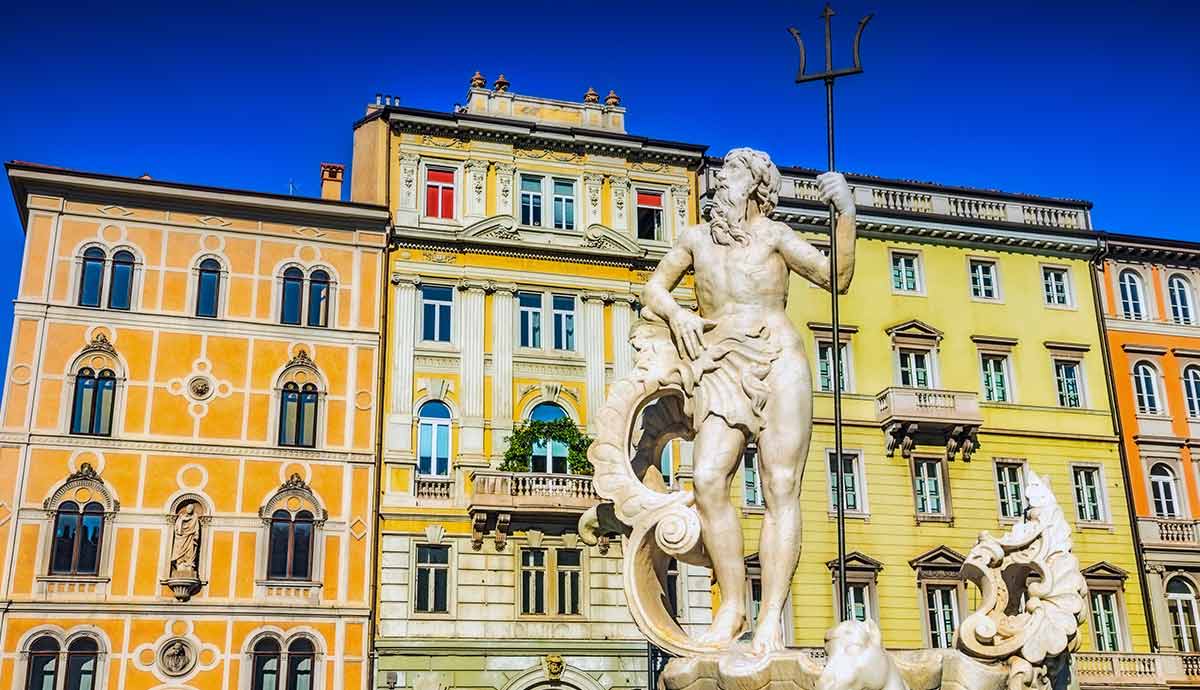
    The Adriatic port city of Trieste is one of the most unique cities in Italy. Founded on the site of Roman Tergeste and overshadowed by nearby Aquileia for much of its history, Triestes fortunes improved gradually under Habsburg rule from 1382. During the 18th century, the Habsburgs transformed Trieste into a thriving port and a cosmopolitan intellectual center, inspiring the nickname Vienna by the Sea. While Trieste has been an Italian city for most of the past century, it has retained many of these characteristics up to the present day.The History of Trieste Begins: Roman TergesteRoman theater of Trieste, photograph by Jimmy Chen, 2023. Source: Jimmy ChenThe city of Trieste derives its name from the Roman city of Tergeste, first recorded during the 1st century BCE by Julius Caesar, who granted it the status of a colony in 46 BCE. Tergeste was built on top of a hill now known as the Colle San Giusto, where the Castle of San Giusto is now located.A few years before he became emperor, Octavian ordered the construction of walls around the city. A surviving Roman arch known as the Arco di Riccardo is believed to have been a city gate. It is unclear how the arch received its name, but one theory links it to Richard the Lionheart, who passed through the area in 1192, shortly before he was taken prisoner by Duke Leopold V of Austria.Tergestes fortunes were closely connected to the nearby city of Aquileia, one of the largest cities in Roman antiquity located at the head of the Adriatic. The Via Flavia, built during the reign of Emperor Vespasian, connected Tergeste with Pula on the Istrian peninsula and the Dalmatian coast. The theater of Trieste was built in the 1st century CE and later expanded by Emperor Trajan. The ruins of a basilica dating from the reign of Trajan can also be seen on the site of the Roman Forum on the hill.Historical artifacts from the region can be seen in the citys archaeological museum, named in honor of the art historian Johann Joachim Winckelmann, who was assassinated in Trieste in 1768. He was buried in the cemetery next to the Cathedral of San Giusto. His remains were subsequently deposited in a monument built in his honor in the 1820s.The Middle AgesInterior of the Cathedral of San Giusto, Trieste, photograph by Jimmy Chen, 2023. Source: Jimmy ChenFollowing the fall of the Western Roman Empire, the Eastern Adriatic faced considerable political turmoil for several centuries. During this period, Trieste passed between the Ostrogothic Kingdom of Italy, the Lombards, and the Byzantine Empire. In 788 CE, the town became part of Charlemagnes Frankish Empire, a precursor to the Holy Roman Empire.Between the 10th and 13th centuries, Trieste was ruled by its bishop, who enjoyed varying degrees of autonomy from the Patriarchate of Aquileia, one of the most powerful ecclesiastical states in medieval Italy. The Cathedral of San Giusto, built on the site of a Roman temple next to the Forum, continues to serve as the seat of the bishops of Trieste. The first church was built in the 6th century CE, and two more basilicas occupied the site until the present structure was constructed during the 14th century. The church is dedicated to Saint Justus, a 3rd-century Christian martyr from Trieste who is venerated as the citys patron saint.By the mid-13th century, Trieste faced threats from the Republic of Venice and the Counts of Gorizia. Over the following half-century, the ecclesiastical authorities gradually relinquished their powers over the city until the government passed into secular administration by 1295. The city continued to struggle in the face of the Venetian threat and was occupied by the Venetians from 1368 to 1372.Habsburg RuleCastle of San Giusto, Trieste, photograph by Jimmy Chen, 2013. Source: Jimmy ChenAfter Venice renounced its claim to Trieste in 1381, the citizens of Trieste sought the protection of Leopold III of Habsburg, Duke of Austria. The voluntary submission was agreed in September 1382, and the city remained under Habsburg rule for the next 540 years, with a couple of brief exceptions. The Habsburgs lived up to their promise of protecting the citys autonomy and political rights.In 1468, Holy Roman Emperor Frederick III ordered the construction of a fortified residence for the Imperial Captain on the hill of San Giusto near the cathedral. This edifice, known as the Captains House, formed the core of the Castle of San Giusto, which was expanded in the 16th and 17th centuries. In 1508-1509, Trieste was briefly occupied by Venice during the War of the League of Cambrai. The Venetians constructed a round bastion to protect the Captains House but withdrew before they could carry out their intention of building a triangular fortress. Construction work began on the Lalio and Fiorito bastions in 1553, though the latter was not completed until 1636.The castle never saw any military action and was already obsolete at the time of its completion. It continued to serve as the residence of the Austrian Imperial Captain until 1750 when a palace was built in the city below. The castle subsequently served as an armory and prison and was restored in the 20th century.Imperial Trading PortCanal Grande, Trieste, photograph by Jimmy Chen, 2023. Source: Jimmy ChenTrieste reached new heights in the 18th century after the city was granted the privileges of a free port by Emperor Charles VI. The city continued its expansion during the reign of Charles successor, Empress Maria Theresa, who drained the swamps to the northeast of the old town to create the new district of Borgo Teresiano. The empress envisaged transforming Trieste into a modern Venice by constructing a network of canals. Financial pressures meant only the Canal Grande and two minor canals were completed. Nevertheless, the city became the largest port in the Habsburg Empire, with a population of 30,000 at the end of the 18th century.During the turn of the 19th century, Trieste was occupied by French troops on three occasions during the French Revolutionary and Napoleonic Wars. It became part of the Illyrian Provinces in the Napoleonic Empire between 1809 and 1813. Trieste regained the status of Free Imperial City after the restoration of Austrian rule and continued to thrive as a commercial port.Palazzo del Lloyd Triestino on Piazza dellUnit dItalia, Trieste, photography by Jimmy Chen, 2016. Source: Jimmy ChenIn 1833, the company of sterreichischer Lloyd (Austrian Lloyd) was founded in Trieste to facilitate information exchange in the shipping industry, inspired by Lloyds of London. The company began its shipbuilding operations in 1836 with the construction of six steamships for the Levant trade. The company would soon become the largest shipping company in the Austro-Hungarian Empire, carrying both freight and passengers.The opening of the Suez Canal in 1869 enabled Austrian Lloyd to expand further into Asia, running passenger services to Mumbai, Colombo, Singapore, and Hong Kong. The company had become so successful that, in 1907, it moved its operational headquarters to Vienna. After Trieste was annexed to the Kingdom of Italy, the restructured company moved its headquarters back to Trieste and was renamed Lloyd Triestino in 1919.Triestes political status was elevated in 1849 when it became the capital of the Austrian Littoral region, and the citys trade links were further enhanced by the completion of the Austrian Southern Railway in 1857, which connected Trieste to Vienna via Slovenia.Archduke Maximilian and Miramare CastleMiramare Castle, Trieste, photograph by Jimmy Chen, 2023. Source: Jimmy ChenLocated five miles to the north of the city center, Miramare Castle and its surrounding park are some of Triestes most famous attractions, welcoming some one million visitors each year. The castle was built between 1856 and 1860 for Archduke Ferdinand Maximilian of Austria, the younger brother of Austrian emperor Franz Joseph I. The archduke had been made an officer of the Austrian Navy in 1852 and appointed commander-in-chief in 1854. Since the Austrian Navy was based in Trieste, the archduke sought to build a suitable palatial residence for him and his wife, Charlotte.The castles eclectic design reflected the personal tastes of Archduke Maximilian. The ground floor was intended for the personal use of Maximilian and Charlotte. Maximilians study and bedroom were based on the cabins of the frigate Novara, which completed a circumnavigation of the world in 1857-1859, commissioned by Maximilian. Other highlights include the library and the Throne Room on the first floor.The Library at Miramare, Trieste, photograph by Jimmy Chen, 2023. Source: Jimmy ChenA few years after Maximilian and Charlotte moved into Miramare, the archduke accepted an invitation from Mexican conservatives to become emperor of Mexico. The couple duly left for Mexico aboard the Novara in 1864. Although he was able to establish a government in Mexico City with French military assistance, Maximilians reign as Emperor of Mexico was tragically brief.The conservatives were no match for Benito Juarezs Republicans, and after Napoleon III withdrew the French troops, Maximilian was captured by the Republicans in May 1867 and executed on June 19, 1867. In 1868, the Novara brought Maximilians body from Mexico to Miramare en route to the Imperial Crypt in Vienna.After Maximilians death, Miramare continued to host members of the Habsburg imperial family, and Empress Elisabeth (Sisi) stayed in the castle on more than a dozen occasions. After Trieste became part of Italy in the aftermath of the First World War, Miramare became the residence of Duke Amadeo of Aosta, the cousin of King Victor Emmanuel III of Italy.City of CultureExhibits from the Carlo Schmidl Museum of Theatre in Palazzo Gopcevich, Trieste, photograph by Jimmy Chen, 2023. Source: Jimmy ChenTriestes success as a trade hub made it a cosmopolitan city during the 19th century. Small but wealthy communities of Greek and Serbian merchants sponsored the construction of Orthodox churches, while the Great Synagogue of Trieste, built in 1912, served the citys rich and influential Jewish community. The citys architecture, particularly in the Borgo Teresiano, resembled that of the Austrian capital of Vienna.As a major European center of the coffee trade, Trieste came to be known for its coffee culture, and it continues to be regarded as Italys coffee capital. The citys famous coffee houses attracted several prominent writers and intellectuals at the turn of the 20th century. Italian writers Umberto Saba and Italo Svevo were born in the city, and Trieste served as James Joyces primary residence from 1905 to 1920. The Caff Pirona in Trieste was a favorite spot for all three, and according to local legend, Joyce began writing Ulysses in the caf.During this period, Trieste was also subject to ethnic and social unrest as the Austrian authorities struggled to deal with nationalist sentiment among the citys Italian and Slavic populations. According to the 1910 census, 52% of the population spoke Italian, and 25% spoke Slovenian, compared to the 5% of German speakers, most of whom were government officials. In December 1882, the Italian nationalist Guglielmo Oberdan was arrested and executed for planning an assassination attempt on Emperor Franz Joseph during the latters visit to Trieste.The History of Trieste During the World WarsApartment Building with flags of UK, USA, and the Free Territory of Trieste, Trieste, photograph by Jimmy Chen, 2023. Source: Jimmy ChenFollowing the outbreak of World War I, Italy joined the Allies in 1915 intent on annexing Trieste and other Italian-speaking territories, called terre irridente (unredeemed territories) in Italian, from the Austro-Hungarian Empire. Most of the citys inhabitants refused to fight for the Austrians and instead enlisted in the Italian Army.After the collapse of the Austrian war effort in late 1918, Italian troops occupied the city in November. The Italian annexation of Trieste was formalized in the Treaty of Rapallo of 1920, signed between Italy and newly independent Yugoslavia. Under the agreement, Trieste was transferred to Italy, but its surrounding hinterland became part of Yugoslavia. The partition led to a decline in the citys economic fortunes.During the interwar period, Trieste lived under Italian fascism, and the passage of anti-Jewish legislation in 1938 prompted attacks against the Jewish community. During the interwar period, Trieste served as the major European transit hub for European Jews emigrating to Palestine. During the Second World War, Trieste escaped heavy fighting until late 1943, when it became part of the Italian Social Republic, commonly known as the Republic of Sal, the German puppet regime headed by Mussolini in northern Italy. In 1944 and 1945, the city witnessed attacks by Slovene Partisans and Allied air raids targeting port facilities.The Yugoslav forces took over the city at the beginning of May and launched brutal reprisals, known in Italy as the Foibe massacres, against Italians and anti-Communist Slovenes. They withdrew on June 12 after an agreement with the British. The city came under joint Anglo-American administration and was mentioned in Winston Churchills famous speech in March 1946 when he declared, From Stettin in the Baltic to Trieste in the Adriatic an iron curtain has descended across the continent. The Anglo-American occupation was formalized in 1947 with the establishment of the Free Territory of Trieste. In 1954, the city returned to Italy, but border disputes with Yugoslavia were not resolved until 1975.A latte and Sachertorte at the historic Caff Stella Polare in Trieste, founded in 1865, photograph by Jimmy Chen, 2023. Source: Jimmy Chen.Triestes economy experienced a revival at the turn of the 21st century after Slovenia gained independence from Yugoslavia in 1991 and joined the European Union and Schengen Area in 2004. This eliminated border controls between Italy and Slovenia and restored Triestes trade links with its historical hinterland.Although not as famous as other Italian tourist destinations such as Rome, Florence, or Venice, Trieste has been attracting large numbers of foreign tourists in recent years. It remains a center of the coffee trade, and its historic coffee houses continue to attract a large number of artists and intellectuals. Trieste serves as a prominent hub for scientific research in Europe, hosting organizations such as the International Centre for Theoretical Physics and the World Academy of Sciences.
    0 Reacties 0 aandelen 16 Views
  • WWW.THECOLLECTOR.COM
    How Naval Warfare Went From Triremes to Galleons
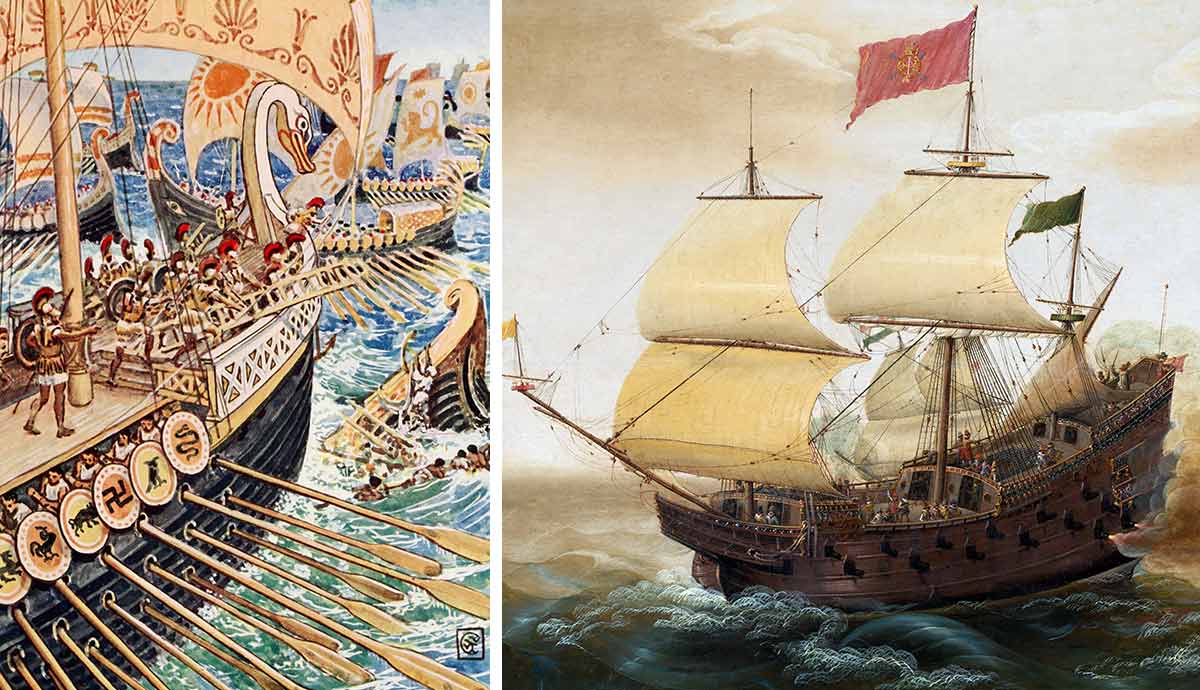
    In ancient times through to the present, war has been fought in many realms, from land to sea, and in the air. From the dawn of civilization, the ocean has played host to some of the most devastating engagements, where entire fleets clashed in an effort to gain supremacy. These salty battlefields heard the screams of sailors, the creaking and snapping of wood, and the crackling blazes of boats on fire.From the whistle of arrows to the thunder of cannon, here is how naval warfare changed from triremes to galleons.The Trireme and the Age of the OarThe Battle of Salamis by Walter Crane from The Story of Greece: Told to Boys and Girls by Mary MacGregor. Source: Wikimedia CommonsIn the world of Greek antiquity, naval warfare was based on the design of sleek ships built for speed. Triremes, so named for their three banks of oars, were built of lightweight wood and were highly maneuverable. At their prow was a heavy bronze ram, designed to sink enemy ships by punching a hole below the waterline. The trireme evolved from the earlier pentekontor, which had fifty oars and room for cargo and passengers. The pentekontors main purpose was to ferry troops for coastal raids and boarding actions, while its ram came in useful if the opportunity arose.Diagram of the three banks of oars in the trireme. Source: Pearson Scott Foresman/Wikimedia CommonsThe bireme followed, with more oars, split into two banks, and reduced room for cargo, eventually followed by the trireme, with 170 oars, purpose-built for sinking enemy ships like a guided missile. Unlike the pentekontor and the bireme, the triremes main focus was its ram, and it was a ship purpose-built for combat rather than with any dual-purpose.It is difficult to determine exactly where these ships originated, with some historians purporting the Egyptians or the Phoenicians to have invented them. It was the Greeks, however, who made these warships really famous. By the end of the sixth century BCE, Persia, the superpower of its day, was on its way to building a formidable navy and was able to field a massive fleet of triremes, providing impetus to Greek city-states to do the same if they wished to resist Persian expansion into the Aegean.Administering massive fleets in battle required the skilled use of tactics on a grand scale. The Greeks employed two primary forms of attack called the diekplous and the periplous. The diekplous involved a column of ships in single file attempting to penetrate the enemy line. By sailing through the enemy line, ships would also attempt to plow into banks of enemy oars, snapping them, thus leaving enemy ships crippled. Once this was achieved, the attacker could then circle around and attack the enemy from the rear and the flanks. Periplous involved outflanking the enemy by line abreast, targeting the weak flanks, and attempting encirclement. Both tactics could be countered by employing the kiklos (cycle) or hedgehog formation, which involved forming a circle of ships that presented no weak flanks to the enemy.The Olympias, a modern reconstruction of a Greek trireme. Source: Wikimedia CommonsOf particular note during this era of naval warfare was the Battle of Salamis, which involved over a thousand ships, and where the Greeks soundly defeated the Persians, forcing the latter to abandon their campaign of conquering Greece.During the Hellenistic era and the era of Romes primacy, triremes evolved to be bigger and more complex. The prefix on the names of these ships was determined by the number of rowers per vertical file or section. Quadremes (four), quinqueremes (five), hexaremes (six, etc.), septiremes, octereis, enneres, and deceres all sailed the Mediterranean. Even larger ships were built, but likely were not used in combat.After the fall of Carthage, Romes dominance of the Mediterranean became apparent, and after the Battle of Actium, which neutered Greek and Egyptian power, Rome no longer needed a fleet that was intended for large-scale engagement. Larger ships, however, were kept on as flagships and troop transports, but the focus shifted back to smaller, more maneuverable vessels, like the liburna, for patrol and anti-piracy operations. The liburna was essentially a bireme galley, typically having 18 oars on each side.Transition: Dromons and CogsA conjectural reconstitution of a dromon. Source: Wikimedia CommonsBy the end of the ancient era, the dynamic of naval warfare was changing, spurred on by technological advancements that made the trireme and its direct descendants obsolete. Grappling hooks and boarding actions required more stable vessels, and ship design evolved to take this into account.The dromon evolved out of the Roman liburna, and sported a full deck and a triangular or lateen sail. The ram was dispensed with, likely due to innovations that made ship hulls more resistant to ramming, but this was replaced with a spur, which was perfect for crushing oars, thus crippling the propulsion of enemy vessels.A good example of dromons being used in combat was the siege of Thessaloniki, in which the Saracens besieged the Byzantine city from the water. They did this by lashing their dromons together and using the fore and aft castles as siege towers, assaulting the walls of the cities with troops, and hurling projectiles.A model of a cog in the Polish National Maritime Museum in Gdansk. Source: Wikimedia CommonsIn other instances, the dromon served as the platform for the use of Greek fire, a combustible liquid that was essentially the predecessor to modern napalm, although the exact composition of Greek fire remains unknown. A siphon mounted on the front of Byzantine dromons acted as a flamethrower, engulfing enemy ships with sticky, burning fuel that was almost impossible to extinguish.For trade and transport, round-hulled ships known as cogs were in widespread use. These vessels saw introduction around the 10th century in northern Europe. The primary purpose was as cargo ships, and these boats plied the waters of the North and Baltic seas. Naval combat was rare in this part of the world, and when needed, cogs could be outfitted with fore and aft castles to turn cogs into combat vessels. They evolved from Frisian trading craft similar to Viking knarrs with their flat-bottomed hulls, and were designed for use in shallow coastal waters, although they were quite capable of venturing further out into the sea.Gunpowder: A Fundamental Shift in Naval CombatAn illustration of a soldier with a primitive handgonne, the precursor to modern firearms. Source: Wikimedia CommonsThe introduction of gunpowder signaled a shift in military tactics not just on land but at sea, where it would have a devastating effect. Early usage of gunpowder on ships came in the form of breech-loading guns generally used for deck clearing rather than sinking enemy vessels. Early artillery found a place on cogs, as these ships were sturdy enough to carry primitive cannon as well as transport troops.Evidence for this comes from 1338 in the Battle of Arnemuiden, in which the English fought against the French. The English cog Christopher mounted three cannon and a handgonne. Later in the century, cannon saw use in Asia during the Battle of Lake Poyang in China in 1363, and the Battle of Jinpo in 1380, in which the Koreans, armed with just 80 ships and equipped with cannon, defeated a Japanese pirate fleet of 500 ships.Ship design thus evolved to take into account the need for cannon as they became the primary weapon through which naval action would take place. Initially, cannon were heavy and unreliable, and used mainly for demoralizing the enemy, but as technology improved, it became clear that the power they were capable of projecting was unmatched by any other ship-borne weapons. Eventually, warships became dedicated platforms, bristling with banks of cannon that could inflict incredible damage, not just on other vessels, but on shore defenses and settlements.The Age of SailAn illustration of the Mary Rose from The Anthony Roll of Henry VIIIs Navy. Source: Pepys Library/British Library/Wikimedia CommonsOriginally, guns were mounted on the forecastle and sterncastle of warships, which aligned with the tactic of attacking head-on. They fired down at enemy ships, but their size and firepower made the ship top-heavy. This dynamic evolved quickly with more cannon being introduced to warships. To improve stability and to maximize damage, cannon placement was shifted over time, and placed lower down on the ships, and was done so in banks along the side.Carracks were large ships designed as transport and cargo vessels. They were large enough to sport a significant number of cannon, and continued to evolve in form. Their descendant was the galleon. One of the most prominent carracks that exemplified this transition was the English Mary Rose, launched in 1511, and sunk in 1545 at the Battle of Solent, in action against the French. When it was sunk, the ship carried a total of 91 guns, including cannon and anti-personnel piecesa clear indication of the evolution of the broadside tactic which would dominate naval tactics for centuries to come.The capture of the Portuguese carrack of St. Thom by Floris Balthasarsz van Berckenrode, 1605, from the account of Joris van Spilbergens journey to the East Indies in 1601-1604. No. 10. Source: Wikimedia CommonsDeveloped in Spain and Portugal, galleons evolved from carracks and were large multi-decked ships designed for cargo transport and for war, although their primary focus was for combat. Their size meant they could carry many cannon, and they were pressed into service during the Age of Exploration from the 16th to the 17th centuries. They were also sleeker and more maneuverable than their carrack forebears.During the age of sail, the broadside became the major tactic of naval combat. Ships presented their sides to the enemy vessels and opened fire with numerous cannon, creating a short and single attack that could cripple an enemy vessel in a single blow (if the ship was weak enough), but more often than not, the broadside was designed to weaken the enemy ship through successive waves of broadsides, smashing holes in the hull, ripping the sails and rigging, and causing casualties.A Spanish galleon, detail from A Naval Encounter between Dutch and Spanish Warships by Cornelis Verbeeck, 16th century. Source: Wikimedia CommonsWhole fleets could form up in parallel lines and present volleys of broadsides, and thus naval combat evolved into an artillery duel in many contexts. Relying on broadside tactics meant that ships had to be mobile enough to pull off the maneuver, as well as evade enemy ships trying to do the same. Ramming and boarding gave way to long-range combat and strategic positioning. Being able to pull up right next to a ship, within grappling distance, and unleash a broadside at close range was a rare occasion, but when it did happen, it was completely devastating.In 1805, the established tactics were changed from ships forming lines and pummeling each other with cannon. Outnumbered and outgunned, Admiral Nelson won a great victory for the British against the combined French and Spanish fleet at Trafalgar, with a tactic that was somewhat reminiscent of diekplous, although the weapons, the ship-to-ship combat, and the overall effect that was required had changed dramatically from the triremes that employed the strategy so effectively 2,000 years earlier. Instead of smashing oars (which were no longer present on boats), Nelsons forces broke through the line at two places and cut the French and Spanish fleet in three, causing chaos and loss of cohesion. Nelson did away with the tactic of parallel lines pummeling each other with cannon, and instead crossed the T, a tactic which saw widespread adoption in the following decades.The Battle of Trafalgar by Clarkson Frederick Stanfield, 1806. Source: Wikimedia CommonsFor centuries, cannon broadsides were the hallmark of naval combat, but ship evolution and naval warfare did not stop evolving. Guns became more accurate. Wood gave rise to steel. Aircraft became a factor, and missiles, radar, and sonar were introduced, while submarines silently hunted their prey, all fundamentally changing how ship-to-ship combat was conducted.

    0 Reacties 0 aandelen 16 Views