How China and Japan Shaped Each Other Through War and Trade
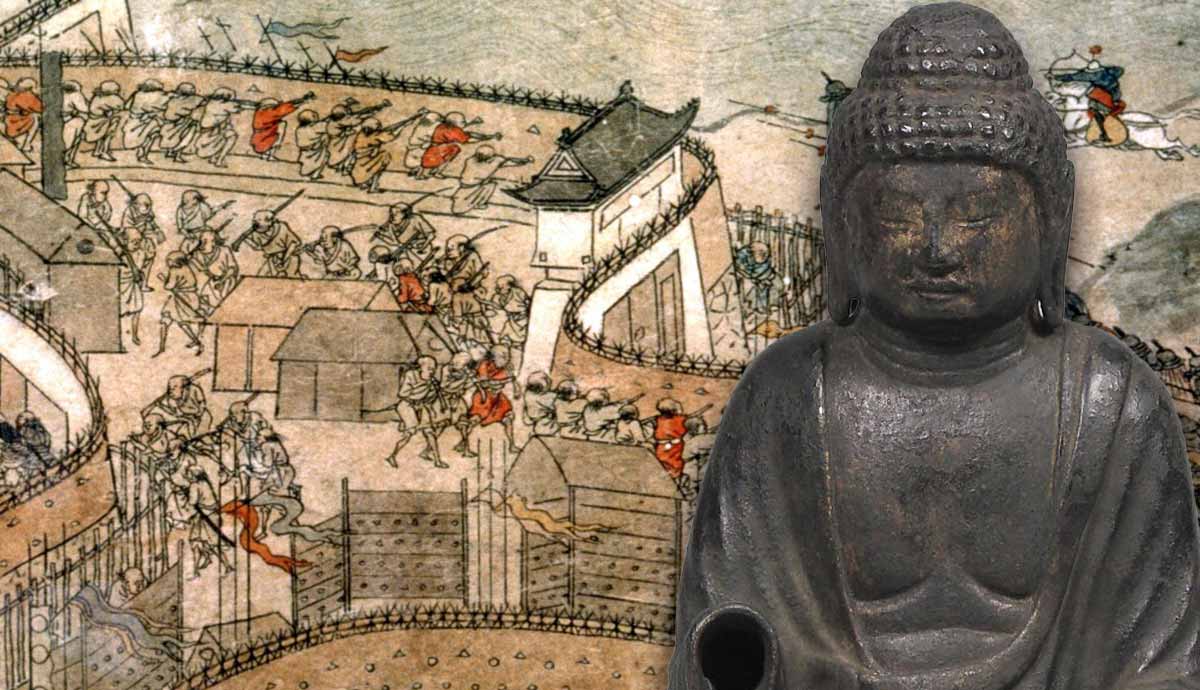
Almost 2,000 years ago, Han China first acknowledged Japan. It started with Emperor Guangwus gift of a golden seal of the King of Na of the state of Wa, which was the name for the Japanese islands at the time. China knew of Wa and recognized its existence as a sovereign nation rather than just another geographical region. From periods of cultural exchange, trade, and tragically several periods of war and occupation, Japan and China have historically been two of the most influential powers in the East Asian region. Their dynamic continues to shape the world.The Period of Initial Cultural InfluenceMap of the Tang Dynasty at its greatest extent. Source: Wikimedia CommonsFor the majority of recorded history in Asia, China has been viewed as the pinnacle of culture to which other nations should aspire. The gold seal mentioned above was a gift from the kingdom of Wei to the King of Na. Yamatai, the strongest kingdom of what is now Japan, was ruled by Queen Himiko, who sent emissaries to the Wei Dynasty in 238 CE as reported in the Weizhi. From then forward, China recognized the various kingdoms of Japan as a sovereign country and a tributary state. It is thought that Queen Himiko had sent emissaries to China as an effort to add further legitimacy to her status as ruler of Yamatai.During the Tang Dynasty (618-907 CE), the countrys wealth and prestige increased dramatically. In efforts to centralize the government to model it after the Chinese bureaucratic model that seemingly had led to its prosperity, Emperor Kotoku instituted the Taika Reforms in 646. These decrees, among other things, regulated the size of villages (groupings of 50 houses), reallocated the tax system (based upon the amount of land dedicated to rice fields), and required that the court keep a census. In turn, the Japanese adopted the same writing system as China, as well as much of its architecture and religion.Buddhisms Introduction to JapanSeated Buddha, Heian Period. Source: Metropolitan Museum of ArtBuddhism was introduced to the Japanese islands on a large scale by emissaries from the kingdom of Baekje, a province of Goryeo (present-day Korea), which was a Chinese tribute state, in 552 CE. They presented Emperor Kinmei with several images of the Buddha and some pages of Buddhist scripture (at least as relayed in Nihon Shoki). The emperor presented Minister Soga Uwari with two of them. The ruler of the Soga clan built a new temple on his lands, and he adopted the practice of Buddhism. At first, there was backlash from the other ministers, who derived their power from their position as spiritual leaders for the indigenous Shinto faith.Buddhism was seen as a more sophisticated religion and one that meshed more cleanly with Shinto than might have been expected. The native kami of Shinto were reframed as manifestations or aspects of the Buddha. Therefore, it was easier for Buddhism to spread throughout the populace and integrate into Japanese culture. The introduction of Buddhism increased literacy (for the sake of reading the sutras) and helped to build wealth and knowledge.In addition to Buddhist beliefs, the cross-pollination of culture between Japan and China brought Confucianism to Japan, which heavily influenced the above-mentioned Taika reforms.Break With the Tang DynastyTang Emperor Taizong gives an audience to Gar Tongtsen Yulsung, the ambassador of Tibet, 641 CE. Source: The Palace MuseumAlthough the Tang Dynasty was Chinas supposed golden age, all good things must come to an end. China had enjoyed a boom of prosperity thanks to the many trade caravans that traveled back and forth along the Silk Road, exchanging goods and ideas with Sassanid Persia, the Uighur steppe nomads, the Abbasid caliphate, India, and other groups. The capital city of Changan was considered one of the most cosmopolitan cities in the world, easily the equivalent of Constantinople. However, a number of factors led to the decline of the Tang, perhaps most prominently the 787 Huang Chao rebellion. The policies of various Tang emperors had led to increased taxation on commoners, and coupled with famine caused by several natural disasters, made it almost impossible for people to grow enough food to survive. The Imperial court was not powerful enough to withstand these circumstances, leading to the end of the Tang in 907.The Japanese government had been sending official envoy missions known as kentoshi since 630 CE. These were large-scale missions, consisting of over a dozen ships each, carrying trade goods/tribute, as well as various representatives who were tasked with learning as much as they could about Chinese culture.Sometimes, these representatives could stay for years or decades before returning home to disclose their learnings. The decline of Tang hegemony led to dangerous conditions for visitors, and combined with the inherent perils of sea travel and the rise of private trade networks, the government believed that the kentoshi missions were no longer worth the risk. They also felt they had garnered all the knowledge from China that they needed. The last mission took place in 837, and from this point onward, official diplomatic relations between China and Japan in the classical period ended.Trade Relations in Medieval and Premodern TimesExtent of the Silk Road with land and maritime routes. Source: TheCollectorEven after Japan ceased its outreach to China as a diplomatic partner, Japanese and Chinese goods were traded through private merchants. Primarily, these merchants came from the Zhedong region of China as well as from the Silla kingdom in Korea. Trade between China, Korea, and Japan, as well as other countries in the Southeast Asian region, was controlled by a Silla prince named Chang Pogo (spelled in Chinese as Zhang Baogao), and when he died, private merchants gradually took over those trade routes.The kentoshi of earlier years had brought prestige items as well as religious objects to Japan, and these expeditions were few and far between. Private trade, on the other hand, happened more frequently and specialized in goods that everyone could use and access. Japan would import silk, precious metals, and medicine from China, and in return would export swords, paper, and lacquerware, among other things.The increase in private trade led to an increase in wealth among the merchant classes. Although from a social standpoint, merchants were looked down upon according to the Confucian value system, they were recognized as playing a valuable part in society and over time came to have more actual power than military leaders like the shogunate of Japan or the Chinese imperial court.With the increase in maritime trade, pirates called wokou sailed along the coasts and trade routes, capturing ships when they could. This ultimately led to Japan losing its tribute and trade rights with China.The Mongol InvasionsMoko Shurai Ekotoba (Mongol Invasion Scroll). Source: Wikimedia CommonsOne of the most pivotal events that shaped Japanese history was the attempted Mongol invasion of 1274 and 1281. At the time, China was under the control of Kublai Khan, who had started the Yuan Dynasty and intended to continue expanding the Mongol empire. The Khan sent several emissaries to Japan to request that they pay tribute and recognize the sovereignty of the Mongol leadership; Japan did not respond.In 1274, the Mongols invaded and were thwarted by a typhoon. During the intervening years, the Mongols gained control of southern China and attempted another, much larger, invasion. Although the Japanese were better prepared for the second invasion than the first, it was still a wake-up call for the shogunate. They saw that the old way of war-making from the samurai would not suffice against a foreign power.The second invasion was again stopped by a combination of Japanese preparations, a well-timed storm (that occurred out of the normal storm season), and some questionable tactics on the Mongols part. Ultimately, the two consecutive Japanese victories against what they saw as overwhelming odds cemented the belief that Japan was somehow divinely protected and contributed to the cultural notion of inherent superiority. This, combined with the poor natural resources on the Japanese islands, led to several Japanese attempts at colonizing parts of the Asian mainland.Toyotomis Invasion of KoreaThe Battle of Sunchon. Source: GW Institute for Korean StudiesFor the next three centuries, Japan was mired in various internal struggles. The Kamakura shogunate, led by Hojo Tokimune, helped to repel the Mongol invasion. There was a brief period of Imperial restoration that gave way to the Ashikaga shogunate, which in turn was weakened due to the Onin War and the subsequent Sengoku Jidai. Europe, at this time, was also beginning to send trade and missionary missions to various Asian countries, including Japan.By 1592, Toyotomi Hideyoshi, Oda Nobunagas top general, had succeeded in uniting the various daimyo of Japan under his rule, almost (but not quite) putting an end to nearly a century and a half of warfare. At this point, he decided to turn his attention to Korea and China, intending to subjugate these nations and even land as far away as the Philippines and India.Ming China, which had adopted Korea as a client state, was obligated to provide defense. Over the next seven years, at least 100,000 soldiers were sent. The war effort played a major role in toppling the Ming Dynasty, which could not replenish its coffers. In 1644, the Ming Dynasty collapsed, giving way to the Manchu-led Qing Dynasty. The Japanese, meanwhile, instituted the sakoku policy of seclusion from the outside world.The Opium Wars and the Meiji ReformsBritish Ships Sailing Toward Canton, May 24, 1841. Source: Wikimedia CommonsBy the middle of the 19th century, the United States and various European countries had industrialized and modernized their militaries. Unfortunately, neither China nor Japan had had the opportunity or resources to do this. In the 1840s, Great Britain, through the British East India Company, was making a profit on trading opium in the region. The Qing administration attempted to make opium illegal because of the harm it inflicted on the population. Great Britain made war on China, forcing the ban on the opium trade to be lifted.Japan, although in self-imposed isolation, was aware of the happenings of the world. It looked upon China as an example of what could happen if it did not adopt Western culture and technology. In 1853, Commodore Matthew Perry came to Japan to seek trade negotiations with the United States after a show of force. Ultimately, Japan instituted the Meiji Reforms, which brought the country into a modern industrial footing, making Japan the preeminent power in Asia.Modern RelationsJapanese Imperial soldiers in China. Source: Wikimedia CommonsIn the late 19th and the first half of the 20th century, Japanese and Chinese relations were marked by almost constant warfare as Japan adopted a campaign of aggressive expansionism and imperialism. Among the territories Japan invaded were Manchuria and Korea. The Imperial military committed many horrific acts (most infamously the Nanjing Massacre of 1937) against the populace, whom they saw as unworthy of humane treatment. Although Japan did acknowledge its role in the war and China renounced its reparation demands, Japanese history textbooks often downplay or eliminate the atrocities committed during the war.After World War II, Japan and China sought to resume diplomatic and trade relations, signing a treaty on September 29, 1972, that marked a normalization of diplomatic relations. Japan and China, in the 21st century, have combined their resources to further the prosperity of Asia.













 Arabic
 French
 Spanish
 Portuguese
 Deutsch
 Turkish
 Dutch
Dutch
 Italiano
 Russian
 Romaian
 Portuguese (Brazil)
 Greek
Greek