• Why Minnesota lawmakers are trying to ban crypto ATMs
    Why Minnesota lawmakers are trying to ban crypto ATMs In a joint effort between Minnesota lawmakers, local law enforcement, and the Department of Commerce, legislation has been introduced to ban crypto ATMs across the state in response to widespread fraud and financial abuse, particularly of the elderly. Bill HF3642, sponsored by...
    0 Commenti 0 condivisioni 13 Views
  • Anthropics Claude overtakes ChatGPT as #1 in App Store
    Anthropic's Claude overtakes ChatGPT as #1 in App Store In the battle for AI supremacy, Anthropic’s Claude has just managed to dethrone OpenAI’s ChatGPT in Apple’s App Store, claiming the #1 spot as the most-downloaded free app in the United States, leaving ChatGPT in second and Google’s Gemini a distant fourth.This sudden surge in the...
    0 Commenti 0 condivisioni 7 Views
  • WWW.THECOLLECTOR.COM
    9 Largest Armies That Shook the Medieval World
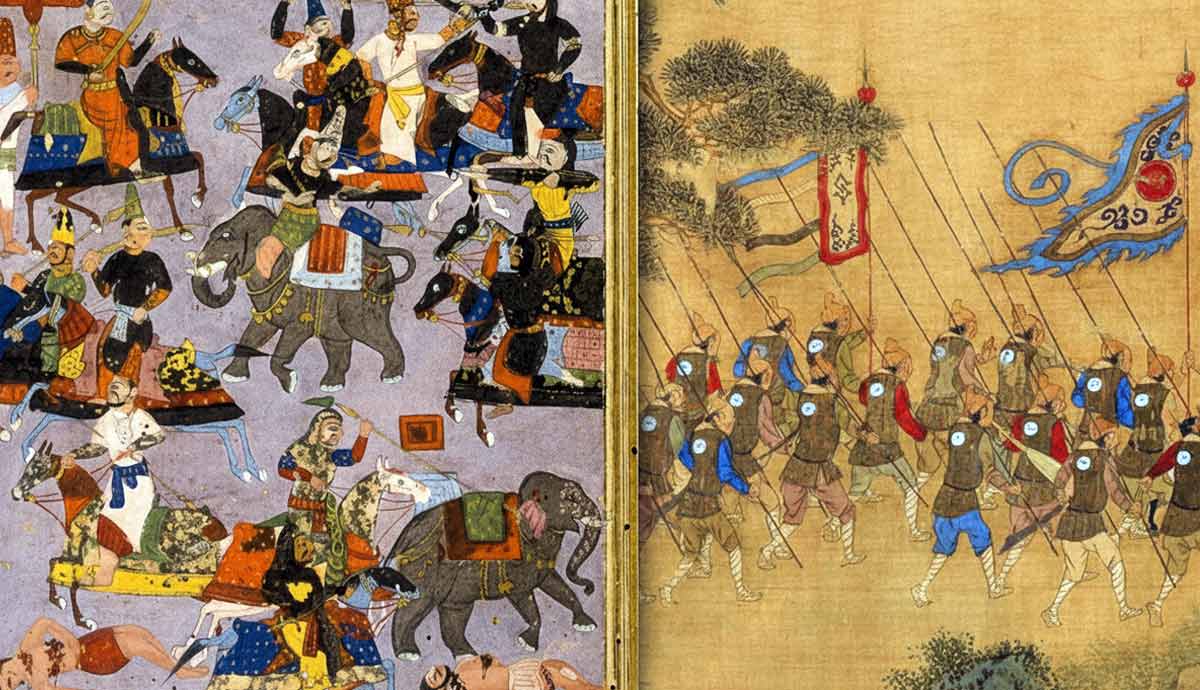
    Although standing armies were rare in the medieval world, certain empires had the administrative capacity to maintain large military forces to defend against foreign threats, preserve law and order, and expand their realms through conquest. The largest armies in the medieval world came from empires in China, India, the Middle East, and Eurasia.1. Song Dynasty, ChinaMap of the Northern Song Dynasty. Source: Wikimedia CommonsSimilarly to the other Chinese dynasties, the Song dynasty (9601279) relied on quantity over quality. By the 1000s, Song emperors had over 1,000,000 men at their command, either garrisoning the kingdom or ready to march to battle. The cost of maintaining this force was enormous; some reports indicate that close to 80% of the state budget was used paying for equipment and salaries. The force was overwhelmingly composed of infantry, limiting its mobility. Additionally, Song emperors were afraid of generals rebelling against the dynasty and limited their authority.Internal chaos ate at the professionalism of the army and led to territorial losses at the expense of the Jin and Mongol empires to the north. The formidable size of Song armies as well as superiority in naval warfare enabled it to hold off the northern conquerors until 1279, when Kublai Khan completed the conquest of China, eight years after proclaiming the foundation of the Yuan Dynasty.2. Ming Dynasty, ChinaChinese scroll depicting Ming infantrymen. Source: Wikimedia CommonsIt is a common myth that Revolutionary France was the first army to rely mainly on conscript soldiers. Centuries earlier, Ming China used a system of conscription called weisuo. This meant that every Chinese household had to provide at least one military-aged male to the army, who would also bring his own supplies. This meant that the Ming emperors could field a force numbering over one million, enormous for its time.Over time, the erosion of order within Ming China weakened this system and mercenaries became more commonly used than conscripts. Nonetheless, some documents from the 1500s indicate that they still fielded 850,000 men for combat duties. These forces dwarfed any army that could be raised by European states at the time, owing to Chinas large population and efficient administration.3. Tang Dynasty, ChinaDepiction of soldiers of the guard of honor from the Tomb of Princess Changle in the Zhao Mausoleum, 644. Source: Wikimedia CommonsThe Tang Dynasty in China relied heavily on a conscription system known as the fubing system. In the 7th century, the system created an army of 600,000 men to be used by Tang leaders, an enormous contingent in that period. Repeated rebellions and external threats meant that the army grew to close to one million, rivalling the armies of the Ming Dynasty. The force was overwhelmingly composed of infantrymen recruited from the peasantry.The conscript system was gradually replaced by the use of professional soldiers, whom Tang leaders considered more capable. Even by using these men in a full-time capacity, the size of the army remained substantial. Other Chinese dynasties emulated the Tang in their recruitment of men for military service and the maintenance of a large standing army.4. Byzantine Empire, MediterraneanThe Invitation of the Varangians by Viktor Vasnetsov, before 1913. Source: Wikimedia CommonsAt its peak in the 6th century, the Byzantine Empire controlled most of the Mediterranean, stretching from what is today Armenia to modern-day Portugal. This was thanks to the efforts of Emperor Justinian I, who was determined to rebuild the Roman Empire. His senior general, Belisarius, conquered Rome, much of North Africa, and parts of Iberia. These conquests revealed the prowess of the Byzantine military.The size of the Byzantine army fluctuated over time, but it is estimated that during the 6th century, Constantinople had 350,000 men under its command. Much of this force came from the former Roman army and included men from all over the empire. Its most elite force was the Varangian Guard, founded in the late 10th century CE and composed of Norsemen or Englishmen. As the empire contracted, Byzantine armies dwindled in size.5. Sasanian Empire, Middle EastSilver Bowl Depicting a King Hunting, Sasanian c. 4th-5th century CE. Source: The Smithsonian National Museum of Asian ArtBetween 224 and 651 CE, the Sasanian Empire maintained a formidable military force that enabled them to dominate areas across the Middle East and Central Asia. The exact size of the Sasanid armies is not known, but some scholars estimate that it was over 300,000 men across the empire. The elite forces of the empire included elephant-borne troops and Aswaran cavalry units. Over the years of the empires existence, it battled the Byzantines for control over the Levant and parts of modern-day Anatolia.Despite its armys large size, during the 7th century CE the Sasanian Empire faced the twin threats of the resurgent Byzantines under Emperor Heraclius, and the Arab conquests initiated by the Prophet Muhammad. In 651, the Sasanian Empire was destroyed by the Rashidun Caliphate.6. Vijayanagara Empire, IndiaIllustration of the Battle of Talikota which led to the fall of the Vijayanagara Empire, 1565. Source: Wikimedia CommonsRuling over the southern part of the Indian subcontinent, the Vijayanagara Empire boasted a formidable army, similar to other Indian medieval kingdoms. However, the exact size of its forces is not known. Foreign travelers, mainly from Europe, visited the Vijayanagara realm and made estimates of its armys size in their writings. Based on their accounts, historians estimate that the Vijayanagara Empires military had between 500,000 to 750,000 men available to fight if they went to war.The most professional component of the force was called the Kaijeeta Sainya and wasessentially a household guard. This force numbered in the tens of thousands. The mainstrength of the empires army came from recruitment by regional leaders callednayakas, who conscripted peasants for military service. This allowed for the deploymentof a large infantry-heavy conscript force.7. Umayyad Caliphate, Middle EastBattle of Tours by Charles de Steuben. Source: World HistoryThe Umayyad Caliphates army was only a little larger than the Rashiduns but was still sizable for its time. Like the Rashiduns, it relied heavily on light cavalry to make quick advances against its enemies. Much of the elite of the force came from Syria, while converts from conquered territories (such as Berbers) and slaves helped increase the size of the armys infantry component. The Umayyads suffered a similar fate to the Rashidun Caliphate as a result of internal divisions.The exact size of the army is not known exactly but is estimated to be in the tens or hundreds of thousands. The scale of the Umayyad conquests meant that the caliphs had to recruit a lot of fighters to maintain control. For instance, a major Berber revolt led to territorial losses, meaning that the Umayyads had to recruit a force of hundreds of thousands to defend their territory.8. Delhi Sultanate, IndiaMap of the Delhi Sultanate during the 14th century Tughlaq dynasty. Source: World HistoryFor over 300 years, the Delhi Sultanate dominated the Indian subcontinent in the Middle Ages. Its army was a formidable force dominated by a well-trained and well-equipped cavalry component that enhanced the armys maneuverability and speed. It also had the ability to deploy mangonels and mines to assist with its siege operations, enabling it to conquer major population centers in the subcontinent. Its ranks were composed of Central Asians, Indians, and Mamluk mercenaries.At its peak in the 14th century, the sultanate had close to 500,000 men available, mainly cavalry. It was able to defend its territory from the Mongols and launch expeditions into other parts of India and Asia thanks to its size and maneuverability. However, it suffered from internal chaos that led to its armys destruction and the conquest by the Mughals in 1526.9. Mongol Empire, EurasiaMongol Siege of Kyiv ca. 1240 from the Facial Chronicle (Illustrated Chronicle of Ivan the Terrible) by an unknown artist, 1560-1570. Source: State Historical Museum, MoscowWhen Genghis Khan first started his conquests, he had a small force of mounted men with him to seize population centers in East Asia. By the time his empire expanded, he had a formidable force numbering in the hundreds of thousands. Both forced and voluntary recruitment boosted the Mongol army and enabled them to continue their march westwards. However, a large part of the army had to be used to garrison captured territories on the way, leading to Genghiss force being diluted over time.Even then, the Mongols were still able to advance into Europe with a force of 150,000 men. Even more impressive was the fact that most of this force was composed of cavalry, meaning that they had to bring more supplies for both men and horses. Being mounted also doubled the distance the army could travel in a day. Their mobility anticipated the use of massed cavalry in European armies.
    0 Commenti 0 condivisioni 2 Views
  • ALLTHATSINTERESTING.COM
    The Shocking Story Of The Costa Concordia, The Luxury Cruise Ship That Catastrophically Capsized Near Italy
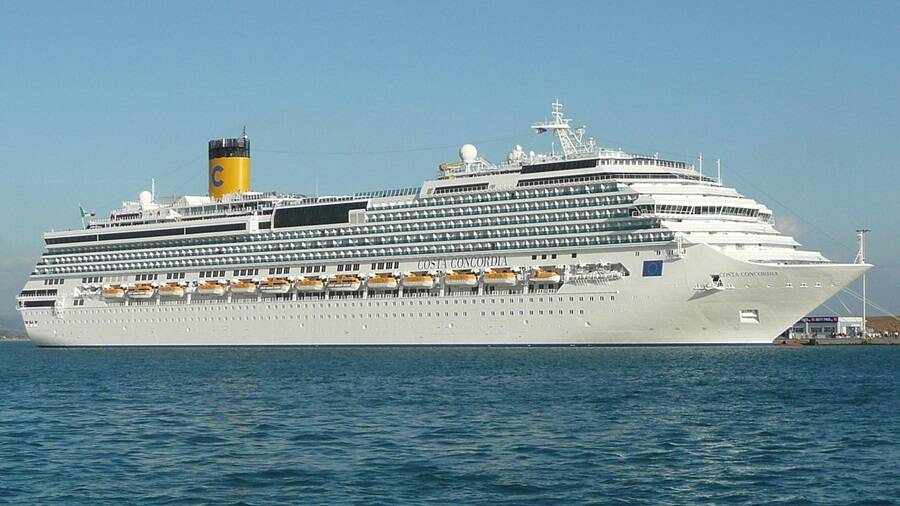
    Robert Lender/Wikimedia CommonsThe Costa Concordia, a 114,000-ton cruise ship, was among the largest cruise ships built in Italy.On Jan. 13, 2012, the Italian cruise ship Costa Concordia set out on what should have been a routine Mediterranean voyage. Thousands of people families, couples, and retirees boarded the massive vessel expecting a week of luxury at sea. Instead, the first day of the ships journey ended in a tragedy that no one could have imagined.By the next morning, 32 people were dead, and thousands were stranded on a tiny Italian island. One of the largest cruise ships ever built lay on its side just offshore, slowly sinking into the water.What had happened to the ship? The Costa Concordia disaster was ultimately a tale of poor decision making by its crew, which sadly cost dozens of human lives. A Luxurious City At SeaWhen the Costa Concordia entered service in 2006, it was one of the largest cruise ships ever constructed. The massive vessel stretched 952 feet long, weighed more than 114,000 tons, and could carry over 3,700 passengers alongside 1,100 crew members. It was thus far larger than the Titanic.And the ship was not only large it was luxurious. Inside, every imaginable comfort awaited guests, including swimming pools, a movie theater, bars and nightclubs, a casino, and a luxury spa. The ship felt like a city at sea.Robert Lender/Wikimedia CommonsInside the Costa Concordias dining room, where many passengers were eating dinner when the ship lost power and began listing.The first five years of its service passed largely without incident aside from when high winds pushed the ship against a dock in Palermo, Italy, in 2008, damaging its bow. As such, the Costa Concordias planned cruise in January 2012 was expected to proceed as normal. The voyage was intended to be a seven-day Mediterranean cruise, leaving from Romes port of Civitavecchia, with stops in Italy, France, and Spain. For the 3,206 passengers onboard, the first night of the cruise was supposed to be the beginning of a carefree vacation. But it would end up being one of the worst nights of their lives.How The Costa Concordia Disaster BeganJust after 7:00 p.m., the Costa Concordia left Civitavecchia. A few hours later, it sailed toward Giglio Island, a small rocky outcrop off the Tuscan coast. Instead of staying on its planned course, the ship moved closer to shore.The ships captain, Francesco Schettino, had ordered a sail-by salute, a tradition meant to impress locals by passing near land. He had performed similar salutes before without incident, although Schettino would later be accused of ordering this particular salute in order to impress his girlfriend.At 9:40 p.m., Schettino called his former mentor, Senior Captain Mario Palombo, who lived on Giglio. He told Palombo the ship would sound its horn as a tribute while passing by. Palombo said he wasnt on the island that night, and according to Vanity Fair, advised Schettino to only quickly honk his horn and to stay far from the shore. Moments later, disaster struck. YouTubeFrancesco Schettino, the captain of the Costa Concordia. At 9:45 p.m., the Costa Concordia struck a reef known as the Scole Rocks. The collision tore a huge gash along the port side, measuring 115 to 174 feet, flooding the engine rooms and cutting power to the ship.Inside, the lights went dark. Passengers heard banging noises and the sound of the ship groaning, but not everyone immediately realized that something was wrong. According to CNN, when the ships lights went out during a magic show, some passengers thought it was just part of the act. But then the ship began to list sharply to the starboard side. In the dining areas, dishes, tables, and people tumbled down. Elsewhere, in an ironic twist, the the Oscar-winning song My Heart Will Go On, from the film Titanic played. Fifteen minutes after the initial collision, Schettino called Roberto Ferrarini, the ships crisis coordinator. He initially downplayed the damage to the ship, saying that just one compartment was flooded. Over two subsequent conversations with Ferrarina, Schettino admitted that two compartments were flooded (in fact five were flooded).I have made a mess and practically the whole ship is flooding, Schettino told Ferrarini. What should I say to the media? To the port authorities I have said that we had a blackout.Panic On The Costa Concordia As The Ship SankSchettino had called Ferrarini, but the first calls to the Italian Search and Rescue Authority did not come from the ship, but from the shore a passengers mother had called the police after learning that the passengers were putting on life jackets. Search and Rescue then called Schettino.But the captain didnt initially reveal the full truth of the Costa Concordia disaster. It wasnt until 10:22 p.m. that he admitted that the ship had had a failure and needed help. And at 10:33 p.m., passengers were ordered to make their way to muster stations and await instructions. YouTube The port side of the Costa Concordia after capsizing. However, by this point, that was easier said than done. The ship had tilted more than 30 degrees, making navigating its labyrinth of corridors extremely difficult. Whats more, some passengers claimed that they never heard the instructions to proceed to the lifeboats though, at 10:54 p.m., Schettino had given the order to abandon ship. As the Costa Concordia tilted more steeply, passengers were forced to climb slanted corridors to reach lifeboats. Some jumped into the cold water and attempted to swim toward shore, more than 300 feet away. Those who waited to get onto a lifeboat found themselves facing utter chaos as the passengers elbowed each other to escape the ship. Meanwhile, by 11:19 p.m., Schettino had abandoned the vessel. He later claimed that he had fallen into a lifeboat because of the listing of the ship, but a coast guard member who encountered him angrily told the captain: Vada a bordo, cazzo! Get back on board!Meanwhile, Giglio Islands deputy mayor, Mario Pellegrini, had raced toward the scene from shore to help. To his shock, he couldnt find any senior officers on board just one young, a second-class officer, as he later told the BBC. The two worked together to navigate passengers toward the lifeboats and, by 12:15 a.m., almost everyone from the Costa Concordias starboard side had escaped the vessel. But then the ship began to roll. Rvongher/Wikimedia CommonsThe Costa Concordia rests on its side near Giglio Island after running aground on January 13, 2012.I couldnt understand what was going on, the movement was so violent, Pellegrini told Vanity Fair. Suddenly it was difficult to stand. It was very disorienting. If you took a step forward, you fell. You couldnt tell which way was up or down. You couldnt walk Thats when the panic hit, and the electricity went out as well. Lights winking out all over.The movement of the ship caused seawater to surge down new corridors, trapping passengers throughout the ship. Hundreds of people were still onboard, and Pellegrini and the second-class officer worked until dawn to rescue who they could. But not everyone could be saved. Thirty-two people lost their lives in the Costa Concordia disaster, both on the ship and in the cold water surrounding it. The last victims body was not recovered until November 2014.The Legal Aftermath Of The Maritime DisasterIn the aftermath of the Costa Concordia disaster, many of the ships crew were convicted for their role in the sinking, and several were sentenced to time in prison. Captain Francesco Schettino was found guilty of manslaughter, causing a shipwreck, abandoning ship before passengers and crew were evacuated, and lying to authorities about the disaster. In 2015, he was sentenced to 16 years in prison. Meanwhile, the wreck of the Costa Concordia sat in the shallow water off the coast of Giglio Island for more than two years. In September 2013, the ship was righted during a massive 19-hour operation. Rvongher/Wikimedia CommonsThe decaying Costa Concordia at Genoa after the disaster that killed 32 people.By July 2014, the wreck was towed to Genoa for dismantling, and scraping of the ship was completed in 2017. The operation cost nearly $2 billion more than three times the ships original construction price. But the Costa Concordia disaster cost far more than that. Thirty-two people lost their lives, and thousands were traumatized. Most tragic of all, the Costa Concordia did not sink because of rough conditions at sea, but because of the poor decisions made on its bridge that night.Crew member Roberto Bosio, who helped dozens of women and children into lifeboats and is believed to have helped coordinate much of the rescue effort throughout the night, said of Captain Schettino: Only a disgraceful man would have left all those passengers on board. It was the most horrible experience of my life. A tragedy, a heartache that I will carry with me forever.Now that youve read about the Costa Concordia, read about how researchers found the USS Nevada after 72 years. Then, learn the story of the SS Cotopaxi, the ship that vanished from the Bermuda Triangle in 1925.The post The Shocking Story Of The Costa Concordia, The Luxury Cruise Ship That Catastrophically Capsized Near Italy appeared first on All That's Interesting.

    0 Commenti 0 condivisioni 2 Views
  • 0 Commenti 0 condivisioni 3 Views
  • WWW.MASHED.COM
    The Costco Food Court Item Cowboy Kent Rollins Always Grabs
    Cowboy Kent Rollins is a busy man. When he's not rustling up his signature rustic grub, he enjoys this convenient and much-loved item from Costco's food court.
    0 Commenti 0 condivisioni 2 Views
  • WWW.BGR.COM
    California Is Trying To Crack Down On E-Bikes To Solve A Growing Problem
    Fans of e-bikes should be aware of a new bill being proposed in California to crackdown on a major problem that continues to grow unchecked.
    0 Commenti 0 condivisioni 3 Views
  • WWW.BGR.COM
    Don't Plug In An HDMI Splitter Until You Know These 3 Rules
    An HDMI splitter is useful if you're trying to get the same image to display on multiple screens, but there are a few rules you should know before using one.
    0 Commenti 0 condivisioni 3 Views
  • TECHCRUNCH.COM
    Investors spill what they arent looking for anymore in AI SaaS companies
    TechCrunch spoke with VCs to learn what investors aren't looking for in AI SaaS startups anymore.
    0 Commenti 0 condivisioni 3 Views
  • TECHCRUNCH.COM
    OpenAI reveals more details about its agreement with the Pentagon
    By CEO Sam Altmans own admission, OpenAIs deal with the Department of Defense was definitely rushed, and the optics dont look good.
    0 Commenti 0 condivisioni 3 Views