0 Yorumlar
0 hisse senetleri
12 Views
Rehber
Elevate your Sngine platform to new levels with plugins from YubNub Digital Media!
-
Please log in to like, share and comment!
-
Camping season is around the corner — grab this Anker Solix C800x power station for over 40% offPortable power station deal: Save over 40% on the Anker Solix C800x SAVE $269: As of Feb. 27, the Anker Solix C800x portable power station is on sale for just $379.99 at Amazon. That's over 40% off its list price of $649. $379.99 at Amazon...0 Yorumlar 0 hisse senetleri 16 Views
-
Save over $50 on the Soundcore Work, an in-your-pocket translator and notetakerSave $59: The Soundcore Work is 37% off at Amazon SAVE $59: As of Feb. 27, get the Soundcore Work, a pocket-sized translator and transcription tool, for just $99.95. That takes 37% off its list price of $159, saving you $59.05. $99.95 at Amazon...0 Yorumlar 0 hisse senetleri 17 Views
-
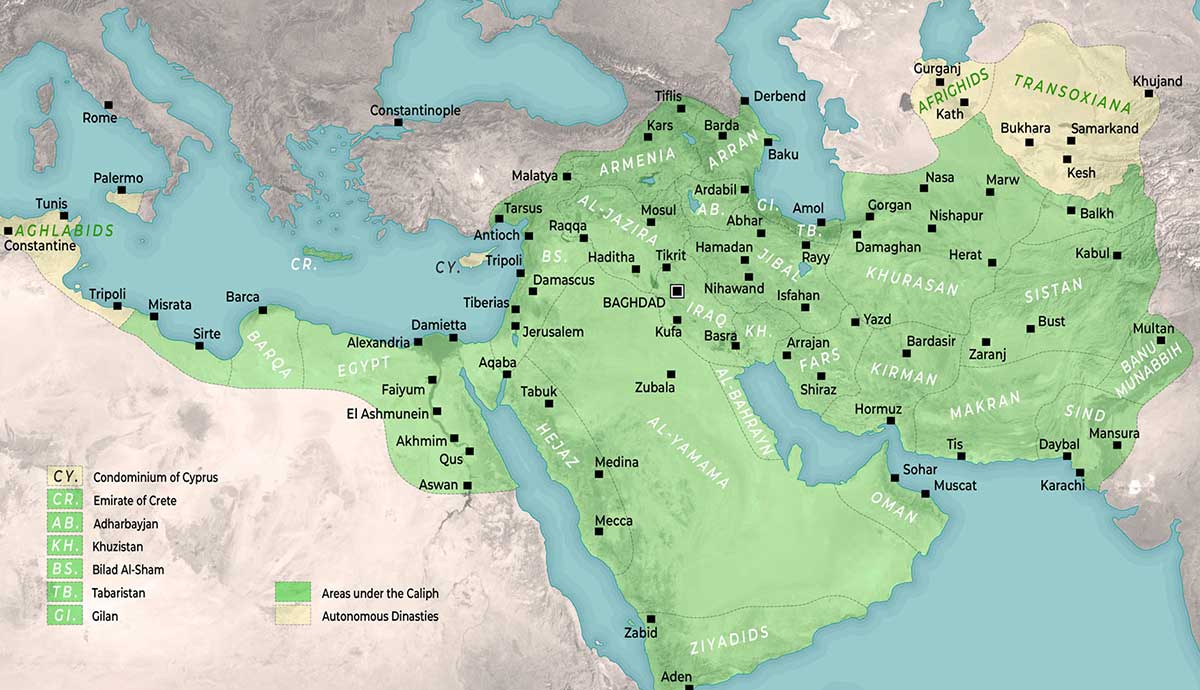
WWW.THECOLLECTOR.COMThe 7 Largest Empires in HistoryHuman beings have existed for hundreds of thousands of years, but its only in the past few thousand years that civilization took hold, forming the foundation for great states to expand. Since then, countless empires have risen and fallen. Some reached continent-spanning status and left legacies that are inherent in society today, while others are barely more than a footnote in history.These are 7 of the largest empires that ever existed.A Short Disclaimer on the Size of the Largest EmpiresThe sizes of the following empires, in terms of the numerical claims, are widely accepted, but not beyond debate. Historical claims are not always in line with actual control of the territories, and thus, the ranking given can be subject to revision if other factors are taken into account. In addition, land area percentages have different metrics for calculation, depending on the source and the inclusion or exclusion of lakes and rivers within an empires borders. Nevertheless, the ranking here is largely based on historical consensus.1. The British EmpireThe British Empire in 1921, including territory handed over by the Germans and the Ottomans to the British after WWI. Source: Wikimedia CommonsIt was widely quoted that the sun never sets on the British Empire, and this was for good reason. The British Empire at its height spanned continents and included so many ocean territories that at any point in time during the day, there was always sunlight somewhere over which the British flag was flying.At its zenith in 1920, the British Empire covered 13.71 million square miles (35.5 million square kilometers), which accounted for just under 24% of the worlds land surface. In North America, it owned the northern half of the continent (what is now Canada), as well as various islands in the Caribbean. In South America, there was British Guiana, and in Central America, Belize, while in Africa, much of the continent from the Cape of Good Hope to Cairo was under the command of the British.A flag from 1921 featuring the coats of arms of Canada (lower left), South Africa (upper right), and Australia. New Zealand is represented by the four white stars. Source: Royal Museums Greenwich/Wikimedia CommonsAustralia and New Zealand formed part of the empire, as well as significant areas in the Middle East. The Jewel in the Crown of the British Empire was India, which, before partition, covered what is now India, Pakistan, and Bangladesh. It was the most populous and valuable colony of the British Empire.At the center of it all were the British Isles, tiny specks of land compared to the vast territories over which they held dominion.2. The Mongol EmpireThe Mongol Empire in 1279 (including vassal and tributary states) stretched across the breadth of Asia and included a huge portion of Europe. Source: TheCollectorFrom the steppes of Mongolia, horse warriors rode out, establishing the Mongol Empire in the early 13th century. They conquered all before them, laying waste to entire nations to become the largest empire the world had ever known to that point. By the end of the 13th century, the empire stretched from the Pacific in the east to the Danube in the west, and the Persian Gulf in the south. It was the largest contiguous land empire in history, and covered 9.27 million square miles (24 million square kilometers), accounting for over 16% of the worlds land surface.Of major importance was the conquest of China and the establishment of the Mongol-led Yuan Dynasty, which began in 1271 and ruled over China from 1279 to 1368.After the death of Kublai Khan in 1294, the Mongol empire went into decline and fragmented. The longest surviving successor, the Golden Horde, lasted well into the 15th century when it, too, fragmented into smaller states.3. The Russian EmpireMap of the Russian Empire in 1866. Source: Wikimedia CommonsIn the second half of the 19th century, the Russian Empire grew to become the third-largest empire of all time. By 1866, it stretched from Finland in the northwest to Tashkent in the south, all the way to the Pacific in the east, and beyond. In 1867, the Tsar sold Alaska to the Americans, greatly reducing the empires size.At its height, the Russian Empire covered 8.8 million square miles (22.8 million square kilometers), which represents more than 15% of the worlds land area. Although reduced over the decades that followed, Russia continued to be the worlds biggest country. It was the biggest member (by far) of the Soviet Union, and even after the collapse and breakup of the communist state, Russia is the biggest country in the world, covering 6.6 million square miles (17.1 million square kilometers), which is almost twice as big as the second biggest country, Canada.4. The Qing DynastyThe Qing Dynasty at its height (with claimed but not controlled territories in light green). Source: Wikimedia CommonsChinas Qing Dynasty represents world historys fourth biggest empire, lasting from 1644 to 1911/12. It was the last of the imperial dynasties and by the mid-19th century, had a population of well over 400 million, making it the most populous country at the time.At its height around 1790, the Qing Dynasty controlled 5.68 million square miles (14.7 million square kilometers), representing 10% of the worlds land surface. It stretched from the Sea of Japan in the east to the Pamir mountains in Central Asia, and from Mongolia to the South China Sea.The 19th century was a tumultuous and devastating time for the Qing, as the empire dealt with internal and external pressures in the forms of revolts, famines, and wars. There were land disputes, ethnic tensions, disease, and economic strain that reduced the power of the Qing authority, eventually leading to the Xinhai Revolution, which saw the Xuantong Emperor, 6-year-old Puyi, removed from the throne, ending the Qing Dynasty as well as 2,000 years of imperial rule on February 12, 1912.5. The Spanish EmpireThe Cross of Burgundy, associated with the Spanish Empire. Source: Wikimedia CommonsThe fifth-largest empire in history is represented by the Spanish, who controlled vast territories in the Americas, as well as the Philippines. In 1492, the Reconquista was completed, and later that year, Christopher Columbus, sailing for the Spanish monarchy, discovered the New World, providing a huge opportunity for Spain to expand.Within decades, the Spanish conquistadors had conquered the Aztecs and the Incas, claiming vast portions of the Americas and establishing Spanish control over the New World. Although the empire experienced its golden age in the mid to late 16th century, its territorial height came later.Over the decades that followed, claimed territories stretched from the present US-Canada border, all the way to Tierra del Fuego, the southern tip of South America, as well as Cuba and half of Hispaniola in the Caribbean. The late 18th century represented the territorial height of the Spanish Empire, but it was soon followed by a steep decline as independence movements swept through the Americas, and Spain had to accept the loss of its colonial empire.Map of the claimed territories of the Spanish Empire at its peak in the late 18th century. African possessions (Morocco and Equatorial Guinea) were not subject to the claims of The Right of Discovery, which governed the New World, and are thus omitted from the map as Spanish possessions. Source: TheCollectorMap of the Spanish Empire at its peak. Source: TheCollectorIt also had nominal possession of the small territory of Equatorial Guinea in Africa, but colonization was not carried out until the mid-19th century, after Spain had lost its territories in the Americas.At its height, the Spanish Empire covered 5.29 million square miles (13.7 million square kilometers), accounting for over 9.2% of the worlds land area. Including the extraneous and uncolonized claims, these figures can be increased, and the Spanish Empire could end up representing the third-largest empire.6. Second (or Third) French Colonial EmpireThe flag of France and the French Empire. Source: Wikimedia CommonsOne of the great colonial empires throughout the 19th century, France controlled a considerable amount of territory, becoming the sixth-largest empire in history. At its territorial peak during the 1920s, the French colonial empire was just over a third the size of the British Empire, and covered 4.44 million square miles (11.5 million square kilometers), accounting for around just under 8% of the worlds land area.The Second French colonial empire was established in 1830, some 15 years after the end of the Napoleonic Wars, and it began with the invasion of Algeria (which took over 70 years to fully conquer). Some historians separate the post-Napoleonic colonial period into Second and Third colonial empires, but Second colonial empire can also be used to encompass the entire era up until the end of Frances colonial ambitions in the latter half of the 20th century.Map of the French Empire at its peak. Source: TheCollectorThe French Empire expanded into Southeast Asia, Madagascar, and vast parts of Northern Africa, as well as Syria in the Middle East, and French Guyana in South America. Due to the defeat of Napoleon and the collapse of the First Empire, all of Frances North American and Indian colonies were lost or abandoned, with the exception of a few scattered holdings.Of major importance at the empires height during the first half of the 20th century were North Africa and French Indochina. Marking huge turning points in the colonial era, however, Frances colonial ambitions would suffer humiliating military defeats in Vietnam and Algeria, as its possessions fought for independence.7. The Umayyad (and Abbasid) CaliphateThe Umayyad Caliphate. Source: TheCollectorAt its peak in the 8th century CE, the Umayyad Caliphate covered a huge area, from Persia in the east to the Iberian Peninsula in the west. Vast territories in North Africa were under Umayyad control, as well as virtually the entire Middle East, including the entirety of the Arabian Peninsula.The Umayyad Caliphate was the second Muslim caliphate and followed the Rashidun Caliphate, which was established after the death of the Prophet Muhammad. The total area of the Umayyad Caliphate at its peak in the early 8th century was 4.29 million square miles (11.1 million square kilometers), accounting for approximately 7.5% of the worlds land area.It was succeeded by the Abbasid Caliphate, which took control in 750 CE, and briefly claimed all of the Umayyad territory. There were, however, various regions loyal to the Umayyads, which the Abbasids could not control, and the Abbasid Caliphate, as a result, lost much of its claimed territory on the outskirts of the empire.0 Yorumlar 0 hisse senetleri 12 Views -
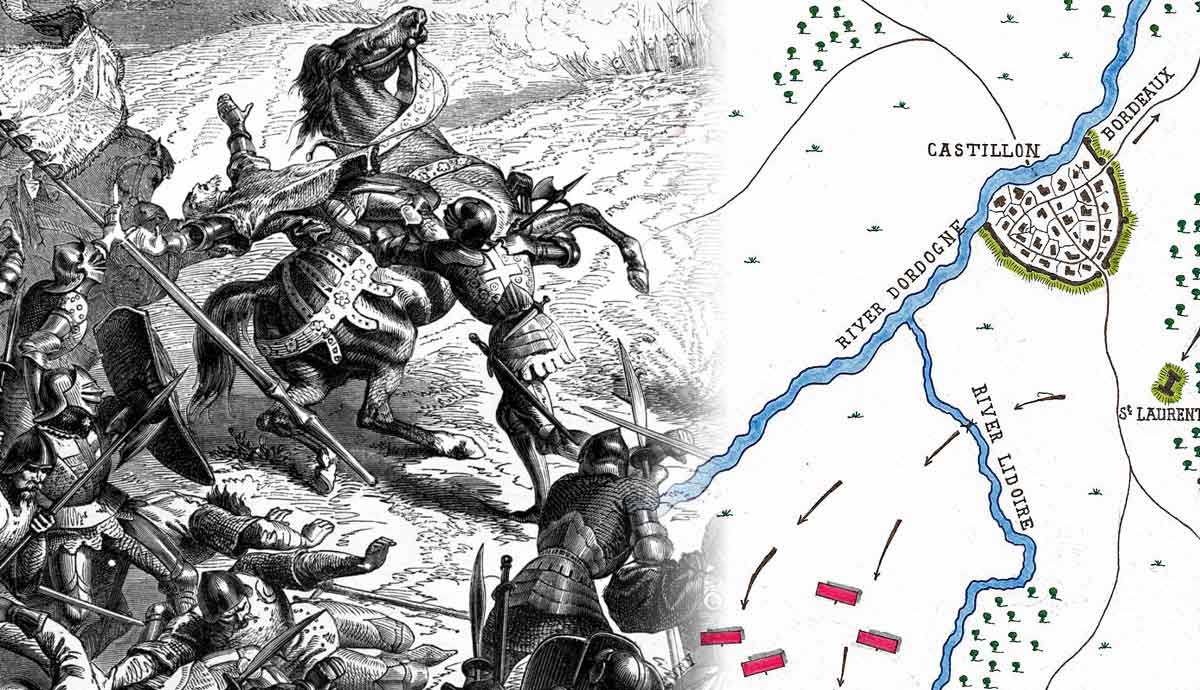
WWW.THECOLLECTOR.COMThe Battle of Castillon That Ended the Hundred Years WarThe Hundred Years War is usually known for great English victories over the French at the battles of Crcy, Poitiers, and Agincourt. However, the conflict ended in Frances favor in the summer of 1453, when French forces defeated an English army in detail near the town of Castillon in the first European battle to see the use of massed field artillery. The ensuing decades would see France consolidate its position as Europes leading power while England succumbed to civil war.The Late Stages of the Hundred Years WarThe Capture of Joan of Arc. Painting by Adolphe Alexandre Dillons, c. 1850. Source: Wikimedia CommonsDuring the early 1400s, the English went from being the dominant force in France to steadily losing control over their possessions on the European continent. In the 1420s, a French army besieging the city of Orlans was joined by a young French peasant woman named Joan of Arc. Their victory helped turn the tide against the English, and French royal forces continued to march against the armies of England and their French allies.By 1451, the new French king, Charles VII, marched an army into Gascony and seized control of most of the territory. This campaign came on the heels of the successful conquest of Normandy. The English armies were overstretched and faced major turmoil at home, enabling quick French gains. However, the French faced a conundrum. After decades of English rule, many Gascons remained loyal to the English. The Duchy of Bordeaux maintained allegiance to the English Crown and sent envoys to London begging for an expedition to reconquer the territory. Charles knew that the locals did not support him, requiring him to maintain large garrisons in the region.On October 17, 1452, English troops under the command of John Talbot, the Earl of Shrewsbury, landed near Bordeaux. Thanks to the support of the locals, who joined his army in droves, he was able to retake much of Gascony. This startled Charles and his court, who feared that the English would attempt to retake Normandy. They gradually mustered an army to oust Lord Talbot once and for all.Opposing ArmiesKing Henry VI invests John Talbot with the sword of office as constable of France in 1436. Source: Warfare History NetworkAs French forces converged on western Gascony from three directions, Talbot prepared his forces to fight. In addition to the 3,000 men who landed with him, he received another 3,000 reinforcements from England led by his favorite son, the Viscount Lisle. Talbots army was bolstered by local Gascons who supported his cause. By the time he arrived at Castillon, Talbot had anywhere between 5,000 and 10,000 men with him.Charles spared no effort to raise an army to reconquer Bordeaux. Along with the Duke Peter II of Brittany and Jean Bureau, he had assembled a force of between 7,000 and 10,000 men, including Gascons loyal to the French Crown. He laid siege to the Gascon town of Castillon, hoping to draw the English out to battle. The plan worked; the garrisons pleas for assistance forced Talbot to march the bulk of his forces towards the besieged town. This was despite his plan to build up his strength before meeting the French on open ground.By this stage in the war, the armies of England and France were evolving considerably. Infantry still relied heavily on armor, two-handed swords, and pikes. Archers still used longbows and crossbows, but they were being phased out for gunpowder weapons such as culverins, long firearms similar to the more famous arquebuses. France had a particular advantage in that they employed a lot of artillery at the battle, which they planned to use when besieging Bordeaux again. The coming fight would see the first massed use of field artillery in a European battle.The Day of BattleMap of the Battle of Castillon by John Fawkes. Source: British BattlesWhile King Charles was present at Castillon, the French forces were commanded by Jean Bureau, a renowned artillery officer. He established a fortified camp on the River Lidoire, just downstream from the besieged town. The French soldiers set up defensive works in preparation for an assault and were backed up by several hundred pieces of French artillery. They planned to lure the English into attacking the camp and overwhelm them with heavy firepower.The English vanguard of several hundred archers and cavalrymen was personally led by Talbot. He was aware of the extent of the French army and did not want to launch an immediate attack. Instead, he waited for the main body of his force to catch up. However, messengers from the garrison of Castillon arrived at his encampment and informed him that the French had broken up the siege and were withdrawing eastward. This excited Talbot, who hoped to fall upon the French rearguard and defeat them in detail. On July 17, he dismounted his cavalry and gathered as many men as he could for an assault.Initially, the attack went surprisingly well. Momentum carried the English force into the French defenses on the outskirts of the camp and fighting was grim. However, the French artillery inflicted gruesome losses on the attackers and Talbot had no weapons in his arsenal capable of matching the French firepower advantages. When Peter II brought 1,000 Breton cavalrymen to attack Talbots flank, the English army disintegrated. Some Englishmen fled back to Bordeaux while others deserted into the countryside, shedding their weapons and armor.The Fall of BordeauxThe death of Lord Talbot during the battle, 1880. Source: Warfare History NetworkWhile the English attack collapsed, Talbots horse was struck by an artillery round and he fell to the ground. His son also fell in the battle, contributing to the disorder in the English force. While English casualties were estimated to number in the thousands, French losses were much lighter, possibly a few hundred at most. Charless victory was complete and he could now march on the rest of Gascony with relative ease.Following the decisive French victory, the garrison of Castillon surrendered quickly to avoid bombardment from the formidable French guns. Charles followed up on this success by advancing to Bordeaux and laying siege to the port city on August 13th. The garrison, made up of some English stragglers from Castillon and loyal Gascons, held on for just over two months. However, the French had the strategic advantage and no English reinforcements were coming.By October 19, the city surrendered in exchange for Charles agreeing to respect the regions autonomy. Nonetheless, he had the governor executed for treason and insisted on appointing several loyalists to senior positions throughout the region. The seizure of the city meant that France was now in full control of Gascony for the first time in 300 years. The French showed unity and resolve that had been lacking at the start of the Hundred Years War, enabling their victory over the weak and divided English.France and England After the WarThe Battle of Tewkesbury, c. 1460-1560. Source: Wikimedia CommonsAt the time of the final conquest of Bordeaux, no one thought that the fighting between the English and the French would end. England still maintained control over Calais and the Channel Islands. Additionally, the English had not renounced their claim to the French Crown. Even as Charles defeated the final English garrisons in Gascony, he remained vigilant to the possibility that the English would land another expeditionary force in northern France and march on Paris.However, the English cause was undermined by the mental incapacity of King Henry VI. Additionally, English nobles demanded compensation from the Crown for lost territories in France. The collapse of royal authority led to the War of the Roses in England, which distracted English leaders and effectively ended the period of hostilities between England and France. While the English attempted to support a revolt against the French in Burgundy, it failed. The Treaty of Picquigny of 1475 formally ended the war and the English claim to the French Crown, although tensions between the two kingdoms remained high.France would seize Calais in 1558 from the English, finally unifying the mainland under French control. From then on, France became one of the dominant continental powers in Europe. Meanwhile, after being reduced to the British Isles, England began to focus on strengthening its navy and exploring colonial opportunities further afield rather than acquiring territory on the European continent. The Royal Navys mastery of the worlds oceans allowed the British to build the largest empire the world has ever seen.The Battles LegacyIllustrations of medieval artillery pieces from Eugne Viollet-Le-Ducs Dictionnaire raisonn de larchitecture franaise du XIe au XVIe sicle, 1856. Source: War History OnlineWhereas the battles of Agincourt and Crecy displayed the power of the English longbow, Castillon was a clear statement of the superiority of gunpowder artillery. When the French army set up defensive positions supported by artillery, they forced the English to attack them on their terms. The lopsided nature of the battle reflected the French superiority in firepower. Despite Talbots willingness to fight the battle on his terms, he was convinced to start the battle by false information and overconfidence in his own abilities.By the end of the Hundred Years War, land armies in Europe were beginning to transition to the use of firearms. These proved to be very potent and made armies much more lethal. The English army was also equipped with these weapons at Castillon, but not to the same extent as their French enemies did. They continued to rely on the archers that had won glorious victories decades earlier. However, Talbots archers failed to inflict serious losses as Castillon, whereas the majority of the English casualties were inflicted by French artillery. This was noted by military observers all over the continent.Castillon also proved to be an example of a country sending an expeditionary force too far away without sufficient support. Talbot did not have a large enough force to defend all of Gascony, let alone march on Paris. Yet he insisted on fighting Charless vastly superior force in the open. Once his force was defeated, the English could not reinforce the garrison of Bordeaux, ensuring their defeat. The inability to address these logistical issues plagued English armies throughout the whole conflict and ultimately condemned them to defeat.0 Yorumlar 0 hisse senetleri 12 Views -
WWW.THEKITCHN.COMThe Secret to Better-Than-Movie-Theater Popcorn (I Get Why It Keeps Selling Out)Butter! Ranch! Jalapeo! And more!READ MORE...0 Yorumlar 0 hisse senetleri 13 Views
-
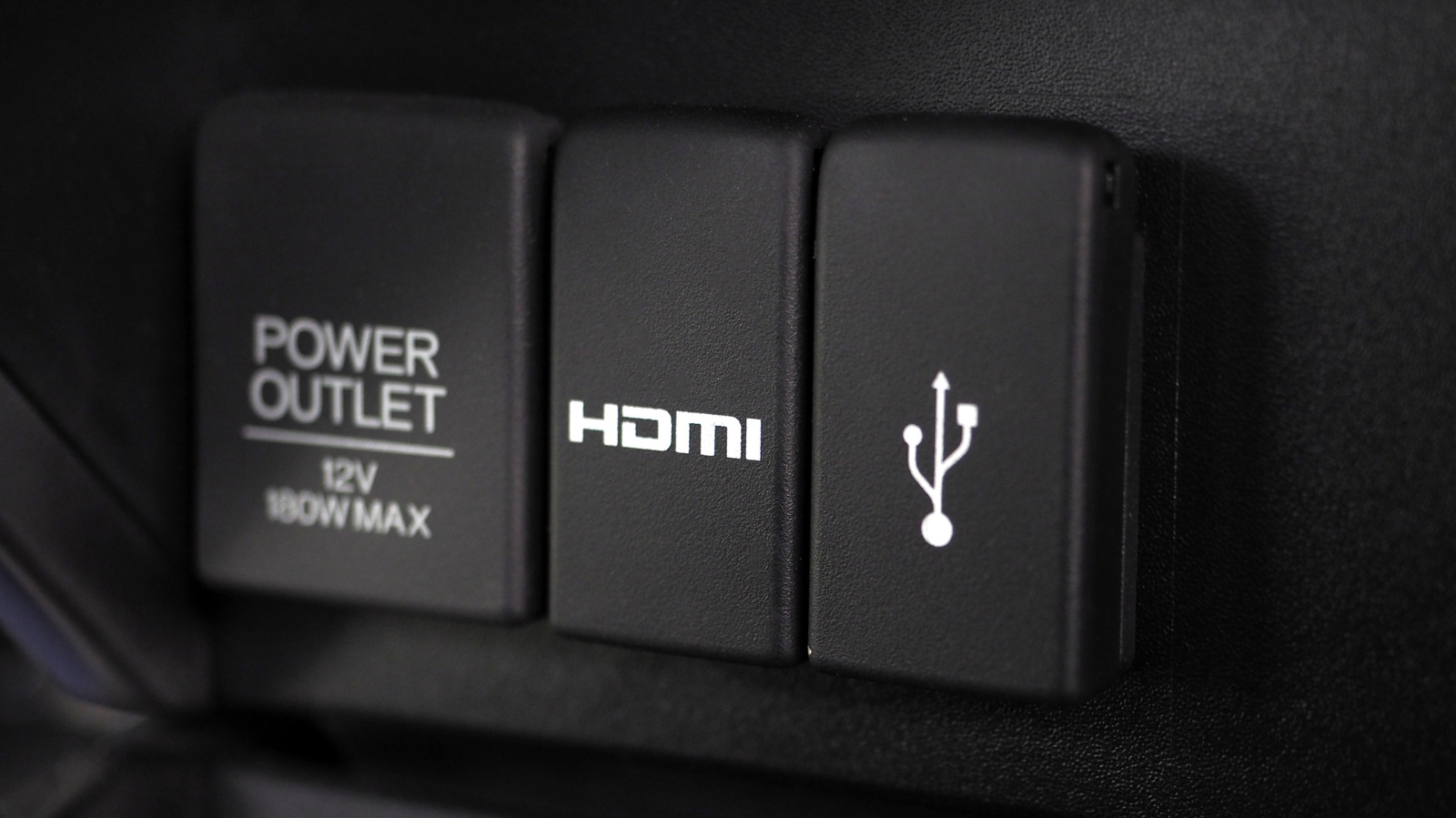
WWW.BGR.COMHere's What The HDMI Port In Your Car Is Actually ForAbout 10 years ago, HDMI ports arrived in cars, especially Hondas, as the automaker worked on an early version of automotive tech that is widespread today.0 Yorumlar 0 hisse senetleri 12 Views -
TECHCRUNCH.COMChatGPT reaches 900M weekly active usersOpenAI shared the new numbers as part of its announcement that it has raised $110 billion in private funding.0 Yorumlar 0 hisse senetleri 12 Views -
TECHCRUNCH.COMPokmon Winds and Pokmon Waves are coming to the Nintendo Switch 2 in 2027The 10th-generation starter Pokmon were revealed in the trailer: Browt (a grass bird), Pombon (a fire puppy), and Gecqua (a water gecko).0 Yorumlar 0 hisse senetleri 12 Views -
Punk In The Park 2026 Canceled Over Political BacklashPunk In The Park 2026 Events Canceled After Backlash Over Political TiesPunk In The Park Festival Canceled After Backlash Over Trump SupportInstagram: @punkintheparkfestPunk in the Park is officially done for at least 2026 after multiple bands dropped from the lineup, citing the festival owner's support for Donald Trump.The festival, billed as the Punk in the Park Road Show, had dates scheduled...0 Yorumlar 0 hisse senetleri 14 Views