What Made the Joseon Dynasty the Most Influential in Korean History?
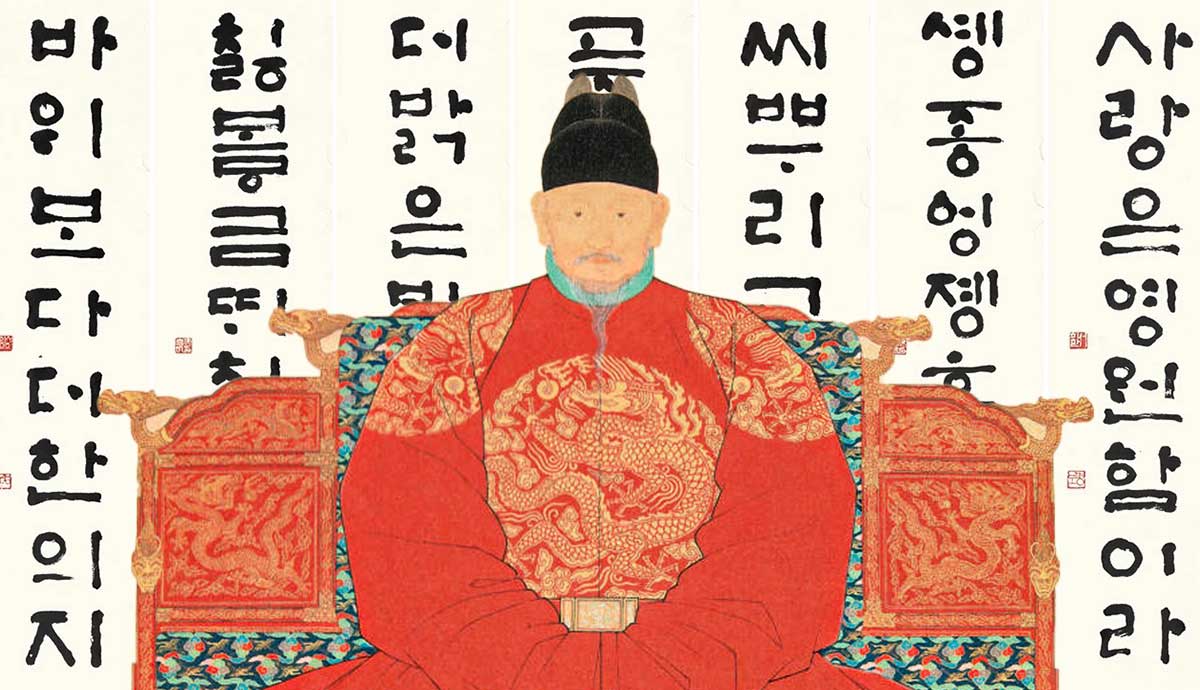
The Joseon Dynasty (1392-1897) is regarded as the most influential period in Korean history, marked by significant societal transformations. From politics to education to culture, no part of Korea was left untouched. Due to the longevity and far-reaching nature of this dynasty, many of its elements still play a significant role in Korean society today. Neo-Confucianism, in particular, influenced many facets of society, with its philosophies still shaping the lives of modern-day Koreans centuries later.The Origins of the Joseon DynastyPortrait of King Taejo, 1335-1408. Source: Wikimedia CommonsThe story of Koreas longest-lasting dynasty begins with the fall of its predecessor, the Goryeo Dynasty (918-1392). By the 13th century, the Korean peninsula had experienced an influx of Mongol invasions. The Goryeo army suffered severe losses as a result, leading to widespread devastation. Mongol rule brought many changes, particularly to tributes and taxes, which negatively affected the economy, causing hardship. Furthermore, warlords became increasingly powerful, lessening the power of the Goryeo rulers.Taking advantage of the situation, skilled general Yi Seong-gye (King Taejo) staged a coup, deposed the king, and installed puppet monarchs until he officially seized the throne in 1392. From there, he sought to legitimize his power, with the approval of Ming China and the implementation of Confucian ideals throughout society. From then on, Korea experienced epochal change, shaped by King Taejos legacy.The Rise of Neo-ConfucianismPortrait of Confucius, late 14th century. Source: The Minneapolis Institute of ArtConfucianism was introduced to Korea from China through scholars and envoys, with texts circulating among Korean intellectuals at the end of the Goryeo Dynasty. Before this, Buddhism was the dominant ideology, influencing many aspects of society from peoples personal beliefs to art and culture. Scholars viewed it to be corrupt, and seeking an ideology for more efficient governance, they landed on Neo-Confucianism as an alternative.Backed by influential scholars, Neo-Confucianism became the state ideology, affecting education, law, family structure, politics, and the arts. In particular, those in governance were required to pass exams based on knowledge of Confucian ideals. If one wanted power, abiding by a Confucian ideology was essential. These ideals are deeply imprinted in Korean society, and Confucian principles are still followed today. For example, the filial piety emphasized by Neo-Confucianism remains a core virtue in Korean families, such as through rituals dedicated to the memory of ancestors.Changing Legal and Social SystemsGyeongbokgung Palace, photo by Brady Bellini. Source: UnsplashThe rise of Neo-Confucianism brought with it the institutionalization of the Five Relationships, which altered power structures across society. These dictated the hierarchical relationships between ruler and subject, husband and wife, elder brother and younger brother, and friends. Both parties have obligations within these relationships, but must conform to their role within the relationship. This, specifically, reinforced the patriarchal family structure, which prioritized male lineage.As a result, women were expected to be obedient daughters, faithful wives, and devoted mothers. This was a far cry from the previous dynasties of Korea, where women could be queens and rulers, such as during the Silla Period. These structures still affect relationships in society today, but women are beginning to push back against the patriarchal values that dominate society.Scholar-officials (Yangban) presided over society, dominating government posts, administration, and the judicial system. Though in theory anyone could be a member of the yangban class, it eventually became a hereditary role. They restructured the military and prioritized examinations for civil positions. With this emphasis on learning, science and technology thrived, with many new inventions appearing during this period. Meteorology and astronomy also advanced.The Flourishing of CultureMoon Jar, 18th century. Source: The Metropolitan Museum of ArtThe yangban saw art as something to be produced by artisans, rather than themselves. Instead, they produced literati paintings, or ink and brush drawings. Government artists mostly produced painted landscapes, portraying idealized scenery over familiar vistas. Their patrons were the yangban; therefore, to cater to their tastes, which Neo-Confucianism heavily influenced, purity became the focus of their works.Moving beyond the famed celadon produced in the Goryeo Period, white porcelain became popular. Though this reveals the strong influence of China upon this craft, Joseon artisans claimed it for themselves, creating new moon jars which epitomized Neo-Confucian ideals. They are spherical vessels with a white glaze, resembling the purity and simplicity of a full moon.Other ceramics were developed too, such as the baekja bottles for storing wine. These stunning creations are celebrated in museums today, and moon jars in particular continue to influence contemporary artists such as Kim Whanki (1913-1974).The Creation of the Korean AlphabetModern Hangul Calligraphy, by Seo Heewan, 1983. Source: MutualArtThe creation of Hangul, the Korean alphabet, occurred at the beginning of Joseon in 1446. King Taejo recognized that the Chinese alphabet did not express their everyday speech, which was native to Korea. He sought out a writing system to do this, one that his subjects could readily learn and use. Alongside his literati-officials, Taejo devised a 28-letter alphabet that was simple enough for common folk to learn.The yangban class did not welcome this new alphabet, as their literacy in the Chinese writing system maintained their superiority. Women, such as the wives and daughters of the yangban, used Hangul extensively, penning letters to each other with the new alphabet. Yet, the Chinese alphabet was often used for important works in government, limiting the wider use of Hangul. As the Joseon Period progressed, its significance grew, and today it is the only writing system in use in the country.Recovery From InvasionA Battle Scene from Pyongyang, 16th century. Source: Yale UniversityThe Japanese invasion of Korea, or the Imjin War, began in 1592, when leader Toyotomi Hideyoshi, seeking to build upon his empire, landed in Busan. Koreas defending forces were repeatedly defeated.Guerilla forces appeared throughout Korea, and with the support of a 50,000-strong army from China, the Japanese were eventually forced to participate in peace negotiations. In 1597, the Japanese attempted to invade again, but this time Korea was prepared and they were able to resist occupation.Throughout this period, Korea suffered heavily. There was pillage, slaughter, famine, and disease. Many cultural treasures were lost to fire as well, such as Pulguk-sa temple. Yet, amidst the destruction, Korea was rebuilt. There were land surveys and tax reforms, as well as military reforms. The yangban class reasserted control, and bureaucracy (for better or worse) was restored. The Joseon Dynasty continued to dominate Korea for centuries to come.Developing Education SystemsPortrait of Scholar-official Ahn in his Fiftieth Year, by Yi Chaegwan, 19th Century. Source: LACMANeo-Confucianism placed great emphasis on education and scholarly achievement, which continues in the focus on academic success in Korean society today. State-sponsored Confucian academies were established across Korea, where students studied key thinkers, Chinese texts, poetry, history, and philosophy.The ultimate goal was to prepare men for civil service examinations, opening them up to more opportunities. However, the examinations were usually only open to yangban men, who maintained their position at the top of society. These exams tested students essay writing, mastery of Confucian texts, and their moral judgement. Modern exam culture in Korea can be traced to these exams, specifically the College Scholastic Ability Test (CSAT), which is viewed as a major life-defining moment.With the rise of King Taejo and the arrival of the Joseon Dynasty, Korea would never be the same again. The prioritization of Neo-Confucianism shaped life in multitudinous ways. From writing and art, to power structures and how perceptions of relationship hierarchies, no part of life was untouched. As a result, many thought processes and cultural norms carried over into contemporary society, making the Joseon Period the most influential in Koreas history.









 English
 Arabic
 French
 Spanish
 Portuguese
 Deutsch
 Turkish
 Dutch
Dutch
 Italiano
 Romaian
 Portuguese (Brazil)
 Greek
Greek