Queen Victorias Ladies in Waiting & Their Duties
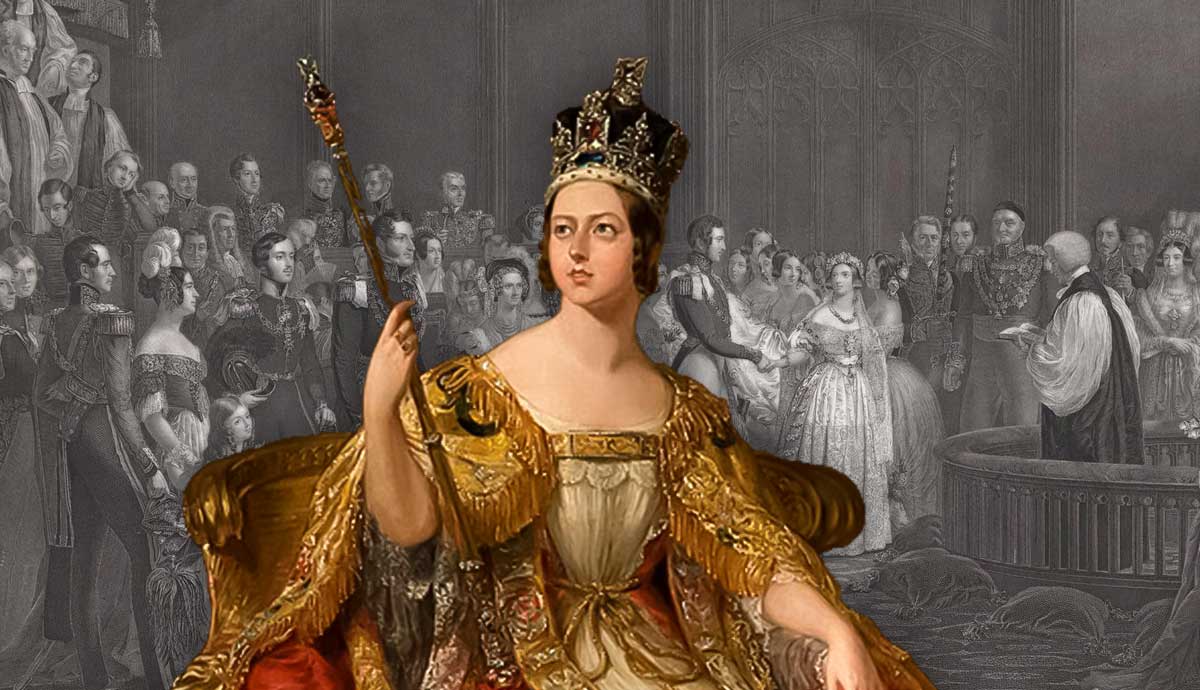
Ladies in waiting were an integral part of Queen Victorias household. They served her every day, kept her company when she was alone, accompanied her to events both public and private, oversaw her health and wellbeing, and even provided support and advice when required. They helped her into her dresses each morning and then into her nightgowns each night. Whenever something small was needed, it was a lady who was asked first. They were required to be patient, likeable, entertaining, and attentive.Throughout her reign, Queen Victoria enjoyed the company of nearly 150 different women. Naturally, she favored some more than others, but either way, they were her near-constant companions.Mistresses, Ladies, and Maids: The Different Types of RolesA drawing room at St Jamess Palace, copy of an original by Jeremiah Barrett, 19th century. Source: Royal CollectionAt the British royal court during the 19th century, there were five types of lady in waiting. The first title was mistress of the robes, of which there would only be one at any given time. There were also ladies of the bedchamber, women of the bedchamber, maids of honor, and a further selection of ladies, which were broadly referred to as extra ladies. Although there were no firm rules to be obeyed, Queen Victoria kept an average of eight ladies per category. This large number of women worked on a loose schedule on rotation.Undoubtedly, the mistress of the robes was the most important title a lady in waiting could acquire. The mistress of the robes was always a duchess and was appointed by the Queen from amongst the highest-ranking women of the English aristocracy. While present at court, the mistress of the robes enjoyed precedence over every female courtier but the Queen. Her duties ranged from managing the Queens wardrobe bills to providing light entertainment, womanly advice, and general companionship.Despite the fact that a large portion of her job involved a close friendship with the Queen, the Mistress of the Robes was more often selected for political advantage rather than social. Generally speaking, the holder of the position changed in relation to the changing government.One famous holder of the position was Harriet Sutherland (the Duchess of Sutherland), who acted as mistress of the robes on four occasions. There was a clear pattern to her coming and going; whenever the Whigs were presiding in government, Harriet Sutherland was presiding in the Queens household.Other notable holders of the position included Elizabeth Russell (Duchess of Bedford), Elizabeth Campbell (Duchess of Argyll), Elizabeth Wellesley (Duchess of Wellington), and Louisa Montagu (Duchess of Manchester).Queen Victoria and Prince Albert, 1861. Source: GetArchiveNext, there were the ladies of the bedchamber. These women and young ladies were always chosen from amongst the many wives and daughters of the English peers. It was the ladies of the bedchamber who were most commonly referred to as ladies in waiting. Being a lady of the bedchamber was a particularly light-hearted and enjoyable occupation. Their only job was to be happy, amusing, and perhaps occasionally useful. Essentially, they were sociable companions to the Queen. They would accompany her wherever she went, whether it be to a ball, a dinner, a state occasion, a public event, or an evening in her private sitting room. Ladies of the bedchamber were in pretty much constant attendance, and they provided entertainment and friendship.Although their title could hardly be more similar, the women of the bedchamber were quite different from the ladies of the bedchamber. Ladies of the bedchamber were certain to have been envied by the women. Such a prestigious birth was not expected of women of the bedchamber, and they were often much lower ranking than the ladies. Women were the wives of sirs and misters rather than of dukes, counts, and barons. Unlike the ladies, the women of the bedchamber were not required to reside at court, but were ready to attend the queen at any time.Queen Victoria, Coronation Portrait, by George Hayter, 1838. Source: Royal CollectionNext, there were the maids of honor. The maids were very young ladies from noble families, personally selected by Queen Victoria. At any given time, two maids of honor attended Queen Victoria. Despite their young age, they were required to leave their homes and take up residence at court. Once married, maids would receive a generous financial gift and the lifelong title of honorable.Finally, there were the further ladies. There were an unlimited number of places to fill, so if Queen Victoria desired, she could summon a further selection of companions to her side. These were broadly referred to as extra ladies, and their only real purpose was to keep Queen Victoria company. They did not receive a salary and had no official duties, but were kept at the expense of the royal household. For this reason, Queen Victoria may also have selected an extra lady to aid her financially, perhaps after the death of her husband. Extra ladies were present simply for the pleasure of their company, but were occasionally called upon to fill a vacancy in the event of sickness or authorized absence.Queen Victorias First Ladies: The Royal Household in 1837The Marriage of Her Most Gracious Majesty Queen Victoria, by Charles Edward Wagstaff, 1844. Source: Yale Center for British ArtWhen Queen Victoria first came to the throne in 1837, she had a number of decisions to make and companions to appoint. Most importantly, she was required to select one woman from amongst the duchesses in Britain to act as her Mistress of the Robes. This coveted position was quickly offered to Harriet Sutherland, whose husband just happened to be a close friend of the current Prime Minister, Lord Melbourne. The proposal was gratefully accepted. As mistress of the robes, Harriet took precedence over all women at court but the Queen.But that was only the beginning. There were four other named positions available, and a queens household required at least eight women to fill each category. With help from Lord Melbourne, her new friend and advisor, Queen Victoria sent invitations to 32 women with the expectation of their service.Firstly, she acquired eight ladies of the bedchamber. These were Anna Russell (Duchess of Bedford), Anne Claufield (Countess of Charlemont), Frances Noel (Countess of Gainsborough), Louisa Lambton (Countess of Durham), Louisa Petty-FitzMaurice (Marchioness of Lansdowne), Maria Phipps (Marchioness of Normanby), Emma Portman (Baroness Portman), and Sarah Lyttleton (Baroness Lyttleton).Queen Victoria also felt the need to hire another assistant, whom she called a resident woman of the bedchamber. The first of these women was named Miss Mary Anne Davys. This young lady was the daughter of Queen Victorias former tutor, George Davys, the Bishop of Peterborough.Anne, Countess of Charlemont and her son James, 1805. Source: Wikimedia CommonsThe women selected as ladies of the bedchamber were high-ranking members of society, including duchesses, countesses, and marchionesses. However, candidates for the women of the bedchamber ranked slightly lower. Amongst them were wives of sirs and misters rather than counts and dukes.The first group of eight women to serve Queen Victoria as women of the bedchamber was as follows: Frances Forbes (Viscountess Forbes), Lady Caroline Barrington, Lady Charlotte Copley, Lady Harriet Clive, Lady Caroline Gardiner, Lady Theresa Digby, Mrs Brand, and Mrs Campbell.As if that were not enough, Queen Victoria also acquired eight maids of honor during the first year of her reign. They were Lady Caroline Somers-Cocks, Harriet Pitt, Margaret Dillon, Sarah Cavendish, Matilda Paget, Amelia Murray, Harriet Lister, and Mary Spring Rice.So far, we have named 26 female friends who formed the first household of Queen Victoria in 1837. Next, we will discover a little more about the lives, duties, and friendships of just five of these 26 Ladies. They are Harriet (Duchess of Sutherland), Miss Mary Anne Davys, Anna Russell (Duchess of Bedford), Emma Portman (Baroness Portman), and finally Sarah Lyttleton (Baroness Lyttleton).Who were they? What were their duties? What did they do for Queen Victoria on a daily basis? How did their private lives contrast with their public appearances?Harriet, Duchess of SutherlandHarriet Sutherland as portrayed by Margaret Clunie in the ITV series Victoria. Source: TumblrOver the last two centuries, Harriet Sutherland has slowly become one of the most famous of all Queen Victorias Ladies. It is perhaps her unrivalled closeness with Queen Victoria that makes her so memorable. Throughout both their lives, Harriet Sutherland was one of Queen Victorias most trusted confidantes and also an integral member of her entourage. They were the best of friends throughout joys and troubles. Harriet Sutherland presided at Queen Victorias coronation in 1837, and wept with her over Prince Alberts death in 1861. So close were the pair that Queen Victoria desired only the company of Harriet Sutherland during the first few weeks of her mourning.However, despite their relationship, it is important to remember that Harriet Sutherland was unlikely to have been personally selected by Queen Victoria in the first place. It is probable that Harriets name was put forth by Lord Melbourne, Queen Victorias first prime minister and newly appointed private secretary. Both Harriet and her husband were great supporters of the Whig party, and conveniently were also extremely good friends of Lord Melbourne. The suggestion of Harriet for Mistress of the Robes was accepted by Queen Victoria.It was little wonder why Queen Victoria immediately warmed to Harriet Sutherland, and even honored her as the most special lady of her household. Harriet possessed many qualities that made her suitable for intimacy with the royals and was a perfect candidate for the Queens friendship at the beginning of her reign. Not only did she fit with the current government, but she was an influential and well-liked figure in English society. She was warm, likeable, affectionate, amusing, good-natured, happy, experienced, and polite. She was known for her sense of humor and had interests in politics, architecture, and gardening.Harriet Sutherland, by Franz Xaver Winterhalter, 1849. Source: Wikimedia CommonsAlthough she is more famous for her gentile position as mistress of the robes and also for her participation in womanly pursuits, Harriet Sutherland also had interests that lay far outside the walls of Buckingham Palace. Somewhat unexpectedly for an aristocratic woman of her time, Harriet was a renowned advocate for the end of the slave trade, and wasnt afraid to act. Harriet Sutherland used her social position to carry out many good works. She participated in the protest of the English Ladies against American slavery and is now remembered by historians as a prominent female abolitionist of her era.Throughout the mid-19th century, anti-slavery attitudes amongst aristocratic women became more and more common. Harriet Sutherland was by no means the only female abolitionist within Queen Victorias social circle, nor amongst her ladies in waiting.Even after returning home to her own residence, Harriet Sutherland was still an exceptionally busy woman. As if all this were not enough, she also had eleven children in her own nursery at home, all of whom survived to adulthood. Luckily for Queen Victoria, all but four of these children were born before 1837, and therefore, Harriet was not too often absent from court after taking on her new position.Harriet Sutherland served as mistress of the robes on four separate occasions. These terms included 1837-1841, 1846-1852, 1853-1858, and 1859-1861.Miss Mary Anne DavysPortrait of George Davys, Bishop of Peterborough, 1860-64. Source: Wikimedia CommonsWe now move from a woman we know much about to a woman we know very little about. In terms of fame or remembrance, Harriet, Duchess of Sutherland, and Miss Mary Anne Davys could not be more different. However, they both served as ladies to Queen Victoria together for years, and would have known each other well. So, how did Miss Mary Anne Davys come to live in such close proximity to the likes of duchesses and queens?As any historian might expect, even at the age of 18, Queen Victoria possessed immaculate manners, a high standard of etiquette, and even a large amount of courtly generosity. This is why, upon assuming the throne, she kindly invited a young woman called Miss Mary Anne Davys to join her household. This was done as a gift of thanks to her former tutor, the Right Reverend George Davys, the Bishop of Peterborough. George Davyss daughter, Mary Anne, was brought to court to act as a resident woman of the bedchamber.This title was new and especially created for Mary Anne by Queen Victoria. Because Mary Anne did not possess the requirements to become a traditional lady in waiting, a new post was invented for her use. Very little is known about the life of Mary Anne Davys, even though she remained in the service of Queen Victoria for over 50 years. In 1888, she was replaced that year by another similar candidate, Miss Ina Erskine McNeill. There were only two resident women of the bedchamber in over 32 years, the entire reign of Queen Victoria.Anna Maria Russell, Duchess of BedfordPortrait of Anna Maria Russell, 19th century. Source: Wikimedia CommonsIn Britain, the Duchess of Bedford is best remembered for being the creator of the iconic English meal called afternoon tea. However, she is also remembered for her valuable time spent in the household of Queen Victoria. Although she was a lady of the bedchamber for only four years (between 1837 and 1841), she maintained a close and lifelong friendship with the Queen.When the Duchess of Bedford accepted her new position, the duties and requirements would have been quite familiar to her. Her own mother, Jane Stanhope (Countess of Harrington), had also served as Lady of the Bedchamber. Janes period of service had been during the reign of George IV, in the household of his wife, Queen Charlotte of Mecklenburg-Strelitz.The Duchess of Bedford died in 1857. She was buried in her family Chapel, the Bedford Chapel, in Buckinghamshire, England.Emma Portman, Baroness PortmanA portrait of Emma Portman, c. 1842. Source: The British MuseumEmma Portman, also remembered as the Baroness Portman, has slowly become one of the more famous of Queen Victorias ladies in waiting. Her sudden popularity is owed, in part, to her depiction by Anna Wilson-Jones in the television series Victoria, produced and shown on British television over the last decade.Emma Portman is depicted in the series as a mature, wise, and motherly figure, but in reality was only ten years older than Queen Victoria herself. At the time of her entry into Queen Victorias employment, she had already been married to her husband, Edward Portman, for nearly a decade. With her husband, she shared six children: four sons and two daughters. Despite her large family, it is reasonable to suggest that her friendship with Queen Victoria may have taken precedence, on many occasions, over her husband and children.Emma Portman stayed with Queen Victoria for nearly 30 years, firstly as a lady of the bedchamber (1837-1851), and then as an extra lady of the bedchamber (1851-1865).Sarah Lyttelton, Baroness LytteltonPortrait of Sarah Lyttelton, by John Jackson, 19th century. Source: Unofficial RoyaltyWhen Sarah Lyttelton was offered the chance to join the household of Queen Victoria in 1837, she was 50 years old and very recently widowed. Her husband, William Lyttleton (3rd Baron Lyttleton), had died in April of that same year. Although Sarah accepted the position, she is thought to have harbored severe doubts over her suitability for life in such close proximity to royalty. She expressed her unease to a friend, saying the character of an advisor, a woman of influence, a probable preserver or improver of the national morals is exactly the very last I could fill decently. With this exclamation, she revealed her opinion of her own character, which she apparently deemed inappropriate for service to the Queen.Queen Victoria never heard these words and therefore developed her own good opinion of Sarah Lyttleton. Despite her supposedly unfitting personality, Sarah only flourished at court. She managed to win the love and respect of Queen Victoria, and later that of her husband, Prince Albert. In fact, so well thought of was Sarah by the Queen and Prince that she was even appointed governess to the royal children in 1843.Sarah Lyttleton left both of her posts in 1850, after 13 years in royal service. Following the death of her daughter Lavinia, Sarah submitted a request to Queen Victoria in the hope that she might return home. The request was granted, and with a generous pension, Sarah spent the rest of her life raising her grandchildren.Dedication to William and Sarah Lyttelton. Source: Wikimedia CommonsSarah Lyttleton died at the age of 82 on April 13, 1870. A memorial to Sarah can still be visited at Saint John the Baptist Church in Hagley, in Worcestershire in England. The stone inscription is dedicated to both her and her husband, and reads To the memory of William Henry Lord Lyttleton, who died 30th April 1837, aged 55, and also of Sarah, wife of the above, who died April 13th, 1870, aged 82.In the 21st century, Sarah Lyttleton is best remembered not only for being a lady of Queen Victoria, but also for being an early governess and influential figure to the future King Edward VII.The Many Ladies of Queen VictoriaQueen Victoria, by Heinrich von Angeli, 1875. Source: Wikimedia CommonsIn this article, we have briefly covered the lives of just five of Queen Victorias ladies in waiting. Although some of the most famous are included in this list, it is important to remember that there were at least 140 other names, which were equally important, and which could have been selected.Although the title of lady in waiting may initially seem girly, unnecessary, or even frivolous, the importance of these women should not be underestimated. The constant company of these ladies undoubtedly had a profound impact and lasting effect on Queen Victoria. Her lifelong friendships had a surprisingly great influence on her personal experiences, her private happiness, and her iconic reign.









 English
 French
 Spanish
 Portuguese
 Deutsch
 Turkish
 Dutch
Dutch
 Italiano
 Russian
 Romaian
 Portuguese (Brazil)
 Greek
Greek