• YUBNUB.NEWS
    Executives Sentenced to 20 Years for $233 Million Obamacare Fraud
    The Department of Justice building in Washington on Jan. 6, 2026. Madalina Kilroy/The Epoch TimesThe president of an insurance brokerage company and the chief executive of a marketing company have been
    0 Reacties 0 aandelen 30 Views
  • YUBNUB.NEWS
    79th Suspect in Massive Minnesota Fraud Scheme ARRESTED After Attempting to Flee to UK Center Received MILLIONS in Taxpayer Funds Under Walz Administration
    Fahima Egeh Mahamud Another taxpayer-funded grift artist has been stopped in her tracks. The owner of Future Leaders Early Learning Center, who pocketed a staggering $3.67 million in child care funds
    0 Reacties 0 aandelen 30 Views
  • YUBNUB.NEWS
    LIVE NOW: Colin Gray Trial Continues in Georgia School Shooting Case
    Colin Gray, the father of a teenager who allegedly killed four people at his Georgia high school in 2024, stands trial on Feb. 19. Gray faces murder and manslaughter charges in a case testing the limits
    0 Reacties 0 aandelen 30 Views
  • YUBNUB.NEWS
    Rubio Follows in Reagans Footsteps
    The trip that former President Ronald Reagan took to Europe in June of 1987 culminated in one of the greatest speeches of the last centurybut its first major moment was a visit to the Vatican. On June
    0 Reacties 0 aandelen 30 Views
  • Best Overwatch settings for optimized PC performance
    Best Overwatch settings for optimized PC performance Looking for the best Overwatch settings? It's important to set yourself up using the most optimal settings for Overwatch to ensure your game runs perfectly. Not only will these settings reduce visual clutter, but having a consistent frame rate will help you even in the most intense fights where ultimates are going off every few...
    0 Reacties 0 aandelen 50 Views
  • Meta might launch its first smartwatch this year
    Meta might launch a smartwatch this year Meta, the parent company of Facebook, might launch an Apple Watch competitor this year. According to a report by The Information, the smartwatch is code-named 'Malibu 2,' and will come with health-tracking tools, similar to the ones seen on other popular smartwatches, including Apple Watch. A...
    0 Reacties 0 aandelen 36 Views
  • WWW.LIVESCIENCE.COM
    Saturn's largest moon may actually be 2 moons in 1 and helped birth the planet's iconic rings
    A new study hints that Saturn's largest moon, Titan, was created around 400 million years ago, when two massive moons smashed into each other. This hypothesis could also help to solve several other mysteries surrounding other moons and the planet's iconic rings.
    0 Reacties 0 aandelen 30 Views
  • WWW.THECOLLECTOR.COM
    How a 70-Year-Old Apache Leader Outran Two Armies Against All Odds
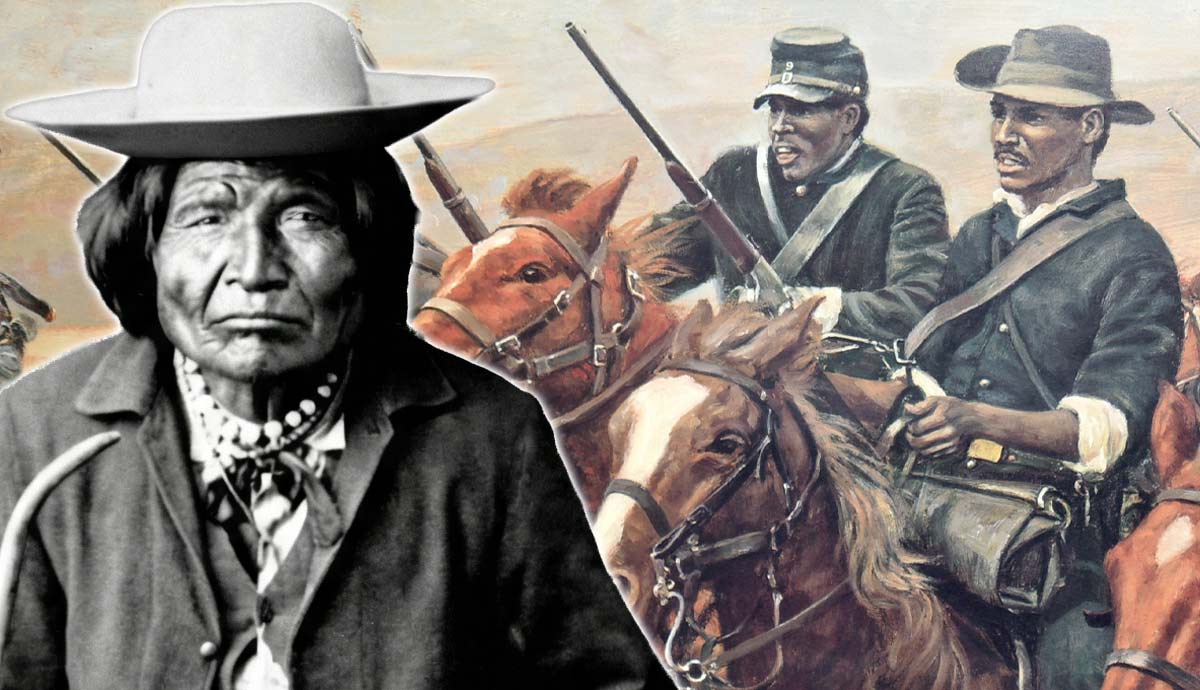
    Nana (Nanay) Chiricahua Apache war chief, 1886, left. Source: National ArchivesNanas story is a typical one for any 19th-century Native American tribe. Years of conflict forced many tribes onto reservations. Several Apache bands, like them, resisted. Their leaders, such as Geronimo, conducted effective guerrilla campaigns. Yet Nanas campaign would demonstrate what a master warrior could achieve.By 1881, Nana was ranked as a respected Chiricahua Apache war chief. Yet he was old, at or past seventy, with a lame leg. Angry at how the Americans and Mexicans decimated his people, he sought revenge. Reservation hardships, broken promises, and the death of his brother-in-law Victorio (killed by the Mexican army). With a small band of warriors, typically fewer than forty, Nana unleashed himself in fury, showing what supreme mobility could do.A Hard-Hitting Summer BeginsAn Apache Ambush by Henry Farny, 1894. Source: Cincinnati Art MuseumNana started his six-week raid in late June 1881 with 15-40 warriors. This warrior-only band traveled fast, having left families behind. Nana wanted freedom of movement; families or wagons would only be anchors. But logistics rules all conflicts, and he needed supplies. So he headed through southwest New Mexico, southeast Arizona, and northern Chihuahua (Mexico). They first raided rural ranches, stagecoaches, and mining camps-easy targets. This gave the Apache ample weapons, ammunition, and mounts. Extra horses meant Nanas riders could swap out tired horses to keep moving. For the Apache, speed meant life.Nanas looping guerrilla campaign took his warriors through sharp canyons, broken ridges, or dense forest cover. Locations touched on were the Black Range foothills near the Mogollon Mountains for ranches, the Pinos Altos mining camps, or unwary travelers.Nanas opponents, the U.S. Army, posses and Mexicans responded quickly. The Army sent units from three forts right as the first raids began.Shoot, Move, and FireSouthwest pionjuniper country. Source: National Park ServiceNana certainly appeared to be an uncatchable enemy. The elderly but wily war chief used every tactic gained through decades of war and unmatched knowledge of the terrain. Nanas primary tactic was mobility and multiple mounts. The Apache raiders rotated horses frequently, setting a pace that stunned his pursuers. Like the Mongols centuries earlier, the Apache lived in the saddle, using nearly impassable terrain, such as volcanic badlands or ridgelines, to foil their enemies.Importantly, the impaired, arthritic Nana never stood his ground, knowing when not to fight, preferring ambushes or hit-and-run tactics. The Apache remained irregular by doubling back or disappearing into side canyons. They often struck from above, firing and then vanishing.The slippery Apache foiled Mexican and Americans alike. Raids took only minutes-Nana never strayed from this tactic. They sought food, ammunition, or horses. Soldiers and possies alike tried enveloping movements. Nana drew on his bag of tricks, using tactics like false trails, breaking into smaller groups, or decoys. The Apache stymied every trap. Nanas group struck across New Mexico, Arizona, and Mexico. Such unpredictability gave Nana the psychological edge, demoralizing his chasers. His tactics forced the Army to spread its soldiers across a huge region.Pursuit, Politics, and No Luck10th Cavalry Buffalo Soldiers 19th century. Source: U.S. ArmyFor two frustrating months, everyone tracked Nanas Apache. Nanas band struck so fiercely, killing and taking supplies. Prior to Nanas raid, the U.S. and Mexican governments reached an agreement allowing cross-border pursuits. Each shared information about the Apache, but it was always late. Despite attempts at coordination, both accused the other of not doing enough or of allowing the Apache to escape. Neither could fathom that Nanas warriors traveled up to fifty miles a day.Even the famed Buffalo Soldiers failed to intercept Nana. The Apache war chief fought only at his discretion, as on August 12, 1881, at the Battle of Carrizo Canyon (New Mexico). Here, Nana ambushed 10th Cavalry troopers, his 40 troopers against the 18 Buffalo soldiers.Nana waylaid the soldiers upon entering the narrow canyon entrance, firing rapidly. Eventually, a small group of soldiers gained the hills above under fire. They rained lead down on the Apache, allowing their comrades to retreat. This marked the last battle of Nanas revenge. Nana made for the border, crossing more than 60 miles at their usual speed.A Lesson DeliveredDash for the Timber 1889. Source: Amon Carter Art MuseumCarrizo Canyon marked the end of Nanas summer raid. During the seasons hottest months, the nearly blind, arthritic Apache chiefs small warband kept nearly 1,000 soldiers at bay. He killed at least 30 people in his raids, fueled by rage. Nana traveled 1,000 miles to raid or clash with soldiers, often disappearing quickly. He demonstrated that knowledge, tactical knowledge, and grit can outweigh numbers and firepower.
    0 Reacties 0 aandelen 31 Views
  • WWW.THECOLLECTOR.COM
    5 Black Women Writers Who Changed the World With Their Prose
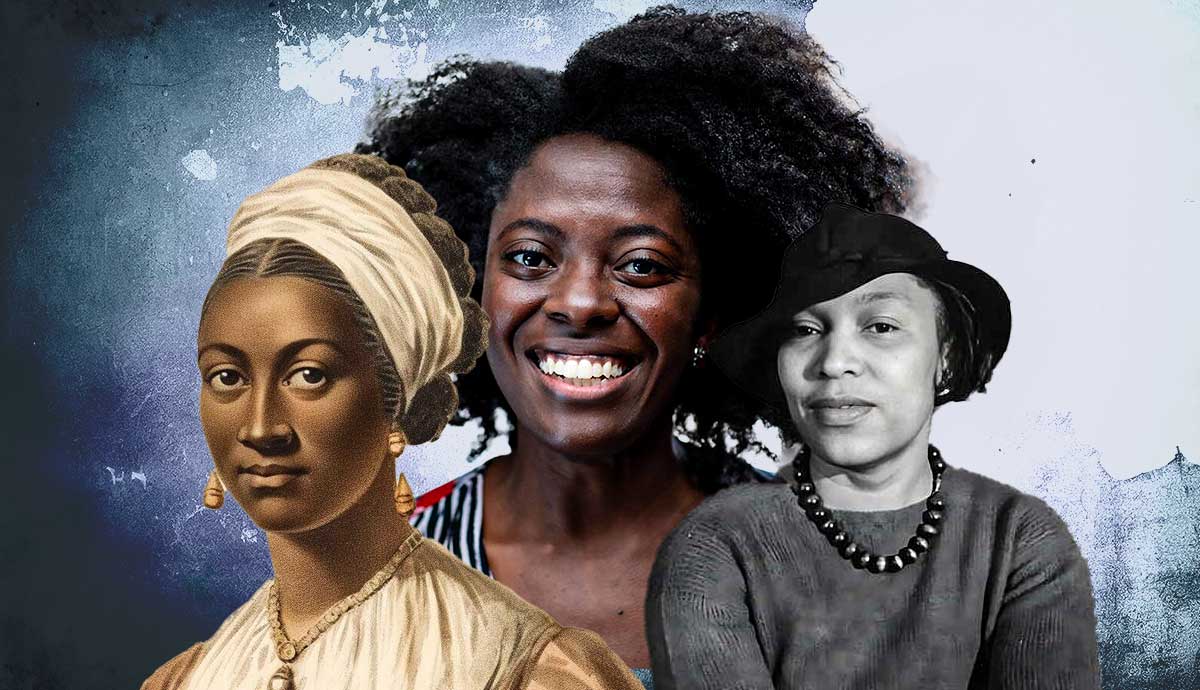
    Through poetry, fiction, essays, and journalism, Black women writers have challenged racism, sexism, and social injustice while reclaiming narratives historically ignored or distorted. Their voices have preserved cultural traditions, documented resistance, and inspired movements for civil rights, gender equality, and liberation. Writers like Phillis Wheatley, Mary Ann Shadd Cary, Zora Neale Hurston, Audre Lorde, and Yaa Gyasi have expanded the literary canon and deepened our understanding of identity, power, and resilience.1. Phillis Wheatley (c. 1753-1784)Phillis Wheatley. Source: Poem AnalysisWisdom is higher than a fool can reach, Phillis Wheatley, On Virtue in Poems on Various Subjects, Religious and Moral, 1773.Phillis Wheatley was a West African-born writer and activist, known as the first Black American to publish a book of poetry. Kidnapped at a young age, she was brought to North America and enslaved by the Wheatley family in Boston. The Wheatleys taught her to read and write, recognizing her talent early and encouraging her to write poetry. Phillis studied the Bible, geography, British literature, Greek and Latin classics, and astronomysubjects that profoundly shaped her writing.In 1770, Wheatley gained international attention with her An Elegiac Poem, on the Death of that Celebrated Divine, and Eminent Servant of Jesus Christ, the Reverend and Learned George Whitefield. The poem was published in several cities, including London. Though she had written 28 poems by the age of 18, American colonists were reluctant to publish her work, so Wheatley sought support in London. In 1771, she traveled there, meeting abolitionists, poets, and political figures and connecting with bookseller Archibald Bell, who agreed to publish her work.Statue of Phillis Wheatley in Boston celebrating her life and literary contributions. Source: New England Historical SocietyWheatleys book, Poems on Various Subjects, Religious and Moral, appeared in 1773. Her writing reflected on biblical themes, anti-slavery sentiment, religious devotion, classical references, and thoughts on American independence. She often used the couplet form in her poetry, combining classical and neoclassical styles.In 1778, Wheatley married John Peters, a freed Black man, and continued to write throughout her life. Scholars estimate she wrote at least 145 poems and many letters to political and religious leaders in America and abroad. Wheatley used poetry to criticize slavery and comment on events like the Great Awakening, demonstrating not only her intellect but also the capabilities of enslaved Black women. Her legacy paved the way for abolitionists and womens rights activists to use writing to advance the causes of freedom and equality.2. Mary Ann Shadd Cary (1823-1893)Portrait of Mary Ann Shadd Cary. Source: News Media CanadaIn anything relating to our people, I am insensible of boundaries, Mary Ann Shadd Cary in a letter to abolitionist Frederick Douglass, 1849.Mary Ann Shadd Cary, born to a free, middle-class Black family in Delaware, was a writer, anti-slavery activist, educator, and the first Black woman to edit and publish a newspaper in North America.Her family helped enslaved people escape through the Underground Railroad, and her father wrote for The Liberator, an abolitionist paper. Inspired by her parents actions, Cary spoke out against slavery and educated others on the Black American experience. She attended a Quaker school as a child and, after the Fugitive Slave Act passed, moved to Canada, where she opened an integrated school.In 1852, Cary began publishing essays promoting emigration to Canada as resistance to oppression. Her pamphlet, A Plea for Emigration; or, Notes of Canada West, informed Black Americans about settling in Canada and included testimonials from those who had successfully relocated.An article from The Provincial Freeman detailing the capture of a fugitive enslaved person, 1854. Source: Heritage TorontoIn 1853, she founded The Provincial Freeman, Canadas first anti-slavery newspaper. Through it, Cary advocated for education, racial equality, and self-reliance, while condemning prejudice. In an effort to reach more Black readers, she even smuggled the paper into the US. Once The Provincial Freeman gained a steady audience, she put her name on the masthead, but backlash forced her to resign in 1855.Undeterred, Cary toured the US, giving speeches in support of abolition and civil rights. That same year, she became the first woman to speak at a national Black civil rights convention. After her husband passed away, Cary returned to the US with her children, believing she would make more of a difference supporting Black Americans across the border.During the American Civil War, she accepted a commission from the US government and ran a recruiting office for Black soldiers to join the Union Army. After the war, she supported emancipated Black Americans and resumed teaching.In 1880, Cary founded the Colored Womens Progressive Franchise and, in 1883, became one of the first Black women to earn a law degree, graduating from Howard University. Carys voice uplifted other Black voices and exemplified Black womens influence in the 19th century.3. Zora Neale Hurston (1891-1960)Writer, anthropologist, and filmmaker Zora Neale Hurston during the Harlem RenaissanceI have the nerve to walk my own way, however hard, in my search for reality, rather than climb upon the rattling wagon of wishful illusions, Zora Neale Hurston in a letter to fellow writer Countee Cullen.Zora Neale Hurston was an American writer, professor, folklorist, and anthropologist whose work illustrated the lives of Black Americans in the South. Born in Alabama to formerly enslaved parents, she became one of the most influential female writers of the 20th century, producing over 50 short stories, plays, essays, ethnographies, and an autobiography.After high school, she earned an associates degree and a BA in anthropology from Barnard College in 1928. As a student, she conducted fieldwork on Black folklore in the American South. In the 1920s, she became involved in the Harlem Renaissance, writing alongside such talents as Langston Hughes.In 1930, Hurston and Hughes collaborated on Mule Bone: A Comedy of Negro Life in Three Acts, a play rooted in Southern folklore and oral traditions, though it was never fully completed. In 1934, she published her first novel, Jonahs Gourd Vine, which offers a raw, authentic portrayal of the Black Southern experienceexamining dysfunctional relationships, religion, and post-Reconstruction Era migration among other themes.Zora Neale Hurston Drumming, 1937 by a New York World-Telegram & Sun photographer. Source: The Library of CongressIn 1935, Mules and Men was published, documenting folk traditions of Black Americans in Florida specifically. Her acclaimed 1937 novel, Their Eyes Were Watching God, explores racial identity, gender dynamics, and self-reliance in a South still shaped by the aftermath of the American Civil War. In 1938, she published Tell My Horse, a blend of travel writing and anthropology focused on Voodoo practices, followed by Moses, Man of the Mountain in 1939. Her autobiography, Dust Tracks on a Road, appeared in 1942, and her final novel, Seraph on the Suwanee, was published in 1948.Hurstons work highlights the often overlooked experience of Black rural life in the South. Interest in her writing surged in the late 20th century, with posthumous collections released. In 2025, The Life of Herod the Greata continuation of Moses, Man of the Mountain with research based on Hurstons letterswas completed by scholar Deborah G. Plant.4. Audre Lorde (1934-1992)Audre Lorde (far left) with fellow writers at a writing workshop in Austin, Texas, 1980, by K. Kendall on Flickr. Source: Mental FlossMy sexuality is part and parcel of who I am, and my poetry comes from the intersection of me and my worlds Audre Lorde in an interview with Dr. Charles H. Rowell, 1990.Born to West Indian parents, Audre Lorde was a Black American writer, poet, intersectional feminist, and civil rights activist who supported gender equality and spoke out against racism, sexism, and homophobia. She identified as a lesbian and spoke in favor of sexual freedom. Lorde achieved a BA from Hunter College and an MLS from Columbia University, going on to work as a librarian before teaching as the poet-in-residence at Tougaloo College in Mississippi, a historically Black college. Later, Lorde served as poet laureate in New York City.Lorde published several poems in the 1960s and 1970s, with her most famous collections being Cables to Rage (1970), which explores her anger at the personal and societal injustices she faced as a lesbian and feminist, and The Black Unicorn (1978), which represents the marginalization and oppression Black women face in society. Written after a trip with her children to Benin, the text calls on the strength of goddesses in African mythology.Lordes works discuss identity, societal expectations, oppressive forces, liberation, and self-acceptance. Lorde also often alludes to the American Civil Rights Movement in her writings, commenting on murders of innocent Black victims at the hands of authority figures and illustrating the dark realities of being Black in a racist country.Audre Lorde photographed in Berlin, photo by Dagmar Schulz. Source: The BerlinerLorde also wrote essays, including Burst of Light (1988), a collection of essays that explores racism, Black identity, and lesbian sexuality, calling for resistance against oppression and attitudinal changes in society. Within the collection, Lorde challenges societal norms and reflects on the human experience, including her own struggles with her cancer diagnosis. The theme of vulnerability is present throughout the collection.Lordes work is significant as Lorde speaks for the marginalized in society. She raised awareness of the injustices women, especially Black women, face, and she shed light on the experience of the LGBTQ+ community, providing a raw portrayal of the struggles of those on the fringes of society.5. Yaa Gyasi (1989-Present)Photograph of Yaa Gyasi, 2020. Source: Vilcek FoundationI started imagining the idea of the Gold Coast women walking above these dungeons and I was wondering what they knew of what was going on below, Yaa Gyasi said in an interview with the Vilcek Foundation about her debut novel, Homegoing, 2020.Born in Mampong, Ghana, Yaa Gyasi is a Ghanaian-American novelist whose work reflects on the immigrant experience and Black life in the United States and abroad. In 1991, Gyasi moved with her family to the United States as her father pursued a PhD, and the Gyasi family eventually settled in Huntsville, Alabama. Gyasi achieved a BA in English from Stanford University as well as an MFA from the Iowa Writers Workshop, a prestigious creative program at the University of Iowa.In 2012, Gyasi resigned from her job at a tech startup to focus on her first novel, Homegoing, published in 2016. The book was inspired by a trip to Ghana, where Gyasi explored her mothers ancestral home and visited with family. She also toured the Cape Coast Castle, a colonial fort that once housed enslaved people who were held captive there before being forced onto ships headed for the Americas.The novel follows sisters as they navigate life in 18th-century Ghana, with one sister marrying a British commander and the other being enslaved. The book explores colonialism, generational trauma, and the effects of history through the eyes of the sisters descendants, commenting on such historical events as plantation life in the American South and the American Civil Rights Movement.Gyasis second novel, Transcendent Kingdom, 2020. Source: NPR/KnopfGyasis second novel, Transcendent Kingdom, was published in 2020. It explores the protagonists immigration story by illustrating the struggles the family faces moving to Alabama from Ghana, including addiction struggles, mental health issues, and racism.Gyasi has contributed to a number of publications and, in 2021, wrote a short story, Bad Blood, which appeared in The 1619 Project: A New Origin Story. The story follows a woman who suffers from hypochondria as a result of the discrimination Black people have faced in the healthcare system in the US, referencing the 1932 Tuskegee Syphilis Study.Gyasis work sheds light on the Black experience in America, specifically the difficulties Black immigrants face and generational traumas that Black people endure due to racism, slavery, and conflict.

    0 Reacties 0 aandelen 18 Views
  • WWW.THECOLLECTOR.COM
    The History of Equatorial Guinea, Africas Only Spanish-Speaking Country
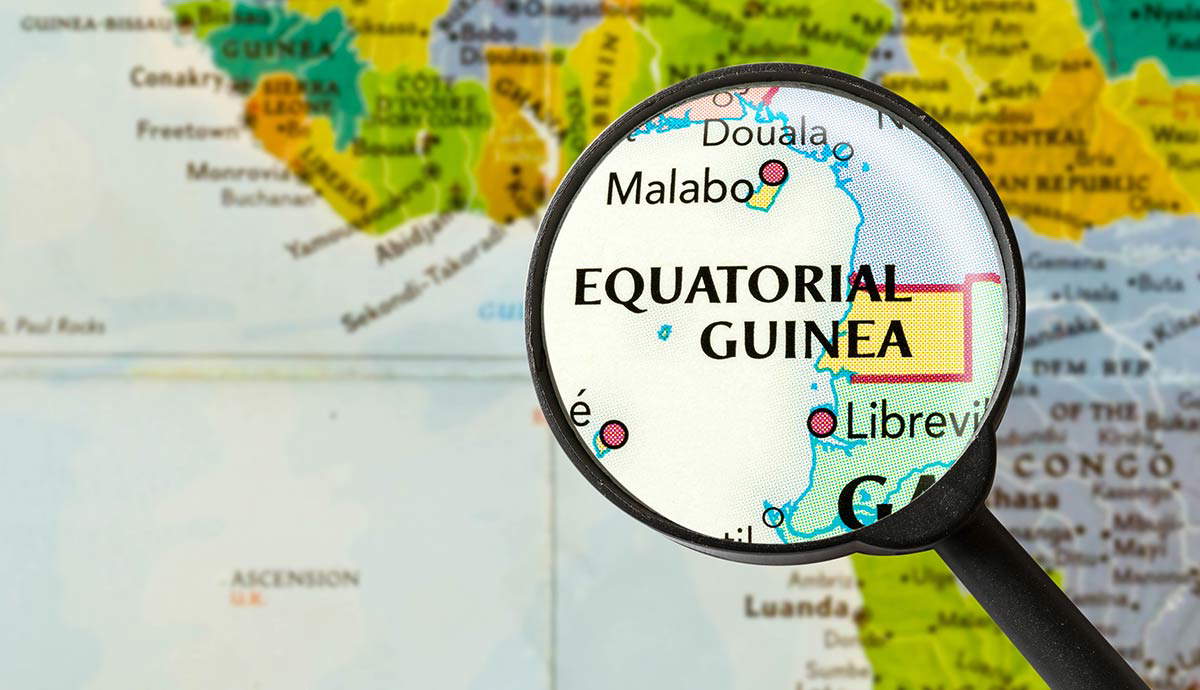
    At 10,831 square miles (28,052 square kilometers), Equatorial Guinea, on the West coast of Africa, is one of the smallest countries in Africa and is comparable in size to the state of Massachusetts.Despite its size, the country has been a busy place. It has a history rich in migrations of many peoples, from Indigenous Africans to the competing operations of three colonial powers, all of which shaped the country that exists today. Read on to discover more on the history of Equatorial Guinea.Equatorial Guineas GeographyMap of Equatorial Guinea. Source: Library of Congress, Washington DCEquatorial Guinea is a small country that sits in the Bight of Biafra on the West African coast. Cameroon lies to its north, and Gabon lies to its east and south. To the west lies the vast expanse of the Atlantic Ocean.The countrys main geographical constituents are the mainland, known as Rio Mun, and an island called Bioko, which was previously known as Fernando Po. These two regions are distinct and have very different histories, adding to the complexity that is the history of Equatorial Guinea.The country also includes the small island of Annobn, which lies to the southwest, beyond So Tom and Prncipe.Bantu MigrationsA Fang figure from Equatorial Guinea, photograph by Sailko. Source: Wikimedia CommonsVirtually all countries in sub-Saharan Africa have been characterized at some point in their history by migrations of the Bantu ethnic groups, who originated in the western-central region of the continent. Equatorial Guinea, close to this epicenter, encountered migrations as far back as around 2000 BCE, with permanent settlements being erected by 500 BCE at the very latest.They were, however, not the original inhabitants. That honor went to the so-called Pygmy peoples who, over the ages, were pushed into progressively isolated pockets in the north of the country and now constitute a tiny fraction of the countrys 1.8 million people.Representing the vast majority of todays population of Equatorial Guinea are the Fang, a Bantu ethnic group that arrived in Equatorial Guinea fairly recently. They conquered and displaced other groups in the area around the mid-19th and early 20th centuries. Today, they represent almost 86 percent of the countrys population.European InterestMap showing the division agreed upon by the Treaty of Tordesillas in 1494, by Ane Urrutia. Source: Wikimedia CommonsBefore the Fang people arrived, however, European powers had already taken an interest in the area. Portuguese explorer Ferno do P and his crew were likely the first Europeans to spot the island of Bioko (Fernando Po) in 1472, a substantial landmass that makes up part of Equatorial Guinea.By the Treaty of Tordesillas in 1494, Portugal gained exclusive rights to trade in Africa. Spain was given virtually all the rights in the Americas, while the Portuguese got the easternmost section of South America, which is now part of Brazil. The Portuguese used the islands in the Bight of Africa, including Fernando Po, for slave trading.In 1777, several territories changed hands. The Spanish granted the Portuguese rights to land further west in South America, while in return, the Portuguese ceded Fernando Po and land on the African continent to Spain. The Spanish intended to use this foothold as a source for slaves to take back to the new world. The area had not been actively colonized by the Portuguese, and the Spanish began their invasion in 1778.Efforts at expansion were foiled by an outbreak of yellow fever, and the Spanish left the island in 1781, having made no effort to establish any presence on the mainland. Two decades later, the political winds shifted completely, and the island of Fernando Po would factor considerably in the fight against slavery.The Fight Against SlaveryThe Barque Orion captured by HMS Pluto Nov 1859, by Josiah Taylor, 1876. Source: Wikimedia Commons/Royal Museums GreenwichIn the early years of the 19th century, Britain proved its supremacy as the worlds foremost naval power. When Britain abolished the slave trade in 1807, the British made huge efforts to defeat the practice through naval action. They pressured Spain to abolish slavery, too, but despite Spain conceding to the demands, a thriving trade in contraband continued.Strapped for cash, the Spanish leased Fernando Po to Britain between 1827 and 1836 to serve as a base for anti-slavery operations. Complete control of the island passed back to Spain in 1836, which by this time had been eclipsed by other colonial powers and had lost most of its South American possessions. The British made offers to buy Fernando Po but were denied.Efforts to rekindle interest failed to gain financial traction in the decades that followed, and Spanish attempts to colonize Fernando Po and Rio Mun (the mainland part of Equatorial Guinea) were severely limited. Nevertheless, scientific expeditions were mounted to elevate the importance of the Spanish colony and assert Spanish presence. During this time, Fernando Po was also used as a penal settlement for Cubans.Spanish DominanceThe cacao trade renewed interest in Spains African colony, photograph by Rudolf Fanchini. Source: Wikimedia CommonsIn the first few decades of the 20th century, Spain was able to reassert some control over the territory of Spanish Guinea. This was in part due to the cacao trade. There was, however, a distinct lack of labor, and the Spanish looked to fill this void by using the Bubi population present on Fernando Po.Development was concentrated mainly on the island of Fernando Po, while the mainland remained comparatively ignored. By the end of 1898, at the end of the Spanish-American war, Spanish Guinea represented Spains last tropical colony.The colonial efforts resulted in the destruction of Bubi culture and populations, much of it by diseases such as yellow fever, dysentery, trypanosomiasis, and whooping cough. Many Bubi were relocated to work on plantations, but escape was easy, and many fled into the forests, leaving Spain with little in the way of an effective workforce. There were also rebellions and guerilla resistance, which made controlling the Bubi population nearly impossible.Although slavery was illegal, there was a perceived justification for forced labor. There was, however, little to differentiate forced labor from actual slavery. Additionally, there was still a notion among Europeans that Africans could not govern themselves and could not be incentivized to work for a salary.Persecution of the Bubi culture continues to this daya protest outside the embassy of Equatorial Guinea in Madrid, photograph by Calvin Smith. Source: Wikimedia Commons/FlickrThe Spanish turned their attention to migrant labor to suit their needs and drew from populations in the surrounding areas to work on the cacao and coffee plantations. Treatment of the worker population was brutal, and it drew international attention, especially from Britain, which applied diplomatic pressure to force Spain to improve working conditions.In 1914, the Spanish signed a deal with Liberia for the transport of 15,000 workers. The International Labour Organisation (ILO) later investigated this deal and declared that the workers had been recruited under conditions of criminal compulsion scarcely distinguishable from slave raiding and slave trading. As a result, the Spanish government forbade the recruitment of Liberian workers.A postage stamp from Spanish Guinea, photograph by Mark Morgan, 2016. Source: Wikimedia CommonsThe void, however, was filled by an illicit trafficking operation that procured a steady stream of workers from Nigeria. The smuggling moved to the realms of legality when the Spanish government signed a deal with the British Crown in 1942, allowing for Nigerians to work on the plantations.Over the decades, many tens of thousands of Nigerians ended up on the island of Fernando Po. Meanwhile, many Bubi people on Fernando Po had benefited from schooling and became landowners. Thus, a small elite of Bubi people helped maintain control and supported the Franco regime, even though other African territories around them clamored for independence.The driving force behind independence would mostly come from the mainland. Of concern to the Spanish administration was the reliance on migrant workers, so the colonial administration mounted military expeditions to Rio Mun in the 1920s to subdue and pacify the local Fang people. This is where much of the anti-colonial sentiment took hold. The fighting was brutal, and many Fang people were forced to work on plantations on Fernando Po.IndependenceFlag of Equatorial Guinea, by De la/from the Open Clip Art. Source: Wikimedia CommonsAfter the Second World War, Spain elevated the status of Spanish Guinea from colony to province. During this time, nationalist sentiment grew as the provinces inhabitants sought independence from colonial rule. In the 1960s, limited autonomy was granted, and then, in 1968, Equatorial Guinea gained full independence. The following years, however, would be anything but democratic. The countrys first president, Francisco Macias Nguema, created a one-party state and declared himself president for life.His rule was brutal and characterized by the repression of non-Fang ethnic groups. During his reign, it is estimated that up to 80,000 people were killed or fled the country, which only had a population of between 200,000 and 300,000 people.Medical reports suggested that Macias was mentally unstable, and contemporaries had severe doubts about his sanity. The countrys economy was utterly ruined, and in 1978, Macias was overthrown in a coup detat by Teodoro Obiang Nguema Mbasogo. He was then executed. Obiang became the new president, but subsequent elections were marred by irregularities and were completely one-sided. As of the time of writing, he is still president.Equatorial Guinea TodayMalabo, the capital of Equatorial Guinea, on the island of Bioko, photograph by Happiraphael. Source: Wikimedia CommonsEquatorial Guinea has relied heavily on cacao and coffee production but shifted to oil production after major deposits of the latter were discovered in the 1980s and 1990s. Despite having the third highest GDP per capita (it was previously ranked first) in Africa, much of the wealth is concentrated within a small proportion of the population. Poverty is thus a major issue in the country, and economic challenges lie ahead, with lower oil prices and tighter economic pressures on a global level.Nevertheless, the country is working towards diversifying its economy and becoming more stable, indicating a tentative positive outlook.Today, the country is home to around 1.8 million people, most of whom speak Spanish as a national lingua franca. Indeed, Equatorial Guinea is the only country in Africa that recognizes Spanish as its national language.
    0 Reacties 0 aandelen 18 Views