5 British Tea Traditions and Their Origins
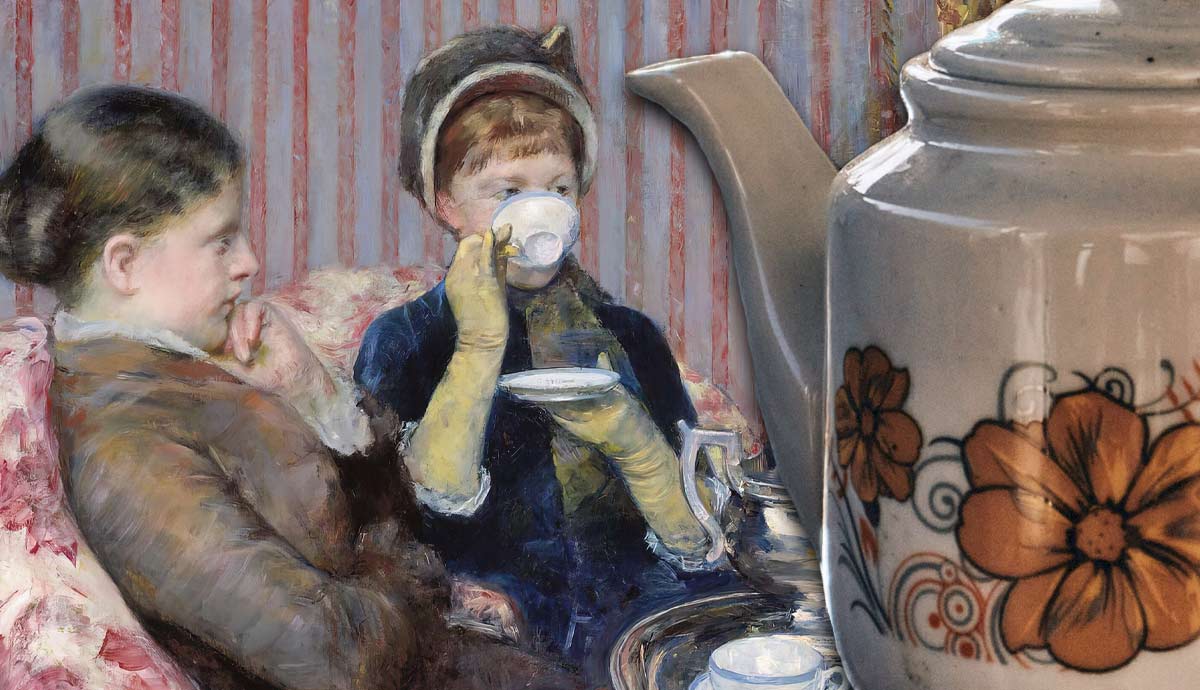
Have you ever wondered about the correct way to take afternoon tea, according to the traditions of the British upper classes? If you havent, youd hardly be alone. Whether rightly or wrongly, most people ignore the rules that were once upheld by afternoon tea-eaters of England. Over the centuries since its creation, the treatment of this unique and special meal has become only more casual.So, maybe we should all be thinking twice before turning up, haphazard and unprepared, to our next post-lunch, pre-dinner affair. According to experts in etiquette, there is a correct way to do everything, including something as simple as eating a few sandwiches and cakes.What Is Afternoon Tea?At The Tea Table, by John Bowles, 1710. Source: The British MuseumWho doesnt love afternoon tea? This tradition is one of Britains finest. It appears to consumers that its only purpose is enjoyment and pleasure.The Cambridge Dictionary describes afternoon tea as a meal eaten in the afternoon, usually including cake, sometimes several different cakes, and often sandwiches, with tea to drink. When it comes to its usage in the English language, the dictionary gives as an example the following sentence: the hotel offers a famous afternoon tea including tiny sandwiches, homemade scones with clotted cream and jam, and a wonderful selection of pastries.A proper afternoon tea is served on a three-tiered structure. On the bottom and biggest plate come the sandwiches. On the middle plate come the scones with little pots of jam and cream. On the highest and smallest plate come the selection of cakes and sweet pastries.The manner in which these foods are served is particularly gentile. Sandwiches should be small, not chunky, and served without crusts. Cakes should be bite-sized and individually baked, rather than cut from a larger cake. This sounds very petite and perhaps a little unsatisfying. However, the purpose of serving afternoon tea is not to fill the guest up, but to keep them going between the larger meals of lunch and dinner.Just as the name suggests, your afternoon tea will come with a choice of tea to drink. It is common practice for restaurants or hotels to offer an unlimited number of pots per person. One neednt worry if they are not a lover of tea, the drink is usually interchangeable with coffee. Champagne, or some other fizzy alcoholic beverage may be served. However, this addition should not be taken for granted, and usually warrants an extra payment.The First Afternoon Tea: When, Where, and How Did it Begin?Anna Russell, 1820-34. Source: The British MuseumThe afternoon tea was inadvertently created in the mid-1840s by Anna Russell, the Duchess of Bedford. Anna was a prominent member of London society, and more importantly, a close friend of Queen Victoria. Apparently, while visiting the household of the Duke of Rutland, she requested a light refreshment between lunch and dinner. She found that she was so hungry during the late afternoon that she could not wait comfortably for the next meal. It is worth remembering that during the 1840s, dinner was becoming increasingly late, and was not served until eight at the earliest, and ten at the latest. To combat what she described as a sinking feeling that came with early evening, Anna ordered some tea, some sandwiches, and a few cakes to be brought to her room.Having enjoyed it once, Anna made the same request again and again, and eventually began to ask her friends to join her for afternoon tea in her apartments.Such was her influence in London that many other ladies in her social circle began to imitate her quirks. It wasnt long before afternoon tea was common practice in many high-class households in London.Aside from the pleasure it provided, there were other advantages to filling up on sandwiches and cakes a few hours before dinner. When the family and guests were finally called into dinner at around nine oclock in the evening, the young ladies werent as hungry as they might have been had they been waiting since lunchtime. This meant they didnt feel the need to consume so much food. In such a polite and gentile society, it was important to women that they didnt appear greedy in front of any gentleman visitors.1. Pre-Tea PreparationStill Life with Fruit, Bottles, Breads, by Francisco Goya, 1824-26. Source: Wikimedia CommonsSo, you have been invited to attend an afternoon tea. Before committing to your dining experience, the first question you should be asking yourself is, in what sort of meal am I actually meant to be partaking?There are many types of tea. High tea, cream tea, and afternoon tea are just a few examples of the meals that appear to be pretty much interchangeable. But this is wrong. Afternoon tea is definitely not a cream teathis simply refers to the much smaller meal of a scone with cream and jam, and perhaps a cup of something hot.However, this isnt quite as bad as mistaking an afternoon tea for a high tea. Many people use this term as they think it sounds classier than afternoon tea, but to those in the know, it actually has the opposite effect. High tea was the name given to a servants meal. After serving their employers an afternoon tea, employees would take high tea in the servants quarters. High tea included items such as joints of meat, thick slices of bread, large cakes, and alevery different from what appears on an afternoon tea menu. The meal was eaten at a proper table, rather than a coffee table, and so it became known in the servants hall as high tea. Referring to an afternoon tea as a high tea, particularly during the 20th century, would have provoked a few sideways glances to say the least.The Tea, by Mary Cassatt, 1880. Source: Museum of Fine Arts BostonAnother thing you might want to familiarize yourself with is the dress-code. The general rule for afternoon tea is that dress should be smart-casual. This means that guests should strike a balance between comfort and sophistication; between carefree and polished. The look is generally considered suitable for numerous occasions.Some hotels are stricter than others. The Ritzone of the finest hotels in Londonrequires that gentlemen wear a jacket and tie for afternoon tea. Although there is no such advice for ladies, they can take this as a sign that they should dress to match the standards of the men. Jeans are not allowed for either sex. Shorts, trainers, and sportswear are not permitted in any of the hotels restaurants, whether for afternoon tea or any other meal.The Palm Court of the Ritz, 1907. Source: Wikimedia CommonsTo avoid embarrassment, it is considered good practice to confirm the dress-code well in advance of the event. This is best done by ringing either the host or the hotel to check. There is nothing worse than turning up underdressedsome locations may even hold the right to deny entry to anyone not adhering to the dress code.We shouldnt complain about this. Although it was originally relaxed and taken at home, afternoon tea became a social occasion or outing rather than a private activity. The meal was eaten in hotels instead of bedrooms. Young ladies of the Victorian era soon began using afternoon tea as an excuse to dress up in their beautiful gowns, silky gloves, fine hats, expensive jewellery, and high shoes. In fact, one of the rooms of the Ritz, the Long Gallery, was specifically designed to accommodate two ladies walking side by side in their enormous dresses.The final thing that everyone wants to know before responding to an invitation is the time at which the event is scheduled to take place. Most commonly, afternoon tea will be taken between three and five. Four is often regarded as the best time at which to begin. As you might expect, the timing finds its origins in the Victorian Era. As previously mentioned, the tea was, and still is, eaten as a light meal right in the middle of two heavier meals. Afternoon tea came between lunch (at around noon) and dinner (at around nine).2. Water or Milk: Which Should Go in the Teacup First?The Milkmaid, by Johannes Vermeer, 1660. Source: The RijksmuseumImagine that you are making yourself a cup of tea at home. What do you need? You definitely want some tea and plenty of hot water. You probably also require some milk and sugar. But in which order would you add these ingredients to the cup? Furthermore, in which order should you add these ingredients to the cup, when in polite company? Unlike many questions surrounding afternoon tea, this one has a definite answer.It is considered good etiquette to add hot water to a teacup first, and then the milk afterwards. This tradition has its origins in the 19th century, when it was common practice to demonstrate the strength of your chinaware through your tea preparation. Rich families would have expensive and resilient tea sets that would not crack on contact with hot water. Poorer families would have cheap tea sets that may break if hot water was added directly, without something cold to dilute it. In the Victorian Era, guests could estimate how much their host had paid for their teacups by noticing whether they added the cold milk or the hot water first.Afternoon Tea, by Sebastian Coman Photography. Source: UnsplashAnother perk to this method is that you can properly see the amount of milk needed after evaluating the strength of your tea. If it was already in the cup before the water and the tea leaves or teabag, there may be too much, and your tea might end up tasting too weak.In the best hotels that England has to offer, guests may find an enormous array of tea to choose from. Some of the most common include Darjeeling (an aromatic tea from India), Chai (a spicy tea from India), Lapsang Souchong (a smoky tea from China), Assam (a strong tea from India), and Earl Grey (the traditional English favorite). Herbal tea may also be selected, and flavors include peppermint, lavender, chamomile, lemon and ginger, hibiscus, echinacea, peach blossom, and rooibos.Never, never, raise your little finger while drinking tea. It is considered neither necessary nor fashionable.3. What to Do With Your Napkin: A Guide for All SituationsTea and Scones, by Robert Bye. Source: UnsplashAt the start of an afternoon tea, your napkin (otherwise known as your serviette) should be placed on your lap. This will be done either by you (in a restaurant of moderate standards) or by the waiter or waitress (in a restaurant of extremely high standards). If a waiter or waitress approaches you with this intent, do not be alarmed. Let them carry out their expertise alone; you need do nothing but sit still.However much of a mess you may have made, wiping your mouth with your napkin is a big no. To correctly remove any crumbs or potential stains, you should gently dab your lips with the napkin with small and gentle motions. The main body of the napkin should remain on your lap, with just a corner extending to your face. The napkin should come to you; you should not bend down to meet the napkin, but remain sitting upright. The underside of the napkin should be used for dabbing. This is so that when it is folded back onto the lap, any potential stains are underneath. Thankfully, the napkin appears white and pristine.In a truly tragic caseone in which dabbing is not sufficientit would be best to excuse yourself from the tea for a moment and retire to the bathroom, where a more extensive wash can be carried out in private. However, even a trip to the bathroom can be challenging as far as napkin etiquette is concerned. If you leave the table for any reason, your napkin should be placed on your chair. This signals the other guests, and the waiter, that you intend to return.4. Bottom to Top, or Top to Bottom?Teapot, by Tran Phu. Source: UnsplashWere you ever told as a child to eat your sandwiches before your cakes? Well, the next piece of etiquette advice will be reminiscent of that time in your life. There is a definite order in which your afternoon tea should be eaten. You should begin with the savory items on the bottom tier, then proceed to the scones on the middle tier, then finish with the sweet items on the top tier. The rule is to go from bottom to top, certainly not top to bottom.When it comes to actually eating the items, there are a few things to remember. If you are attending with friends, you may be presented with one or two afternoon tea plates. If you are sharing one set of tiers between two people, there will certainly be an equal number of each item. These should absolutely always be split evenly. For example, if there are four smoked salmon and cream cheese sandwiches, you should eat only two.No matter how many other guests you are sharing with, it is considered good manners to select an item then move it to your own plate before eating it. No need to ask for an extra plateeach guest will automatically receive their own small piece of chinaware for personal use.Consumers of afternoon tea may rest assured that every item on every plate should be eaten with the fingers. There is no need to use any cutlery to eat any of the food. The only occasions on which to pick up a spoon or a knife are in the stirring of your tea or the spreading of condiments on your scone.5. Jam or Cream: Which Should Go on the Scone First?The flag of Cornwall. Source: Wikimedia CommonsA scone is an integral part of the afternoon tea experience. It is the middle course, which means it is the main course, for it comes after the sandwiches and before the cakes. The Cambridge Dictionary describes a scone as a small, usually round cake that is like bread, made from flour, milk or cream and a little fat.To those who have never eaten a scone, this description may evoke thoughts of something dry, tasteless, and therefore pointless. However, it is what is served with a scone that makes it special. There are only two condiments to add to a scone. They are raspberry or strawberry jam (also called jelly), and clotted cream. But which of these should be applied first?This topic is controversial. When it comes to starting an argument in Britain, there is nothing that gets people going like the question of how to properly spread condiments onto a scone. The correct answer was dependentand to some extent still is dependenton geographical location, social standing, and personal inclination.Residents of Britain are divided: either they do it the Devon way or the Cornish way. These two rivals have been at war with one another for centuries over this matter. Those from Devon put on the cream first, and then the jam. Those from Cornwall put on the jam first, and then the cream.There is no definitive answer to this seemingly endless debate. The truth is that both the Devon way and the Cornwall way are equally acceptable amongst members of the highest society in England.Coronation Portrait of Queen Elizabeth II, by Cecil Beaton, 1953. Source: The Royal CollectionHowever, if any attendee of the afternoon tea were to push for an answer, there is one timeless source that could potentially be consulted. That source is none other than the British Royal family. Inevitably, our findings will shock and even disappoint about 50 percent of the population. The teatime preferences of King Charles III are elusive, but it is reported by the household of the late queen, Elizabeth II, that she adhered to the Cornish way. She chose to put her jam on first, then her cream. Who can say fairer than that?There is one final point to remember about correctly preparing your scone for consumption. If you really want to impress people, do not cut your scone in half with a knife, as has become customary in recent years. As strange as it may seem, the correct etiquette is to pull a little off at a time, using only your fingers. Then, you should spread your condiments on each individual, bite-sized piece before eating it, repeating the sequence until it is finished.













 English
 Arabic
 French
 Portuguese
 Deutsch
 Turkish
 Dutch
Dutch
 Italiano
 Russian
 Romaian
 Portuguese (Brazil)
 Greek
Greek