



WWW.THECOLLECTOR.COM
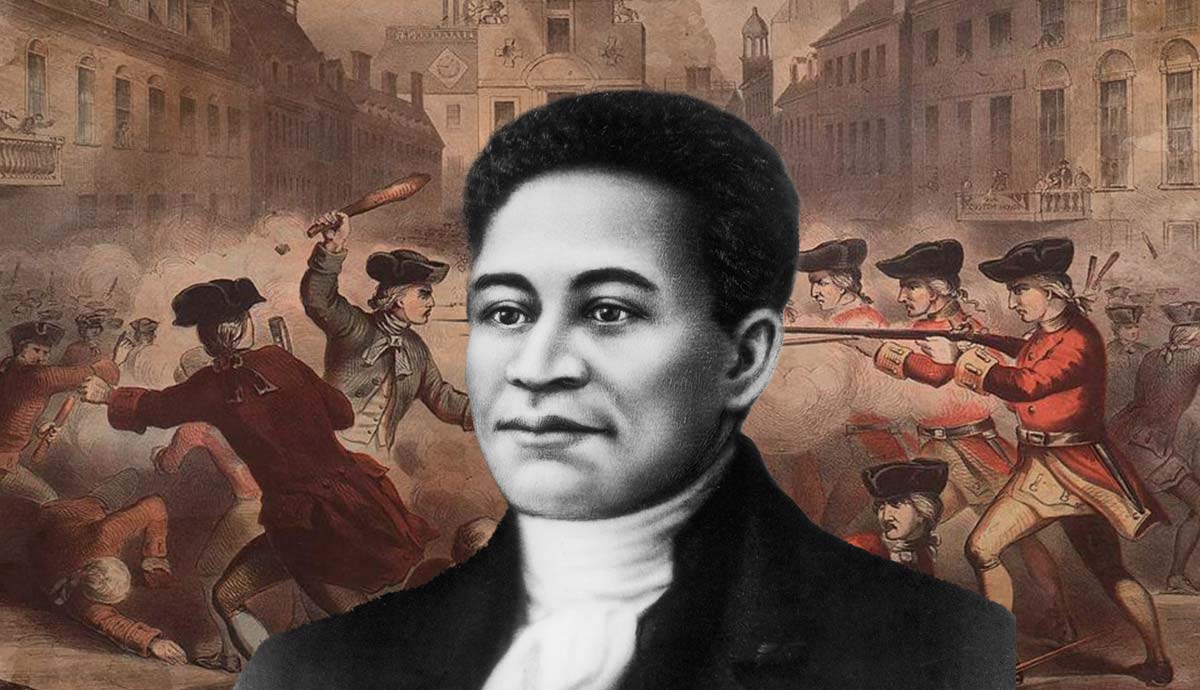
The Story of Crispus Attucks, the American Revolutions First Martyr
For a man so widely known by students of American history, much of Crispus Attucks life remains lost to the past. Despite the ambiguity about his days, Attucks played an important role as the future United States was moving at warp speed toward the American Revolution. People to whom he was unknown only days prior championed Attucks as a hero, quickly establishing him as a martyr. What do we know about Crispus Attucks, the man, and why was he so important to the Patriot cause?The Early Life of Crispus AttucksA painting of Crispus Attucks, likely created after his death. Source: Wikimedia CommonsObscurity hinders the details of Crispus Attucks early life, largely due to his likely status as a slave for at least some of his life. While slavery was more common in the agricultural south during the early days of the American colonies, it was by no means unheard of in the northern, more urban parts of the country.It is believed that Attucks was born around 1723 in Framingham, Massachusetts, not far from Boston. His parents, Prince Yonger and Nancy Attucks were both living in slavery at the time and were under the possession of a man named Colonel Buckminster. Nancy Attucks was believed to be an Indigenous woman who had been forced into slavery, likely of Wampanoag or Natick ancestry. The pair may have had other children, a girl older than Crispus and a boy younger, but they are believed to have died in childhood.Attucks lived with his parents, working for Buckminster until he was 16 years old. At that time, he was sold to a man named Deacon William Brown, another Framingham slaveholder. Apparently, from an early age, Attucks showed skill at trading, and was to put those skills to work for the man who subjugated him.Escape From SlaveryAfro American Monument, shows scenes from African-American history, including Christopher Attucks, featured with the angel in the center. Attucks is described as sleeping in his straw bed as a slave, dreaming of liberty. Source: Library of CongressAttucks worked for Brown for several years, mainly occupied with selling cattle. However, he grew tired of a life of enslavement and struck out for freedom at age 27. In 1750, a series of notices appeared in the Boston Gazette and Weekly Journal, asking the public to be on the lookout for a runaway slave named Crispas. He was described as a mulatto fellow who stood at 6 feet, 2 inches tall, with tightly curled hair. A reward was offered for his return, but Crispus remained at large. He may have changed his name to Michael Johnson to protect his identity.He embraced his Indigenous heritage, defining himself as a Native American to his employers to further protect himself from being suspected as a runaway slave. He spent the next 20 years largely on ships, working on trading vessels and in the whaling industry. Attucks also worked as a rope maker between voyages.Attucks was engaged in the often dangerous whaling industry. Source: The Smithsonian LibrariesAttucks lived a life in which he was constantly looking over his shoulder. Not only did he have the fear that he may be forced back into slavery, but there were the British to worry about. American sailors were technically still British citizens and, therefore, subject to the practice of impressment, in which they could be forced into duty on a British Navy ship. As tensions surrounding taxation and freedom in the American colonies grew, British military presence increased in Boston and other important cities. These soldiers often took part-time work away from colonists, including sailors like Crispus. It is likely that Attucks had ill opinions of the British redcoats that were streaming in and out of his locality, opinions that he demonstrated in his actions on March 5, 1770.The Incident on King StreetThe Boston Massacre, a lithograph by William Champney and J.H. Bufford. Attucks is featured in the center of the image. Source: Library of AmericaAttucks and his sailor friends werent the only people in Boston stressed by the increasing presence of British military forces. Boston had been occupied by the British since 1768 after colonists expressed their dissatisfaction with the repeated taxation the government was applying in the colonies. The Townshend Act, which applied new duties on commonly used imports such as glass, lead, paper, and tea, was the latest in a line of taxation acts pressed upon the colonists. Some of those living in the colonies, particularly in the Boston area, responded to the news with rioting. This led to an influx of British soldiers, soon numbering about 2,000 in the city of 16,000 colonists. The soldiers were assigned to protect goods and customs officials while keeping the peace.The Redcoats nickname is attributed to the standard uniform of the British military at the time of the American Revolution. Source: Wikimedia CommonsUnfortunately, tension only rose as the Redcoats patrolled the city of Boston, and confrontations with the colonists were not uncommon. These were largely nonviolent, such as name-calling, but did nothing to dispel the increasing apprehensiveness that surrounded the city. On March 2, 1770, there was a fight between three British soldiers and a group of ropemakers. Three nights later, a British soldier entered a pub, looking for a part-time job. He was ridiculed by a group of patrons, including Crispus Attucks. Later that night, a group of about 30 people approached the Boston Customs House on King Street. The group was later described by John Adams as a motley rabble of saucy boys and was said to be led by, or at least include, Crispus Attucks.A portrayal of the Boston Massacre used for propaganda after the event, credited to Paul Revere. Source: Library of CongressA lone private, Hugh White, stood guard at the Customs House. The crowd, which was growing, began taunting the young man. They threw snowballs, rocks, and sticks at the soldier, jeering at him. Within minutes, Captain Preston of the 29th regiment arrived with eight additional soldiers to back White up, and the crowd included them in their taunts. One soldier was knocked to the ground by a rock. Whether mistakenly or on orders, a gun went off, and the remaining soldiers fired. When the smoke from the gun barrels had cleared, five colonists were dead or dying. The first to die was Crispus Attucks, killed by two musket balls to the chest. Samuel Gray, Samuel Maverick, and James Caldwell were buried, along with Attucks, in a common grave at the Granary Burying Ground in Boston.A week later, the fifth victim, Patrick Carr, died and was interred along with the other four. The funeral procession for the men was led by Samuel Adams and it is estimated that 67% of Bostons population turned out to witness the burial parade. Attucks burial at this location was noteworthy for a time in which laws and regulations governed the segregation of the dead by race.An Unintentional MartyrIn this prints caption, Attucks is referred to as a brave soldier. Source: Library of CongressAlthough the raucous mob could easily be credited in hindsight with starting the fight that took five lives, the event at the Customs House was quickly seized as a propaganda measure by the Patriot cause. It was branded as the Boston Massacre and turned the victims, especially Attucks, into martyrs for the cause. Attucks was memorialized as the first to defy, the first to die and was later considered the first death of the American Revolution. His name was utilized by organizations such as the Sons of Liberty to illustrate what they considered the unrighteous infiltration of the colonies by British soldiers. Despite the disillusionment the public felt toward the soldiers, Preston and his men were largely acquitted in the trial that followed, with two soldiers receiving minor sentences.A drawing of the coffins of the four men killed immediately in the Boston Massacre. Source: Library of CongressAttucks would continue to be relevant to American causes long after his death in 1770. His image and association with the cause of freedom became a tool for the abolitionist movement among Bostonians in the 1800s. Attucks memory was also used as a reminder that the contributions of Black citizens to the American Revolution were largely overlooked in history. In the early 20th century, March 5 in Boston was labeled Crispus Attucks Day, though Black Bostonians were holding annual celebrations in his memory long before.The Boston Massacre by Alonzo Chappel. Source: National Archives at College ParkThough Crispus Attucks was a simple sailor on the streets of Boston just before the incident that took his life, propaganda would elevate him to the status of a martyr as the colonies moved toward the defining war that would create the United States. Attucks couldnt have known that his actions that day would result in it being his last, nor did he realize the implications of his simple resistance to the British occupation. Regardless of his intentions, Attucks served the Patriots of Boston well and propelled support for their cause to new levels.
0 Commentarii
0 Distribuiri
225 Views





 English
 Arabic
 French
 Spanish
 Portuguese
 Deutsch
 Turkish
 Dutch
Dutch
 Italiano
 Russian
 Portuguese (Brazil)
 Greek
Greek