0 Commentarios
0 Acciones
35 Views
Directorio
Elevate your Sngine platform to new levels with plugins from YubNub Digital Media!
-
Please log in to like, share and comment!
-
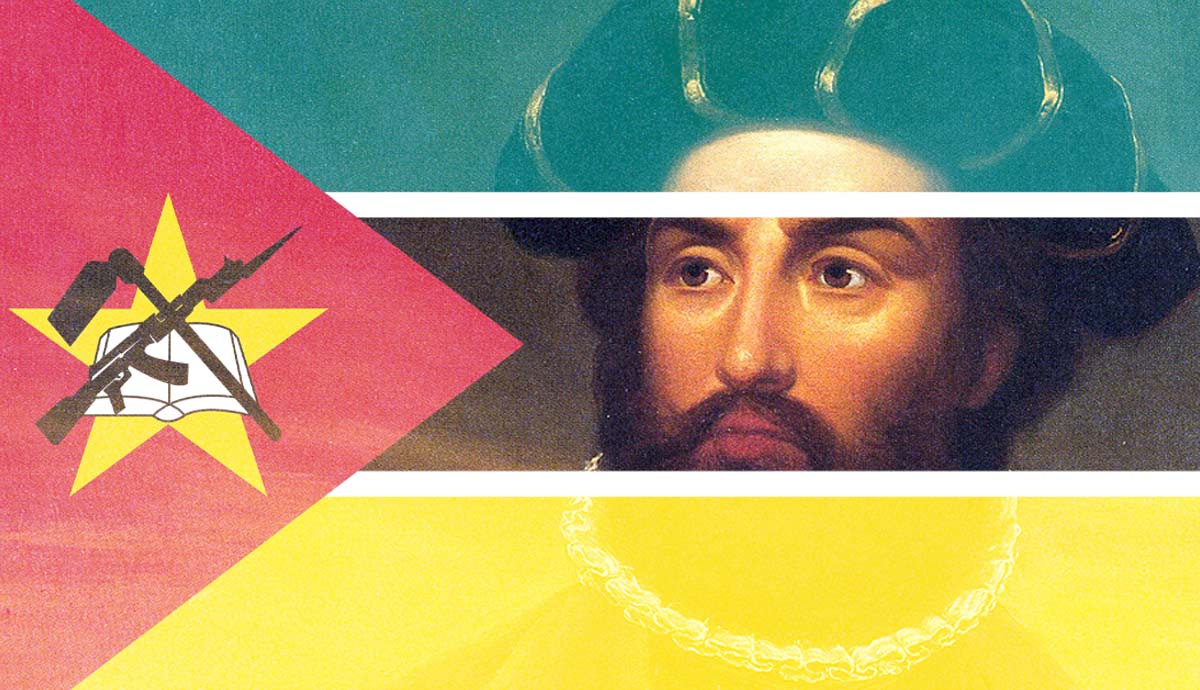
WWW.THECOLLECTOR.COMThe Dark History of Portuguese Colonialism in Mozambique Still Echoes TodaySituated on the southeastern coast of Africa, Mozambique has a tropical to subtropical climate and is graced with beautiful landscapes and beaches that open onto the warm waters of the Indian Ocean. While this description may seem idyllic, the countrys history has been anything but. Foreign interest in the area planted the seeds for an age of strife, whose echoes still reverberate today. This is unsurprising, considering the Portuguese spent almost half a millennium engaged in colonial pursuits in Mozambique.The Portuguese in Mozambique: A DiscoveryVasco da Gama, by Antnio Manuel da Fonseca, 1838. Source: Wikimedia Commons/National Maritime Museum, LondonWhile most did not realize it at the time, 1498 was a fateful year for the land that would become Mozambique. It was the year it was discovered, for good or for ill, by Europeans. The man to get the credit was explorer Vasco da Gama. After rounding the Cape of Good Hope, da Gama and his men sailed east and northwards up the coast of Africa during their attempt to be the first Europeans to sail from Europe to India.In the early 16th century, the Portuguese took control of the island of Mozambique between the Mozambique Channel and Mossuril Bay. They established a trading fort in their settlement, later known as Stone Town. Construction of the Fort of So Sebastio began in 1558 and finished five decades later. This fort is one of the oldest European structures in sub-Saharan Africa that is still standing. It is also a UNESCO World Heritage Site. Further south, the Portuguese also established themselves at the port city of Sofala at the mouth of the Sofala River.The driving force behind the early Portuguese colonial ambitions in the area was the search for gold. By 1530, the Portuguese had pushed their way inland and set up trading posts at Sena and Tete on the Mozambique River. These and other settlements, such as Quelimane on the coast, were protected by garrisons and signified Portugals ambitions of gaining control of the gold trade. Adding to this trade, however, were other profitable businesses, especially slaves and ivory.Early Consolidation of PowerA Portuguese caravel, photograph by Lopo Pizarro, 2019. Source: Wikimedia CommonsThe Portuguese expanded control through the prazo systemland grants to Portuguese traders and colonial settlers. Prazos were controlled by a landowner called a prazeiro, in essence a lord who administered control over his land in a feudal manner and paid a fee to do so to the Portuguese crown. These lands were often acquired through military action and were guarded by private armies. Through intermarriage, many of the subsequent prazeiros were Afro-Portuguese.The Portuguese, however, werent the only foreigners interested in the east coast of Africa. They competed for trade with Arab merchants, and the Portuguese eventually established a monopoly, driving off their rivals. This monopoly, however, would not last forever.CompetitionThe slave market in Zanzibar by Gustave Janet; engraver: Hippolyte Dutheil. 1877.Etching. In Le Monde Illustr, 20th October 1877, p. 244. Source: Socit de plantation histoire & mmoires de lesclavage La Runion/Collection of Villle historical museum. Michel Polnyk donation, inv. ME.2017.1.51In 1698, the Arabs seized Fort Jesus on Mombasa Island, which is situated in present-day Kenya. Over the decades of the 18th and 19th centuries, the Arabs reasserted dominance over much of the Indian Ocean trade, while Portuguese operations moved further south.In this climate of competition, there was little interest in financially backing colonial efforts in the area in Lisbon. As a result, the Portuguese shifted their attention elsewhere, expanding trade in India and the Far East while concentrating on the colonization of Brazil. By this time, the Portuguese Empire had seen its heyday and was well into its era of decline as other European powers rose to dominance.Trade in the region around Mozambique was also the focus of the British South Africa Company, which greatly expanded its influence in the late 19th and early 20th centuries. Meanwhile, the French operated out of Madagascar directly east of Portuguese Mozambique.SlaveryMen, women and child slaves near Tete, Mozambique, are forced to walk through the fields fettered at the neck and wrists. Wood engraving by J.W. Whymper after J.B. Zwecker, 1865. Source: Wellcome Collection, LondonOne of the major businesses operating out of Mozambique was the lucrative trade in slaves. While slavery existed before the arrival of the Portuguese, operations were small in scale. Portuguese and other colonial interests drove a huge demand for this cruel enterprise.The late 18th and early 19th centuries saw a huge demand for slaves, and Mozambique became a major hub. Of note was Delagoa Bay, which the Portuguese permanently settled in 1781 and proved a profitable asset for the slave trade. Inhambane, another major port, also became a major center for the slave trade.In the latter half of the 18th century, the region was affected by severe droughts, which caused crops to fail and cattle to die. The situation was exacerbated by slavers burning crops. Amongst these pressures, traditional forms of trade failed, and banditry and raiding for slaves increased.Africans and Europeans took advantage of the market, and hundreds of thousands of slaves were taken to the coast and shipped off to the Americas. The industry completely upturned the social order that had existed before. Some groups, such as the Gaza and the Ngoni, joined the Portuguese in slave raids, while other groups, such as the Ngwane and Ndebele, fled westwards into the hinterland in a bid to escape captivity.Such was the importance of this industry that it remained Mozambiques most profitable enterprise until around 1870.In the early 19th century, Britain came to dominate the seas, and the British were able to enforce their own political agendas. Of major consequence was the ban on the slave trade. In the mid-19th century, the slave trade was significantly reduced due to international pressure from abolitionist groups. However, illegal operations continued in Mozambique into the 20th century.The Berlin ConferenceColonial Africa in 1911, by Whiplashoo21, 2015. Source: Wikimedia CommonsWhile Portugal was well-represented in the Berlin Conference in 1884/1885, it was not as influential when compared with the might of Britain, France, and Germany. Portugal presented their idea of the Pink Map to link up their colonies in Angola and Mozambique by co-optioning the territories between them. The bid, however, was blocked by Britain, but Portugal managed to retain colonial rights to Angola and Mozambique. The land that would have linked these colonies comprised Zambia, Zimbabwe, and Malawi.The Portuguese Empire was well past its golden age, and maintaining its colonies required significant investment. The solution to this dilemma was to rent out authority and sovereignty to royal and leasing companies.Major players in this occupation were the Mozambique Company, the Zambezia Company, and the Niassa Company, which were largely financed and controlled by British interests. As the companies sought to bring their goods to market, infrastructure projects followed. Railways, roads, ports, and military outposts sprung up to support the colonial industries.Of course, the occupation was not without defiance. There were many instances of armed resistance against Portuguese conquest and occupation, especially since the land that Portugal took was already claimed by African political entities. It was not until 1895, with the fall of the Gaza Empire in the south of Mozambique, that Portugal actually secured all the territory within Mozambique.War of IndependenceSamora Machel, leader of FRELIMO and first president of Mozambique, photograph by JusticeNyathi, 2018. Source: Wikimedia Commons/invent-the-future.orgThe first few decades of the 20th century were a troubling time for Portugal. In 1910, the monarchy fell, and over the next 16 years, the country went through 44 governments. In 1926, a military coup took place, and Antnio Oliveira Salazar seized control of the government, turning Portugal into a fascist state. From this ideology came tighter control over Portugals colonial assets and a wider use of forced labor. Growing discontent from Mozambiques Native population, as well as the spread of Marxist and anti-colonial ideologies, fueled the push for independence.A stamp from the USSR commemorating the founding of FRELIMO. Source: Wikimedia Commons/ CCCP (Post of the USSR) on FlickrFounded in 1962 by Eduardo Mondlane and Samora Machel, Frente de Libertao de Moambique (FRELIMO) led the country to independence through guerilla actions that initiated the decade-long Mozambican War of Independence. From 1964, FRELIMO waged its war while growing anti-colonial sentiment stifled Portuguese military efforts. Mondlane was killed in 1969, and Samora Machel took over the reins of FRELIMO, guiding the organization to its final victory over the Portuguese in 1974.This victory came off the back of a military coup in Portugal the same year. Known as the Carnation Revolution, it gave FRELIMO the opportunity to demand a cease-fire. On June 25, 1975, Mozambique became an independent nation with Samora Machel as its first president.The Struggle ContinuesThe flag of Mozambique. Source: Wikimedia Commons/openclipart.orgThe Portuguese exit did not usher in a new era of peace and prosperity for Mozambique. Centuries of influence had created socio-economic challenges that linger to this day. At the same time, surrounding countries political interests spilled over into Mozambique, and the country was plunged into a civil war that lasted until 1992.Over the past few years, the country has still struggled with political violence and the growing concern of Islamist insurgencies. Mozambiques road to peace and prosperity is still a long one, and the country remains one of the poorest in Africa.0 Commentarios 0 Acciones 12 Views -
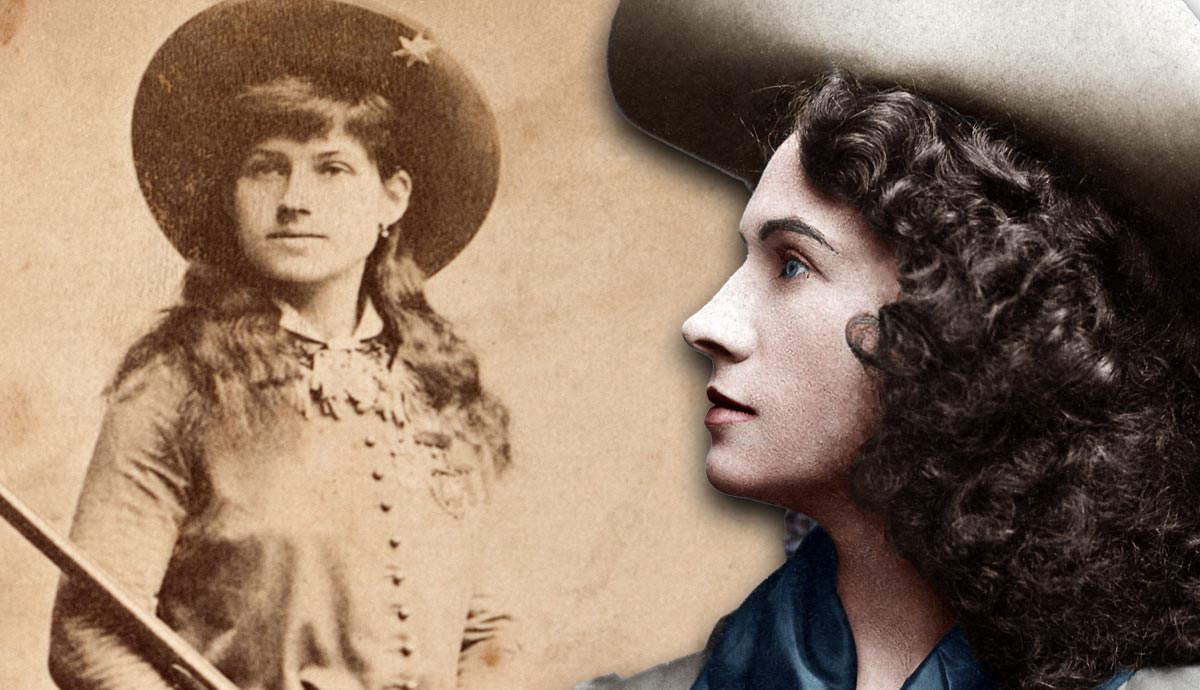
WWW.THECOLLECTOR.COMHow Annie Oakley Became the First Female Superstar of the Wild WestAnnie Oakley first used firearms out of necessity, unaware that her skill would soon make her world-famous.Traveling to the United States and Europe, Oakley was a star on the stage, proving not only that women could be as skilled as men in traditionally male-dominated activities but also that they could be better. Through her fame, Oakley impacted many and built a Wild West legacy that has stood the test of time.Bare-Bones BeginningsA marker indicates the birthplace of Annie Oakley. Source: Nahlekukp/Wikimedia CommonsIn August of 1860, Phoebe Ann Mosey entered the world. Jacob and Susan Mosey, of Darke County, Ohio, had six children in total, but the happy family would be short-lived. Phoebe, who went by Annie, was only six years old when her father died of pneumonia. Susan was left to raise Annie and her siblings alone and was soon remarried to Dan Brumbaugh. Like Jacob, Brumbaugh died suddenly, leaving Susan once again destitute, this time with a new baby. Annie was sent to live at the Darke County Infirmary, a combination poorhouse and asylum. At the infirmary, Annie lived with the superintendent, Samuel Crawford Edington, and his family.Annie Oakley later used the sewing skills she learned from Mrs. Edington to sew her stage costumes. Source: Cowans Auctions via Wikimedia CommonsAnnie was around eight or nine years old when she moved in with the Edingtons, and remained with them for about five years. She was tasked with working with the children at the Infirmary, mostly orphans. She aided with their care, learned how to sew, and received an education.Annie briefly spent time in the care of an abusive family, whom she referred to later in her life as the wolves, but as a teen, she returned home to her family. By this time, her mother had remarried to her third husband, Joseph Shaw. Despite the union, money was still tight, and Annie used her fathers rifle to hunt small game. She sold this meat to the local grocery store, which often resold it to restaurants in Cincinnati, and used the money to support her family. Annie proved to be an exceptional markswoman and earned a steady income from her hunting. By age 15, she paid off her mothers mortgage using her hunting income.Child CrackshotFrank Butler gave Annie this pistol sometime around 1900. Source: mark6mauno/Wikimedia CommonsNot only was Annie helping her family, but her reputation was growing. A Cincinnati hotel owner named Jack Frost, who was a purveyor of Annies game, took note of her shooting ability. Frost invited her to come to the city to compete against renowned rifleman Frank Butler. Butler spent his time traveling the United States, entertaining crowds and challenging amateurs in shooting competitions.At 15, Annie traveled to Cincinnati for a shooting contest with Butler. The goal of the match was to shoot 25 targets, and whoever hit the most was declared the winner. Annie hit all 25 of her marks, while Butler managed 24. Instead of lamenting his loss to a woman, Butler was entranced by Annie. The two immediately began a courtship and were wed the next year. Annie began traveling with Butler as he toured his way around the country, and she occasionally acted as his assistant during demonstrations. On May 1, 1882, Butlers shooting partner was ill. Instead of canceling the show, Butler recruited his wife to act as his stage collaborator. A star was born.Little Sure ShotA cabinet card of Oakley dating to the 1880s. Source: Heritage Auctions via Wikimedia CommonsAnnie wowed audiences in her first performance, so much so that she continued to perform with Butler rather than return to her offstage role as his quiet wife. The couple continued to travel, developing new acts. Annie adopted Oakley as her stage name, though offstage, she remained Mrs. Frank Butler. It has been postulated that the name came from the Oakley area of Cincinnati, where the couple first met. The couples shooting act often featured their dog, George, and delighted audiences of all ages.Sitting Bull and Buffalo Bill Cody in 1885. Source: Library of Congress via Wikimedia CommonsIn an 1884 performance in St. Paul, Minnesota, Annie met and befriended Lakota leader Sitting Bull. Though Sitting Bull was still considered a prisoner at Fort Yates, he had traveled to the area for a public appearance and was excited to meet the young sharpshooter, paying to have his photograph taken with her. The pair became fast friends, and Sitting Bull gave her a new nickname, Watanya Cicilla, meaning Little Sure Shot. The friendship continued until Sitting Bulls death, and the pair would even spend a year working together under Buffalo Bill Cody. Eventually, Sitting Bull came to see Annie as a surrogate daughter, gifting her a pair of moccasins that he had worn in the Battle of Little Bighorn.Buffalo Bills Wild West ShowOakley posing with a shotgun in 1880. Source: Bakers Art Gallery via Wikimedia CommonsIn 1884, the Butlers had a brief performative stay with the Sells Brothers Circus. After one season, in 1885, Butler and Annie joined Buffalo Bills Wild West Show, where they would perform for the next 17 years. For the first time, Annie was billed as the top performer rather than her husband. Butler took this in stride and happily went to task as his wifes assistant and manager. Crowds around the United States were dazzled by Annies talents. She could split playing cards from the side, snuff out candles, and shoot the cork off a wine bottle without missing a beat. She could look into a mirror to shoot behind her back and blast objects out of the sky.Annie was unique among other female variety show performers of the time, preferring to maintain a conservative wardrobe and designing her own modest costumes. Still, she endeared herself to the audience, blowing kisses and using theatrics to bolster her talent. Her career was further propelled into the history books when the Wild West Show traveled to England to perform for Queen Victoria at the American Exposition in 1887. The Queen called Annie a very clever little girl when they met, and Annie also impressed the British media.Annie Oakley in 1903, colorized. Source: Wikimedia CommonsAnnie and Frank briefly departed Buffalo Bills show as a result of a tense rivalry with fellow sharpshooter Lillian Smith. Smith was Annies first female rival in the world of sharpshooting, and she let her opponent know about it. Smith had a brusque personality and didnt hesitate to brag, claiming that Annie Oakley was done for. Smith and Annie were foils to one another in so many ways. Smith was a flashy dresser who was known for shameless flirtation, while Oakley preferred to dress more conservatively. Despite the fact that Smith was an expert with a rifle, not Oakleys preferred shotgun, the two could work together. Smith eventually left the Wild West Show, and Annie returned.A Trailblazer for WomenFellow sharpshooter and rival Lillian Smith. Source: Wikimedia CommonsAnnie Oakley was Americas first female superstar. Her fame was legendary not only at home but in Europe, bolstered by a triumphant return of the Wild West Show to the continent in 1889. Oakley became a role model for women of all ages, showing them that they could compete with and even perform better than men. She became the highest-paid performer of the Wild West Show besides Cody himself and was known for being frugal with her money. Her humble upbringing was ever-present in her mind, and she was once noted as saying that although shed made a great deal of money, I never believe in wasting a dollar of it. She made extra money by competing in sharpshooting competitions when she wasnt performing.Annie photographed by Roland Bonaparte in 1889. Source: Cowans Auctions via Wikimedia CommonsA train accident resulting in a back injury disrupted Oakley and Butlers life in 1901. Annies injury compromised her ability to travel and perform as she once had, but she was nowhere near ready to cool her heels. Though she desired a quiet life, it was hard for Annie to stay out of the headlines. In 1903, William Randolph Hearst published a false claim stating that Annie was in jail as the result of a cocaine habit. Though the claim had no foundation in truth, Oakley was embarrassed and angry. She proceeded to sue multiple newspapers that had published the article, winning or settling 54 cases.Annie reading in her tent at the Chicago Worlds Fair, 1893. Source: Center of the West via Wikimedia CommonsAnnie briefly returned to the stage as a sharpshooter in 1913, after which she and her husband retired, spending time in Maryland and North Carolina, where they participated in charity events. Annie continued to hunt as she had in her youth and gave shooting lessons to other women. When World War I erupted, Annie offered to raise and train a regiment of female crackshots, but the government turned her down. She instead gave shooting demonstrations to raise money for the Red Cross.Oakley giving Mrs. W. Gould Brokaw shooting instruction in Pinehurst, NC, 1919. Source: The New York Times via Wikimedia CommonsAnnie Oakley passed away on November 3, 1926. Frank Butler, whom she had been married to for over 50 years, followed his wife to the grave just 18 days later. Oakley is remembered today in history books and popular culture. An Irving Berlin musical based on her life has run periodically since 1946, and film adaptations of her adventures punctuated the 20th century. More so, what Annie Oakley left behind was an idea that women have capabilities beyond the traditional ones that society confines them to. Oakley was a champion for anyone wishing to follow their talent and hearts desire while remaining true to themselves in the pursuit.0 Commentarios 0 Acciones 12 Views -
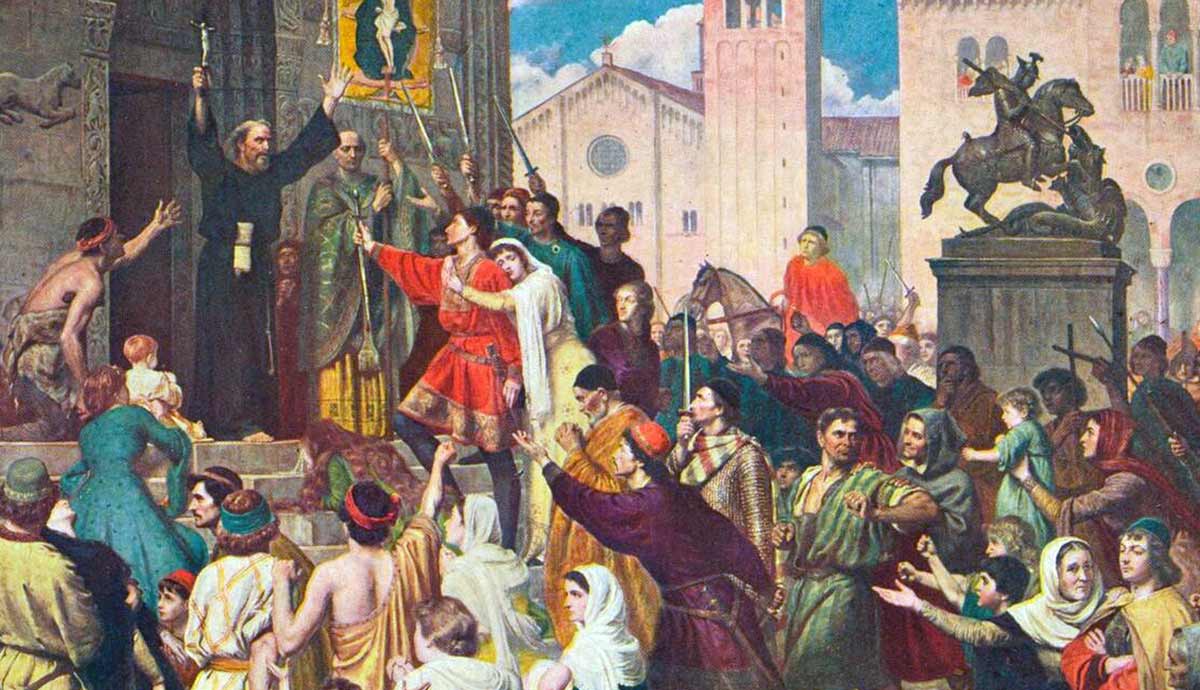
WWW.THECOLLECTOR.COMWhy Pope Leo Called for Peace on a Battlefield of the First CrusadeIn an age of renewed holy war, the Bishop of Rome preached peace. In league with other Christian leaders, Pope Leo XIV assembled about the ruins of an ancient basilica to mark the memory of that most fundamental of ecumenical councils. Yet his words of reconciliation amongst peoples of all faiths finds not an apt background in the Council of Nicaea, but in the siege of the same city in 1097. A siege that first tested the warriors of the First Crusade in a conflict encouraged by one of Leos predecessors.Holy Wars Never Get OldPope Urban at Clermont (14th century miniature). Source: Wikimedia CommonsBut the heads of the Catholic and Orthodox churches did not come to the Turkish city of Iznik, ancient Nicaea, on November 28, 2025, to mark a moment when the warrior elite of Christian Europe clashed with Muslim armies of the Seljuk Turks. The historically minded, however, cannot help but make the connection. Standing among the ruins of the ancient basilica of Nicaea, where tradition holds the Roman Emperor Constantine presided over that monumental gathering of clerics, the Pope and Patriarch of Constantinople, in league with other Christian leaders, paid homage to the work of their forebears. Stressing the unity formulated by the Nicaean fathers centered upon the universal creed they produced, the Pope recognized modern humankinds desperate need for reconciliation in a world plagued by incessant war.Conflicts teeming with the bitterness of religious zeal are perhaps best exemplified by Russias invasion of Ukraine being sanctified as a Holy War by the Patriarch of Moscow in March 2024. By framing Putins invasion as a war of liberation against a western-backed Kyiv despoiling lands rightfully Russian, Patriarch Kirill of Moscow stood his nations cause in line with arguments made a thousand years before by Pope Urban II, proving quite simply that holy wars never get old.To the Defense of the Eastern ChurchRoundel of Alexios I Komnenos, Venice. Source: Wikimedia CommonsUnlike the present Pontiff, who stressed we must strongly reject the use of religion for justifying war, violence, or any form of fundamentalism or fanaticism, Pope Urban harnessed it in mobilizing western Christendom to aid the beleaguered Byzantine Empire. Calls from Constantinople for military support to regain lands lost in Anatolia to the Seljuk Turks met an overwhelming response. Encouraged by Urbans impassioned speech at the Council of Clermont to hurry to the defense of the Eastern Church, tens of thousands took the cross for the liberation of the Holy Land.This call came from a war-weary emperor whose realm had shrunk dramatically in only 20 years. Its genesis came on August 26, 1071, in Constantinoples defeat at the hands of the Seljuk Turks at Manzikert. But enterprising though the Turks were, the Crusades were not motivated by their onslaught upon Byzantine lands, but by Byzantine military weakness generated by civil war and rebellion in Manzikerts wake.While the Byzantines fought each other internally, Seljuk conquests in Anatolia continued until Nicaea itself fell in 1078. Such losses could not be sustained, for Nicaea sat upon Constantinoples doorstep. Yet upon ascending the throne in 1081, the warrior-emperor Alexios I Komnenos turned his sword westward to deal with the encroachments of the expansionist Normans. For the first decade of his reign Alexios fought a series of holding actions that culminated in the stabilization of his borders only at the beginning of the 1090s. Bled dry by incessant conflict, the emperor looked for succor from the Christian West and found a willing ear in Urban.A Message Gone AwryPeter the Hermit preaching the First Crusade by James Archer, 1833. Source: Wikimedia CommonsUrbans speech was straightforward: Eastern Christendom had been assailed by Turkish invaders, and it was up to the warriors of the Christian West to support them. In so doing, those who embarked upon this expedition were to bear the sacred symbol of the lord on his forehead or on his breast, i.e. the cross. Bearing the symbol of the cross upon ones person was a traditional symbol of a pilgrim. Urbans decision to cast the expedition as an armed pilgrimage was not without precedent.Pope Gregory VII had attempted it and failed, while only 30 years earlier a band of Germans had succeeded in making it through to Jerusalem despite the contentious relations between the Fatimids of Egypt and the Seljuks, both of whom coveted the Holy City for themselves.But the message quickly got out of hand. Calling upon the knightly elite of Christendom to embark upon what he dubbed a holy pilgrimage to the support of their Eastern brethren; the Pope found to his growing distress that the common people wanted a hand in the endeavor as well.We were stimulating the minds of the knights to go on this expedition, Urban explained to some overzealous monks a year after Clermont, since they might be able to restrain the savagery of the Saracens by their arms and restore the Christianstheir former freedom (Peters, 1998, pp. 44-45). Cloistered monks without harness or conditioning for combat would not have been welcomed by a warrior such as Alexios.Illuminated manuscript depicting the Peoples Crusade by Jean Colombe, c. 1474. Source: Bibliothque nationale de FranceYet the potential perks of Urbans pilgrimage were apparent to all. Simply put, a pilgrimage was a spiritual journey undertaken for a specific purpose: penance for past sins, spiritual wellbeing, or merely to pray at places of religious significance. A pilgrimage to liberate former Christian lands, however, was altogether more appealing in a Europe rife with interminable war.The first waves to depart for the East were cobbled together out of nothing. Bands of villagers, knights, clergy, and adventurers known to history as the Peoples Crusade lacked the discipline, organization and military sophistication to fulfill what the Pope intended. Their destruction at the hands of the Seljuks in the summer of 1096 seems like a foregone conclusion, but it sowed in the mind of the young Sultan Kiliji the idea that these impetuous crusaders would be easy opponents. The second wave, however, would be a much tougher nut to crack.These armies, led by nobles, some of them kindred of the royal houses of France and the Holy Roman Empire, were armed to the teeth and thoroughly professional. Contingents hailed from Norman Italy, Normandy proper, the Rhineland, Flanders, and throughout France. It was a loose coalition of princely hosts banded together around a common purpose, but whose lack of a centralized command left the door open for tension and rivalry at the top. Upon this loose command structure Alexius sought to impose his will.The Four Chiefs of the First Crusade by Alphonse Marie de Neuville, 1880s. Source: Wikimedia CommonsThe Crusade was, after all, originally envisioned as a military force to support the Byzantine emperor. He knew the lay of the land; the tactics of the Turks, and his would be the supply hub from which the crusaders would draw their subsistence. To that end, Alexius bade the crusaders commanders to swear an oath of fealty, guaranteeing that whatever towns they may retake in Anatolia were to be returned to the Byzantine empire. In exchange, Alexius would supply the Crusaders with food, support them with troops and naval assets (The Alexiad, p. 261). Without the Emperors help, in fact, the princely armies may very well have gone the way of their disorganized predecessors. Their first target thus became Nicaea.Target Nicaea (MayJune, 1097)The Battle of Nicaea in 1097 by Gustave Dore, 1877. Source: Wikimedia CommonsLess than 100 miles from Constantinople, Nicaea had become the new capital of a state the Seljuks grandiosely called the Sultanate of Rum. Seljuk control of Nicaea was intolerable for the Byzantine emperor, who began supplying the Crusaders with food, intelligence, and some troops when they began arriving before the city on May 6, 1097.Protected to the west by the waters of Lake Iznik, and bordered by rising ground north and south, Nicaea would be no easy conquest. Over the next ten days the Crusaders took up positions opposite the citys northern and eastern walls. By May 16 only the southern perimeter remained exposed. This was left to the late arrivals of Count Raymond of Toulouse. A powerful French magnate, Raymond mustered the largest of the various contingents and was to have the dubious honor of being the first into battle.No sooner had his men gained the citys southern approaches than chroniclers speak of the sudden onslaught of thousands of Turks from the heights beyond. Sultan Kijiji wasted no time in mobilizing an army to break the siege. Hurtling down from the hills, the Seljuks slammed into the army of Toulouse. But these Christians were professionals who would not shatter as easily as the mobs of the previous year.Drawn into a melee in the narrow ground between the walls and the hills, the Turks were pinned long enough for Raymonds allies to arrive from elsewhere along the city walls. Assailed from the flank and unable to break Raymonds men, Kiliji disengaged from the unwinnable melee (France, pp. 160-162).The Taking of Jerusalem by the Crusaders, July 15, 1099, by Emile Signol. Source: Bridgeman Art LibraryAs hideous as the fighting of May 16 proved to be, it was another month before Nicaea surrendered. Tall Roman walls studded with towers encased the city in stone, which could not be breached for lack of siege machines. Fortunately for the Nicaeans, Alexius now entered the fray.Nicaea was spared the horrors of the storm and sack following the arrival of Alexiuss navy from the lakeward side. Keen to reclaim a Roman city without unnecessary slaughter, the emperors agents negotiated the citys surrender without informing his allies. Their month-long siege had cost them dear. Disease and supply shortages were already a concern, and the bloodletting of May 16 added to a growing death toll. Yet that days fighting, terrible though it was, showed that the Crusaders could act in concert on the battlefield, and that they were more than a match for the mounted warriors of whom even Alexius learned to be wary.While more consequential and bloodier events awaited them on the long road to Jerusalem, it was before Nicaea that their zeal and spirit was first tested in a bloody war waged in the name of God. So bloody that a thousand years later, the very term Crusade reverberates with controversy.Well may Pope Leo XIV stand near that very same ground and make a declaration of a universal fraternity of men and women, regardless of ethnicity, nationality, religion or personal perspectives. Such words in a world torn apart by war and violence can sound hollow, even from a Pope. But by inadvertently delivering them upon a battlefield of the old holy wars, the Popes message must find a larger audience, for there is no more appropriate a place to call for peace than on ground where the sword once held sway.BibliographyAnna Comnena. (1928) The Alexiad of the Princess Anna Comnena: Being the History of the Reign of Her Father, Alexius I, Emperor of the Romans 1081-1118 A.D. (E. A. Dawes Trans.)France, J. (1994) Victory in the East. A Military History of the First Crusade, Cambridge University Press: Cambridge.Peters, E. (ed) (1998). The First Crusade: The Chronicle of Fulcher of Chartres and Other Source Material. Second Edition, University of Pennsylvania Press: Philadelphia.0 Commentarios 0 Acciones 12 Views -
-
-
WWW.PCGAMESN.COMDigging a huge hole has never been as exciting (or terrifying) as it is in MoleOf all the games I expected to capture my attention in 2026, I didn't expect one to simply be called Mole. But then, it's the games that come out of nowhere that always get you best, isn't it? Mole, which I keep accidentally calling Hole, is a game that's basically about piloting a large, post-war drilling machine. But if you liked the creepy horror of Mouthwashing, you'll know there's far more than meets the eye to this game.Read the full story on PCGamesN: Digging a huge hole has never been as exciting (or terrifying) as it is in Mole0 Commentarios 0 Acciones 12 Views -
WWW.PCGAMESN.COMBaldur's Gate 3 drops surprise patch nearly a year after "final" update, but Larian's really focused on Divinity now, honestLarian just can't seem to leave Baldur's Gate 3 in the past, can it? While the behemothic RPG shot the studio to stardom in 2023, Larian constantly tinkered with it for years afterwards - for better and for worse. But, nearly a year on from Patch 8, which was purported to be the 'final' update for the game, Larian is back for more, and has spent some time fixing the most egregious bugs that remain in the fantasy game. Now it can really focus on Divinity, honest.Read the full story on PCGamesN: Baldur's Gate 3 drops surprise patch nearly a year after "final" update, but Larian's really focused on Divinity now, honest0 Commentarios 0 Acciones 12 Views -
WWW.PCGAMESN.COMRazer's new Niko collection is surely the most desirable selection of CS2 gear aroundThe Razer Niko Collection just dropped, and it has to be one of the most desirable sets of gaming peripherals I've ever seen. Not only is it a great-looking set, co-designed by pro CS2 player Nikola 'NiKo' Kova, but it's also some of the most capable gaming gear you can buy. Razer has pulled out all the stops on the hardware front for this collection. Grab the full selection, and you'll be equipping yourself with what I consider the best gaming headset and one of the best gaming mouse options you can buy right now. The keyboard and mouse mat are great options, too.Read the full story on PCGamesN: Razer's new Niko collection is surely the most desirable selection of CS2 gear around0 Commentarios 0 Acciones 12 Views -
WWW.MASHED.COMAt-Home McDonald's Caramel Frappe RecipeWhen nothing sounds better than a sweet, refreshing frappe, it's fun and easy to make a copycat McDonald's Caramel Frappe at home, and fresh is always best.0 Commentarios 0 Acciones 14 Views