The Story Of The Chernobyl Disaster And The Radioactive Ghost Town Of Pripyat It Left Behind
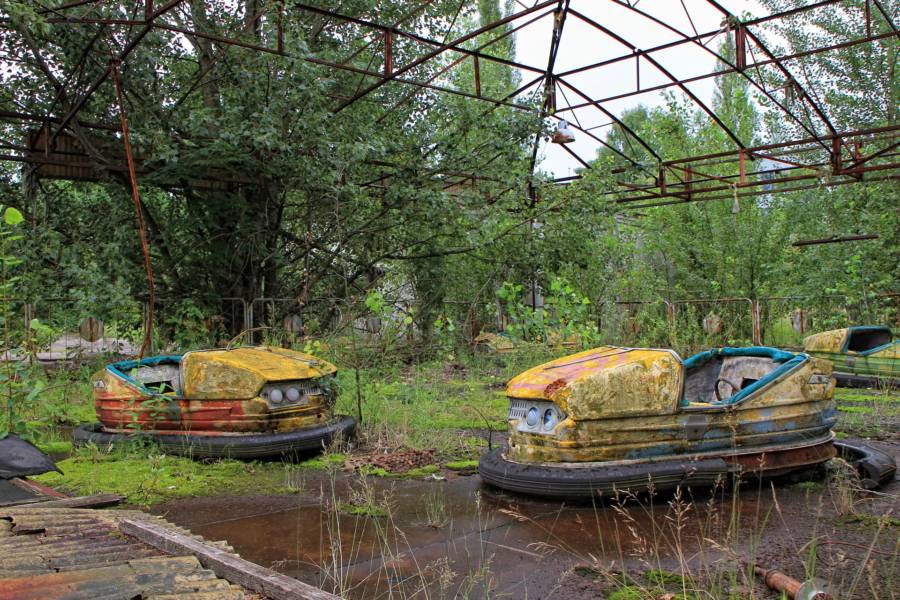
The Chernobyl disaster of April 25 and 26, 1986, was the most catastrophic nuclear accident of the 20th century. It has shaped and inspired nuclear policy, influenced environmentalist and activist groups, and left a direct, physiological impact on Pripyat, Ukraine along with the Eastern European regions it contaminated. The event happened due just as much to negligence as inevitability with no fail-safes to prevent radiation from escaping in case of an accident, improperly trained personnel, and no enacted safety measures to ensure that those mistakes wouldnt occur in the first place, the disaster was arguably lying in wait.When a late-night safety test went awry and subsequent human error interfered with preventative measures, Chernobyls Reactor 4 became unmanageable. Water and steam merged together which lead to an explosion and a resulting open-air graphite fire. Two plant workers died that night and arguably suffered the least out of all those who eventually died from radiation or grew up with birth defects.PixabayThe Pripyat Amusement Park was set to open on May 1, 1986 a week after the Chernobyl disaster.Over the next few days, 134 servicemen involved with the clean-up in and around Pripyat were hospitalized, 28 died of acute radiation syndrome (ARS) in the following weeks, and 14 died of radiation-induced cancer within the next ten years. Indeed, the complete effects the disaster had on the health of the public in Pripyat and the surrounding area is still not totally known.A simple miscalculation in safety measures during a late-night test quickly became the biggest nuclear disaster of the modern era. Brave souls on the ground sacrificed everything to stop it as the rest of the world watched in horror. 33 years later, the radioactivity of the Chernobyl disaster still lingers.MIT Technology ReviewEmergency workers cleaning up radiated materials with shovels in Pripyat, 1986.A Timeline Of Events That Led To The Chernobyl DisasterThe accident occurred a full year before President Reagan famously ordered USSR General Secretary Gorbachev to tear down this wall. The Pripyat Amusement Park was set to open on May 1st as part of the May Day celebrations, but that opportunity never came. It was 1:23 A.M. local time on April 25, 1986 when Reactor 4 suffered a fateful power increase too high to handle. This was before nuclear reactors were encased in a now standardized, protective containment vessel. Vitaliy Ankov/RIA NovostiWorkers hosing the plant down with a decontaminant, 1986.Chernobyls meltdown billowed out vast amounts of radioactive isotopes into the atmosphere, covering parts of the Soviet Union, Eastern Europe, Scandinavia, the United Kingdom, and the American east coast in varying amounts of fallout.Areas closest to the site, like Pripyat, were affected most drastically, with Ukraines capital Kiev receiving around 60 percent of the fallout while a significant amount of Russian territory sustained considerable contamination as well. UNICEF estimated that over 350,000 people evacuated their homes in Pripyat and far beyond between 1986 and 2000 specifically due to Chernobyls after effects.The Design Flaws And Misuse Of Reactor 4The Soviet Unions Chernobyl nuclear plant is about 65 miles north of Kiev on the banks of the Pripyat River. The town of Pripyat or Prypyat was founded in 1970 to serve the nuclear plant specifically as a closed, nuclear city. It only became an official city nine years later.But today, save for the startling emergence of wildlife, Pripyat remains a ghost town.Chernobyl had four reactors and each was capable of generating 1,000 megawatts of electric power. For context, the California Independent System Operator which oversees the bulk of the states electric power system, says one megawatt is capable of producing enough electricity for the instantaneous demand of 1,000 homes at once.Sovfoto/UIG via Getty ImagesRecording radiation levels during construction of a new sarcophagus for Reactor 4, August 1986.Chernobyls four reactors were different than most others worldwide. The Soviet-designed RBMK reactor, or Reactor Bolsho-Moshchnosty Kanalny meaning high-power channel reactor, was water-pressurized and intended to produce both plutonium and electric power and as such, used a rare combination of water coolant and graphite moderators that made them fairly unstable at low power. If the reactors lost cooling water, theyd dramatically decrease power output which would rapidly facilitate nuclear chain reactions. Whats more, the RBMK design didnt have a containment structure: a concrete and steel dome over the reactor itself meant to keep radiation inside the plant even if the reactor fails, leaks, or explodes.These design flaws compounded with the staff of untrained operators made for the perfect storm.The rather inadequately trained personnel working on the Number 4 reactor late that night on April 25 decided to complicate a routine safety test and conduct an electrical-engineering experiment of their own. Their curiosity of whether or not the reactors turbine could operate emergency water pumps on inertial power, unfortunately, got a hold of their judgment. First, the team disconnected the reactors emergency safety systems as well as its essential power-regulating system. Things quickly worsened when they set the reactor at a power level so low that it became unstable and removed too many of its control rods in an effort to regain some control. At this point, the reactors output reached over 200 megawatts. At that fateful hour of 1:23 A.M., the engineers shut the turbine engine off completely to confirm whether or not its inertial spinning would force the reactors water pumps to kick in. Tragically, it did not. Without the requisite water-coolant to maintain temperatures, the reactors power level spiked to unmanageable levels.The Chernobyl DisasterIn an effort to prevent the situation from rapidly getting worse, the engineers reinserted all the control rods about 200 taken out earlier in the hopes of recalibrating the reactor and bringing it back to reasonable levels. Unfortunately, they reinserted those rods all at once, and because the rods tips were made of graphite, this set off a chemical reaction which resulted in an explosion that was then ignited by steam and gas.The explosion ripped through the 1,000-metric-ton concrete and steel lid and reportedly ruptured all 1,660 pressure tubes as well thereby causing another explosion that ultimately exposed the reactor core to the world outside. The resultant fire allowed more than 50 tons of radioactive material to waft into the sky where it was inevitably carried away and spread across the continent by wind currents. The graphite moderator, leaking radioactive material, burned for 10 days straight. It didnt take long for the Soviets to order an evacuation of Pripyats 30,000. Authorities scrambled to problem-solve their way out of the fiasco on their hands and began with an attempted cover-up that failed a mere day later. Swedens radiation monitoring stations over 800 miles northwest of Chernobyl detected radiation levels 40 percent higher than standard levels just a day after the explosion. The Soviet news agencies had no choice but to admit to the world what had happened. The amount of radiation relinquished into the skies from the Chernobyl disaster was several times that of U.S. atomic bombings on Hiroshima and Nagasaki. With the help of global air currents, the nuclear disaster affected Eastern and Northern Europe and contaminated millions of acres of pristine farmland in the region. PixabayA crumbling school building in Pripyat, 2018.The Suicide Squad Makes A Sacrifice For The Greater GoodUnbelievably, the events of the Chernobyl disaster could have been even worse if not for real-life hero Aleksandr Akimov and his brave team.Akimov was the first to declare an emergency in the plant as soon as the reactor was shut down, though by then the damage had already been done. He realized too late the extent of the damage; already the reactor had exploded and began to leak extremely high levels of radiation.Rather than evacuate the plant as the explosion ensued, Akimov stayed behind. He and his crew of Valeri Bezpalov, Alexi Ananeko, and Boris Baranov entered the reactors chamber in waist-high radioactive waters beside the exploded reactor to release water. Bezpalov, Ananeko, and Baranov comprised a Suicide Squad that descended into the water even deeper to turn on the emergency feedwater pumps to flood the reactor and stave off the release of more radioactive materials.They manually pumped emergency feedwater into the reactor without any protective gear. The work of the engineers ended up costing them their lives from radiation poisoning, but they dramatically changed the impact of the disaster. Their sacrifice saved countless others from a resulting fallout that would have covered most of Europe.The Toll Of Cleanup Operations In PripyatWhile the physical illnesses and disease were reportedly difficult to specifically tie to the disaster itself, the short- and long-term efforts to minimize any harrowing consequences were substantial. The initial explosion resulted in the death of two workers and 28 firemen and emergency clean-up workers, including 19 others, died within three months of the explosion from Acute Radiation Sickness (ARS). Around 1,000 on-site reactor staff and emergency workers were heavily exposed to high-level radiation as well as more than 200,000 emergency and recovery operation workers.Managing Reactor 4 proved more difficult and complex compared with the relatively basic task of moving people from one place to another. Soviet estimates have calculated that 211,000 workers took part in the cleanup activities during the first year with anywhere between 300,000 and 600,000 people participating within the first two.Evacuations began 36 hours after the incident with Soviet authorities having successfully relocated everyone in the 30-kilometer exclusion zone within a month. About 116,000 people had to pick up their things and find new homes or potentially die from radiation-induced illnesses. But a 2005 United Nations Report maintains that the largest public health problem created by the accident was its effect on the mental health of the 600,000 people living in areas impacted by the event.The Nuclear Energy Institute claimed Chernobyls failings resulted in about 4,000 cases of thyroid cancer, with some deaths occurring as late as 2004 while the UN study argued that less than 50 deaths could be guaranteed to have resulted from the events radiation exposure. IGOR KOSTIN, SYGMA/CORBISLiquidators preparing for cleanup, 1986.Children in contaminated areas were given high doses of thyroid medication in order to combat the increase in radioiodine a contaminant isotope that had seeped into the regional milk. This isotope had a half-life of eight days. Meanwhile, the soil was found to be contained by cesium-137 which has a half-life of 30 years.The efforts appeared to be to little avail. Numerous studies found that the number of thyroid cancer in children under 15 years of age in Belarus as well as Russia and Ukraine in general, showed a steep, concerning spike. Many of these children had developed a particular form of cancer from drinking milk as cows grazed on contaminated soil, and produced contaminated milk.PixabayA mural in Pripyat depicting children before the meltdown, 2018.It hadnt yet become clear, in the frenzy of day to day cleanup operations in those first months following the Chernobyl disaster, but an entire generation of children would grow up permanently changed by the event.Birth Defects From The ChernobylDisasterA 2010 study published in the American Academy of Pediatrics journal urged scientists to take another look at the seemingly cut-and-dry subject of Chernobyls long-term effects on childrens health in affected regions. Dr. Wladimir Wertelecki of the University of Southern Alabama in Mobile found that the Ukraine province of Rivne 155 miles from Chernobyl had been significantly impacted by the radioactive cesium-137, with serious, subsequent anomalies in the children born there ever since, Reuters reported.There has been a tendency to imply that the question is closed as far as the prenatal effects (of Chernobyl), he said. The study, however which analyzed every one of the 96,438 babies born in Rivne between 2000 and 2006 found that the rate of birth defects in the brain and spine were much higher than the average in Europe.22 of every 10,000 babies born in Rivne during that timeframe were born with birth defects compared to Europes average of 9 of every 10,000. Rates of conjoined twins, congenital tumors on the tailbone, and microcephaly were also significantly elevated.Sean Gallup/Getty ImagesChildren with microcephaly at the Vesnova Home for Invalid Children in Vesnova village near Glusk, Belarus, 2016.While Dr. Wertelecki conceded that other factors such as malnutrition or prenatal alcohol abuse could have impacted these numbers the results are alarming. The study presents a disconcerting correlation between strontium-90 a radioactive element created by nuclear fission and a rise in disabilities caused by birth defects which UNICEF suggested impacted 20 percent of older children in Belarus.Over five percent of Strontium-90 the single most dangerous element of nuclear fallout was released during the Chernobyl disaster. The physical impact of long-term effects in the region, though contested by some, has certainly been significant enough for the Vesnova Home for Invalid Children to open and care for over 170 children born with birth defects.Nonprofit organization Chernobyl Children International, too, has established itself as a childcare facility for affected families in Belarus. Yet another facility, Childrens House Number 1 in Minsk, tends to those born with birth defects from serious neurological issues to abnormal heart conditions. Sean Gallup/Getty ImagesDisabled children in the cafeteria at the Vesnova Home for Invalid Children, 2016.Children as young as four have to undergo open-heart surgeries to correct holes, faulty heart valves, and more. The congenital heart defects are so prevalent that a U.S.-based group, the Cardiac Alliance, has sent surgical teams that focus specifically on congenital heart defects in children to Belarus.The prevalence of severe birth defects such as microcephaly, hydrocephaly, and others in this region than elsewhere, point to a considerable correlation with the Chernobyl disaster. With Belarus being on the receiving end of 60 percent of Chernobyls fallout, it would be illogical to dismiss this seemingly evident causality.The Children of ChernobylSHONE/GAMMA/Gamma-Rapho via Getty ImagesView of the Chernobyl nuclear power plant after the explosion. April 26, 1986.Yuryi Litvinov was four years old when the Chernobyl disaster occurred. Even though he survived the initial disaster, he couldnt fully escape the consequences of living so close to the disaster in a town near Kiev.The realization of what happened comes only later, after you realize what you got afterwards, he told NPR. You know, I experienced cancer when I was 21 and now Im kind of good and everything works out fine. So I just want to put out awareness about this, what happened and be a little bit more cautious.Litvinovs memories are largely those of a little boy who couldnt fully comprehend what was happening, or why he was sent away to live with his grandmother for five months but the palpable difference he felt in peoples attitudes was fundamentally unforgettable.I realized this (the gravity of the disaster) when I was around seven, he said. And after, you know, seeing the rain when the rain would fall we would have white leaves. And it was in the energy in the people around me that, you know, you realize theres a big fear and people are scared of something that cannot be described in a way.Jerzy KOSNIK/Gamma-Rapho via Getty ImagesThe line at a pharmacy in Warsaw following the slow unfolding of information about the Chernobyl disaster, June 1986.When Litvinov was 21 years old, he was diagnosed with cancer. A lot of his friends and relatives died of the disease in their 40s and 50s. Unlike his loved ones, however, Litvinov had kidney cancer. He had one of them removed, but the cancer came back. Another treatment of radiation was needed, he joked.There are thousands of cases like Litvinovs a child, like any other, whose entire life was shaped and impacted by an event he had no control nor understanding of. Hes rightfully more than a little affected by Chernobyl and has developed an arguably healthy distrust of anyone claiming to have all the answers.It definitely changed the way we see our lives now, the way we trust to our government and the way we hear what they say, he said. Hes since become an artist with his first painting revolving squarely around Chernobyl. The work is comprised of geometric patterns, which if inspected from up close, reveal the date of the disaster as part of the paintings building blocks. For Litvinov, the message is clear: history repeats itself lets try to prevent it from doing so.And if we dont teach our generation that things like this happen, were going to lose our planet, he said.The Sarcophagus Keeping Reactor 4 At BayThe best preventative measure Chernobyl couldve included in its design was a containment structure to prevent radiation from escaping in case of structural failure. Following the accident in 1986, the Soviets built a temporary sarcophagus to enclose the dangerous reactor, but the concrete structure was built as an emergency response with severe time constraints.As such, the sarcophagus was designed with much of the reactors structurally unsound and damaged remains. It was never intended as a final, permanent solution to radiation containment, however. Nonetheless, the shelter managed to confine further radioactive contamination and allowed officials to closely monitor the reactors activities post-explosion. Ultimately, construction of the New Safe Confinement (NSC) was finally completed in November 2016.Wikimedia CommonsThe New Confinement Structure during construction, 2013.The NSC was finally deployed into position over the disintegrating sarcophagus in the hopes it will contain the reactors remaining radiation for the next 100 years, Radio Free Europe reported. Positioning the 109-meter-high and 257-meter-long metal structure into place took two weeks.Funded by the European Bank for Reconstruction and Development, the project cost $1.6 billion and currently involves around 3,000 workers on-site. The new equipment and safety systems being put into place are still being troubleshooted, installed, and tested with the main control room, or Confinement Management Center, receiving livestreams from dozens of cameras throughout the NSC. The project made sure to incorporate automated fire-suppression systems as well.As it stands, around 200 tons of radioactive material still remain beneath the old sarcophagus with NSC workers routinely monitoring exposure on their persons with on-site equipment. Officials are adamant, however, that the radioactivity is fairly low these days in and around Pripyat and poses little to no risk.With a network of passageways, camera systems, and preventative fire suppression tools in place, the NSC project will eventually garner several elevators and receive its finishing touches. 33 years later, the Chernobyl disaster site is still being nurtured to become a more sustainable and secure part of the world. Though the surrounding town of Pripyat remains abandoned by humans. The Startling Resurgence Of Wildlife In Chernobyl Exclusion Zone And PripyatWikimedia CommonsHorses in the Chernobyl Exclusion Zone, 2006.Researchers from the University of Georgia recently studied the resurgence of animals in the Chernobyl Exclusion Zone (CEZ) by setting up a myriad of camera traps to observe any and all species therein. Published in the March 2019 edition of Food Webs journal, the experiment has found the CEZ to be fertile ground for wild animals to not only survive, but flourish. An analysis of the teams footage showed 10 mammals and five birds, ranging from mice, raccoon dogs and wolves, to American mink and Eurasian otters within the CEZ in and around Pripyat. Tawny owls, magpies, and white-tailed eagles have made the CEZ their home, as well, with researchers admitting that some of these species had never before been seen in the region at all.Weve seen evidence of a diversity of wildlife in the CEZ through our previous research, but this is the first time that weve seen white-tailed eagles, American mink and river otter on our cameras, said the studys co-author, James Beasley, in a statement.Wikimedia CommonsA fox in the Chernobyl Exclusion Zone, 2016.During similar research in 2015, Beasleys team found thriving populations of elk, red deer, wild boar, and wolves in the abandoned 1,000-square-mile CEZ including the abandoned town of Pripyat. For their new venture, the team decided to focus exclusively on scavengers. What they found 98 percent of fish they left outdoors was eventually eaten by wildlife pointed toward a surprisingly healthy community of scavengers, and hence, an ecosystem on the rise.This is a high rate of scavenging, and given that all our carcasses were consumed by terrestrial or semi-aquatic species, it verifies that the movement of nutritional resources between aquatic and terrestrial ecosystems occurs more frequently than often recognized, said Beasley. We tend to think of fish and other aquatic animals as staying the aquatic ecosystem, he explained. This research shows us that if a reasonable proportion of dead fish make it to shore, there is an entire group of terrestrial and semi-aquatic species that transfer those aquatic nutrients to the terrestrial landscape. Marina Shkvyria, a wolf expert at Ukraines National Academy of Sciences, encountered similarly promising results during her research in 2015. She found the CEZ to be a refuge for moose, deer, beavers, owls, bears, lynx, and most importantly to her wolves.Wikimedia CommonsAn abandoned village by Chernobyl reclaimed by nature, 2013.We came down here late last spring and howled, and the young wolf pups howled back from the top of that hill, she said, referring to a pack she discovered near an abandoned CEZ village. Coincidentally, Beasley had begun his own research around the same time and was convinced at the ecological rebound after his five-week survey had concluded.From 21 boars, nine badgers, bison, 26 gray wolves, 60 raccoon dogs, and 10 foxes, the evidence of a thriving, natural habitat was finally presenting itself after decades of seemingly futile hope.Its just incredible, he said. You cant go anywhere without seeing wolves.Perhaps most pointedly, Shkvyria used a nearby tree as a prime example of how fast things in Chernobyl were changing for regional wildlife.Literally three weeks ago that tree was still standing, she said, pointing to a half-eaten trunk. The beaver population is growing. Beavers can return it to being a little bit more wild. It will become like it was a hundred years ago.Comparable Nuclear MeltdownsThree Mile IslandLeif Skoogfors/CORBIS/Corbis via Getty ImagesA Pennsylvania State Police officer checking for radioactivity in a town near the Three Mile Island nuclear power plant, 1979.A few thousand miles and halfway around the world, the United States saw its own nuclear disaster. It was March 28, 1979, when a pressure valve in the Unit-2 reactor at Three Mile Island plant in Pennsylvania failed to close. As a result, radioactive cooling water leaked out and flooded the plant.Built only five years earlier on the Susquehanna River and becoming operational one year before failure, Three Mile Island was initially praised for its efficient energy production as the Carter Administration was battling a historical energy crisis at the time. Once again, human error came into play and caused a fair amount of additional damage. The broken pressure valve kickstarted automatic emergency cooling pumps but confused operators shut the system down. This forced the reactor to a halt while remaining heat from the fission process continued to escape. In the end, the core was 1,000 degrees away from reaching a total meltdown. This likely wouldve resulted in a Chernobyl disaster of exposure to radiation. Wikimedia CommonsCleanup at Three Mile Island, 1979.Eventually, however, operators assessed the situation and restarted the cooling pumps and reduced the cores temperature and prevented a complete meltdown which was less than half an hour away at that point. Though Pennsylvania Governor Dick Thornburgh came close to evacuating the state and advised pregnant women and pre-school Agee children to leave until further notice, and 100,000 people did leave their homes, the crisis came to an end on April 1 of that year. Cleanup, however, took two more decades and finally concluded in 1990.FukushimaWhen an earthquake and subsequent tsunami hit the Fukushima Daiichi Nuclear Power Plant in 2011, it suffered a multiple-reactor meltdown. According to the World Nuclear Association, all three disabled cores melted in the first three days. Fukushima was rated 7 on the International Nuclear Event Scale, which is about as serious as nuclear accidents can get. It took two weeks to get the three reactors stabilized with 100,000 people evacuating their homes and over 1,000 resulting deaths. The primary difference between Chernobyl and Fukushima besides the obvious use of a containment structure here was that the tsunami that triggered the Japanese meltdown submerged essential safety measure tools such as diesel generators, batteries, electrical switchgear, and cooling systems. These were located in the basements of the turbine buildings.The tsunami also destroyed necessary infrastructure such as invaluable roads that wouldve allowed for faster access. Of course, a station-wide blackout didnt help matters. Nikkei Asian ReviewCrumbling remains of Fukushimas nuclear plant, 2018.As in the Chernobyl disaster, iodine-131 and caesium-137 were dispersed into the air but because 23 of the 24 radiation monitoring stations were disabled by the tsunami, tracking the releases proved difficult to say the least. While there are still questions as to how substantial the contamination of nuclear materials was, Japans Nuclear Regulation Authority found that the most contaminated areas in the plants evacuation zone had reduced by three quarters between 2011 and 2013. In May of 2013, the United Nations Committee on the Effects of Atomic Radiation (UNSCEAR) issued its report, for which 80 international experts contributed their findings and conclusions.Radiation exposure following the nuclear accident at Fukushima Daiichi did not cause any immediate health effects, it said. It is unlikely to be able to attribute any health effects in the future among the general public and the vast majority of workers. This does not include the 146 emergency workers that were harshly affected by radiation in the disasters early days.Tomohiro Ohsumi/Bloomberg/Noboru Hashimoto/Corbis via Getty ImagesMembers of the media and Tokyo Electric Power Co. (Tepco) take a tour of the No. 4 reactor at the Fukushima, Nov. 7, 2013.UNSCEARs 2015 follow-up report largely confirmed the panels initial findings and stated that none of the new data collected after 2013 materially affected the main findings in, or challenged the major assumptions of, the 2013 Fukushima report.When it comes to Fukushimas effects on local wildlife, scientists are still studying how substantially regional animal populations have been affected by the reactors leaked radiation. Disassembling the crumbling plants sarcophagus will take decades and long-term health effects are yet unclear. There are, however, populations of wild boars roaming around the Fukushima evacuation zone that have been found to contain levels of radioactive elements up to 300 times higher than normal safety standard levels.The Chernobyl Disaster Lingers In Pripyat And BeyondIn the end, there has never been a nuclear disaster that can compare with Chernobyls colossal legacy of fear, paranoia, and generational birth defects. The accident has permeated global culture, influenced post-apocalyptic aesthetic in film and literature, and irradiated entire regions of the planet. Theres a reason that the name alone triggers immediate awareness and its not because the subject is forcibly taught in our schools its because the fallout of the Chernobyl disaster was just as figurative as it was literal and it will likely never be forgotten.After learning about the Chernobyl disaster and the abandoned ghost town of Pripyat it left in its wake, take a look at 25 photos of the abandoned city of Pripyat. Then, learn about the Soviet-era closed cities built to hide their nuclear program.The post The Story Of The Chernobyl Disaster And The Radioactive Ghost Town Of Pripyat It Left Behind appeared first on All That's Interesting.










 English
 Arabic
 French
 Spanish
 Portuguese
 Deutsch
 Turkish
 Dutch
Dutch
 Italiano
 Russian
 Portuguese (Brazil)
 Greek
Greek