



WWW.THECOLLECTOR.COM
The Inhumanity and Injustice of the Great Dakota War
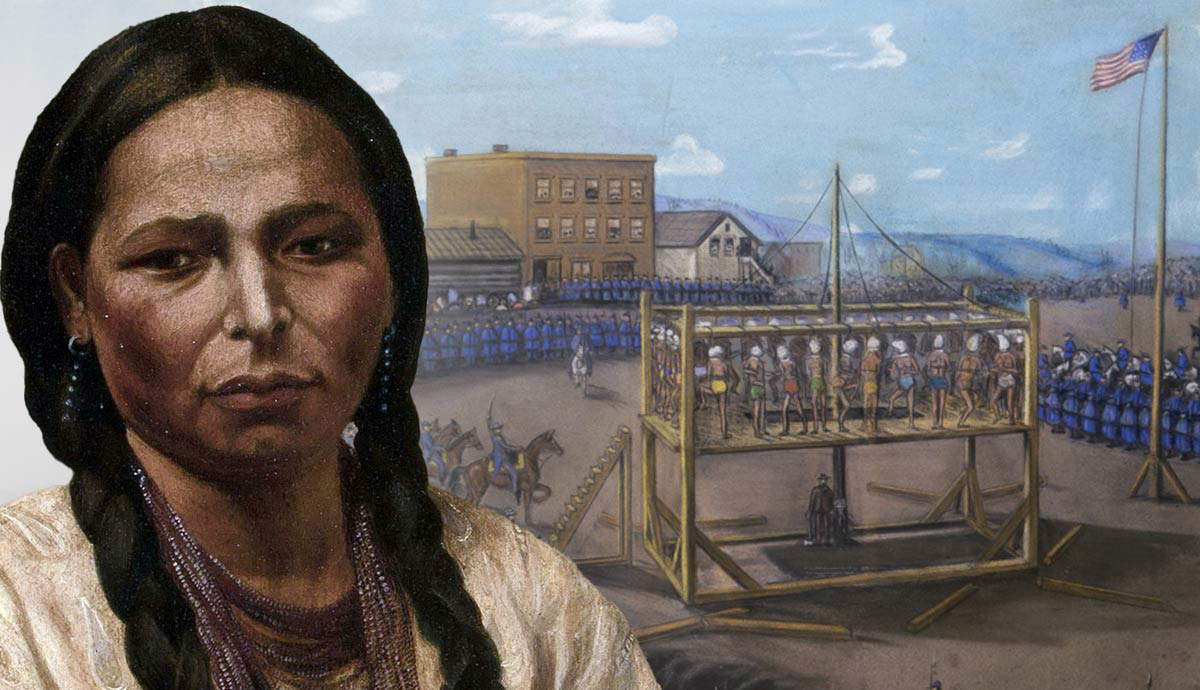
One of the most important yet often avoided events in Minnesota and US history, the Great Dakota War left effects that still echo into the modern era. A precursor to the wars against Indigenous peoples on the Plains after the Civil War, this conflict between the US government and the Dakota peoples quickly spiraled with the building of a concentration camp, deportation, a kangaroo court, and executions.What led to this brief yet devastating conflict, now classified as a genocidal effort, and what was the aftermath?Hard Times in a Young StateMinnesota was transformed from an Indigenous territory to a land of property lines and municipalities, as evident in this 1887 map. Source: Library of Congress / Wikimedia CommonsAchieving its statehood on May 11, 1858, Minnesota was still a young state by the time 1862 rolled around. Even so, its population was rapidly growing, increasing by more than a hundred thousand people during the decade of the fifties. It attracted settlers, not only from the Eastern US but international immigrants, many from Scandinavia, with its fertile prairie and vast woodlands. As settlers moved in, claiming land for farms and homes, they came into contact and conflict with Indigenous groups who had been utilizing the land as part of their territory for many years. Among these groups was the Dakota, a division of what is commonly known as the Sioux. However, Sioux was a name given by tribal enemies, and the nation refers to itself as the Oceti Sakowin. The Oceti Sakowin includes seven tribes and subtribes that are divided into three groups: the Dakota, Nakota, and Lakota. Originating in the woodlands of the future states in the upper Mississippi region, the Oceti Sakowin gradually began moving west, but in 1862, the Dakota were still largely prominent in Minnesota.Sketches of Dakota leaders Wamsittanka (Big Eagle), Mankato, and Hushasha (Red Legs) based on photos taken in 1858. Source: Minnesota Historical Society / Wikimedia CommonsNorth American Indigenous cultures generally do not incorporate the ideas of property ownership that are reflected in European cultures. Land might be competed for in terms of hunting and resources, but it is usually viewed as a commodity to be shared. This clash of ideology made it difficult for settlers who were claiming land and Indigenous peoples who had used the land for generations to see eye to eye. Adding to the tensions, many Dakota people were removed to reservations in 1851 by the US government.In 1858, these reservations were halved due to pressure on the government from white settlers. As was often the case in the reservation system, promised rations and other needs were not delivered. Annual monetary payments that were owed to the Dakota were not paid, which left many unable to pay on owed credit and, therefore, prevented them from purchasing needed goods. By 1862, these governmental failures were exacerbated by the onset of the American Civil War, and many Dakota were on the verge of starvation. That May, President Abraham Lincoln signed the Homestead Act, offering free land to settlers who stayed on it for five years. This law brought 75,000 more settlers to Minnesota over the next three years.Tensions ExplodeTa Oyate Duta, Little Crow in an 1851 portrait by Frank Blackwell Mayer. Source: Frank B. Mayer, Carli Digital Collections / Wikimedia CommonsDespite the challenges faced by the Dakota, settlers and reservation staff were largely unsympathetic. For example, a reservation trader at the Lower Sioux Agency named Andrew Myrick refused to extend Dakota credit after failed annuity payments from the government. He said to a reservation agent, So far as I am concerned, if they are hungry let them eat grass or their own dung. On August 17, 1862, tensions escalated into violence. Dakota hunters killed five settlers after a skirmish resulting from the hunters stealing eggs. Local Dakota leader Ta Oyate Duta, also known as Little Crow, was torn on how to react, but at urging from others in his group, he encouraged his band, the Mdewakanton, to continue raiding. The thefts and resulting violence continued into the next day, with Andrew Myrick among those killed at the Lower Agency on August 18. Oral tradition reports that when his body was found, his mouth was stuffed with grass.Settlers leaving home in Minnesota to escape the fighting in 1862. Source: Library of Congress / Wikimedia CommonsThe Dakota people were divided on their response to the violence. Some were fully invested in violent retaliation against those they believed were responsible for their situation. Others preferred a peaceful approach. Soon, two clear divisions arose, and those against the violence were referred to as cut hairs in reference to their perceived preference for assimilation. US militia companies soon organized in response to the raids, and regiments intended for the Civil War were redirected to help gain control of the situation in Minnesota. Still, this response was slow due to the war, and many volunteers initially fought the Dakota.A series of battles took place over the next six weeks, including at the town of New Ulm, Fort Ridgely, and Birch Coulee. The final battle took place on September 23 at Lone Tree Lake (the battle is referred to as Wood Lake due to misidentification). The Battle at Wood Lake resulted in a decisive defeat for the Dakota forces and marked the conclusion of what would become known as the Great Dakota War or US-Dakota War. Around 600 deaths of settlers and soldiers were recorded. The number of Dakota deaths is unknown.Removal and AftermathA Dakota Indian Woman, oil painting by William Armstrong. Source: Liveauctioneers.com / Wikimedia CommonsFollowing the end of the conflict, an attempt to subjugate and completely assimilate the Dakota people was undertaken by the US government. Minnesota governor Alexander Ramsey stated in November, the Sioux Indians of Minnesota must be exterminated or driven forever beyond the borders of the state. His words were heeded, and approximately 1,600 Dakota people, mostly noncombatant women and children, were marched from the reservations to Fort Snelling, where they were imprisoned in a concentration camp. The camp was disease-ridden, and hundreds died over the course of the winter.A sign at Fort Snelling memorializes those held in the concentration camp after the war. Source: Pingnova / Wikimedia CommonsHundreds of others were held at the ironically named Camp Release. The men imprisoned here were those who had been arrested as a result of their participation in the war and associated events. In November, trials began for the men in the camp. These trials were brief, some as short as five minutes in length, with the defendants denied any legal representation. 498 trials were held, and more than 300 of these exchanges resulted in death sentences for the accused. The charges brought before the court included a number of heinous crimes such as rape and murder. President Abraham Lincoln personally reviewed all of the convictions, and though many sentences were commuted, 39 death sentences were still to be carried out. One additional man received a reprieve just before execution. 38 Dakota men were hanged in Mankato, Minnesota on December 26, 1862, in the largest mass execution event in American history. Those who had their sentences commuted remained imprisoned and were sent to Camp McClellan in Iowa.Execution of Dakota Indians in Mankato, Minnesota, 1862. Source: plainsart.org / J. Thullen / Wikimedia CommonsIn April of the following year, Minnesota and the US government voided the existing treaties that they held with the Dakota nation. Congress then passed legislation making it illegal for the Dakota people to live in Minnesota. Those who were being held at the concentration camp were deported to a reservation in Nebraska. A bounty was created state-wide, awarding anyone who turned in a Dakota scalp with a cash prize. Ta Oyate Duta would be a victim of the bounty, shot and killed on July 3, 1863. His killer was given $500 by the state. Two military forces totaling about 7,000 soldiers were directed to hunt down the Dakota people left in-state, causing many of those remaining to flee, resulting in numerous additional deaths from starvation and exposure. In the following few years, additional leaders and those assumed to have participated in the raids and battles were intercepted, tried, and executed. Those who were deported to Nebraska continued to suffer from starvation and disease. Eventually, the prisoners with commuted sentences would be sent to the Nebraskan reservation as well. About 150 Dakota people who assisted in the arrest and punitive searches were allowed to remain in Minnesota.Legacy in the 21st CenturyMinnesota Governor Mark Dayton issued an apology for the events of the Great Dakota War in 2012. Source: Lorie Shaull / Wikimedia CommonsIn 1889, Congress passed legislation allowing for Dakota communities to be formed in three, later four, designated areas in Minnesota. To this day, those four locations are the only federally recognized Dakota lands in Minnesota. The events of the war were referred to as the Minnesota Massacre or largely ignored until later in the 20th century when the Dakota side of the story finally began to be told. Today, the events of the war and its aftermath are viewed as acts of genocide. In 2012, the governor of Minnesota, Mark Dayton, issued a formal apology for the events of the war and declared August 17 a day of remembrance and reconciliation. Currently, about 4,000 Dakota people live in Minnesota, and thousands remain as refugees living on reservation lands out of state. Curiously, the Dakota Expulsion Act, the legislation that made it illegal for Dakota people to reside in the state of Minnesota, has never been officially repealed and stands as a federal law. Though the Great Dakota War appears to be an event that many in Minnesota and the US would prefer to forget, it remains very relevant to this day.
0 Commentarii
0 Distribuiri
11 Views







 English
 Arabic
 French
 Spanish
 Portuguese
 Deutsch
 Turkish
 Dutch
Dutch
 Italiano
 Russian
 Portuguese (Brazil)
 Greek
Greek