• YUBNUB.NEWS
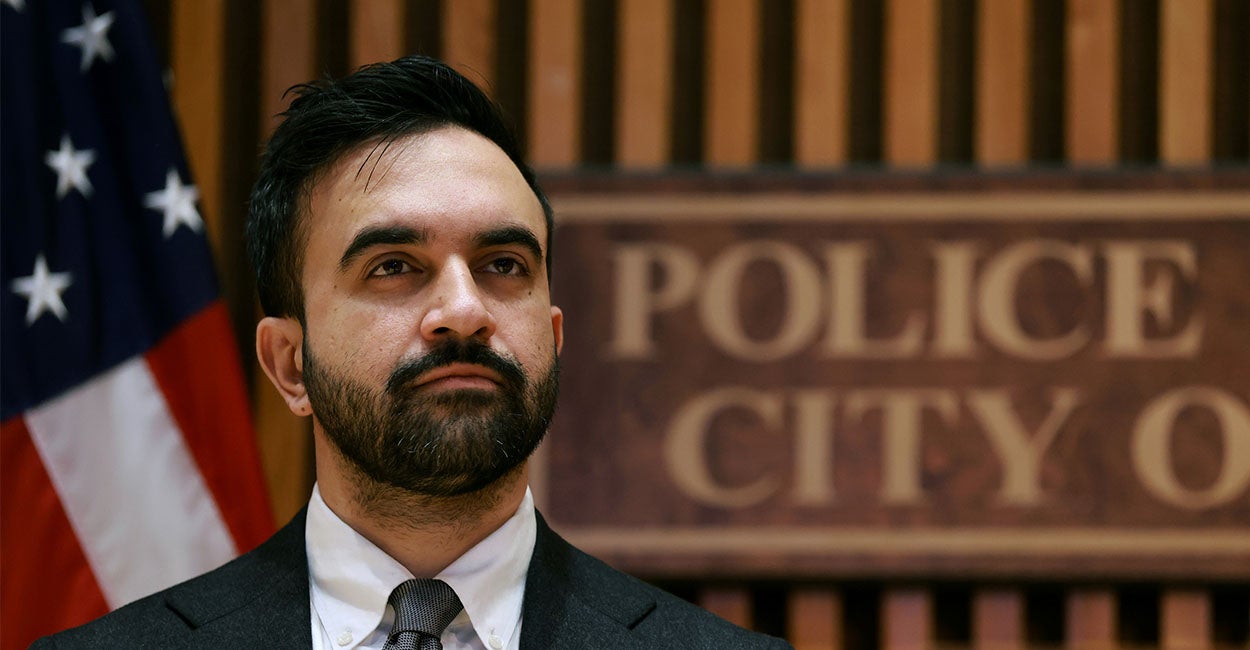
    ICE Deputy Director Leaves Agency to Run for Congress in Ohio
    The deputy director of U.S. Immigration and Customs Enforcement is resigning to run for Congress. Madison Sheahan is running for Democratic Rep.Marcy Kapturs seat in Ohios 9th Congressional
    0 Σχόλια 0 Μοιράστηκε 3 Views
  • YUBNUB.NEWS
    NEW: Lance Twiggs Family Speaks Out For the First Time Since Kirk Assassination, Reveals Twiggs Location (VIDEO)
    Lance Twiggs family spoke out for the first time since the assassination of Charlie Kirk. TPUSA founder Charlie Kirk was fatally shot on September 10, 2025 during an event at Utah Valley University.
    0 Σχόλια 0 Μοιράστηκε 3 Views
  • YUBNUB.NEWS
    Mamdani Adviser Calls for Destruction of Private Housing in Newly Unearthed Videos
    New York Mayor Zohran Mamdanis housing czar is back in the news for a resurfaced podcast episode, where she calls for the tanking of housing markets to usher in a socialist utopia. We decided that
    0 Σχόλια 0 Μοιράστηκε 3 Views
  • YUBNUB.NEWS
    Cell Service Offers $20 Credit After Widespread Wireless Outage
    Verizon announced Thursday that it will issue a $20 account credit to customers affected by a widespread wireless outage that disrupted service across much of the United States earlier this week, leaving
    0 Σχόλια 0 Μοιράστηκε 2 Views
  • YUBNUB.NEWS
    TGPs Cara Castronuova Shoved by Jasmine Crocketts Bodyguard After Yesterdays January 6th Hearing at Congress! See Reactionary VIRAL VIDEO!
    A man that appeared to be part of Rep. Jasmine Crocketts security detail pushed LindellTV and Gateway Pundit reporter Cara Castronuova as she questioned Crockett after a January 6th hearing yesterday
    0 Σχόλια 0 Μοιράστηκε 3 Views
  • YUBNUB.NEWS
    When Resistance AWFLs Don't Realize Not Every State Thinks Their Tantrums Are Adorable
    If this isn't going to be your feel-good story of the day, I don't know what is.Even while writing it, I am, as Buck Owens and Roy Clark used to say, 'a' pickin' and a' grinnin'!' Advertisement We've
    0 Σχόλια 0 Μοιράστηκε 3 Views
  • WWW.UNIVERSETODAY.COM
    NASA Enters Final Preparations for Artemis II Mission
    As NASA moves closer to launch of the Artemis II test flight, the agency soon will roll its SLS (Space Launch System) rocket and Orion spacecraft to the launch pad for the first time at the agencys Kennedy Space Center in Florida to begin final integration, testing, and launch rehearsals. NASA is targeting no earlier.
    0 Σχόλια 0 Μοιράστηκε 2 Views
  • WWW.THECOLLECTOR.COM
    What Caused the Great Schism?
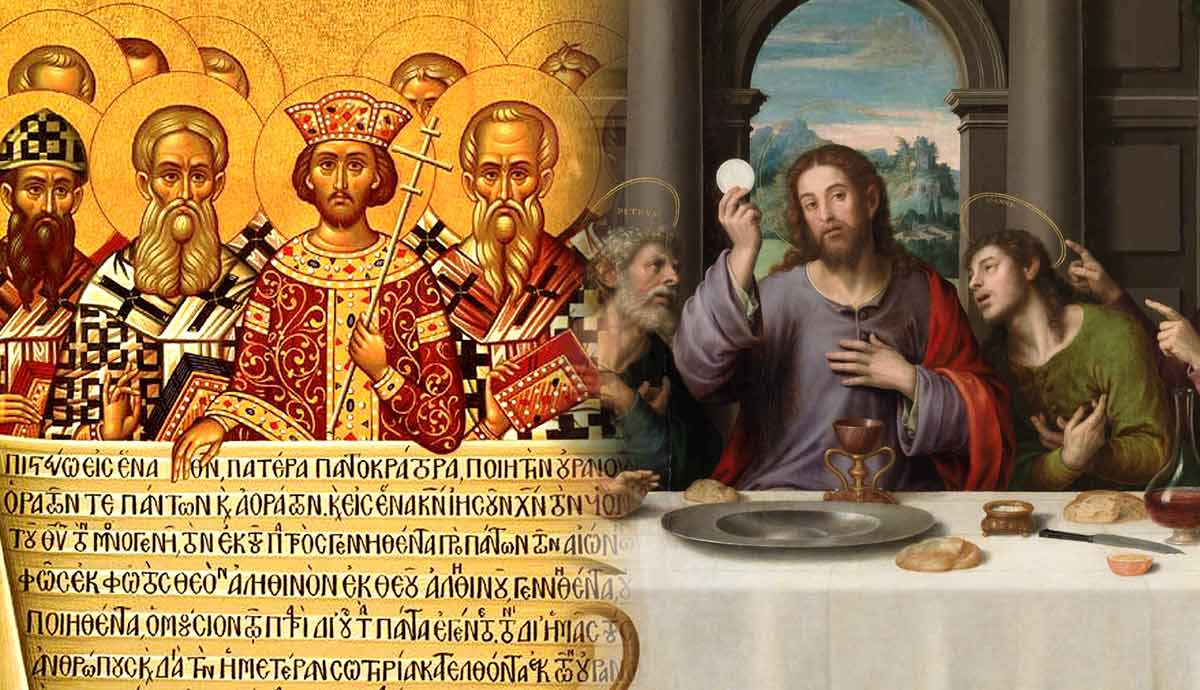
    Few events in religious history had such a profound impact as the Great Schism. The split between the Western Roman Catholic Church and the Eastern Orthodox Church was not only the culmination of the religious dispute but also the consequence of a centuries-long political and theological dispute between the two factions. This article will delve into the historical background of the Great Schism, the theological and political differences between the West and the East, and the legacy and consequences of the Great Schism.Historical Background of the Great SchismDove of the Holy Spirit, by Gian Lorenzo Bernini, Saint Peters Basilica, c. 1660, photograph by Dnalor_01, May 15, 2003. Source: Wikimedia CommonsThe historical background of the Great Schism goes way back before the formal and official split in 1054. The Western Roman Catholic Church and the Eastern Orthodox Church parted ways due to theological, political, and cultural differences that, over time, became too big to overcomehowever, all these disputes developed for a long time and date back to the 4th century.The division began when the Roman Empire was split into the Western (Roman) and Eastern (Byzantine) empires. Rome became the symbol and center of the western portion, while Constantinople (present-day Istanbul) became the center of the eastern part.Initially, the division was mainly administrative, aiming to control better the vast territories and provinces that comprised the Roman Empire. However, the split soon became official, and the West and the East became two political entities.At the end of the 4th century, Emperor Theodosius I formally divided the Roman Empire between his two children, Honorius and Arcadius. With that, the eastern parts of the once-united empire started their completely different trajectories that ultimately led to the Great Schism.From a historical and sociological perspective, the Great Schism was far from surprising and sudden. Many factors impacted the split, and both sides defended their political, cultural, and theological goals and ideals.While the Western Church has embraced more Westernized practices with the pope at its center, the Eastern Church did not have one supreme authoritative religious figure. The Eastern Orthodox Church defended the Greek language and cultural heritage, with multiple patriarchs wielding equal power and the Byzantine Emperor having considerable control over religious matters.Theological DisputesSaint Ambrose Barring Theodosius from Milan Cathedral, by Anthony van Dyck, between 1619 and 1620. Source: Wikimedia Commons/National Gallery, LondonOne of the biggest reasons that led to the division between the Western Roman Church and the Eastern Orthodox Church was theological differences. These started to develop relatively early, and the most significant problems arose regarding the Filioque clause (a Latin phrase meaning and the son and referring to the Holy Trinity) and papal supremacy. Liturgical differences also widened the divide between the two churches.The Filioque controversy concerns one of the oldest and most sacred parts of the Christian faith and doctrine. The Nicene Creed (promulgated at the Council of Nicaea in 325) stated that the Holy Spirit proceeds from the Father (meaning God).However, in the 6th century, the Western Church began adding the Filioque clause to the phrase the Holy Spirit who proceeds from the Father, implying that the Holy Spirit also proceeds from (or through) the Son (Christ). In the 11th century, the papacy formally accepted the addition to the creed.This change was not welcomed in the East, where the religious leadership saw it as an unacceptable change of something holy and fundamental to the Christian doctrine.Icon depicting the First Council of Nicaea with a text of the Nicene Creed in Greek, unknown author. Source: Wikimedia CommonsAnother significant theological dispute between the two churches was the so-called papal supremacy. For the Western Church, the pope represented the ultimate Christian authority on earth since he was seen as St. Peters successor. The Eastern Church, however, could never accept one person as the supreme religious power and saw the Roman pope as the first among equals. They continued to believe that no single person, bishop, patriarch, or pope, for that matter, could have supreme religious authority over the entire Christian Church and religion.Besides the Filioque clause and papal supremacy, there were some other insurmountable liturgical and theological differences. One of them was the matter of clerical celibacy.While in the Eastern Church priests were allowed to wed and have families, they had to be celibate in the Western Church. There was also a difference regarding bread in the practice of the communion. In the West, priests used unleavened bread, while the bread in the East was leavened.The two churches also have some different understandings of purgatory. The Western Church saw it as the purification place between earth and heaven. On the other hand, the Eastern Church refused to adopt this idea, having a more mystical and spiritual way of understanding the afterlife.Political and Cultural FactorsPentecost icon depicting the descent of the Holy Spirit upon the Apostles and Mary, photograph by , between 1850 and 1900. Source: Wikimedia CommonsDue to the official separation of the Roman Empire into two different political entities with two distinct centers of power, the two states started to develop different political and cultural traditions.The Byzantine emperor had considerable authority over the church. He appointed patriarchs, played a key role in religious and doctrine matters, and influenced councils. In particular, the Byzantine emperor saw the pope as a patriarch who had no authority over political and civil matters.In the West, the situation was completely different. Popes sought to influence secular rulers and impose their authority based on their claim of papal supremacy. As head of the Papal States, the pope regularly interfered in politics and wars, often following personal agendas. Indeed, popes were key players in the international and national politics of the European continent.Another political factor that contributed to the division between the two churches was the fall of the Western Empire and the rise of the Byzantine Empire.After the fall of Rome in 476, the once-feared and celebrated Roman Empire was no more, and German tribes and peoples started to form their own political entities.The Last Supper, Juan de Juanes, circa 1562. Source: Wikimedia Commons/Museo del Prado, MadridDue to successful missionary work and the spreading of Christianity among Germanic peoples, the pope became one of the most influential political and religious figures in Europe since he represented the Church and God, and his approval increased the authority of the Germanic rulers to whom he granted it.When the Holy Roman Empire was formed, Pope Leo III was the one who crowned the first Holy Roman Emperor, Charlemagne, in 800. The Byzantine emperor thought this title was not legitimate since there could be only one emperor, especially in the Christian world. He also claimed the pope had no right to proclaim Charlemagne emperor.The language used during mass was also one of the biggest differences that influenced the Great Schism. While churches in the West used Latin, the Eastern churches used Greek. There were miscommunications and misunderstandings between the two churches and mutual dissatisfaction on how and why their languages were used in religious rituals. Also, tensions arose between the people who spoke different languages on territories where churches were fighting for influence, like the Balkan peninsula or southern Italy.Mutual ExcommunicationHagia Sophia, photograph by Arild Vgen, March 1, 2013. Source: Wikimedia CommonsThe official split between the Western and Eastern churches and the Great Schism occurred in 1054.The existing conflict between the two churches intensified due to the clash between Michael Cerularius, the patriarch of Constantinople, and Pope Leo IX.The dispute reached a breaking point when the patriarch condemned the liturgical practices of the Western Church. In response, the pope sent a delegation to Constantinople to improve the relationship with the Eastern Church through diplomacy. Also, the pope felt like the Byzantine Empire and the patriarch were questioning his authority.However, the meeting between the papal delegates and Michael Cerularius was unsuccessful. The delegation refused to recognize the authority of the patriarch, and Michael Cerularius refused to recognize the popes authority regarding the Eastern Church.Following the unsuccessful negotiation, Cardinal Humbert, one of the members of the papal delegation, delivered a papal bull of excommunication directly to Michael Cerularius during a celebration in the Cathedral of Hagia Sophia in July 1054. The excommunication meant that the patriarch and everyone who followed him were cut off from the Western Church.The papal bull stated that the patriarch was excommunicated due to his rejection of papal authority, spreading heresy, and the corruption of the faith. Michael Cerularius responded by excommunicating the papal delegates.The Consequences and Legacy of the Great SchismThe Taking of Constantinople, by Palma Le Jeune, 1544-1620. Source: Wikimedia CommonsThe Great Schism had everlasting consequences. The most obvious and direct result was the de facto creation of two churches.The Great Schism and the mutual ex-communication formally split the Christian religion into two churches: the Roman Catholic Church, with its center in Rome, and the Eastern Orthodox Church, with its center in Constantinople. It should be mentioned that there were some attempts to bring them together at the councils in Lyon in 1274 and Florence in 1439; however, these attempts failed.Another consequence of the division of the Great Schism was the worsening political relationship between the West and the East. The hostility became so great that the Crusaders even sacked Constantinople in 1204. At that moment, the power of the Byzantine Empire was already in decline. The once-powerful entity that influenced medieval geopolitics and culture was unable to defend itself from the Crusaders led by Western states.The Byzantine Empire progressively got smaller and weaker, ultimately leading to the defeat and fall of Constantinople in 1453, and the most significant chunk of the former Eastern Empire came under Ottoman rule.Hagia Sofia in Constantinople, print by Louis Haghe after Gaspard Fossati, 1852. Source: Wikimedia Commons/British Museum, LondonThe legacy and consequence of the Great Schism was the development of two separate religious identities. We can still see differences between the Catholic West and the Orthodox East. The Orthodox Church remained more prominent in Eastern Europe, Russia, and certain parts of the Middle East. The Catholic Church turned into a leading force throughout Western Europe, reaching global success through colonization and missionary work.

    0 Σχόλια 0 Μοιράστηκε 3 Views
  • ALLTHATSINTERESTING.COM
    A Rare 3,300-Year-Old Ceramic Mask Depicting A Human Face Was Just Uncovered From A Grave In Bahrain
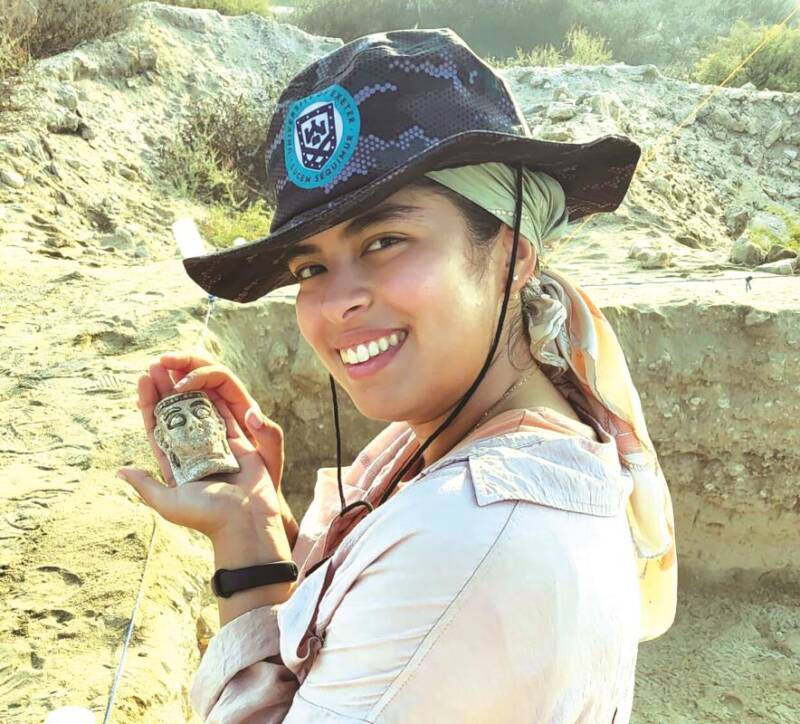
    Bahrain Authority for Culture and AntiquitiesThe ceramic mask dates back to the Middle Dilmun period, around 1200 B.C.E.During excavations at the Hilla archaeological site in southern Bahrain, archaeologists uncovered a roughly 3,300-year-old grave containing two adult women and an infant. Nestled in between the remains, they also found a tiny ceramic mask, intricately carved to depict a human face. The find, only the second of its kind in Bahrain, offers a tantalizing look at the Dilmun people, an elusive civilization in the Persian Gulf during the Bronze Age. The Ceramic Carving Found At The Hilla Archaeological Site In BahrainThe find, announced by the Bahrain Authority for Culture and Antiquities, took place during excavations at the Hilla archaeological site. While excavating the 3,300-year-old grave of two women and a baby from the Middle Dilmun period, archaeologists uncovered the tiny ceramic mask. It had been deliberately placed alongside the three bodies, suggesting that it was ritualistic in nature. Bahrain Authority for Culture and AntiquitiesThe faience mask found in the 3,300-year-old grave.The ceramic, which depicts a human face, was made from faience, a type of glazed pottery. Only one other carving like this has ever been found in Bahrain, which makes the artifact extremely rare. However, the mask has not yet been thoroughly studied by researchers, so many questions about its composition, age, and ritualistic purpose still remain. That said, the ceramic carving is not the only thing that archaeologists found at the Hilla archaeological site. While excavating burials in the area, they also unearthed rings made of seashells, tools that were used to apply kohl an ancient makeup similar to modern eyeliner a large ceramic vessel, and a pointed object that researchers believe is a needle or an awl. These items, which appear to be personal belongings, seemingly played an important role in burial rituals among the ancient Dilmun people. Indeed, although more research is needed to better understand the purpose of the mask, it does offer new insights into the Dilmun civilization, which existed from roughly 3000 B.C.E. until 600 C.E. A Brief History Of The Dilmun CivilizationThough the Dilmun civilization remains somewhat enigmatic, archaeologists believe that it was once an important independent kingdom in the Persian Gulf. Ancient Sumerian texts (from which we know its name) suggest that it was a prominent nexus of commerce, and that the Dilmun people traded copper, beads, precious stones, pearls, dates, and vegetables with the Sumerians and other civilizations in exchange for agricultural products.Rapid Travel Chai/Wikimedia CommonsRuins of a temple in Bahrain believed to have belonged to the Dilmun civilization.Located along an important trade route between Mesopotamia and the Indus Valley Civilization (in present-day Bahrain, Kuwait, and parts of Saudi Arabia), Dilmun was even significant enough to the Sumerians to make its way into their religious texts: The Sumerian god Enki had a connection to Dilmuns underwater springs. Indeed, these underwater springs which still exist today and made Bahrain into an oasis surrounded by desert are thought by some to be the basis for the Garden of Eden in the Bible. But most of what we know about the Dilmun people comes from ruins crumbling remains of settlements or, like at the Hilla archaeological site, expansive burial grounds. These offer a tantalizing look at the lost civilization, which left no written records of its own. As such, the ceramic mask discovered in the 3,300-year-old grave at the Hilla archaeological site is a profoundly important artifact. Though small enough to fit in the palm of your hand, it was seemingly a ritualistic object that was significant enough to be buried with two women and an infant. Though its exact purpose remains a mystery, further research will hopefully offer clues about its origins, carvings, and meaning, which in turn will perhaps give insight into the women and child it was buried alongside and the lost civilization to which they belonged. After reading about the ceramic mask from the lost Dilmun civilization that was found in a mass grave in Bahrain, discover the forgotten story of Zenobia, the ancient warrior queen of the Middle East. Or, learn about Queen Dido, the royal who established the ancient city of Carthage. The post A Rare 3,300-Year-Old Ceramic Mask Depicting A Human Face Was Just Uncovered From A Grave In Bahrain appeared first on All That's Interesting.
    0 Σχόλια 0 Μοιράστηκε 2 Views
  • ALLTHATSINTERESTING.COM
    This Medieval Super Ship, The Largest Of Its Kind Ever Found, Was Just Discovered Off The Coast Of Denmark
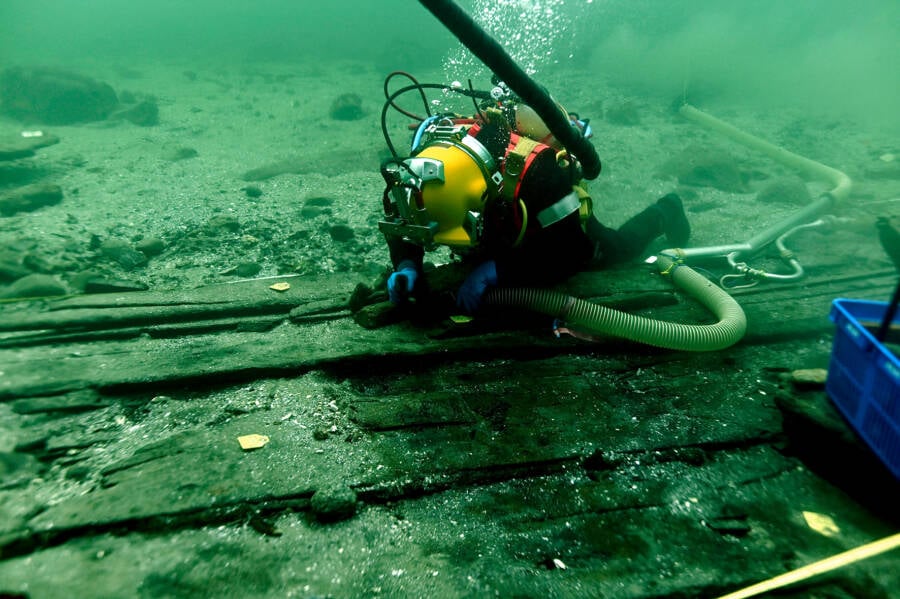
    Viking Ship MuseumMaritime archaeologists excavating the wreckage of the Svaelget 2.Maritime archaeologists in Copenhagen have discovered the worlds largest cog, a type of medieval cargo ship that was once the backbone of Northern European trade. This particular vessel had been hidden just under the seabed for 600 years in the waters between Denmark and Sweden.The vessel, named Svaelget 2, measures about 92 feet long, 30 feet wide, and 20 feet high, with an estimated cargo capacity of 300 tons. Built around 1410, it represents the largest example of its type ever found.The find is a milestone for maritime archaeology. It is the largest cog we know of, and it gives us a unique opportunity to understand both the construction and life on board the biggest trading ships of the Middle Ages, said excavation leader Otto Uldum in a statement from the Viking Ship Museum.The Discovery Of The Svaelget 2, The Largest Medieval Cog Ever FoundViking Ship MuseumA 3D model illustrating the elevation of the wreck.The wreck was excavated at a depth of 43 feet, where it was protected from keel to gunwale by sand. This shielded Svaelget 2 from many of the forces that would typically destroy a ship so near to the coast and, more remarkably, this is the first time that this level of natural protection has been seen in a cog before. As such, the ship was incredibly well preserved.It is extraordinary to have so many parts of the rigging, Uldum said. We have never seen this before, and it gives us a real opportunity to say something entirely new about how cogs were equipped for sailing.Dendrochronological analysis shows the ship was built using timber from both Pomerania, in modern-day Poland, and the Netherlands. The planks were made of Pomeranian oak, while the ships ribs came from the Netherlands.Viking Ship MuseumThe ribs of the Svaelget 2.It tells us that timber exports went from Pomerania to the Netherlands, and that the ship was built in the Netherlands where the expertise to construct these very large cogs was found, Uldum said.The cog was an efficient type of ship that could be sailed by a small crew, even when heavily loaded. Large cogs were built to make the hazardous voyage around Skagen from the Netherlands through the Sound to reach Baltic trading towns.A ship with such a large cargo capacity is part of a structured system where merchants knew there was a market for the goods they carried, Uldum added. Svaelget 2 is a tangible example of how trade developed during the Middle Ages.How Medieval Cogs Transformed Trade In Northern EuropeViking Ship MuseumVarious pieces of salvage from the shipwreck.Experts have referred to the cog as a super ship of the Middle Ages, allowing sailors to transport massive quantities of goods at substantially lower costs.During the 14th and 15th centuries, this revolutionized the exchange of goods, transforming trade patterns and allowing everyday commodities to be sent across great distances. Such long-distance trade had previously been limited to luxury goods.Medieval cogs were distinctly characterized by the presence of high castles at the bow and stern, but these have only ever been observed in illustrations of the vessels.That is, until now.We have plenty of drawings of castles, but they have never been found because usually only the bottom of the ship survives, Uldum said. This time we have the archaeological proof.Viking Ship MuseumA painted wooden dish found in the galley of the Svaelget 2.Not only were researchers greeted by the remains of a real timber-built castle among the wreckage, but they were also surprised to discover the ships brick-built galley, the earliest example of its kind from Danish waters. Around 200 bricks and 15 tiles were used to make the galley, among which archaeologists found bronze cooking pots, ceramic bowls, and the remains of fish and meat.Other objects found among the wreckage provided unique insight into everyday life. These included painted wooden dishes, shoes, combs, and rosary beads.Viking Ship MuseumA sailors wooden comb.These personal objects show us that the crew brought everyday items with them. They transferred their life on land to life at sea, Uldum said.As for the ships cargo, however, no traces have been found. Uldum suggested that since the ships hold was not covered, any barrels containing goods like salt or bundles of cloth would likely have drifted away during the ships sinking. That said, the absence of ballast suggests the ship had been loaded with heavy trade goods, leaving no doubt that this was indeed a merchant ship.There is no evidence pointing to war or conflict in this ship, Uldum noted. None at all.The find was made during seabed investigations in preparation for construction of Copenhagens new manmade harbor district, Lynetteholm.The ships components are now undergoing conservation at the National Museum in Brede.Perhaps the find does not change the story we already know about medieval trade. But it does allow us to say that it was in ships like Svaelget 2 that this trade was created, Uldum concluded.Svaelget 2 gives us a tangible piece of the puzzle and makes it possible to understand how technology and society evolved side by side in an era when shipping was the driving force behind international trade.After reading about the discovery of this medieval super ship, read the astonishing stories of 10 famous shipwrecks from around the world. Then, read the shocking story of the Wager mutiny and the grisly events that followed.The post This Medieval Super Ship, The Largest Of Its Kind Ever Found, Was Just Discovered Off The Coast Of Denmark appeared first on All That's Interesting.
    0 Σχόλια 0 Μοιράστηκε 3 Views