When the Popes Abandoned Rome for Avignon
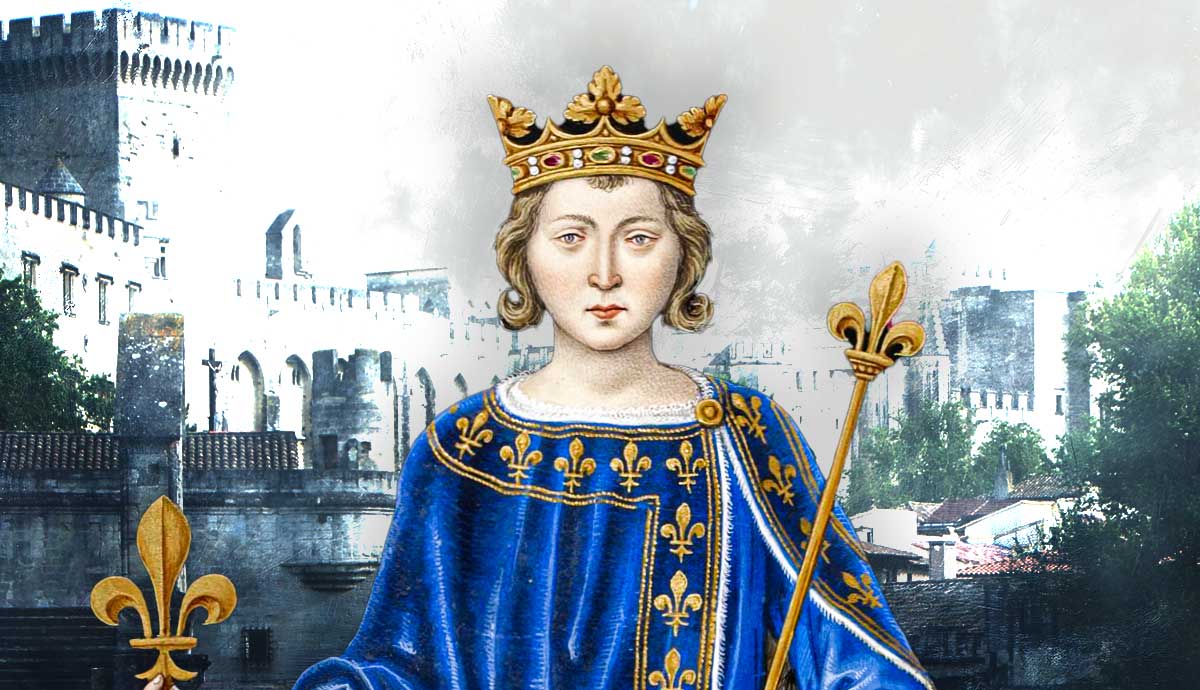
The Avignon papacy refers to the period from 1309 to 1377 when the popes resided in Avignon, then part of the Papal States land close to France, instead of the place they are synonymous with, Rome. The controversial part of the history of the Catholic Church, when the popes had to flee Rome, was linked to the complex political and religious situation in Europe at that time. This article will explore the historical background of the Avignon papacy, the aftermath, its legacy, and the period when the popes were in France.Historical Background of the Avignon PapacyPhilippe IV le Bel, by anonymous, 16th century. Source: Wikimedia Commons/Bibliothque nationale de France, ParisLate medieval Europe was not a very pleasant period for the Catholic Church. In the 13th and 14th centuries, popes attempted to maintain the final word on political life in Europe. However, rulers like the French king did not feel comfortable with this development. Indeed, several monarchs sought a way to reduce the popes power, claiming that the papacy could not have jurisdiction over secular rulers. One monarch engaged in a direct confrontation with the Papal States as well as with the pope, and his name was Philip IV of France (1268-1314).To weaken the papal power, Philip IV began to impose taxes on the clergy, an unprecedented situation that led him into conflict with Pope Boniface VIII (1294-1303). In response, the pope issued the bull Unam Sanctam in 1302, granting him spiritual authority over temporal powers. Such a bull meant that the pope had supremacy over any temporal monarch. But what was the response of the French king?Philip IV planned to arrest the pope while he was spending the summer months at Anagni, a town in Lazio, central Italy. Pope Boniface VIII was later released, but his authority was greatly affected. The angered pope died shortly after and was succeeded by Pope Benedict XI (1303-1304), whose papacy was short-lived. Everything changed when Clement V became the pope in 1305.Tribute of Edward I to Philip the Fair, by Jean Fouquet, circa 1455. Source: Wikimedia CommonsThe French Clement V (1305-1314) was elected pope, and historical sources suggest that his election was influenced by French factions. After all, he was the one who decided to transfer the court to Avignon, a town nominally ruled by vassals of the Papal States but, in fact, under French control and very close to the French king. The Papal States lands were territories governed by the pope from 754 to 1870, which is why they are also called the temporal states of the pope.The Avignon PapacyClment VI, Matteo Giovanetti, 14th century. Source: Wikimedia Commons/Palais des Papes, AvignonPope Clement V decided to move the papal court to Avignon in 1309. Initially, it was planned to be temporary due to security issues and political unrest in Rome. However, there is more to the Avignon papacy than that. There was clear pressure from the French King, and the temporary move became a 68-year-long residency.The Avignon papacy was characterized by high French influence and a stronger Church bureaucracy. Upon moving to Avignon, the pope started supporting reforms regarding Church governance and centralization. Avignon became the center of all Church operations, making the process of taxation, selling indulgences, and managing the Papal States lands easier and more productive.French influence was high, and during the Avignon papacy, seven popes in a row were indeed French. The Church closely worked with the French court and relied on French support, which ultimately led to serving French interests.Clment VI, Andrea Bonaiuto, 14th century. Source: Wikimedia CommonsDuring its period in Avignon, the papacy also experienced a more opulent and luxurious lifestyle, forgoing morals and humility. The papal court and residential palace in Avignon were extravagant and true symbols of wealth and power. People across Europe condemned this kind of lifestyle and the lack of religious spirituality among the Church hierarchy and clergy. The famous 14th-century Italian poet Petrarch called Avignon the Babylon of the West, referring to the low morals and ethics of the new papacy.The Avignon papacy witnessed one of the dreadful calamities of human history: the Black Death (1347-1351). The plague took a toll on Europeans, and at least 25 to 30 million people died. The tragedy was considered the work of God as a punishment for sins and heresy, and also for the Avignon papacy.The Conflict Between Pope John XXII and Louis IV of BavariaAvignon, Palas des Papes, photograph by Jean-Marc Rosier, September 2008. Source: Wikimedia CommonsPapal conflicts with secular rulers and monarchs did not stop with the move to Avignon; on the contrary, rulers wanted even more to get rid of papal supremacy. The biggest conflict of this kind was between Pope John XXII and Louis IV of Bavaria.It all started with the death of the Holy Roman Emperor Henry VII and with the empty throne ready to be occupied by his successor. Two main forerunners for the vacancy were Louis IV of Bavaria and Frederick the Fair of Austria, the papal favorite. After defeating Frederick in an armed conflict in 1322, Louis IV claimed the throne. However, Pope John XXII disagreed with that decision. He argued that Louis IV did not have the right to do such a thing since the pope had the ultimate power in such matters.Luis IV did not care about the protests of Pope John XXII and decided to go against the popes authority and side with anti-papal rhetorics, such as the idea that secular and monarchical authority is higher than that of the Church. In return, Pope John XXII excommunicated Louis IV in 1324 for heresy.Seals of Emperor Louis IV, by Otto Posse, 1909. Source: Wikimedia CommonsLouis IV did not seem so hurt by this development, and as a response, he invaded northern Italian lands and entered Rome victorious in 1328. He then did something unthinkable at that time: he organized the election of another pope, Nicholas V, known also as an antipope. He then crowned himself as Holy Roman Emperor, without the approval of the legitimate pope.The clash between Pope John XXII and Louis IV had a bit of an underwhelming ending since it was not resolved in any kind of particular way. The consequences of this event were, however, significant. For the Holy Roman Emperor, the conflict with the papacy meant the distrust of his neighbors and allies, since they did not know what to expect of this kind of new politics and order. As for the pope, his authority started to decline rapidly, and it became obvious that the papal divine superiority over secular rulers was coming to an end.The Return to Rome & the Western SchismGrgoire XI couronn par Guy de Boulogne, 15th century. Source: Wikimedia CommonsAfter a difficult and long period for the Catholic Church, the papacy finally returned to Rome in 1377, and it was led by Pope Gregory XI. His motives for the return were mainly to get back the authority of the Papal States since it was extremely undermined and at a low point. Indeed, the Papal States were in unrest, and rebellions sprang up all over the country. Pope Gregory XI died only one year after his return to Rome and was succeeded by Pope Urban VI (1378-1389).Pope Urban VI was a controversial figure who wanted to bring about different changes and reforms to the Catholic Church. He faced opposition from cardinals, who were not satisfied with the way the pope handled the Churchs politics and envisioned the future of the Catholic Church.The cardinals rebelled against the pope and returned to Avignon, where they elected a rival pope, Clement VII (1378-1394). The election of a second pope was also the beginning of the period known in historiography as the Western Schism, since there were two different papaciesone in Rome and one in Avignon. The popes in Avignon are also often called anti-popes since their legitimacy was questionable and denied by the Papal States and, of course, by the pope in Rome.The Western Schism came to an end with the Council of Constance (1414-1418) and the election of the one and only pope who would reside in Rome, Pope Martin V (1417-1431). With this council and decision, popes and antipopes stopped residing in Avignon and started rebuilding their diminishing authority and influence.The Legacy of the Avignon PapacyA scene from the meeting of the Council of Constance with Master Jan Hus, Vclav Brok, 1883. Source: Wikimedia CommonsThe time of the Avignon papacy was very significant for the development of the Catholic Church and the history of Europe. Although the Avignon papacy was able to centralize and improve some areas of the Catholic Church, it was still largely under the control of the French monarchy. The Catholic Church was expected to be equal to all countries and not belong to any particular country or side. However, the Avignon period proved the opposite by turning the papacy into a tool of French royal politics.The Avignon Palace, photograph by Paolo Picciati. Source: Wikimedia CommonsThe other consequence of the Avignon papacy and the popes involvement in worldly affairs was the Western Schism. While the papacy returned to Rome, another contender seized the papacy in Avignon, making the papal power and authority even worse. The pope finally solved this issue and became the only Catholic authority, but his claim to divine and absolute power was never the same. Most historians believe that questioning the papal authority created the basis for movements such as the Protestant Reformation.However, the papacy managed to adapt and survive. While the idea of the pope as the ultimate authority over monarchs and secular rulers was challenged, the papacys influence and power did not end. The Catholic Church was still a power to reckon with in the next few centuries, always finding a way to survive, stay relevant, and hold a strong grip over the Christian world.











 English
 French
 Spanish
 Portuguese
 Deutsch
 Turkish
 Dutch
Dutch
 Italiano
 Russian
 Romaian
 Portuguese (Brazil)
 Greek
Greek