The Cultural and Historical Evolution of Soccer to the Worlds Favorite Game
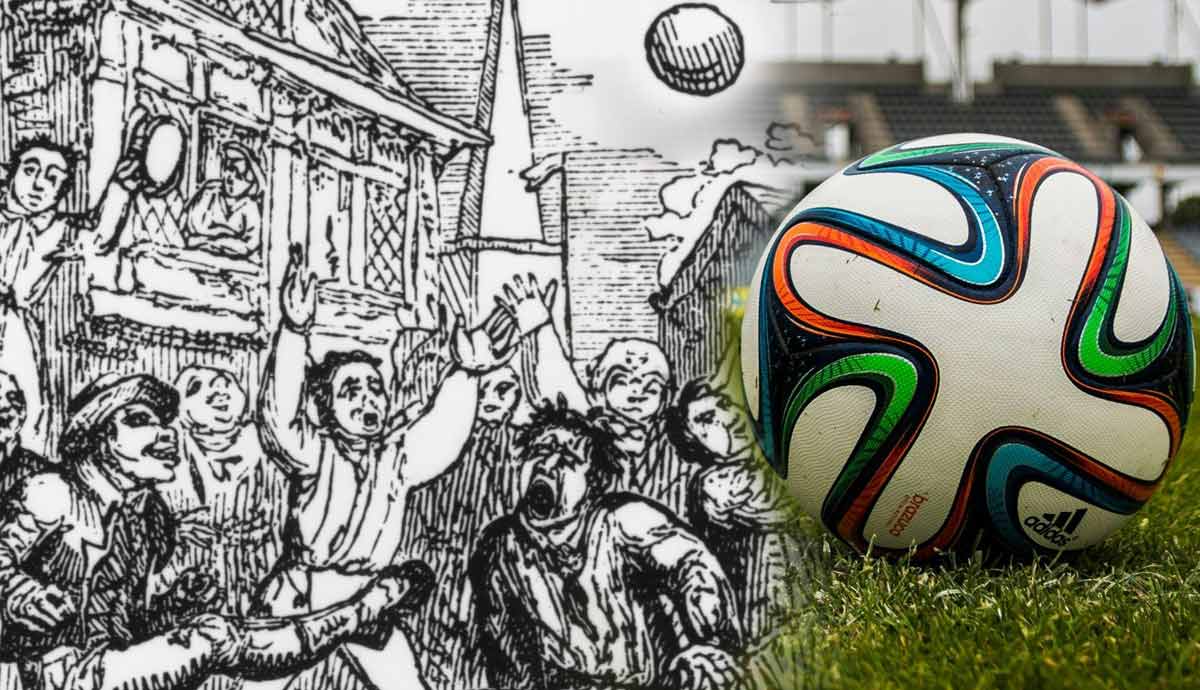
Soccer, or football as it is known by much of the English-speaking world, is played by some 250 million people, making it the most popular sport on Earth. It is not only a sport but also a cultural phenomenon that has endured over the centuries as a pastime for players and fans. What are the origins of the game we know today as soccer, and how has it left a legacy on global society? This is the story of soccer and its evolution throughout the years.Where Did Soccer Originate?One Hundred Children in the Long Spring, by Su Hanchen, 12th Century CE, Song Dynasty. Source: The National Palace Museum Collection, Taipei, TaiwanThe earliest known form of a kicking game resembling modern soccer is the Chinese game cuju, which means kickball. The Fdration Internationale de Football Association (FIFA) cites this game as the oldest example of what would later become soccer, with descriptions dating back to the Han Dynasty of the 2nd century BCE.Ancient Greece also had forms of ball games that somewhat resembled modern soccer. An air-filled ball was kicked and thrown around a field called Episkyros, which was later the basis for the Roman game harpastum. This game was probably more reminiscent of modern-day rugby, but there are surviving accounts of Romans kicking around the follis (air-filled ball). The politician Cicero even mentioned an incident in which a man was killed while being shaved in a barber shop due to a ball being kicked into the shop.However, while FIFA cites these as the origins of games involving kicking balls in antiquity, the history of soccer itself is based in medieval England. As far back as the 9th century, there are accounts of football matches being played to celebrate certain festivals, such as Shrovetide, Christmas, or Easter.An illustration of a mob football match played at Londons Crowe Street, 1721. Source: The Footie ProfessorThese earliest forms of football were called folkball or mob football, as there were no player limits for either side. Often whole villages would kick around inflated animal bladders to get the ball to a certain geographic area, such as the opposing teams church if the game was being played in a meadow between two parishes.In 1314, the first law against football was made by the Lord Mayor of the City of London, Nicholas de Farndone. He decreed that hustling over large foot balls caused great noise in the city and wanted to see it banned due to the many evils [that] might arise. Several such laws followed throughout the 14th century, including one from King Edward III of England who banned handball, football, or hockey in the country.While over 30 bans were in place throughout the 14th and 17th centuries in England, the game endured, and through Britains public schools, evolved into the game of soccer as we know it today.Association Football: How Modern Soccer DevelopedThe Doonies versus the Croonies on New Years Day by Alexander Carse, circa 1810. The oldest known example of a painting of football. Source: National Galleries of Scotland Blog/Bourne Fine Art; with A soccer ball on the field of a stadium. Source: PexelsBritains elite private schools (known in the UK as public schools) were the crucible of modern soccer. The sport had declined in popularity among the working class, who simply did not have time for recreation and whose children often worked six days per week like the adults. On the other hand, early football soared in popularity among public school boys, who had more free time during their studies and were encouraged to use football as a healthy expression of competitiveness and fitness.For this reason, several public schools throughout England became the inventors of modern soccer, with formal rules and regulations for gameplay. However, each school, seeing football as a fun activity among pupils, made up its own rules for the game.By the early to mid-19th century, these individual school rules had begun to form two distinct schools of thought. Several schools, such as Rugby, Cheltenham, and Marlborough, preferred a style of play in which the ball could be carried, while others, such as Harrow, Eton, Charterhouse, and Westminster, played a version of the game in which only the feet were used to kick and dribble the ball.In the 1840s, the invention of the railroad revolutionized travel not only for pleasure and work but also for sports. Schools could easily travel to one another to play competitively, but they were hampered by the fact that their rules were very different. To continue playing, a short-term compromise was made that the first half of the game would be played with the host schools rules and the second half would be played with the visiting schools rules.Team of Sheffield F.C., 1857. One of the oldest surviving soccer teams. Source: The IndependentThe first impetus for a uniform set of rules in modern soccer was the drawing up of the Cambridge rules in 1848. While these regulations were not universally adopted, they provided the basis for the formation of the Football Association (FA) in 1863. In addition to this, football was growing in popularity beyond the public school players. With the Factory Act of 1850, working-class children and adults had more recreation time for games, including various forms of soccer.Modern soccer was officially established in December 1863 when the English FA released the Laws of the Game. These laws banned carrying the ball while running, kicking opponents in the shins (called hacking), tripping, and holding. Eleven teams ratified the codes and set the spark alight for modern organized soccer.The Laws of the Game and the formation of clubs, international matches, and cup competitions like the FA Cup were followed by the creation of the International Football Association Board (IFAB) in 1886 and the international soccer body FIFA in Paris in 1904.In the modern day, the IFAB comprises four representatives of FIFA and one member of each of the four British associations: the Football Association (FA), the Irish Football Association, the Scottish Football Association, and the Football Association of Wales.Several thousand teams now exist in leagues worldwide. Fanship is passed down through generations, and rivalries often reflect not only sports but also the cultural and political climate of the surrounding countries. Soccer is not simply a sport; it is now a cultural phenomenon in much of the world.The Cultural Implications of SoccerBritish troops, German soldiers, and medical personnel meeting in No-Mans Land during the Christmas truce, December 25, 1914, by Cassowary Colorizations. Source: FlickrThroughout the 20th century, Europe and South America were the most dominant soccer regions. The introduction of the FIFA World Cup in 1930, the European Cup in 1958, and the Copa Libertadores de Amrica (CONMEBOL Libertadores) in 1960 allowed for play between national teams. Throughout the decades, international competitions have been peacemakers, but they have also been catalysts for conflict.Perhaps the most famous example of soccer being a peacemaker is the Christmas Truce of 1914, when German and British troops called for a day-long ceasefire. During the truce, the two sides played a soccer game, which Germany won 3-2. Though the peace did not last, soccer brought together enemies from out of the trenches.Another instance involved Brazilian soccer legend Pel, who traveled to Lagos, Nigeria, to play an exhibition game in 1967. The country was embroiled in a civil war at the time, but both sides agreed to a 48-hour ceasefire to watch a master of the sport play. Similarly, and more recently, Cote dIvoires national team qualified for the World Cup in 2006. The country was in the midst of its civil war at the time, but President Laurent Gbagbo agreed to a truce and eventually restarted peace negotiations due to the insistence of the Ivorian Football Federation. Soccer unified the country again and effectively helped to end the civil war.Pel, the worlds most expensive football player at Schiphol, by Joop van Bilsen, October 19, 1962. Source: Nationaal Archief, Netherlands, The HagueWhile there are several instances of soccer inspiring peace, there are just as many about soccer inciting violence. In 1969, El Salvador and Honduras fought a 100-hour war after rising tension between the countries over border disputes, resulting in riots during the World Cup qualifiers between the two countries.The Salvadoran team went on to the World Cup, but the same day they won the play-off match, Honduras broke diplomatic relations with its neighboring country. By July 14, El Salvador invaded Honduras. Negotiations for peace were carried out swiftly just six days later, but by that point, up to 2,000 people had died in the conflict that was super-heated by the teams matches. The event is still known as the football war globally.While soccer can start and end conflicts, it is also a stage where players and fans settle political disputes and voice their opinionsall through the game. Postwar grievances are often played out through sports, such as between the Netherlands and Germany. For generations after the end of World War II and the Nazi occupation of the Netherlands, the two teams and their fans were fierce rivals. Author of How Soccer Explains the World Franklin Foer argued that Dutch pride was only restored when the Netherlands player Frank Rijkaard spit in the hair of Germanys Rudi Voller during a second-round World Cup match in 1990.Political persuasions can also be viewed through the lens of soccer, as is evident between Glasgows (Scotland) two rival teams Celtic and Rangers. Both teams were formed in the late 1800s, Celtic by an Irish Catholic charitable organization and Rangers by Protestants. Religious sectarianism has been an issue in Scotland since the 16th century when the teachings of John Knox led to a growing Protestant population in a traditionally Catholic country.Rangers fans at an Old Firm match, by Steve Lynch. Source: Danmarks Nationalleksikon (Denmarks National Encyclopedia), CopenhagenThis older sectarianism was reignited during the 19th century when masses of Irish Catholics immigrated to Scotland, fleeing the Irish Potato Famine. Tensions between Catholics and Protestants only increased, along religious, socioeconomic, and political lines. This spilled over into soccer, supported by Celtics roots in Irish Catholicism and Rangers keeping a Protestant only policy for players well into the second half of the 20th century.Throughout the years, Glasgows teams and their supporters have come to represent two sides of the political spectrum in Britain. Rangers represent British Unionism, and Celtic echo Irish Republicanism and Scottish nationalism. The rivalry culminates in the Old Firm, a cross-town derby played by the two teams that always produces sectarian chants and jeers and rarely ends without violence.For some, allegiance to a soccer team can literally mean life or death. It is a cultural touchstone that unites and divides people on religious, economic, and political lines. While soccer is a sport first and foremost, it also reflects the society in which it exists.Soccer Today: Still EvolvingArgentinas Lionel Messi lifts the World Cup trophy alongside teammates as they celebrate after winning the World Cup in 2022. Source: FlickrFrom Total Football to Tiki-Taka, soccer is a constantly evolving game. Within the last few years, the introduction of video assistant referee (VAR) technology, which allows for the replay of fouls and offside calls, alone has added technological advancement to a historical game. It has become a game of must-wins and billions of dollars, both spent and earned, a far cry from the game for schoolboys established in the 1800s.According to ESPNs Bill Connelly, soccer has become less physical and more calculated and efficient even in the last ten years. This could be because soccer has a significant global impact on the economy, and teams need efficiency to achieve the high rewards that come with being a winning club.Soccer stadiums become epicenters of economic and social activity during the days leading up to a match, supporting tourism and stimulating local economies. This is dwarfed by soccers support of broadcasting, advertising, and merchandising on a macro level. It is the most popular game in the world for a reason, it has adapted to the increasing globalization of the world.A soccer ball on the field of a stadium. Source: PexelsThe game of soccer is still a stage upon which social and political issues can be showcased. The English Premier League has a campaign against racism in the sport, and national teams often represent solidarity and pride in their country, as is the case with the Ukrainian national team since the countrys invasion by Russia in 2022. Soccer is also still a great equalizer. It unites people from incredibly diverse socioeconomic backgrounds who come together to play and enjoy the sport.In a 1981 interview, Liverpool FC manager Bill Shankly said, Some people believe that football is a matter of life and death. I am very disappointed with that attitude, it is much, much more important than that! While Shankly was commenting on the intense rivalry between Liverpool FC and Everton FC, this logic applies to soccer fans worldwide. For many, it is like a secular religion, a reason to unite. Soccer has had an undeniable impact on the culture, politics, and economy of the world, and if its 250 million players are any indication, it will maintain that impact for decades to come.













 English
 Arabic
 French
 Spanish
 Portuguese
 Deutsch
 Turkish
 Dutch
Dutch
 Russian
 Romaian
 Portuguese (Brazil)
 Greek
Greek