


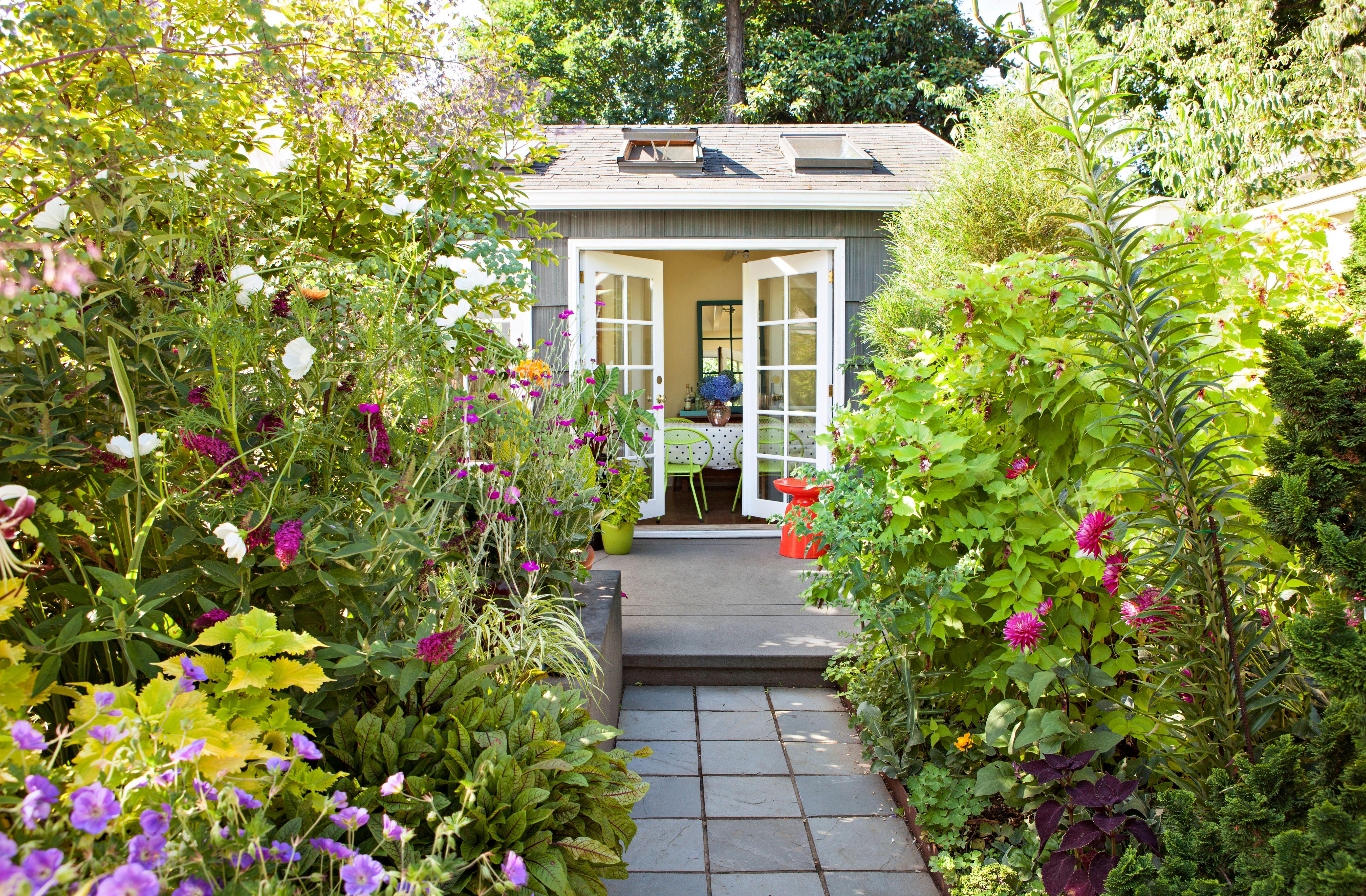
The challenges of gardening in a small space are real. Some design choices, however, amplify the impression of tight quarters. Color, line, and texture all play important roles in making a small garden feel expansive and inviting or confining and cramped. Avoid these 8 common design blunders to make the most of even the smallest garden.
1. Jumbled, Irregular Layout
In a small space, your eye gets overwhelmed when navigating multiple curves or lines. The garden will feel small and cluttered. Small spaces call for a clear, simple overall design. Begin designing your garden by thinking about the shape of garden beds and seating areas from a bird's-eye view. Create a plan using strong shapes and simple lines. A rectangular planting bed, for example, may be more space efficient than a bed with curves.
2. Dark Corners
Small gardens often have low-light areas due to nearby buildings, tall plants, or fences that hem in the space. These dark recesses can make the garden feel closed in.
Brighten up dark sections of the garden with plants that sport variegated foliage, such as hostas, deadnettle, and variegated Solomon’s seal. By adding interest and depth to dim corners, your eye, and maybe your feet too, will be drawn to the colorful foliage and overlooked section of the garden.
3. Gardening at Ground Level Only
Annuals and perennials are great additions to small space gardens; however, they mostly provide color and texture at ground level to about 3 feet high. While the horizontal space in a small garden is defined and limited, the vertical space offers great garden potential. Taller plants draw the eye up, creating a sense of expansiveness.
The key is to choose plants that grow vertically but still match the scale of your space. For example, opt for small trees such as Japanese maple, flowering dogwood, crabapple, serviceberry, and redbud rather than towering shade trees.
4. Planting for a Single Season
A spectacular summer garden is wonderful, but what about the rest of the year? Make the most of your small growing space by intentionally planting it for spring, summer, fall, and winter interest. The repeated act of visiting and discovering new flowers, foliage, and wildlife in a space creates expansiveness.
Winter is usually the most challenging season when it comes to landscape design. Rely on conifers, plants with unique architecture, and consider adding bird feeders to beckon winged guests into your tiny space.
Related
5. Using Straight Paths
A bold, linear path across a small garden quickly reveals the entire space in one glance. Instead of straight paths, employ a curving pathway to reveal one part of the garden at a time. The intrigue of what might be beyond the curve or around the corner takes the mind away from the size of the space and focuses it on the content of the garden.
6. Too Much Vertical Hardscaping
Walls and fences are conspicuous boundaries. They work well in most landscapes, but small gardens benefit from more subtle, soft boundaries that don't create a sense of confinement.
If your small space is flanked by strong vertical fences or walls, the easiest solution is to cover the surface with plants. The texture and color of vines or narrow, upright plants will lessen the visual impact of the wall or fence. Easy-to-grow shrubs for narrow spaces include ‘Fine Line’ buckthorn, ‘Purple Pillar’ rose of Sharon, and ‘Sky Box’ Japanese holly.
7. Frequent Use of Warm Colors
Red, orange, and yellow all jump out at the eye and appear closer than cool colors. For example, a set of blue chairs at the far end of a rectangular garden will make the space feel larger than a set of red chairs in the same place. This color concept applies to plants as well as furnishings. Help your small-space garden feel larger by embracing a cool color palette. Use warm colors for accents here and there.
8. Planting in Ones and Twos
It is tempting to pack a lot of different plants into a small garden, especially if the limited space constitutes your entire gardening real estate. Instead of filling a small garden with one or two plants of each species, plant in groups of at least three plants of a single species. This technique helps cut down on visual clutter and creates order in your small but mighty garden, helping it feel more open and inviting.

 English
 Arabic
 Spanish
 Portuguese
 Deutsch
 Turkish
 Dutch
Dutch
 Italiano
 Russian
 Romaian
 Portuguese (Brazil)
 Greek
Greek