


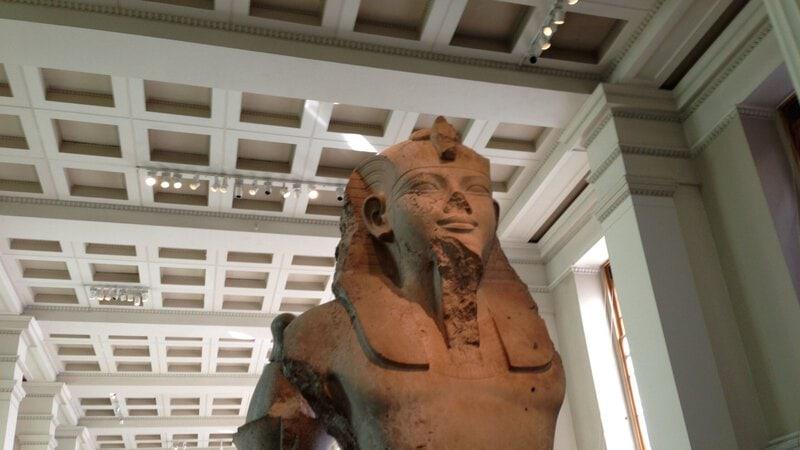

For nearly four decades, one pharaoh presided over an Egypt so wealthy, so diplomatically connected, and so artistically alive that historians still struggle to name a ruler who matched him — and he made absolutely sure nobody would forget his face while doing it. This is the story of Amenhotep III, told milestone by milestone, from a royal harem birth to a legacy that outlasted everything his own son tried to erase.
Born into the Most Powerful Dynasty on Earth, c. 1403 BCE

The boy who would become the ninth pharaoh of Egypt’s 18th Dynasty entered the world inside a royal harem, most likely the son of Thutmose IV and a minor wife named Mutemwiya — not the most obvious heir, but heir nonetheless to something extraordinary. He was the great-grandson of Thutmose III, the conqueror-pharaoh who had stretched Egypt’s reach from the Euphrates to the depths of Nubia, and the empire that ambition built was still humming with power and gold when the infant Amenhotep drew his first breath.
The 18th Dynasty into which he was born had spent a century transforming Egypt from a formidable kingdom into the unrivalled superpower of the ancient world. There was no obvious crisis waiting for him, no kingdom in ruins to rebuild — only a throne built on military muscle, grain surpluses, and accumulated glory, ready for whoever was bold enough to sit in it.
Crowned Pharaoh Around Age 12, c. 1390-1386 BCE

When the double crown of Egypt settled onto his head, Amenhotep III was barely a teenager. Britannica places his accession at around 1390 BCE, while the Low Chronology pins it more precisely to June 1386 BCE — a small scholarly disagreement that matters little against the larger reality: a child was now the most powerful ruler on earth. His mother Mutemwiya almost certainly guided the court’s hand in those early years, a quiet but essential force steadying the Horus throne while her son grew into his role.
What he inherited was staggering even by pharaonic standards: a full treasury, no serious military threat on any border, and tributaries and trading partners stretching across the ancient Near East. The New Kingdom golden age had been built by his ancestors, but it would reach its absolute peak on his watch.
The Lion Hunt Scarabs: Royal Image-Making from the Very Start, Early Reign c. 1386 BCE

Within his first two years on the throne, Amenhotep III did something that revealed exactly the kind of pharaoh he intended to be. He issued large commemorative scarabs — royal announcements carved in stone and glazed in blue-green faience — declaring to Egypt and to foreign courts that he had personally killed 102 lions on hunting expeditions. The numbers may have been embellished; the intent was unmistakable.
These lion hunt scarabs are among the earliest evidence of a deliberate, wide-distribution royal propaganda campaign in Egyptian history. The young king was consciously crafting his image as a fearless hunter in the tradition of his warrior ancestors, establishing from the very beginning of his reign that image-making would be as central to his rule as any military campaign. It was a strategy he would refine and execute on a scale nobody had ever attempted before.
The Marriage to Tiye: A Commoner Becomes Great Royal Wife, c. 1385 BCE

A year or so into his reign, Amenhotep III made a marriage that broke every convention and then dared the world to object. Tiye, the daughter of a provincial official named Yuya and his wife Tjuyu, had no royal blood — and yet the pharaoh chose her as his Great Royal Wife and broadcast the union with another series of commemorative scarabs distributed to foreign rulers. Crucially, those scarabs named Tiye’s non-royal parents explicitly, a startling declaration that the pharaoh’s will outranked any bloodline tradition.
The move was not mere romanticism. Tiye became one of the most formidable queens in all of ancient Egyptian history, depicted beside her husband at equal scale in statuary — a visual statement of shared authority that was almost without precedent. She remained a central figure in diplomacy and court life throughout the entire reign, and her influence extended even into the turbulent era of her son Akhenaten long after Amenhotep III himself was gone.
Thirty-Seven Years of Peace: Egypt at the Height of the New Kingdom Golden Age, c. 1390-1353 BCE

Where his great-grandfather Thutmose III had built Egypt’s empire through relentless military campaigning, Amenhotep III largely chose a different instrument of power: prosperity. After an early campaign in Nubia to suppress a revolt in his fifth regnal year, he fought almost no major wars for the remainder of his approximately 37-38-year reign. Nubian gold flooded the royal treasury, trade networks linked Egypt to every major civilisation of the ancient world, and rivals who might once have tested the borders preferred to send embassies instead.
Britannica describes this era as a period of peaceful prosperity that ranks Amenhotep III among the most successful rulers in all of ancient Egyptian history — a reign during which Egypt was, by the reckoning of those who lived through it and those who have studied it since, at the absolute peak of her glory. It was not complacency but mastery: a pharaoh who understood that a kingdom rich enough and admired enough had no need to prove itself through war.
Diplomacy by Letter: The Amarna Archive and the Management of an Empire, Mid-Reign

While his treasury made Egypt the envy of the ancient world, Amenhotep III worked equally hard to keep that world friendly. He maintained vigorous correspondence with the kings of Babylon, Mitanni, Assyria, and Cyprus, negotiating through gifts, gold, and the carefully arranged exchange of royal brides. The clay tablets later discovered at Amarna — the celebrated Amarna Letters, written in the Akkadian cuneiform that served as the diplomatic lingua franca of the age — preserve the texture of these negotiations in vivid detail, revealing a pharaoh as comfortable in the language of diplomacy as in the language of divine kingship.
He married several foreign princesses as gestures of alliance, and the correspondence with the Babylonian king Kadashman-Enlil I, preserved among the Amarna Letters, offers a candid window into how New Kingdom Egypt managed its international relationships — including frank exchanges about the reciprocal flow of gold and brides between courts. These diplomatic achievements were as much a part of his legacy as any monument he raised in stone, binding the ancient Near East into a web of mutual interest that held, more or less, for his entire reign.
The Building Spree: Temples, Palaces, and the Colossi of Memnon, c. 1380-1353 BCE

If diplomacy was one pillar of Amenhotep III’s reign, architecture was the other — and on that front, he built with an ambition that has rarely been matched in all of human history. He raised or substantially renovated temples at Luxor, Karnak, and Soleb deep in Nubia, each project a statement of divine favour and royal might carved into the landscape itself. His mortuary temple on the Theban west bank was the largest ever built in Egypt at the time of its construction, and though it has been largely dismantled over the millennia by later pharaohs quarrying its stone, its entrance is still guarded by the Colossi of Memnon — two seated quartzite statues of the pharaoh standing approximately eighteen metres tall that have watched the Nile flood and recede for more than 3,400 years.
He also constructed Malkata, a sprawling palace city on the west bank of Thebes that included residential quarters, administrative buildings, a festival hall, and its own vast artificial harbour called the Birket Habu — large enough to sail a fleet. It was a city built not for defence but for grandeur, a physical expression of what it meant to rule the wealthiest empire on earth. The sheer scale of his building programme led later Egyptologists to regard his reign as the artistic and architectural apex of the New Kingdom.
Over 250 Statues of Himself: A Self-Portrait Campaign Without Precedent

No pharaoh before him had ever commissioned so many images of himself, and the numbers alone are remarkable: more than 250 statues of Amenhotep III have been identified, a figure that dwarfs his predecessors and still dominates the collections of major museums around the world. But this was not mere vanity — it was theology made visible. Increasingly across his reign, Amenhotep III presented himself not merely as a servant of the gods but as a god in his own right, placing his own images inside temples alongside those of Amun and the solar deities, deliberately collapsing the distance between the human pharaoh and the divine sphere.
The range of his surviving sculpture is extraordinary, from colossal granite figures that anchor entire temple precincts to exquisitely detailed smaller works that capture something almost intimate in his features. The corpus of Amenhotep III statuary constitutes one of the richest archives of a single ruler’s likeness from the entire ancient world — the face of a man who understood, with complete clarity, that to be seen everywhere was to be everywhere present.
Three Sed Festivals: Staging the Proof of a Living God, c. 1364-1353 BCE

By ancient tradition, a pharaoh who had ruled for thirty years was entitled to celebrate a Sed festival — a ritual renewal of royal power in which the king symbolically demonstrated, before the gods and the people, that he still possessed the physical and spiritual force to hold Egypt together. Amenhotep III celebrated not one Sed festival but three: in his 30th, 34th, and 37th regnal years, each staged with increasing elaboration at the great palace complex of Malkata. Foreign rulers received invitations; the statues of foreign gods were brought to Egypt to witness the ceremonies; the events were framed as cosmic occurrences rather than mere court celebrations.
Each festival reinforced the theological position Amenhotep III had been building across his entire reign — that the boundary between mortal pharaoh and living god had effectively dissolved. By the time of his third Sed festival, he was not merely claiming divine status in the conventional pharaonic sense but staging the proof of it in public, on a scale designed to be remembered long after the trumpets fell silent.
Death and the Mummy: What the Body Reveals, c. 1353-1349 BCE

After roughly 37-38 years on the throne, the god-king’s very mortal body gave out. Britannica dates the end of his reign to around 1353 BCE; other chronologies place it closer to 1349-1350 BCE. His mummy, recovered from the royal cache at KV35 in the Valley of the Kings, tells a quietly sobering story: severe dental disease, probable arthritis, and the accumulated physical toll of decades lived in extraordinary luxury and, toward the end, considerable pain. The face that stared out from more than 250 statues belonged, in the end, to a man who suffered like any other.
He was succeeded by his son Amenhotep IV, who would reinvent himself as Akhenaten and dismantle much of what his father had so carefully constructed — launching a religious revolution centred on the Aten that swept away the traditional pantheon, shuttered temples, and shook Egyptian civilisation to its foundations. The New Kingdom golden age that Amenhotep III’s reign had embodied never quite returned in the same form, making his time on the throne both the summit of ancient Egypt’s long arc and the quiet beginning of its unravelling.
Why Amenhotep III Still Matters

The reign of Amenhotep III endures as one of the most instructive episodes in all of ancient history precisely because it demonstrates what a civilisation looks like at its confident peak — before the cracks appear. He left behind temples that have survived thirty-four centuries of flood, war, and quarrying. He left diplomatic correspondence that still reads with startling immediacy. He left more than 250 portraits of his own face, scattered across museums on every continent. And he left a question that no amount of archaeology has fully answered: how does a civilisation that perfect begin to come undone so quickly? The answer, it turns out, begins with his son — but the conditions were seeded, quietly and invisibly, in the very magnificence of the father’s success.

 English
 Arabic
 French
 Spanish
 Portuguese
 Deutsch
 Turkish
 Dutch
Dutch
 Russian
 Romaian
 Portuguese (Brazil)
 Greek
Greek