


Rouzes/Getty Images
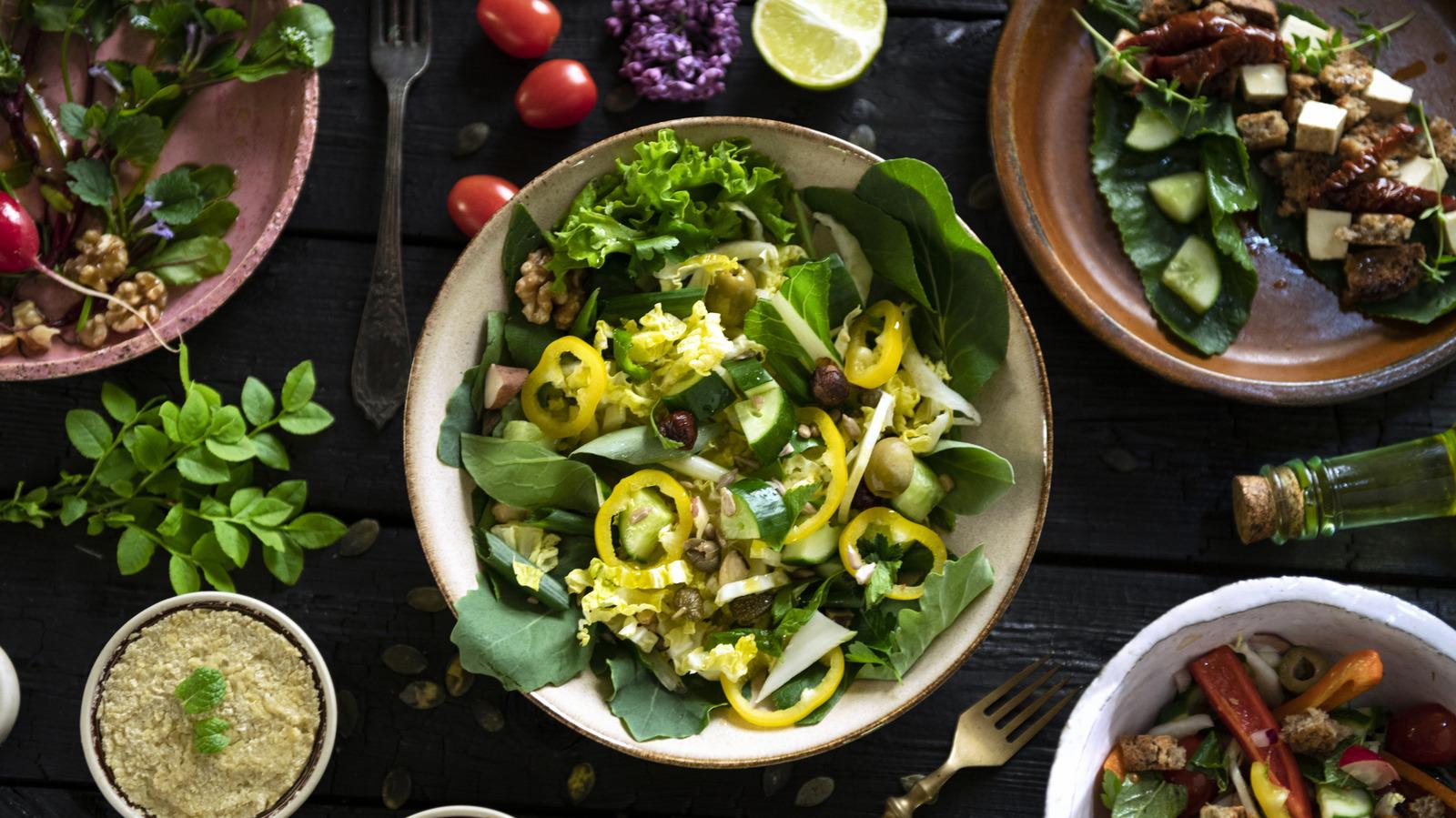
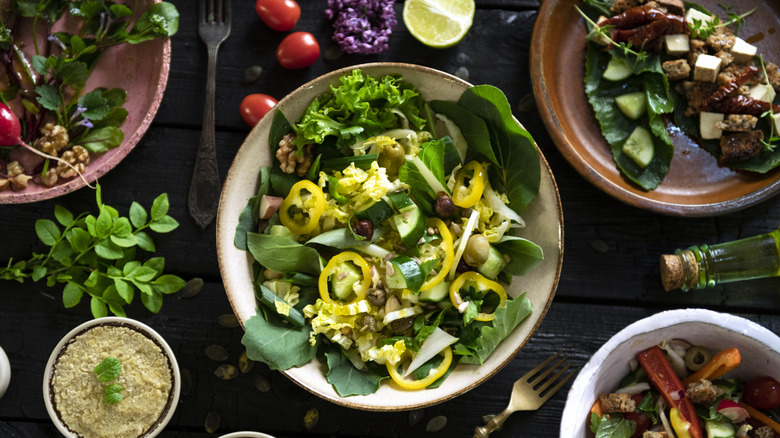
When someone tells you they're making salad for dinner, it doesn't inspire the same joy as something like pizza or fried rice. But the fact is, salads don't have to be sad. While some folks default to the same old '80s or '90s side salad of tasteless iceberg lettuce, underwhelming cucumber slices, and watery supermarket tomatoes, you don't have to do that to yourself.
As a food writer, I spend a lot of time experimenting in the kitchen, and I've made so many salads that I know what makes them good or bad. When the weather gets warm, there's nothing like making a meal that requires little or no use of your oven or stovetop. Plus, it's a brilliant way to eat a lot of fresh produce in one sitting. You just need to think outside the usual go-to ingredients to elevate them from the boringness we all want to avoid.
From using different greens and fresh herbs to bulking them up with carbs and legumes, just a few shifts can turn a sad salad into one you'll want to make on repeat throughout the summer. We've got 11 tips for making better salads that will leave you wondering why you've been avoiding them for so long.
Break up with lettuce
Fortyforks/Getty Images
One of many mistakes people make with salad is always choosing lettuce as the go-to leaf. It has its place, especially once you branch out from the most common choices, like iceberg and romaine, which can lack flavor, but using other leafy greens (and the not-so-greens) instantly makes salads more interesting.
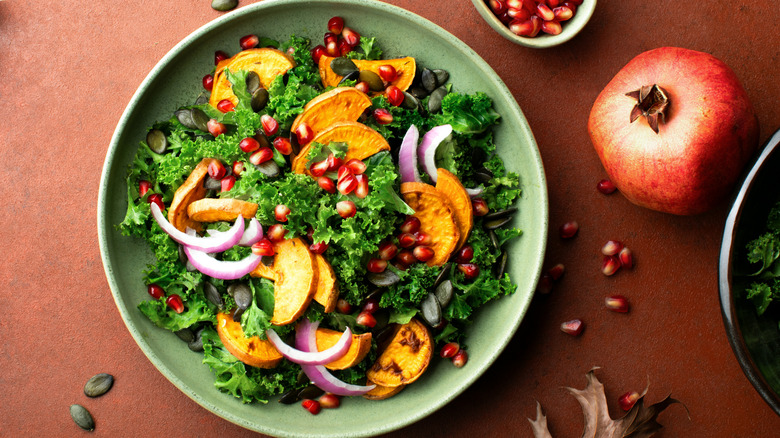
Unless you actively love it, there's no reason to choose lettuce as the default option, because there are so many other salad greens you can use. Arugula and watercress both have a peppery flavor that adds some bite to salads, while kale has a slight bitterness that helps balance out a dressing that's on the sweeter or creamier side — younger leaves are softer and particularly good for eating raw. There's also radicchio, which is on the bitter side and has a red hue that adds color to salad.
Those are just a few of the many options to replace lettuce. If you're confident in your identification skills, there are also greens that you can forage for in your garden or out in the wild, such as young dandelion leaves, chickweed, or ramps. You don't have to stick to just one salad leaf, either. Choose a variety of flavors and textures to break away from the boring monoculture that is your average supermarket lettuce.
Use fresh herbs in salads
Lanista/Shutterstock
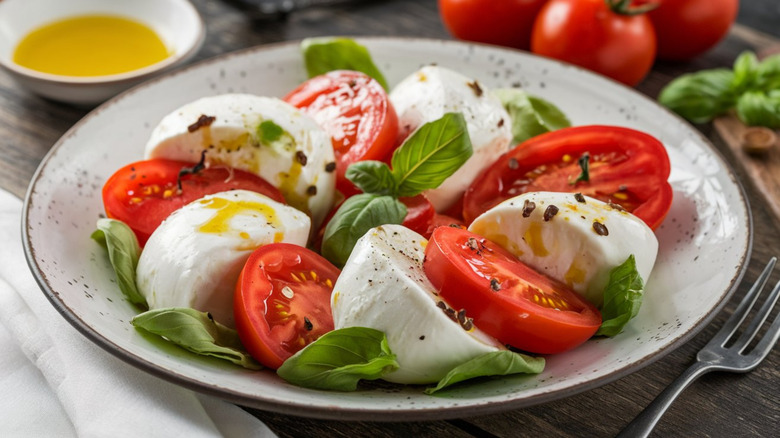
One thing I love doing is piling my salads high with fresh herbs. Even if I'm just raiding my fridge for whatever veggies I have left in the crisper and not making a particularly special salad, throwing in handfuls of herbs from the garden takes it to the next level. I'm particularly inspired by the sheer variety of herbs often found in Iranian and other Middle Eastern cuisines, but there are other great examples, such as basil in an Italian Caprese salad or mint and cilantro in Vietnamese papaya salad.
It's best to use soft herbs rather than hard or woody herbs in salad. These are literally the more tender herbs, such as parsley, mint, dill, cilantro, and basil. Tougher herbs like rosemary and thyme aren't particularly pleasant to eat raw. If you want these flavors in your salad, you'd be better off making an infused oil.
Depending on the type of salad you're making and your preference, you can use whole leaves, mince your herbs finely, or roughly tear them. Don't be afraid to use them abundantly, at a similar ratio to the leafy greens in your salad or even in place of them altogether. I've never found a point at which it feels like I've used too many herbs. The main thing is to make sure the herbs work with the other salad ingredients. They're often quite versatile, but some combinations are a bit jarring — for example, beetroot and basil.
Don't shy away from cooked vegetables
OliviaCraft/Shutterstock
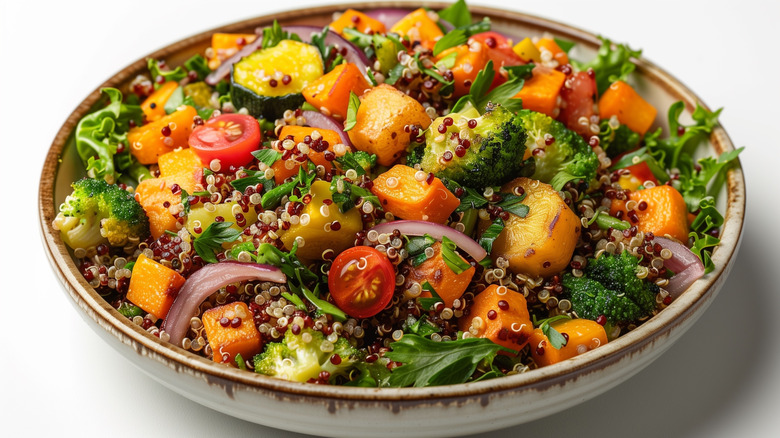
When you imagine a salad, you probably think of raw vegetables. While these are typically the most common components, you shouldn't be afraid to add some cooked ones into the mix. In fact, it can make your salad more interesting, whether you aim for a recipe that uses just cooked vegetables or ones that combine raw and cooked.
I love using roasted vegetables in salads, since their soft texture and sweet flavor provide a nice contrast to raw ingredients such as greens, carrots, or cucumbers that are fresh, crisp, or bitter. A roasted Brussels sprout salad is a great example of a recipe that uses primarily cooked vegetables, combining roasted sprouts and sweet potato with feta and almonds. But you could easily also add salad leaves and other raw vegetables to something like this for more contrast.
These kinds of salads are perfect for meal prep. I often roast various vegetables on a Sunday and use them in salads in different combinations throughout the week. You can also use leftover cooked vegetables in salad, whether roasted, sauteed, or even boiled. My Italian grandmother makes a cooked vegetable salad of boiled potatoes and carrots dressed with extra-virgin olive oil, salt, and pepper, which may sound odd but is intensely delicious.
Consider adding carbs to salads
Mariha-kitchen/Getty Images
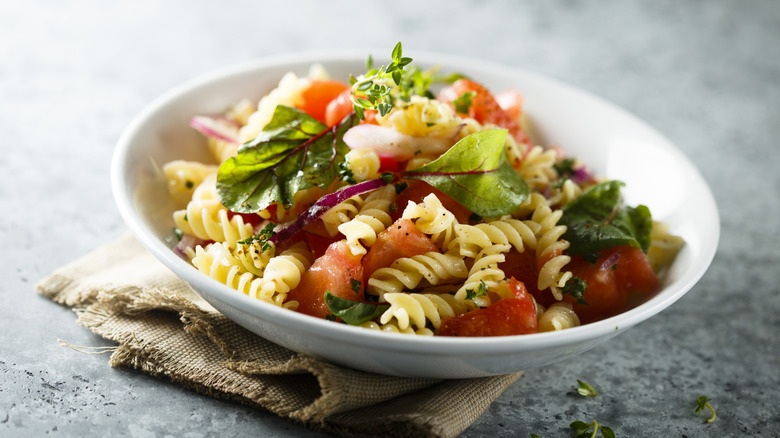
One common complaint is that salads just aren't filling enough, and I hear you. If I were to eat a plate of just raw vegetables for dinner, I'd probably be left hungry. But there are ways to make salads more filling. Adding starchy carbs, such as rice, quinoa, pasta, or potatoes, is a great way to make these kinds of meals heartier and more satisfying.
If you're not sure which ratios to work with, start by adding around 25% of a starchy, carb-heavy ingredient and adjusting up or down from there, depending on how that hits. These ingredients don't just make salads more filling; they add flavor and texture, and just change the overall vibe of the meal. Take a pasta salad, for instance. Minus the pasta, this might have similar ingredients to a more conventional salad and seem a bit boring. But, as soon as you add noodles, everyone is going in for a second helping.
Using different carbs is a great way to change the style of a salad, even if you use largely the same ingredients otherwise. Say, for instance, you'd done some meal prep at the weekend, roasting bell peppers and zucchini, and chopping some fresh tomatoes and cucumbers. You could mix those ingredients with rice and fresh cilantro one day, and it would have a Latin American lean, while mixing them with cold rice noodles, mint, and cilantro would feel more like a Thai- or Vietnamese-inspired salad.
Add legumes to the mix
OlgaBombologna/Shutterstock
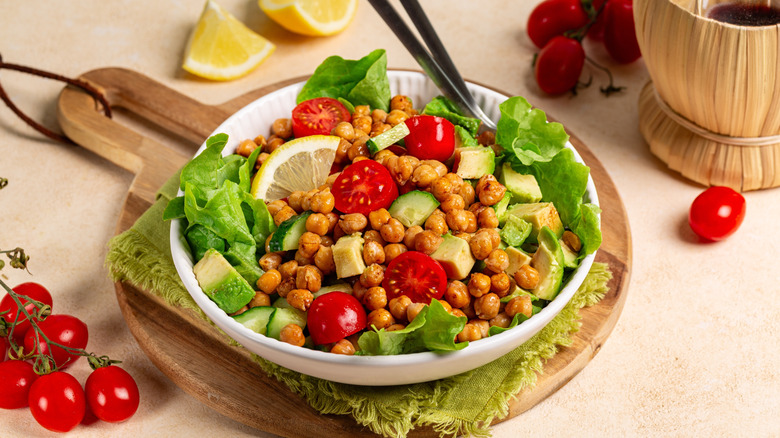
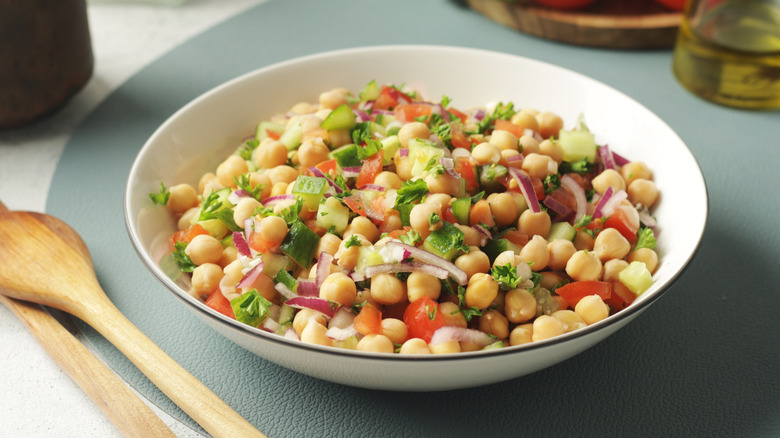
Adding legumes to your salad is another brilliant way to make it more filling. Packed with protein and fiber, they give you lasting fullness, so you won't be running on empty within an hour or two. And while you can cook them from scratch if you want to, they're readily available in cans or jars, so you don't have to do anything to them, which makes salads quick to throw together and means you don't have to turn on your stove on a hot day.
You can make a full-on bean salad where beans are the primary ingredient. However, they can also take a more balanced role. For instance, you may opt for a white bean and pesto salad recipe that uses tomatoes, cucumber, and olives in addition to the beans. This gives you some crisp, fresh contrast to the creamy starchiness of the beans, so the salad feels more balanced overall.
And, of course, beans aren't the only legumes. There are also fresh peas, dried peas (like split peas or marrowfat peas), fresh beans (such as French beans or green beans), lentils, and chickpeas, which could be classed as a pea or a bean, depending on how you look at it. All this choice means that you can pretty much always find the right legume to go with your salad. For instance, you might use borlotti beans for an Italian-inspired salad or chickpeas for a salad with Middle Eastern flavors.
Think about texture
Boonstudio/Getty Images
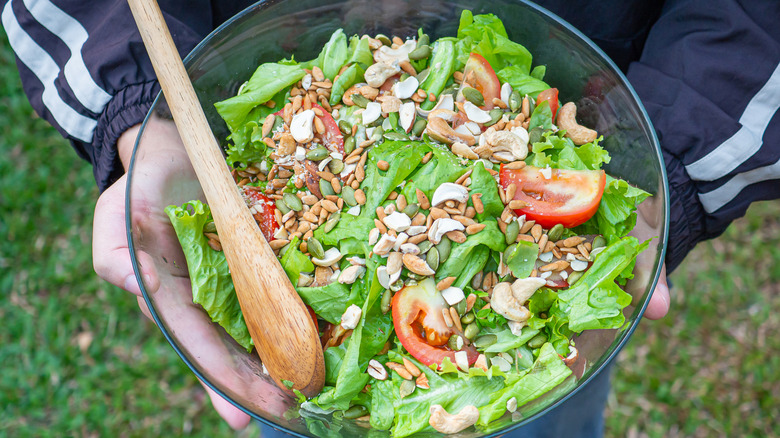
When making food, flavor is usually the first thing on our minds. We're not denying the importance of making food that tastes good, but texture plays a role as well. If you don't have a range of textures throughout your salad, with crunchy and crispy ingredients, as well as softer ones, it can end up falling flat.
The vegetables themselves are one way of adding texture. Choosing crisp, robust greens, like cabbage or radicchio, can go a long way if the other ingredients in your salad are on the softer side. Crisp veggies are also brilliant for this, such as cucumber, raw carrot, snap peas, bell peppers, and sliced raw broccoli.
There are also a number of crispy or crunchy toppings you can add for extra texture — and they can bring loads of flavor to the table, too. Crushed corn chips or crackers add a pleasant crunch. I have a favorite summertime salad that consists of black beans, avocado, charred corn, and tomato, all tossed together with a handful of crushed corn chips on top. Toasted nuts and seeds also add a crunchy texture, while bringing healthy fats and fiber to your meal. Croutons are another great choice, as are crispy chickpeas, both of which you can make at home to save money or buy from the store to save time.
Make your own dressing
Elena Veselova/Shutterstock
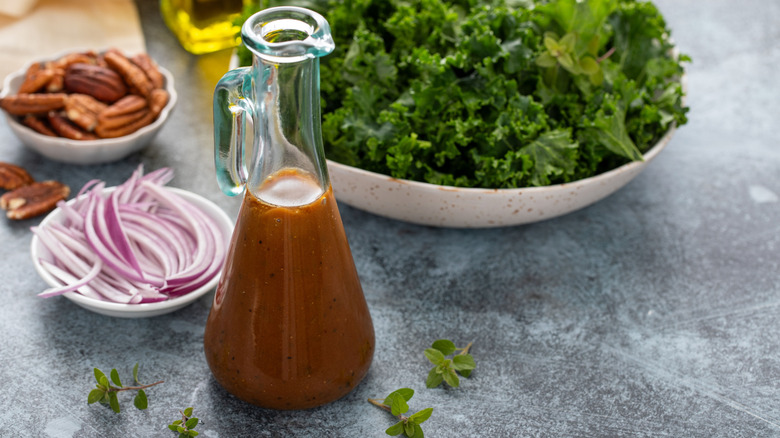
If you're still picking up generic bottles of Italian dressing or other vinaigrettes, it's no wonder that your salad game isn't strong. There are some common mistakes people make with vinaigrettes, but they're ultimately easy to make from scratch. Once you've done it once, you'll wonder why you ever wasted your money on the store-bought variety and disrespected your salad.
A vinaigrette is essentially an emulsification of oil and vinegar, so you probably already have all the ingredients you need to make it. You might be wondering whether it's really necessary to make a dressing like this rather than just tossing your salad with oil and vinegar. The fact is, without being emulsified together, you won't get such a good coating of dressing on your salad. You'll just end up with vegetables floating in a pool of oil, so it is worth the extra step.
It's a good idea to follow an all-purpose vinaigrette recipe at first, but once you have the ratios down, it's one of those things you can riff off. The classic ratio for a French vinaigrette is three parts oil to one part vinegar, but modern dressings often contain a bit more vinegar to make them more zippy, such as 3:2 or 3:1.5 oil to vinegar. You can choose your vinegar, with popular options including balsamic and white wine vinegars, and choose between extra virgin olive oil for flavor or a more neutral oil. Vinaigrettes also need a substance to stabilize the emulsion (Dijon mustard is a common choice), salt, pepper, and any other flavorful ingredients you like, such as herbs or garlic.
Be more creative with dressings
Lisa Beeson/Shutterstock
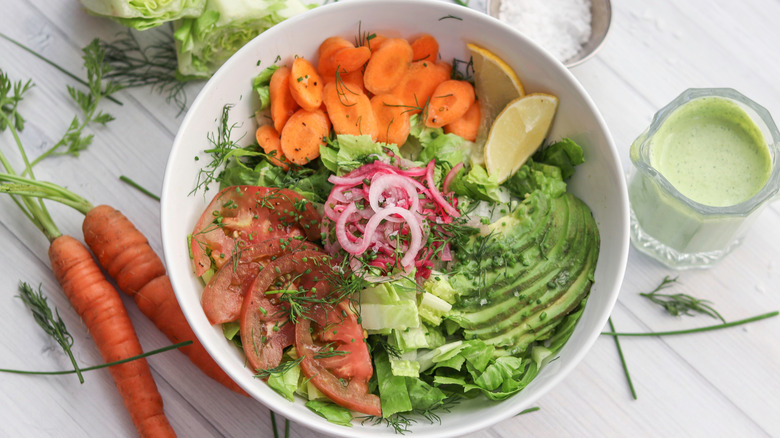
A homemade vinaigrette is a nice choice for salad, but it's certainly not the only choice. Once you get more creative with your dressings, you move away from sad salad territory and into something far more delicious. Luckily, there are plenty of choices, so you're sure to find something that you love.
There are some classic dressings that aren't vinaigrette, such as Caesar, ranch, and green goddess. These aren't necessarily unusual, but they're perfect when you want something deliciously creamy. You can buy them from the store, but as with vinaigrette, you'll end up with a much tastier salad if you take the plunge and make them from scratch. It's worth the extra time and effort.
Beyond that, you can take sauces that aren't usually paired with salad and use them creatively. Tahini sauce is one of my favorite salad dressings, with a slight bitterness and creaminess that balance salads without being overly heavy. You can also think about the geographic inspiration for your salad and match the dressing accordingly. For instance, you could use tzatziki for a salad inspired by Greek flavors or pesto for an Italian-inspired salad. Peanut sauce, hummus, romesco sauce, whipped feta, salsa, and guacamole can all also make great salad dressings, especially when you think carefully about the salad ingredients to pair them with.
Ditch store-bought croutons
Pixel-Shot/Shutterstock
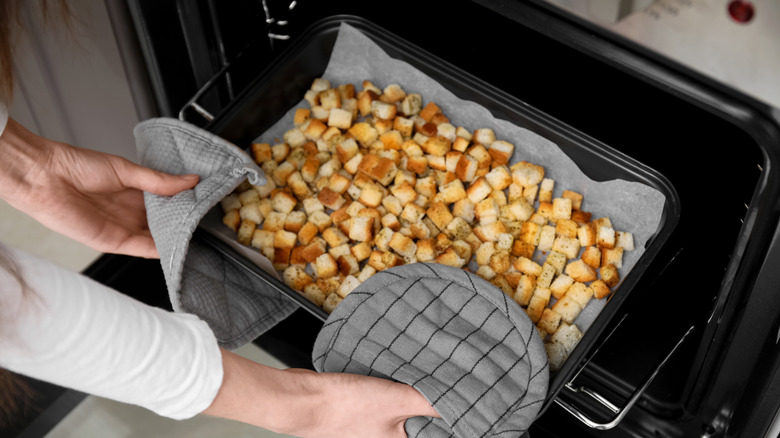
Store-bought croutons don't add much to a salad. They can be overly crunchy to the point of being dry, and they taste of very little. As such, they've fallen out of favor as a salad topping for many people. But when you have homemade croutons, it's a whole different experience. Flavorful and the perfect blend of crisp and slightly tender, they can take your salad to the next level.
A homemade crouton recipe is usually very simple. You just cut or tear bread into pieces, toss them with olive oil and seasonings, and bake or fry them. I often fry my croutons for speed and because I like the crispy exterior with a softer middle, but if you prefer drier croutons, you can achieve that texture more easily by baking them.
You can use pretty much any bread for croutons, so it largely comes down to personal preference. I'm a keen bread baker, so I'll often use the bits of sourdough boule or focaccia that start going stale before I get to eat them. You could also use sourdough from a bakery, or simply supermarket French or Italian bread.
Make your salad seasonal
Oksana Mizina/Shutterstock
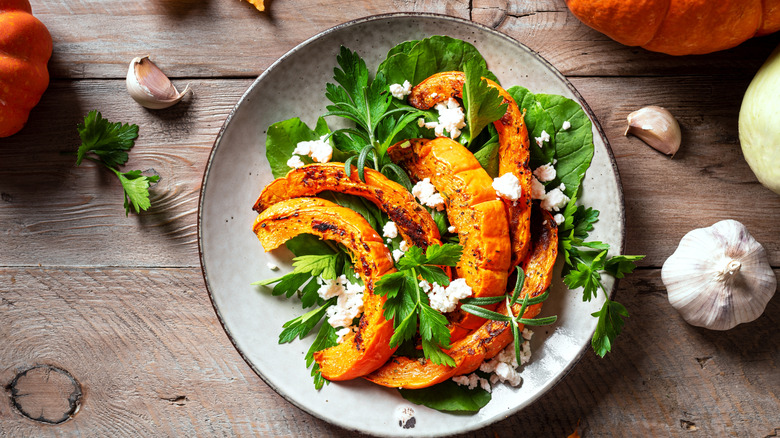
The quality of the produce can make or break a salad, so when you use anemic tomatoes or watery zucchini in the middle of winter, it's going to hit differently than it did when those ingredients were at their peak. This doesn't mean you have to give up salads in the colder months, but rather that you should think seasonally when putting them together.
The thing about seasonality is that it's slightly different everywhere, especially in a large country like the United States. However, on average, this means you'll be using ingredients like asparagus, peas, and new potatoes in spring; tomatoes, bell peppers, eggplant, and peaches in summer; beets, butternut squash, and carrots in fall; and kale, sweet potatoes, and turnips in winter.
Not only will the produce typically taste better, but it's more environmentally friendly to use produce that's in season where you live and doesn't have to be shipped halfway around the world. Also, think about the seasons in terms of what you might want from your food at particular times of year. For instance, summer salads might be lighter and contain more raw vegetables, since you may not want to turn on the stove, while winter salads might be heartier and could even include hot components.
Learn to balance flavors in salads
Anastasia Kamysheva/Shutterstock
One of the things that will help level up your salad game immensely is learning how to balance flavors. Once you've mastered this, you can apply it to any type of salad. It's more of a formula that you can use yourself to put together great salads than a recipe that, even if you learn how to make perfectly, is only one dish.
First, you need to know the elements of flavor. These are salt, sweet, sour, bitter, and umami (a Japanese word that roughly means savory). All these elements are present in different ingredients to various degrees and when the balance is off it can leave a dish feeling flat or just not quite tasting right. Sweetness can help balance spice, cut through overly creamy dressings, or balance out acidity. You can add it to salads in the form of fruits, caramelized onions, or roasted vegetables. Salt enhances the flavors in your dish and can be balanced by sweetness or acidity. Don't think of it just in terms of actual salt, but also via salty ingredients like cheese or soy sauce in a dressing.
Sourness or acidity balances with sweetness and cuts through rich ingredients. You can add pickles for sourness or ingredients like lemon or vinegar in dressings. Bitterness cuts through richness and sweetness. In salads, bitter greens like kale and radicchio are key. Umami adds richness to balance against sweet, sour, or bitter flavors. Use it in salads by adding ingredients like aged cheeses or roasted mushrooms.

 English
 French
 Spanish
 Portuguese
 Deutsch
 Turkish
 Dutch
Dutch
 Italiano
 Russian
 Romaian
 Portuguese (Brazil)
 Greek
Greek