


Ilia Nesolenyi/Getty Images
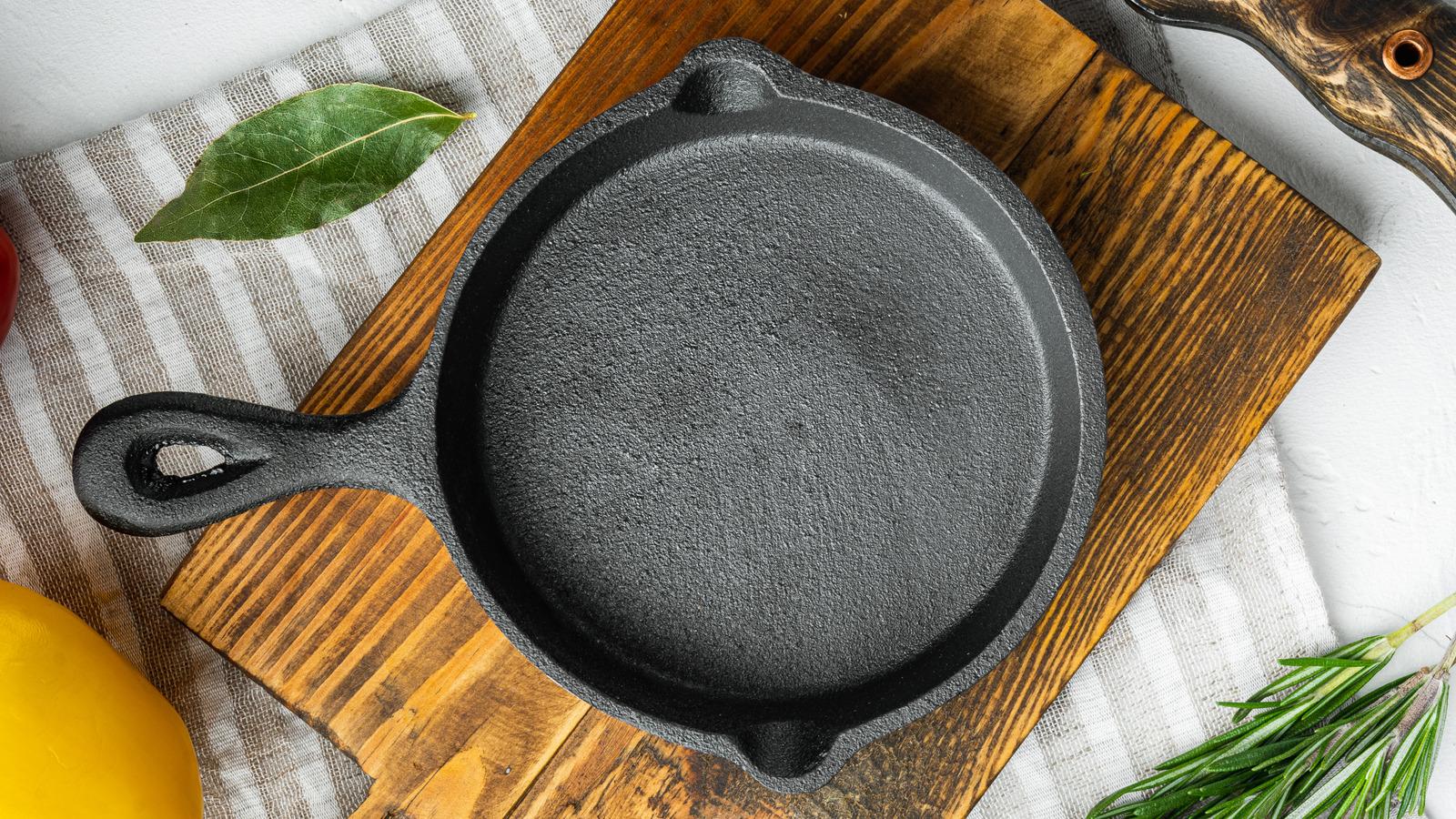
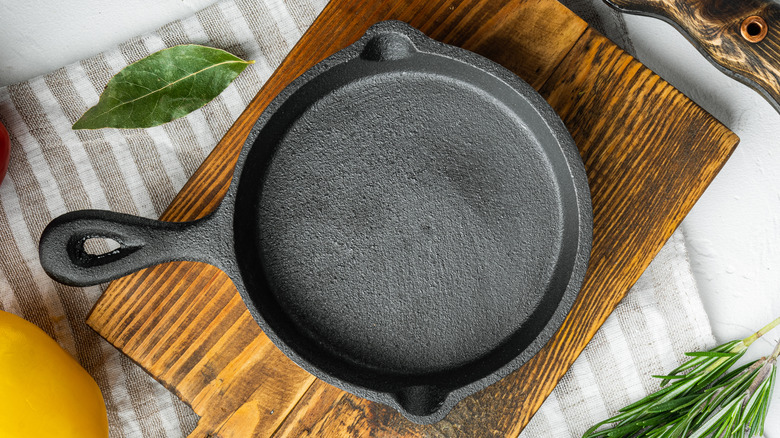
A properly seasoned cast-iron skillet is a chef's best friend. Cast iron pans are initially porous, but oils and fats gradually fill in gaps, creating a naturally nonstick surface that makes cooking a breeze. This is why older cast-iron pans are often smooth. How do you tell if your own cast-iron pan is properly seasoned? It comes down to appearance and texture. A seasoned cast-iron pan should be smooth to the touch, consistent in color, and somewhat shiny. Last but perhaps most importantly, a seasoned cast-iron pan will be effortlessly nonstick.
Taking a quick look at a cast-iron pan can help you tell whether it's well-seasoned. The color should ideally be dark black, mildly polished, and free of discolorations and rust. Texture and scent are also key. A seasoned cast-iron pan should be free of strong odors and smooth with no sticky or wet patches.
However, looks can only tell you so much when trying to determine whether your cast-iron pan is properly seasoned. There are also quick ways to test your skillet. You can sprinkle a bit of water over your pan. If it forms droplets that slide over the surface, your pan's perfectly seasoned. Or, place your pan over medium heat and crack an egg onto it. With solid seasoning, the egg should glide off the pan with ease when flipped, leaving zero residue behind.
What should I do if my pan is not seasoned?
Rekeisha Dunlap/Getty Images
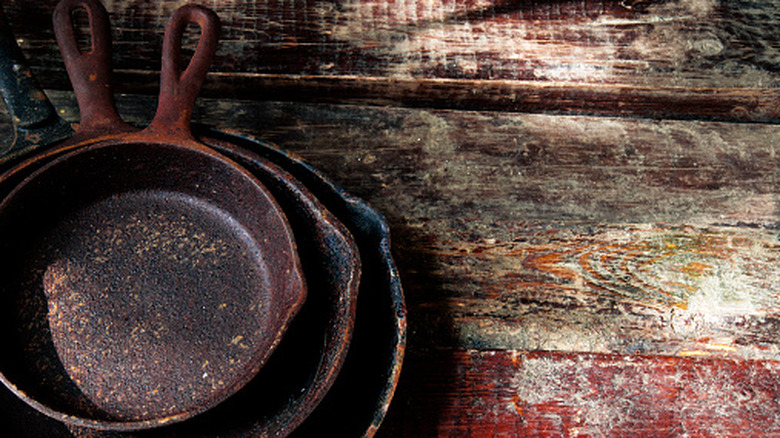
If you're the new owner of a cast iron pan, first, congratulations. Second, most pans do come pre-seasoned but may not have the excellent nonstick qualities of an older, well-loved pan. Part of seasoning is patience. As you use your pan, seasoning will naturally build as fats and oils fuse with the material and fill in pores and gaps. However, you can also intentionally season your skillet to establish a solid coating.
First, wash your skillet with soap and water, and then dry it thoroughly to ensure there is zero debris or moisture left behind. Use a paper towel to fully coat your skillet in cooking oil, with vegetable, canola, or corn oil working well here. Make sure to get the interior and exterior coated, as well as the sides of the pan. Bake your cast-iron pan for 30 minutes at 450 degrees Fahrenheit. After 30 minutes, reapply your choice of oil and repeat the process three to four more times.
With frequent use, you rarely need to re-season cast iron. However, there are some cast-iron skillet tips that can help you maintain your pan over time. Dry your skillet thoroughly after each use to prevent rust. In the event your skillet does get rusty, buff it out with a scrub brush or scouring pad and then re-season. Issues like minor scratching tend to resolve on their own with regular use.

 Arabic
 French
 Spanish
 Portuguese
 Deutsch
 Turkish
 Dutch
Dutch
 Italiano
 Russian
 Romaian
 Portuguese (Brazil)
 Greek
Greek