


Veselovaelena/Getty Images
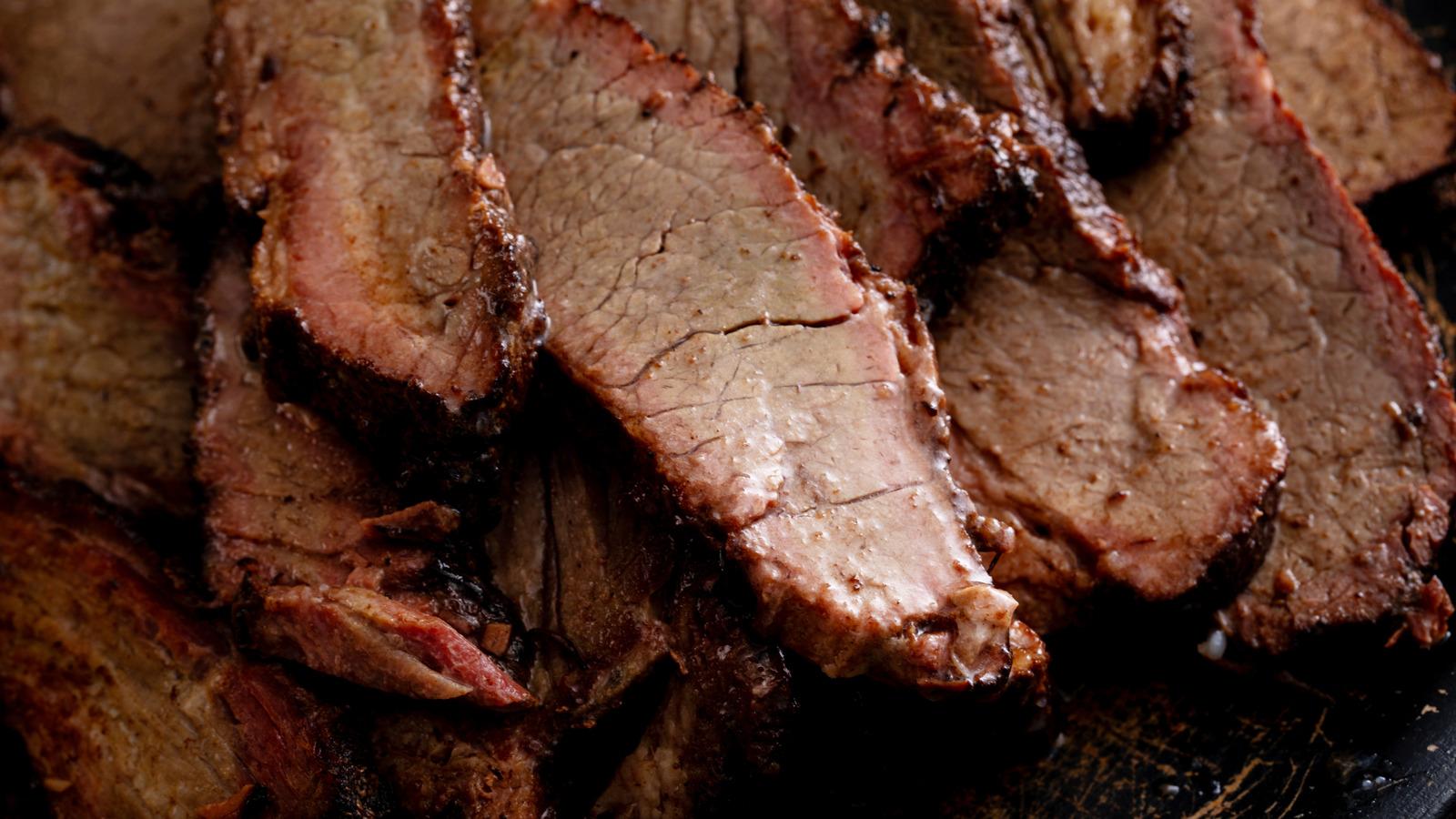
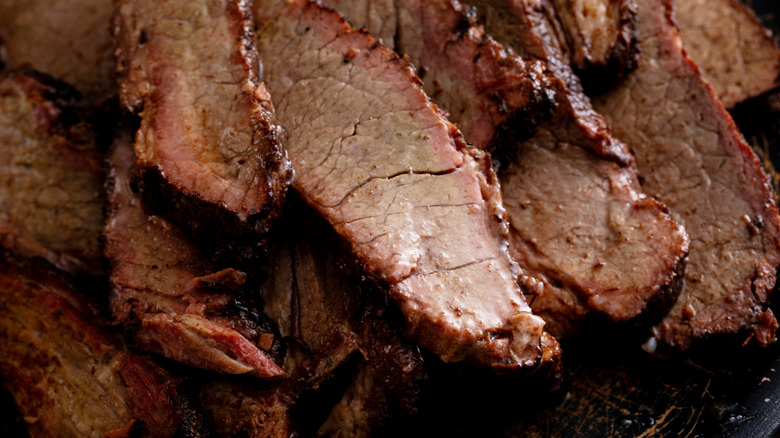
Homemade brisket can be a rewarding and delicious treat. But, given how high beef prices can be, it's also one that requires a bit of knowledge and care to avoid wasting your money on an underwhelming piece of meat. Fortunately, ensuring your brisket is worth the money and time required to prepare it is as simple as examining the packaging. The key factor to look for is the brisket's USDA grade, which should be either "Choice" or "Prime."
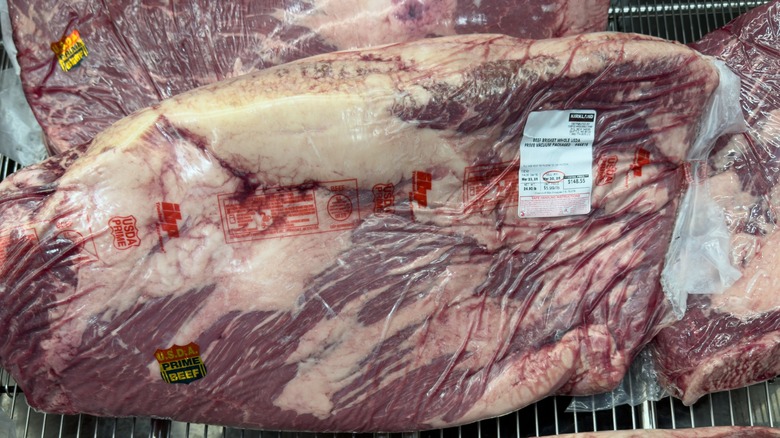
For those unfamiliar with the federal government's meat grading system, most commercially available meat falls into one of three groups. They are (in order from lowest to highest quality) select, choice, and prime. The primary thing determining which group a brisket belongs to is the amount of marbling, or intramuscular fat intermingled with the lean portion of the meat. Generally speaking, more marbling means better flavor and texture, particularly for typically tough cuts like brisket.
Therefore, for the best homemade brisket, buyers should look for the USDA grade listed on the meat packaging, which should clearly state the determination. For the most delectable, tender results, splurge on prime-graded beef. However, it's worth noting that only about 2% of American beef earns this high honor, meaning it's usually a bit tougher to find, and almost universally much more expensive. Choice briskets offer a satisfying alternative, sacrificing some marbling in exchange for lower prices and better availability.
Don't select 'select' briskets
Khosro/Shutterstock
In contrast, it's likely worth skipping the brisket if it's not graded (grading is a voluntary process that requires producers to pay a fee) or it falls into the lowest category, select. Although it's the most commonly available type, don't be tempted by the more budget-friendly price. It won't provide the same mouthwatering flavor. Moreover, when preparation involves long cook times of up to 8 hours or more, as with our classic smoked brisket recipe, the less-marbled meat will dry out more readily.
Home cooks who've made this misstep in the past should take some comfort in the fact that choosing the wrong grade of meat is a common mistake people make when cooking brisket. It sits alongside other significant errors, such as picking the wrong portion of the larger brisket cut or accidentally purchasing pre-brined and flavored corned beef.
Turning a large, tough cut of meat like brisket into a delicious, tender meal can require quite a bit of skill and attention, even for experienced pitmasters. However, it's vital to get your brisket-making on the right track long before you fire up the smoker. With just a quick check of the label for two specific words, "prime" or "choice," you can ensure you're starting off with the best-quality brisket available.

 Arabic
 French
 Spanish
 Portuguese
 Deutsch
 Turkish
 Dutch
Dutch
 Italiano
 Russian
 Romaian
 Portuguese (Brazil)
 Greek
Greek