


Elen Marlen/Shutterstock
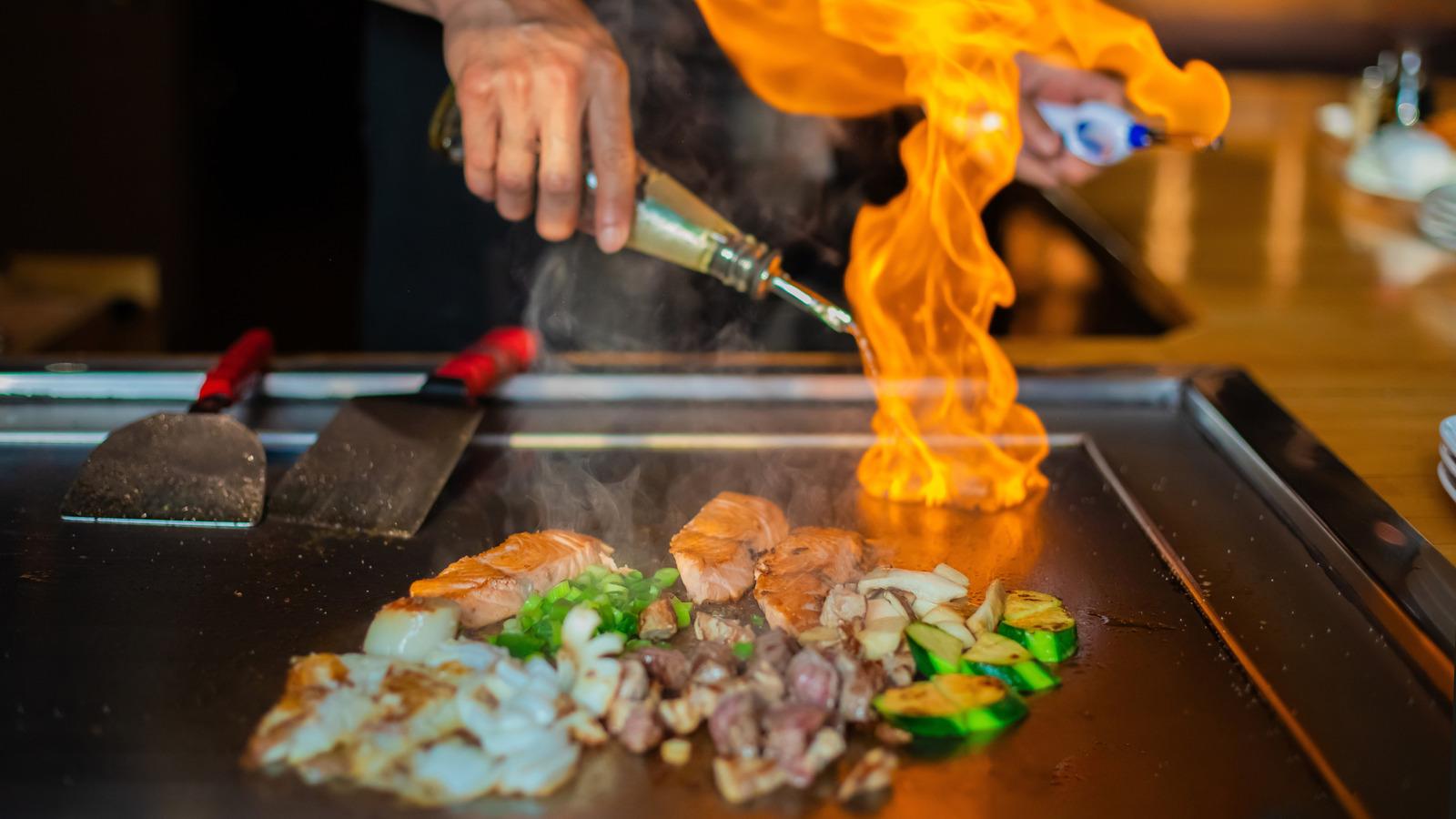
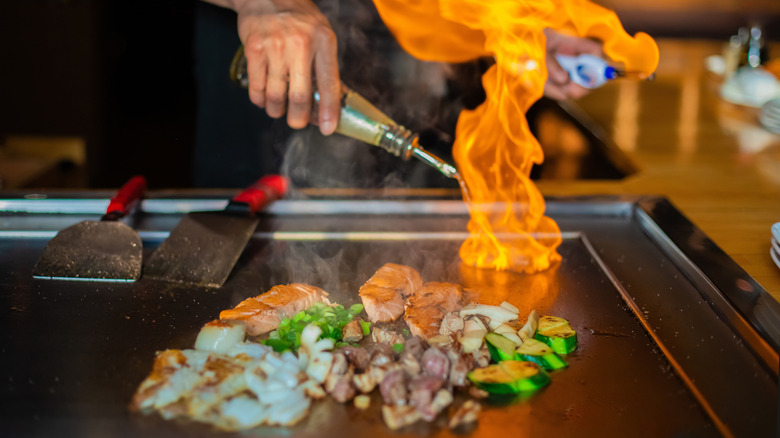
Many people enjoy going to dinner and a show. But what if you could combine the two into a single experience? Enter: hibachi restaurants. Where else can you get delicious food, entertaining chef demonstrations, and the possibility of making new friends, all at once? In the U.S., hibachi and teppanyaki refer to the same thing, even though there is a difference between the two with regards to the cooking surface used. Hibachi uses open grates over charcoal, while teppanyaki uses a flat steel top often heated by gas flame. Both, however, deliver delicious Japanese-style grilled items, but for this expert advice, we're referring to the dining style of communal, theatrical live cooking common in restaurants like Benihana.
In a space that literally has no walls between diner and cook, and the meal is communal by default, it is common to make mistakes, which can range from simple social etiquette to physical endangerment in the presence of hot cooking surfaces. So while having dinner and a show at the same time is undoubtedly fun, there are rules you should adhere to for the safest and most enjoyable experience for everyone at the hibachi grill. Mashed spoke with Arturo Garzon, director of culinary operations at Benihana to get his take on the do's and don'ts of a night out at a hibachi restaurant.
The grill is very, very hot, so beware
Dlewis33/Getty Images
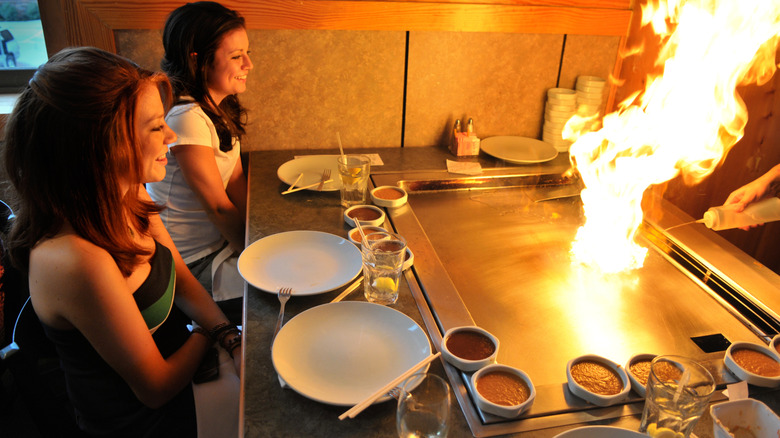
Have you ever wondered why your homemade hibachi is not of restaurant quality? While home teppanyaki cooktop appliances can heat up to about 450 degrees Fahrenheit, a steel cooktop at a teppanyaki restaurant heated with propane gas can reach over 840 degrees Fahrenheit! While this heat is often concentrated in the center of the cooktop, it is still within reach of the average adult diner. Needless to say, never, ever touch it and be careful near the hot grill top.
"Do not reach across it to pass items, clean up a spill, or sneak a piece of food off the griddle," warns Arturo Garzon. Hibachi chefs are trained to handle the heat and any potential flare-ups, while the average diner is ... well, not. You may not know when the chef is going to flambé any ingredients, and you can always specify doneness for the meat or customizations for your order. So sit back, exercise patience, and let the chefs do their job cooking and serving the food.
Keep your children supervised at all times
Erickson Stock/Shutterstock
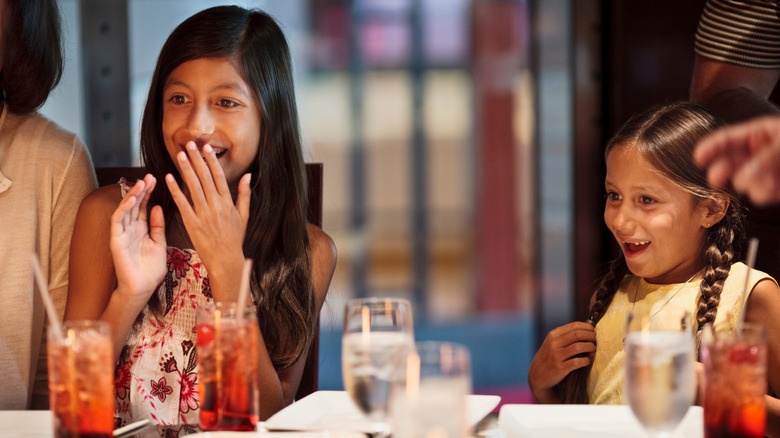
We get it, the tricks are very impressive. Hibachi chefs twirl their spatulas and forks like bartenders practice flair, and they do it near fire and hot ingredients. Their sleight of hand skills will probably mesmerize adults, let alone impressionable kids. If you have young ones in your dining party, Arturo Garzon advises keeping an eye on your children at all times, as there have been reported cases of young children suffering from burns due to the open flames of a teppanyaki cooktop. "Keep them seated and supervised to avoid accidental burns and interfering with the chef's tools," said Garzon.
Chances are your local hibachi restaurant will not have a controversial restaurant surcharge for unruly children, like a certain restaurant in Singapore that states it is not a kid friendly place. That said, the responsibility of caring for younger diners may not have to fall solely on the parents. Restaurants that also provide childcare should become the norm, especially in the case of restaurants with particular potential dangers like hibachi restaurants. Perhaps a supervised activity corner where children can safely eat and play with their food away from the heat?
Be cordial with other diners at the same table
SSBN 728/Shutterstock
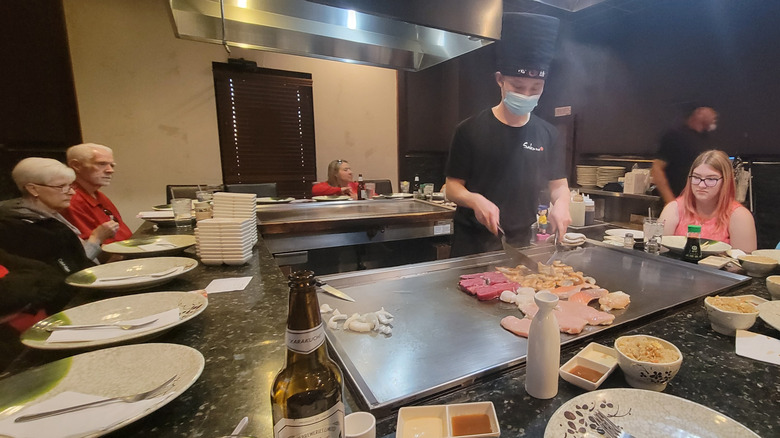
Teppanyaki tables often fit many people in one sitting. While you may typically think of it as a group experience with your own friends and family, what happens if it is just a few of you in your dining party? Arturo Garzon notes you should expect to share your dining experience with other patrons at a single, large teppanyaki table. This means the chef will not only be serving the people in your party, but multiple people in multiple other parties as well.
With any luck, there will be an empty seat between your party and the next, but even in that case, cordial conversations between diners are expected. A few tips for being a great dinner party guest translate well for communal dining in general, particularly around conversation. Treat each party's space at the table as a natural barrier and politely ask to pass condiments or utensils that may not be within your reach. When chatting with your dining neighbors, Garzon advises, "Respect their space and keep conversations friendly and appropriate."
Don't wait to eat; enjoy your food the moment it's served
Yudai1988/Shutterstock
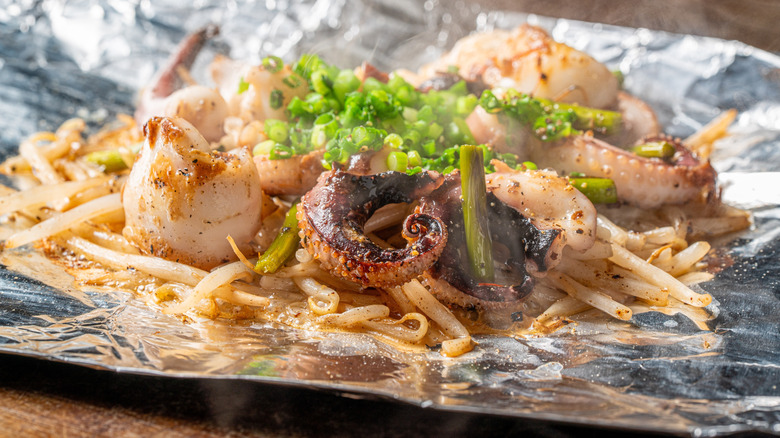
Because there may be multiple parties seated at the same table and served by the same chef, you may need to start eating before others have been served, or even before your whole order has been filled. "Eat while the food is hot or warm," says Arturo Garzon. "Don't wait for the chef to serve everything on your plate to start eating; the food will get cold and could affect your experience." It may seem strange at first to be munching on food while your friend's plate is still empty, and dining etiquette certainly recommends waiting for everything to be served to everyone first, but Garzon reminds us, "The teppanyaki experience is to start eating as soon as the chef puts food on your plate."
Additionally, remember to be patient with your food order. If you see the chef is preparing different food than what you ordered, trust them. There is a lot of math and timing involved in remembering who ordered how much of what food and when to serve them; rest assured your chef is trained for precisely this type of situation.
Safety first, hold the tricks
Food Photographer/Getty Images
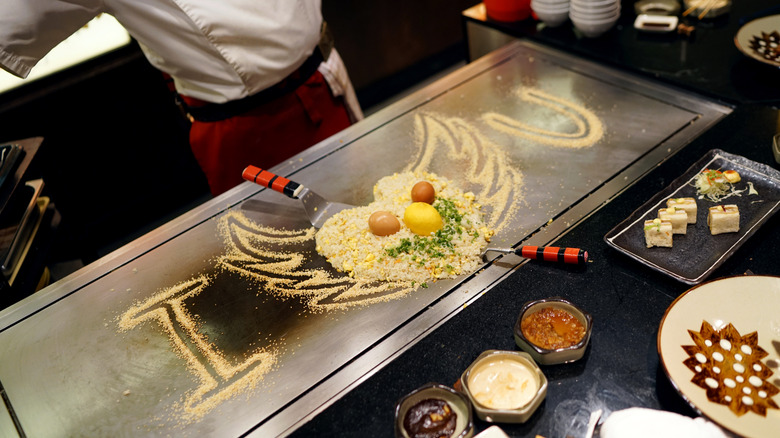
You may have heard of the hibachi restaurant trick where the chef flings cooked food directly into a diner's open mouth. This trick apparently surged in popularity at some hibachi restaurants following a similar trick performed in Jackie Chan's movie, "Mr. Nice Guy," released in the late '90s. Per New York Post, this resulted in a lawsuit following a neck injury that eventually caused the death of a diner in 2001. "For safety purposes, please don't ask chefs to [throw food at you]," advised Arturo Garzon. There are plenty of other fun and safe tricks hibachi chefs are happy to perform, including preparing chicken fried rice with a "beating" heart.
Looking for a hibachi restaurant where you can eat your delicious teppanyaki dinner while also being entertained from the safety of your seat? Mashed rounded up a list of the best hibachi restaurants in the U.S., including Flame in New York City, Shogun in New Orleans, and of course, various Benihana outlets around the country.

 English
 Arabic
 French
 Spanish
 Portuguese
 Turkish
 Dutch
Dutch
 Italiano
 Russian
 Romaian
 Portuguese (Brazil)
 Greek
Greek