


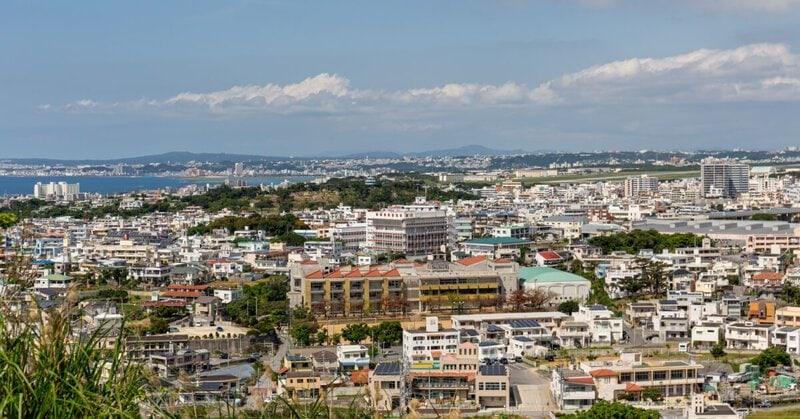
On a rain-slicked cargo net dangling over a 400-foot cliff on the island of Okinawa, a slightly built young man from Virginia climbed hand-over-hand toward one of the deadliest killing grounds of the Second World War — unarmed, carrying nothing but a medic’s bag and a Bible tucked against his heart.
The Man Who Climbed Into Hell With Only a Bible

It was May 1945. The Maeda Escarpment — a jagged coral and limestone plateau American soldiers had taken to calling Hacksaw Ridge — jutted up from the Okinawan landscape like a broken jaw. Japanese defenders had spent months honeycombing its reverse slopes with tunnels and caves, engineering overlapping fields of fire that turned every forward yard into its own private catastrophe. The men of the 77th Infantry Division’s 307th Infantry Regiment scaled the cliff on cargo nets, hauled themselves over the lip, and almost immediately began to die.
Among them was Pfc. Desmond Doss — and here is the central paradox that makes his story so extraordinary, so resistant to easy summary: the United States Army had spent years trying to get rid of this man before he ever set foot on that ridge. His commanders had ridiculed him, punished him, and at one point moved to have him court-martialed and imprisoned. Yet when the smoke finally cleared over Hacksaw Ridge, Desmond Doss would emerge as its greatest hero — the man who saved 75 of his fellow soldiers without firing a single shot.
The Battle of Okinawa ran for 82 days and consumed roughly 12,000 American lives, an estimated 110,000 Japanese troops, and tens of thousands of Okinawan civilians caught in the crossfire. Historians consistently describe it as the bloodiest campaign of the Pacific theater of World War II. It was into this furnace that the Army’s most reluctant soldier climbed — and chose, when everyone else retreated, to stay.
A Faith Forged Before the War: Who Was Desmond Doss?

Desmond T. Doss was born in Lynchburg, Virginia, in 1919 and raised in the Seventh-day Adventist Church, a faith tradition that treats the sixth commandment — “Thou shalt not kill” — not as a guideline but as an absolute moral boundary. For Doss, that commandment was never abstract theology. He later described a defining childhood moment: staring at a church illustration of Cain murdering Abel and feeling a revulsion toward violence so visceral and complete that it simply never left him. The image lodged itself somewhere deep and permanent, and Doss spent the rest of his life organizing his choices around it.
When Japan attacked Pearl Harbor in December 1941, Doss did not hesitate to enlist. He felt a genuine duty to his country. But he believed, with equal conviction, that he could fulfill that duty as a combat medic — healing the wounded rather than adding to them — and that no military order could compel him to carry a weapon intended to kill another human being. The U.S. Army, as an institution, spent the next several years disagreeing with him vigorously.
In the barracks, Doss was an odd figure — quiet, earnest, unwilling to work on Saturdays in observance of the Sabbath, and utterly unmovable when his principles were challenged. Fellow soldiers threw boots at him while he knelt to pray at night. Sergeants assigned him the most punishing labor details they could devise. Officers treated his refusal to touch a rifle as either a mental defect or a disciplinary problem, sometimes both. What none of them understood — not yet — was that the same qualities that made Doss a misfit in the barracks would make him something close to superhuman on the plateau above Okinawa.
The Army’s Campaign to Break Him: Cruelty, Courts, and a Near Court-Martial

From the moment Doss refused to handle a weapon at Fort Jackson, South Carolina, the institutional machinery of the Army turned against him with a thoroughness that reads, in hindsight, as almost comical in its failure. Officers sought psychological evaluations, hoping to establish that a man who would not carry a rifle must be mentally unfit for service. When that avenue narrowed, commanders moved toward the more direct threat of a court-martial — a formal military trial on charges of disobeying a direct order to bear arms, which carried the real possibility of imprisonment.
Doss refused to bend. He also found an unexpected legal shield. His wife Dorothy mailed him documentation of the Seventh-day Adventist Church’s official wartime stance on bearing arms, which the Army was legally obligated to recognize as grounds for conscientious objector classification. The court-martial threat evaporated. The Army’s own historical record acknowledges the sustained pressure Doss faced and the institutional failure to discharge him — a failure that, within a few years, the Army would have every reason to be grateful for.
There is a bitter irony threaded through the entire episode that history has since sharpened to a fine point: the institution that tried to expel Desmond Doss would ultimately award him the Congressional Medal of Honor — the nation’s highest military decoration. The man the Army called unfit would be called, by the President of the United States, an example of what an American soldier could be.
Okinawa and the Ridge: Understanding the Battlefield

By the spring of 1945, American strategic planners understood that Okinawa was not optional. The island sat roughly 340 miles from the Japanese home islands, and the Allies needed it as a staging ground for what military planners anticipated would be a catastrophically costly invasion of the Japanese mainland. Whatever Okinawa cost — and it cost enormously — it had to be taken.
The Maeda Escarpment presented defenders with a near-ideal position. The plateau rose sharply from the surrounding terrain, its coral face offering almost no natural cover to attackers scaling cargo nets under fire. At the top, Japanese forces had prepared a dense network of caves, tunnels, and fighting positions that made the ground above the cliff as dangerous as the climb itself. Seizing the plateau was only the beginning; holding it against coordinated Japanese counterattacks was a different problem entirely.
On the day of the assault, the 307th Infantry Regiment did what soldiers do — they climbed, they fought, and they gained ground at terrible cost. Then the counterattack came, and what had been gained began to dissolve. As night fell, the battalion commander gave the order to pull back from the exposed plateau. Dozens of wounded men lay where they had fallen on the ground above the cliff. In the calculus of that moment, they appeared to be beyond reach.
One Night, Seventy-Five Men: The Rescue That Defied Logic

Desmond Doss did not retreat with his battalion. He stayed on the plateau.
What followed over the next several hours was less a single act of bravery than a sustained, methodical campaign conducted in near-darkness, under sporadic fire, by one unarmed man with a medic’s bag and a rope. Doss moved through the smoke and shadows, found the wounded, dressed what injuries he could, and then dragged each man to the cliff’s edge. There he used an improvised lowering technique — a knot of his own devising — to ease each soldier down the 400-foot face to the ground below, where other hands could receive them.
According to both the historical record and Doss’s own later testimony, he repeated a prayer as he worked through the night, each cycle of effort ending with a simple entreaty: Lord, help me get one more. The phrase became the moral heartbeat of the historical account — and, decades later, of Mel Gibson’s film. It captures something true about what Doss was doing, which was not heroism in the Hollywood sense of fearless aggression, but heroism as sheer moral persistence, one wounded man at a time, through an entire night.
By the time dawn broke over the Maeda Escarpment, Desmond Doss had lowered 75 men to safety. Military historians and journalists who have examined his record note what makes that number genuinely remarkable in the context of Medal of Honor history: most individual actions recognized by the award involve a compressed moment of extreme courage — a charge, a grenade thrown back, a position held. Doss’s rescue was hours long, methodical, and repeated seventy-five times over. It was less a moment than a night-long campaign of unarmed determination.
The Medal of Honor: What the Citation Says — and What It Means

President Harry S. Truman presented Desmond Doss with the Congressional Medal of Honor on October 12, 1945. Truman expressed a particular admiration for a man whose courage was rooted not in aggression but in faith — a soldier who had been afraid, not of the enemy, but of violating his conscience. The citation recognized both the single-night rescue on the plateau and Doss’s conduct throughout the broader Okinawa campaign, including subsequent actions in which he was wounded by a grenade and later struck by a sniper’s bullet, and in which he reportedly refused evacuation while more critically injured men still needed a medic.
The honor carried significance beyond Doss personally. He became the first conscientious objector in American history to receive the Medal of Honor — a distinction that forced a formal, public reconciliation between the military’s definition of battlefield valor and the concept of principled nonviolence. The institution that had tried to court-martial him for refusing to carry a weapon now held him up as the embodiment of what that weapon was supposed to protect.
Doss was not alone among conscientious objectors who served in World War II — thousands fulfilled non-combat roles, from medical service to agricultural labor under the Civilian Public Service program. But he alone had entered the front lines unarmed, and he alone emerged with America’s highest military recognition. The Army’s own profile of Doss frames him as a figure who expanded the military’s understanding of courage — a quiet revolution in what the institution was willing to call valor.
Mel Gibson’s 2016 Film: How Hollywood Told the Story
For decades after the war, Desmond Doss’s story remained relatively obscure outside military history circles and Seventh-day Adventist communities. That changed in 2016, when director Mel Gibson released Hacksaw Ridge, a biographical war film starring Andrew Garfield as Doss. The film earned six Academy Award nominations, including Best Picture and Best Director, and introduced the story of the Maeda Escarpment to a global audience seven decades after the battle.
Gibson and his screenwriters compressed timelines and combined certain characters — standard practice in dramatic adaptation — but the core architecture of the story is drawn directly from the historical record and from Doss’s own documented testimony. The refusal to carry a weapon, the sustained institutional harassment, the genuine threat of court-martial, the single-night rescue of 75 men: all of it happened. Critics who praised the film’s visceral battle sequences often noted the strange power of its central image — the camera returning again and again to a man doing extraordinary things with his hands rather than with a weapon. The film is also available to stream on Netflix for those who want to see the story brought to screen.
The film sparked renewed interest in primary sources, including the documented accounts of Doss’s actions and the testimony of survivors he rescued. That interest is itself part of what good historical filmmaking can accomplish: not replacing the record but pointing audiences toward it.
Why the Story Still Resonates — and What It Actually Proves
The story of Desmond Doss endures because it poses a question that institutional conformity tends to suppress: what if the man who refused to bend was right? In an era of polarized debates about conscience, duty, and the pressure to fall in line, Doss’s biography offers a rare historical case study in which the individual who stood on principle against the full weight of a large and powerful institution was vindicated — completely, publicly, and by that same institution.
It is also worth being precise about what his story does and does not prove. Doss never argued that others were wrong to carry weapons. He argued only that he could not. His moral conviction was personal, not prescriptive, and that distinction mattered enormously to him. He did not see himself as a pacifist making a political statement. He saw himself as a soldier fulfilling his duty by the only means his conscience permitted. The men he saved did not share his theology. He saved them anyway — because they were his boys, and they were hurt, and he was there.
Desmond Doss lived until 2006, quietly, in Alabama. He kept his Bible — the same one he had carried up the cargo nets at Hacksaw Ridge — and by most accounts never quite understood why people considered him remarkable. He had made a promise to God about who he would be, and he had kept it. He had brought his boys home. To Doss, that was simply what you did. The Army, the Medal of Honor, the film — all of that was other people’s reckoning with what one unarmed man had managed to accomplish in a single long night above a cliff on an island in the Pacific, asking only to get one more.

 English
 French
 Spanish
 Portuguese
 Deutsch
 Turkish
 Dutch
Dutch
 Italiano
 Russian
 Romaian
 Portuguese (Brazil)
 Greek
Greek