


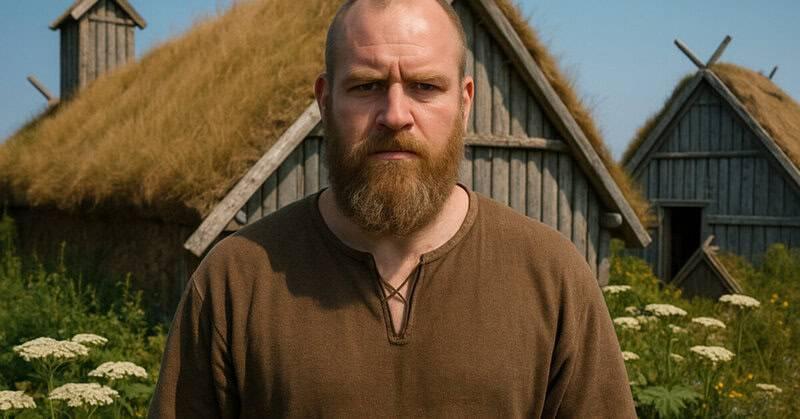
Every May, NFL players jog onto the practice fields at the TCO Performance Center in Eagan, Minnesota, wearing a name rooted more than a thousand years in the past — and most of them probably never stop to think about why.
When Ancient History Meets the Modern Gridiron

When the Minnesota Vikings open their OTA practices each spring, the scene looks like any other modern NFL workout: coaches with clipboards, quarterbacks running routes, analysts studying tablet screens. The team’s organized team activities at the TCO Performance Center draw media attention for roster battles and quarterback competitions. But the name stitched across those purple helmets tells a story that stretches back to longships, fjords, and one of the most consequential immigration waves in American history. Understanding that story makes the Vikings name feel less like a brand and more like a genuine inheritance.
The Founding of the Franchise and the Name Decision

The Minnesota Vikings entered the NFL as an expansion franchise in 1960, set to begin play in the 1961 season. In those early organizational meetings, team founders considered a range of possible names before settling on Vikings. The choice was not accidental, and it was not purely a marketing calculation. It was a deliberate acknowledgment of the ethnic identity that had defined the Upper Midwest for nearly a century.
Ole Haugsrud, an original ownership group member with Norwegian roots, championed the Viking name as authentically representative of the region. His instinct was sound. Minnesota’s Scandinavian heritage was not a distant or decorative fact — it was woven into the demographics, the architecture, the churches, and the daily culture of the state. Naming the team the Vikings was, in its way, the most regionally honest choice available.
The Scandinavian Settlement of Minnesota

To understand why the Viking name fits Minnesota so naturally, it helps to understand how thoroughly Scandinavian immigrants reshaped the region. Beginning in the 1840s and surging through the late nineteenth century, waves of Norwegian, Swedish, and Danish settlers moved into Minnesota, Wisconsin, and the Dakotas in large numbers. By 1900, Minnesota had one of the highest concentrations of Scandinavian-born residents of any U.S. state.
Norwegian immigrants alone numbered in the hundreds of thousands across the region. They brought their language, their Lutheran churches, their folk traditions, and their civic institutions — many of which persist today. Cities like Northfield, Fergus Falls, and Moorhead became cultural anchors of Scandinavian-American life. Minneapolis and St. Paul developed Scandinavian neighborhoods, newspapers, and organizations that gave the Twin Cities a distinctly Nordic character.
Minnesota earned a reputation, only slightly exaggerated, as America’s most Nordic state. When the NFL’s expansion committee was selecting a name that would resonate with a Minnesota audience in 1960, they were not reaching for a romantic abstraction. They were speaking directly to a living community whose grandparents had crossed the Atlantic and whose cultural memory remained vivid.
Who Were the Real Vikings? Separating Myth from History

The historical Vikings were Norse seafarers from Scandinavia — primarily modern-day Norway, Sweden, and Denmark — who raided, traded, and settled across Europe and the North Atlantic from roughly 793 to 1066 CE. The popular image of horn-helmeted warriors is largely a romantic invention of the nineteenth century. Archaeological evidence shows that Norse warriors actually wore simpler rounded iron helmets. The horned helmet lives on in Halloween costumes and stylized logos, but it belongs more to Victorian imagination than to documented Norse history.
What the real Vikings accomplished was genuinely remarkable. They were skilled navigators and traders who established settlements from Iceland and Greenland to the northeastern coasts of North America — centuries before Columbus. Their cultural and linguistic influence shaped England, Ireland, Normandy, and the early foundations of what became Russia. They were not merely raiders. They were explorers, colonizers, craftsmen, and merchants whose reach across the medieval world was extraordinary.
For Scandinavian-American communities in Minnesota, claiming the Viking identity was a way of honoring ancestors from that same seafaring, pioneering tradition — people who had, in their own time, crossed vast distances to build something new in unfamiliar territory.
The Kensington Runestone and Minnesota’s Own Viking Legend

No conversation about Vikings and Minnesota is complete without the Kensington Runestone — a slab of melosite graywacke discovered by Swedish-American farmer Olof Ohman near Kensington, Minnesota, in 1898. The stone bears a runic inscription claiming that a party of Norsemen explored inland America as far back as 1362, centuries before European contact was formally recorded.
Mainstream archaeologists and runologists have largely concluded the stone is a nineteenth-century fabrication, most likely produced within Minnesota’s Scandinavian immigrant community. The debate has never fully closed, however, and the stone became a lasting cultural landmark. Whether authentic or invented, the Kensington Runestone reveals something important: Minnesota’s Scandinavian community wanted to claim a Norse heritage rooted not just in immigration but in the land itself. They wanted to believe that Vikings had walked the same soil their grandparents now farmed.
That desire — mythological or not — says a great deal about how deeply the Viking identity was embedded in regional consciousness long before an NFL franchise existed.
How the Name Became an Identity — On and Off the Field

Over more than six decades, the Minnesota Vikings franchise has built a coherent cultural identity around its Norse theme. The purple and gold color scheme, the evolving Norse ship logo, and the Skol chant — derived from a Scandinavian toast — all reinforce a brand that feels genuinely rooted rather than manufactured.
The team’s home in the Twin Cities metro area, where a meaningful share of residents claim Scandinavian ancestry according to U.S. Census heritage data, means the Viking name resonates with fans as something personal rather than merely commercial. The TCO Performance Center in Eagan sits in a suburb whose surrounding region was settled heavily by Norwegian and Swedish farming families in the latter decades of the nineteenth century. The geography of the franchise’s daily operations overlaps closely with the geography of Scandinavian settlement.
Reporters covering open Vikings OTA sessions focus naturally on quarterback competitions and roster depth. Analysis from outlets tracking Vikings OTA observations tends to center on scheme and personnel. But the broader historical context is always present for those who look for it. Few NFL team names carry the weight of an actual regional ethnic history the way the Vikings name does. It is one of the rare cases where a franchise identity and a community’s heritage are, at their roots, the same story.
What the Name Tells Us About NFL Identity and Regional Pride
The Minnesota Vikings example illustrates something worth appreciating about the best NFL team names: they function as compressed regional histories, encoding immigration patterns, cultural pride, and geographic identity into a single word. In an era when sports team names face increasing scrutiny for cultural insensitivity, the Vikings name stands out as one that a living ethnic community actively embraces rather than contests. It was chosen to honor that community, and that community has honored it in return across generations of fandom.
For Minnesotans of Scandinavian descent, watching players in purple helmets work through spring OTA drills is not only football fandom. It is a form of cultural recognition that connects the present to grandparents and great-grandparents who crossed an ocean to farm land that Vikings — real or legendary — may have reached long before them.
The name Viking, selected in 1960 for a new professional football team, turned out to be one of the more historically honest decisions in American sports branding. What looked like a marketing choice was something rarer: a small act of naming that preserved a meaningful chapter of immigrant history, renewed quietly each season on a practice field in Eagan.

 English
 Arabic
 French
 Spanish
 Portuguese
 Deutsch
 Dutch
Dutch
 Italiano
 Russian
 Romaian
 Portuguese (Brazil)
 Greek
Greek