


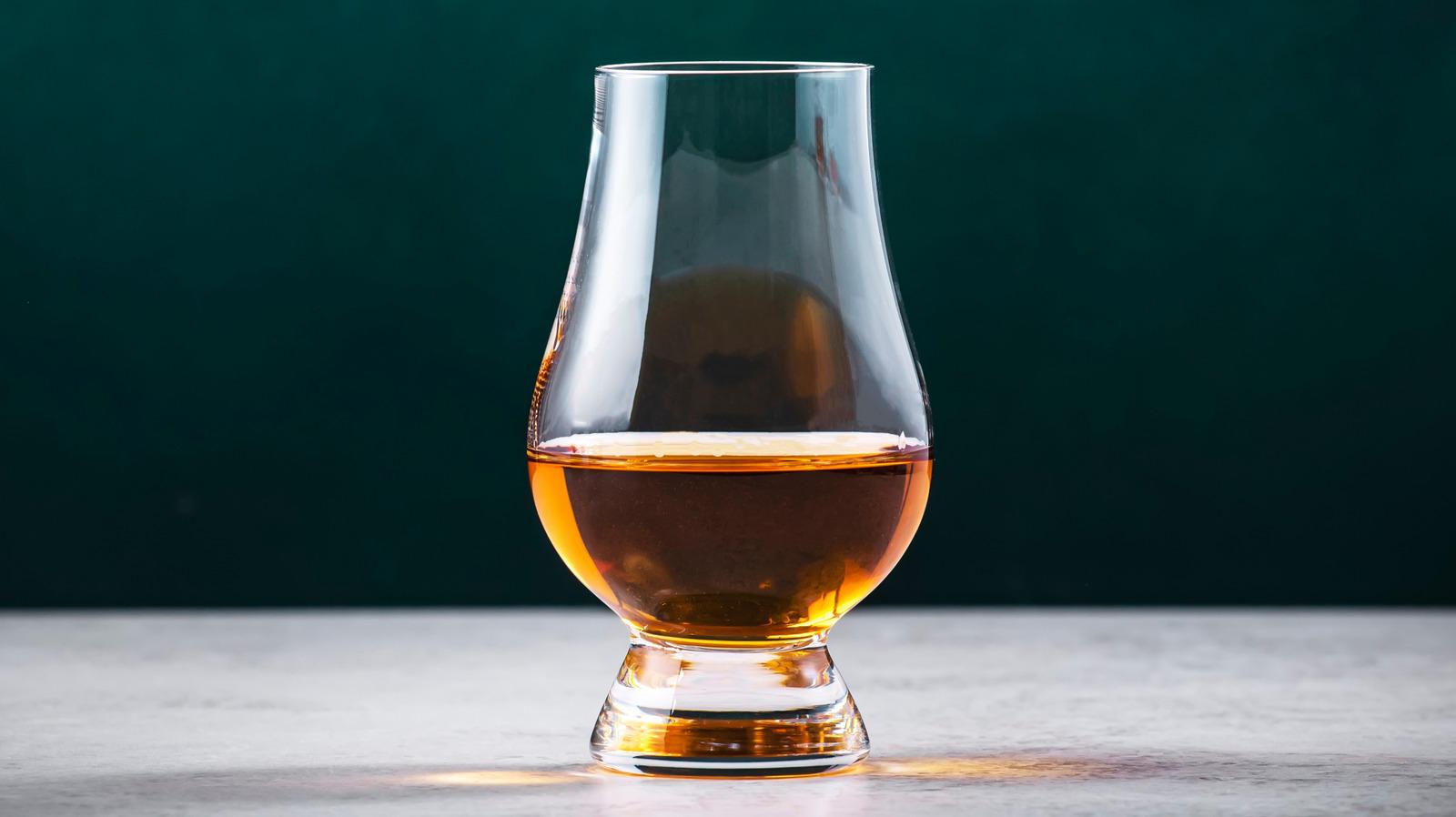
5PH/Shutterstock
There are quite a few different types of Scotch whisky out there, with flavors ranging from the sweet and nutty to the smoky and floral. However, they all have at least one other thing in common: a minimum period of aging. Yep, you're not going to find a bottle of this booze from a freshly barreled batch. In order to qualify as "Scotch," the malt- or grain-based spirit is required by U.K. law to mature for at least three years — specifically in an oak wood cask in Scotland.
The aging requirement dates back to 1915 and Britain's Immature Spirits Act. Proposed by Chancellor of the Exchequer, and avid prohibitionist David Lloyd George, it was specifically brought forth as a measure to restrict the sale of booze during World War I. Lloyd George considered the consumption of alcohol a detriment to Britain's war efforts, and teetotalers at the time thought that younger spirits made folks drunker.
Since many spirits were sold straight from the still, this new law would significantly limit the amount of legal whisky on the market. It essentially required distillers to hold on to their stock for aging. Although the law did cause many of those businesses to close up shop during the war, it ultimately strengthened the whisky industry as a whole.
The more mature the whisky, the higher the quality

Adventtr/Getty Images
As it turns out, maturity is the key to unlocking a tastier, more complex, and all-around better-quality spirit — that is, a drink that became even more favored among 20th century imbibers. Ironically, Chancellor Lloyd George's attempt to curb the whisky industry is actually what ended up reinvigorating it, setting the stage for the rich and flavorful pours we appreciate today.
Three years is indeed the minimum amount of time a true Scotch whisky must be matured, but many makers actually age their product for much longer. The Glenlivet stores its flagship whisky for 12 years, as does the world's top-selling Scotch brand, Johnnie Walker. Whisky connoisseurs can also get their hands on 18-year-old, 50-year-old, or even 85-year-old expressions — for a price. The Glenrothes Distillery single malt Scotch whisky, which was distilled in 1968, hit the market at a cool $35,000 a bottle in 2020. Much like wine, the older the Scotch, the better (and more expensive).
If there's anything else you should know before taking another sip of Scotch, it's its alcohol content. In addition to a minimum age requirement, this whisky also has a minimum ABV, set at 40%. It packs a boozy punch, to be sure, but the reason behind this actually has more to do with preserving the integrity of the product's flavor profile. Once the ABV drops lower than 40%, the taste and quality of the spirit seriously declines. At that point it actually can't be classified as Scotch at all.

 English
 Arabic
 French
 Spanish
 Portuguese
 Deutsch
 Turkish
 Dutch
Dutch
 Russian
 Romaian
 Portuguese (Brazil)
 Greek
Greek