


Molenira/Getty Images
We may receive a commission on purchases made from links.
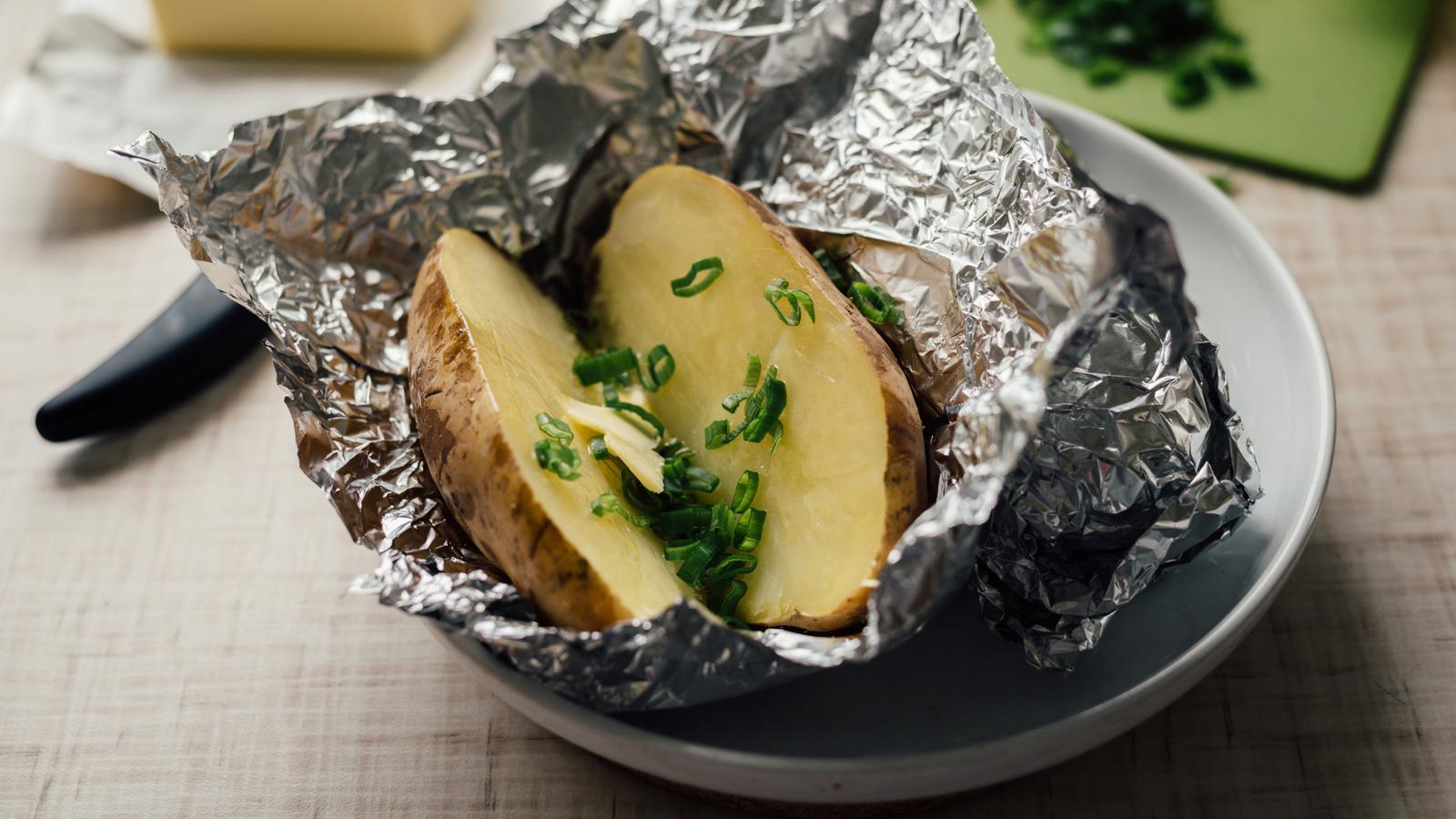
When you're wrapping up an oven-baked potato or making a packet for salmon, aluminum foil is an affordable kitchen item that's always nice to have on hand. However, you may have been making a mistake with aluminum foil without realizing it. Although the thin metal is intended to handle heat, it shouldn't be exposed to heat above 400 degrees Fahrenheit. Exceeding this temperature puts the foil at risk of leaching aluminum into the food you're cooking.
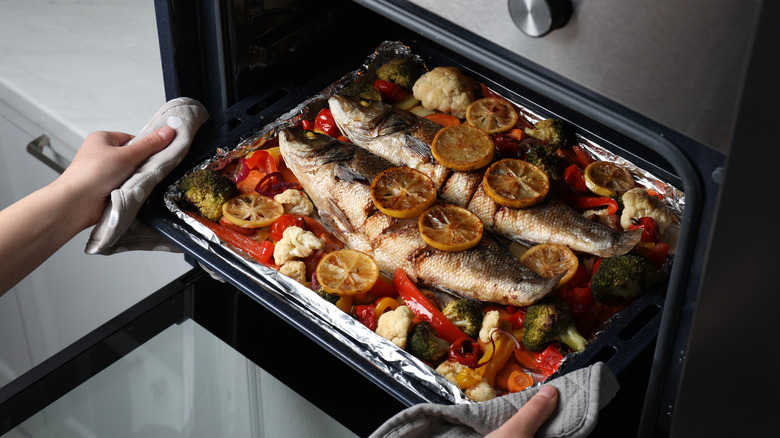
When aluminum foil is used for broiling, roasting, or direct flame grilling, it won't melt (this happens at 1,220 degrees Fahrenheit), but 400-plus degree temperatures can affect its stability. A study published in Food Science & Nutrition examined how aluminum contaminated food while cooking, and it was found that very little aluminum leached into the food when it was cooked under 320 degrees. Yet at 428 degrees, the amount of aluminum transferred to the food was much higher. For context, any foods that you might want to be crispy or have a golden brown exterior would be cooked at 400 degrees or higher in the oven, like roasted vegetables or french fries.
Aluminum transfer into food becomes even more of an issue with longer cook times, like in the case of a baked potato or meat. Salty or acidic foods can cause a greater amount of aluminum to leach into the food. In the study, the foods that contained the highest amount of aluminum after cooking were marinated foods, especially the skinless duck breast and baked fish.
Health concerns over aluminum foil leaching and what to use instead
Liudmila Chernetska/Getty Images
Small amounts of aluminum exposure are considered safe by organizations like the WHO and the CDC. Higher levels of aluminum in the body have been linked to Alzheimer's disease, but according to the CDC, studies demonstrating this are inconsistent. Excessive aluminum consumption can be a health risk for those with kidney disease (who already have issues clearing aluminum from the body) or younger children.
If you want to avoid any level of aluminum leaching into your food when cooking at higher temperatures, there are alternatives to aluminum foil. Parchment paper is the most direct replacement for foil, and when used for baking and roasting, is typically safe up to 425 degrees Fahrenheit (though some brands and types can handle more heat). It acts like a non-stick surface, and conducts heat less directly than aluminum foil, so parchment paper is a better choice for cookies to prevent burning the bottoms.
While aluminum foil is technically reusable, silicone baking mats withstand high heat better and are much easier to wash and reuse. Depending on the brand, silicone baking mats can tolerate temperatures between 450 and 580 degrees. The Amazon Basics Silicone Non-Stick Rectangular Baking Mat, for example, is oven-safe up to 480 degrees, while the HOTEC Silicone Baking Mats 3 Pack can handle more intense heat of up to 500 degrees.

 Arabic
 French
 Spanish
 Portuguese
 Deutsch
 Turkish
 Dutch
Dutch
 Italiano
 Russian
 Romaian
 Portuguese (Brazil)
 Greek
Greek