


Kristen Prahl/Getty Images
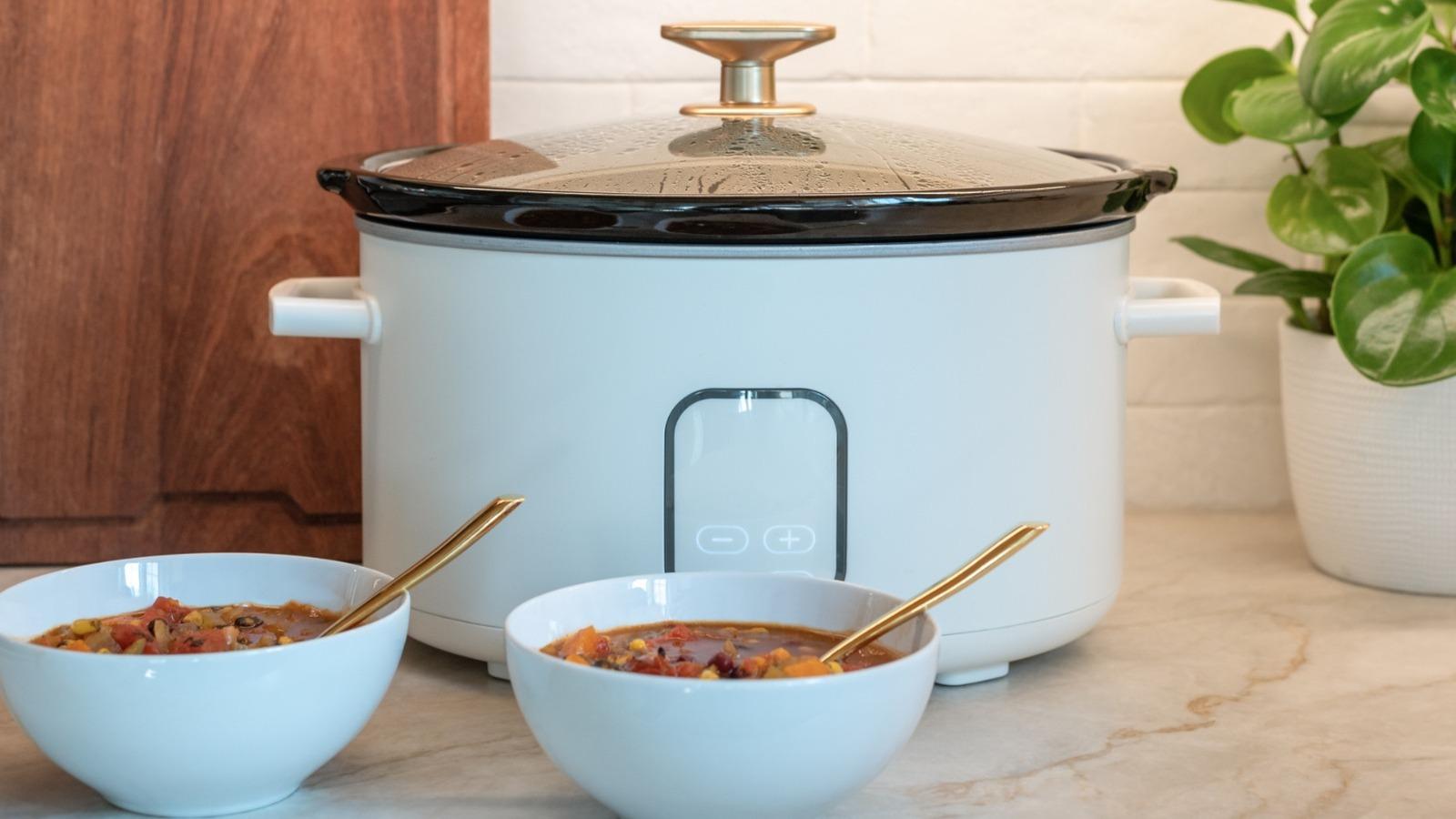
Slow cookers have been a kitchen essential for decades. Cooks everywhere use them to prepare meals with minimal hands-on work, hence the "set it and forget it" mantra. Despite its ubiquity, there are still countless mistakes everyone makes when using the slow cooker. For instance, adding liquid when it isn't needed.
One myth about slow cookers you need to stop believing is that they always require liquid to work properly. Vegetables and proteins (especially fatty cuts; 70/30 ground beef requires less liquid than lean chicken breasts) release moisture while cooking, so depending on the recipe, you may not need to add water. The slow cooker's lid keeps liquid from evaporating, so what's released just might be enough to steam and hydrate your meal.
Take it from Jack Bishop of America's Test Kitchen, who confirmed this with Consumerist in a now-defunct interview. "Most slow cooker recipes are better with less liquid than you would use if you were making the same thing in a pot on the stove," he said. "So, that could mean draining the canned tomatoes and discarding that juice, or it might mean using less broth than you normally would for a stew or a soup." Extra liquid will not only increase the cook time and jeopardize the meal's consistency, but it will also dull its flavor.
You don't always need to add liquid to the slow cooker, but there are exceptions
Helpinghandphotos/Getty Images
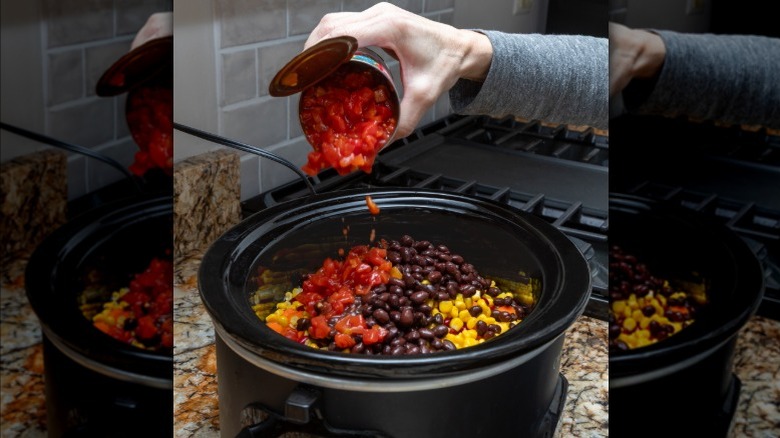
Liquid is key in slow cooker recipes, since they're cooked at a low temperature for a longer time. Moisture aids in tenderizing, and the slow cooker ensures even heating. But any moisture emitted stays trapped in the pot by design, so you don't necessarily need to add more. That said, it doesn't hurt to add a small amount of liquid to most recipes, about half a cup (per pound, if you're cooking a large cut of meat) to keep everything moist and prevent burning.
Dry foods like beans and grains, hardy produce like root vegetables, and lean proteins with minimal fat all require additional liquid. For mostly dry meat dishes (like roasts), cover the protein in a liquid for even cooking and heating. It helps soften the meat and prevents drying. If you add too much, leave the lid ajar to let moisture escape and reduce if needed. To convert a stovetop dish to the slow cooker, nix about half the liquid in the recipe, since the lid will lock in moisture.
You can get fancier than water, too. Broth or stock offer more flavor, as does wine, beer, or cider. Wet ingredients, like canned tomatoes, fruit juice, or even gravy, work as well. Just be sure to add dairy items, like milk or cream, last to keep them from curdling before serving.

 English
 Arabic
 French
 Spanish
 Portuguese
 Turkish
 Dutch
Dutch
 Italiano
 Russian
 Romaian
 Portuguese (Brazil)
 Greek
Greek