


Lamb of God's Randy Blythe Challenges Bands to Speak Their Minds
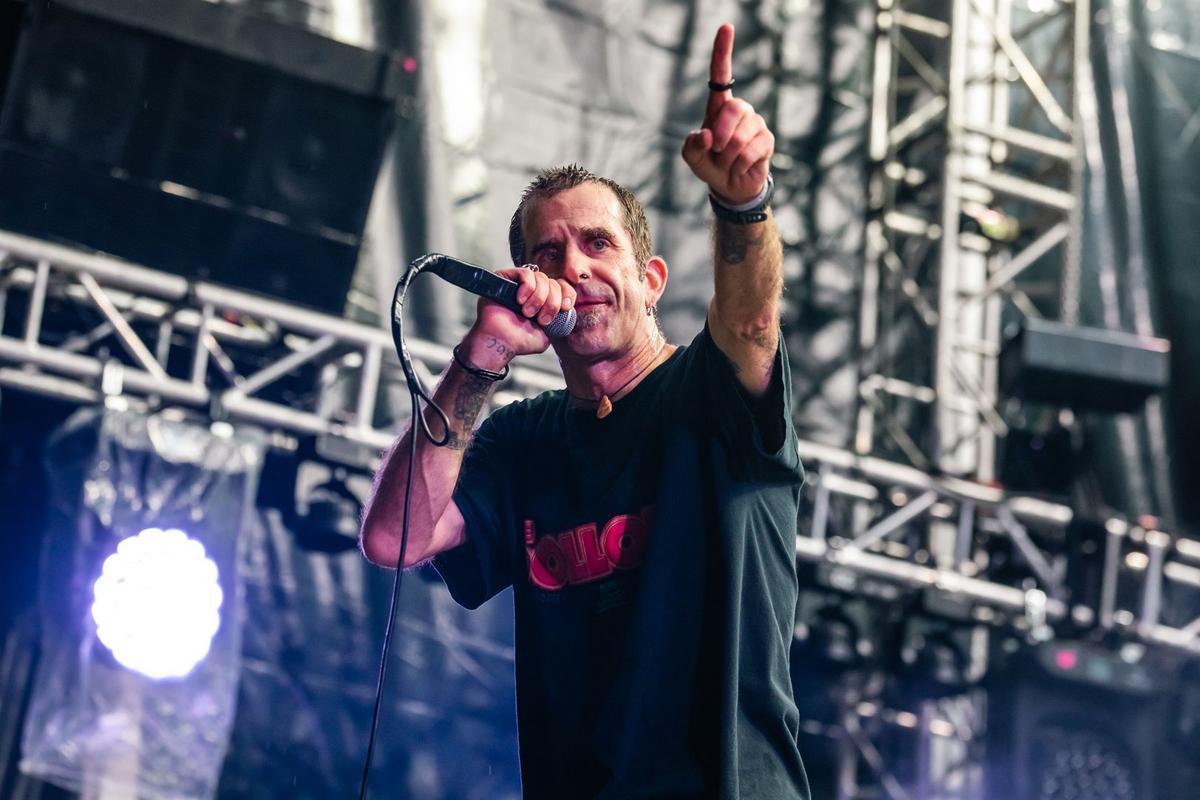
'Don't Be a Coward, Speak Up' — Lamb of God's Randy Blythe Challenges More Bands to Speak Their Minds
"Don't be a coward, speak up," Lamb of God singer Randy Blythe shares with Full Metal Jackie as his challenge to other bands to be more vocal in using their platform to speak about the issues of the day.
Blythe is not holding anything back on Lamb of God's latest album, Into Oblivion, and he was asked by the radio host for her weekend radio show if he feels there's enough bands speaking out these days.
"in general, I will say no. There are some bands that are very loud and vocal. I'm hesitant to say, "No, there's not," because there is a younger generation of bands that are doing things in their own world, in their own scene, that frankly, as a 55-year-old man, I'm probably not even aware of," cautions Blythe.
But he observes, "Amongst people of my generation and older, I sure would like to see a little bit more vocal discontent, Shout out to the Dropkick Murphys. And shout out to Bruce Springsteen, you know?"
"I think coming from an underground sort of music, I'm not here to sing love songs. I'm not here to make sure everybody's having a good time at the party. Let's speak some words of substance, let's address some distressing concerns. And there are a lot of them right now," says the singer.
In part 1 of a two-part interview, Full Metal Jackie speaks with the Lamb of God singer about the impact that the historic studio they used for their new album had on his performance. They also delve into the impact of social media on the current generation and Randy's own experiences breaking free from social media while still engage with daily world events.
Randy also shares his concern over the loss of community in local music scenes, while sharing his appreciation for the time he came up in musically and he and Jackie share their thoughts on how they would handle it if either of them won the lottery one day.
Check out more of the chat below and come back next week for part two of the discussion.
It's Full Metal Jackie. Lamb of God's Randy Blythe with us on the show this week and we're talking about the new Into Oblivion album. This album was recorded at Total Access in Redondo Beach, California. So many legendary punk albums were made there. Are you someone who feels environment can impact the sound of a record? And what was your experience taking in all the history of the studio?
Yes. Of course, I think environment can impact a record.
Our producer, Josh, found Total Access and he knew I would love it 'cause when you walk in there and you look on the walls, you, you see Black Flag, My War. You see a Saint Vitus album cover, you see records by The Descendents, by Minutemen, by Hüsker Dü, all the early SST stuff.
When that studio started, Spot, who was SST Records' producer, was brought in by Greg Ginn of Black Flag, who owned that record label. And he came to the studio, and he basically asked the owner at the time, he's like, "I have X amount of money. How many records can I get done for this?" Kinda like a Groupon sorta deal back in the day. So, he's like, "I can do this much." So, that's why there's so many of those great punk bands from the California region recorded there.
And there's also like Dio recorded there. It's not just punk rock, but some really significant metal stuff went down there too.
Randy, we were talking about your experience recording this new album, Into Oblivion, which happened in Redondo Beach. Tell us more about how it was compared to previous records that you have done.
Our last record was in Henson [formerly A&M in Hollywood]. I believe that's gotten changed now [It was recently changed to Chaplin Studios by the new owners]. But that's a very fancy studio and a huge live room and we recorded that record a little bit differently, mostly live.
This one, we went back to something more traditional. They track, then I sing to tracks. The vibe in Total Access is it's nice but it's no frills. It's down to business. It's like, "This is what we're here for, we're going to make some music," and you can feel that. And I think it came through in the vocals.
I was extremely comfortable at this studio. It suited me very well. And the owner, I got to sit there and bend his ear and get old punk rock stories from the '80s bands that recorded there and some of the shenanigans that went down with them.
So all of that added to a vibe where ... it's no big secret I don't particularly love recording general. But it made it more comfortable for me. I feel more comfortable in a more utilitarian studio. And also just the vibe there, man. And I'm like that with not just music, but art and stuff. Writing out when I'm overseas I'll go to different places where different famous authors lived or wrote. I've been to Pablo Neruda's house in Chile and I've been to all the cafes in Paris where Hemingway wrote, et cetera. I just like to go and soak up the vibe.
I don't know, it just feeds the sort of creative bug for me.
Randy, we were talking about working out of one of the great studios to birth some of the great punk albums in history. And one great thing about punk has always been using the platform to speak your mind. You've never been one to shy away from supporting something you believe in. Do you feel there's enough of that in the music scene these days, that punk ethos, putting a message out there through music and standing behind it?
in general, I will say no. There are some bands that are very loud and vocal. I'm hesitant to say, "No, there's not," because there is a younger generation of bands that are doing things in their own world, in their own scene, that frankly, as a 55-year-old man, I'm probably not even aware of.
So, I, hate to be like, "Nobody's doing anything these days," right? But amongst people of my generation and older, I sure would like to see a little bit more vocal discontent, Shout out to the Dropkick Murphys. And shout out to Bruce Springsteen, you know? But he can't be just old man.
READ MORE: Randy Blythe Sounds the Alarm on Trump + Ice in Powerful Message
I think coming from an underground sort of music, I'm not here to sing love songs. I'm not here to make sure everybody's having a good time at the party. Let's speak some words of substance, let's address some distressing concerns. And there are a lot of them right now.
There are.
Don't be a coward, speak up.
Lamb of God, "Parasocial Christ"
Randy, one of the key tracks off the new album is "Parasocial Christ." In speaking about the song, you've addressed what amounts to an addiction to the internet and to some extent, the cult of celebrity that comes with it. "Go live your life." you address the fans in that way. In your own life, you've taken accountability by deactivating social media. Can you speak to what that experience has been like while also trying your best to stay in the loop with current events?
Well it's interesting, because social media, it's very much a catch-22. I deactivated my lone real social media account, which is Instagram, because frankly, I'm tired of making Mark Zuckerberg money, you know? Meta as an organization has admitted that only about seven percent of what you see on your feed comes from people you follow.
So when I got on Instagram, originally it was just kind of an interesting thing and it quickly turned into a tool for me to share my photography, which is a big love of mine and also to learn. I learned a lot about photography from other photographers on there.
At first it was a pretty exciting place and I've made actual lifelong friends through Instagram, some very good friends back in the day. But then as the algorithm changed and things became more and more monetized, its sensationalism, you know? The algorithm does not have a moral compass. The algorithm only rewards what gets the most clicks. And what gets the most clicks are negative things.
This is a part of human nature and it goes back to biology and evolution. Things of danger that would have a negative impact on your life, in primitive times, in Paleolithic times, you're gonna pay more attention to that. You're gonna pay more attention to a saber-tooth tiger sneaking up behind you to eat you, right, that's in our genetic code than you are, "Oh, that's a nice breeze today." Right? That's just in our nature. That is biology. It's scientific fact, because it's a self-preservation mechanism. Now we're not dealing with saber toothed tigers. Most of the time you aren't gonna deal with a wild animal attempting to eat you.
However, our brains are still geared towards paying more attention to negative things. And the algorithm is tailored to this.
Randy, we were just talking about social media. Tell us more about why you decided to deactivate your Instagram.
As I said, you only see like seven percent, according to Meta, their own findings of people that you follow. That's what you see. The rest are ads and sensationalist reels and all this mind-melting crap, this short attention span crap that just grabs your attention real quick.
All of this is having very negative consequences, particularly on younger people, their mental health, their ability to concentrate, their ability to focus on long-term projects.
You're of an age to remember life before the internet, as am I. There's kids who grow up now only knowing these phones, only knowing how to interact in a lot of ways, interface with the world via this. And scientific research is increasingly showing this is having negative cognitive and emotional effects on these kids.
You look at young women, the rates of eating disorders and depression and suicide rate, they're steadily heading up, right? The people that own these social media companies know this, but they do not care. It is about the bottom line. And Mark Zuckerberg has enough money already. He doesn't need any more money. He has an unfathomable amount of money. So for me, pulling away from it is a sort of, it's a conscious attempt to not feed that machine, but it's also a conscious attempt to cut through the noise for my own emotional and mental and physical wellbeing.
However, I do believe it is irresponsible to not stay informed on current events. So what I've been using is a website called groundnews.com and they present all the stories of the day and then there's a bias rating. They show, like the supposed story is, "Randy does interview with Full Metal Jackie," right? And then that's the main headline. And then underneath, it will show different versions of the same news story and then it it'll show from which outlet, which way they lean, whether left or right or centrist and then it will show a factuality rating and a bias rating, because there's bias in so much of the news now, you know?
Either left or a right. I just want facts.
Randy, you were telling us what your methodology is for keeping sane, keeping up to date, and how social media can make us all crazy. What is your overall goal these days when you do hit social media?
I want to cut through all the invective and the pedantic finger wagging by these people. I just want a journalist to tell me what in the hell's going on. So I'm trying to do that and I am very addicted to news and a bit of a political junkie, so I have to pull myself back and only allow myself to do that twice a day and I do that on the computer. I don't have an internet browser on my phone anymore.
Do you think your life is better this way?
100 percent, and I am not any less informed. In fact, I'm probably better informed, because I'm taking the time to actually read long-form journalism.
Right.
Rather than these clickbait things.
That are never really what the actual story is.
Exactly. And that's what you're getting through social media. The only reason why I have not completely erased everything is there's two reasons. Number one, I don't want someone to take my account, make a fake Randy. There's tons of fake Randys online and they're always trying to scam people. So my Instagram account is verified, so if you don't see a blue check beside it, it's not me. So, that's one thing. And because sadly, people will try and scam people for money.
Then number two, the only reason I haven't completely just deleted it, is because I have managed to use my social media account quite effectively for charitable causes over the years. I've raised a lot of money for a lot of different causes and/or individuals, particularly from the music scene who have been undergoing very costly medical procedures and with our disgrace of the healthcare system, people need money to survive. So I've managed to raise money for individuals and organizations via my Instagram.
I don't know what other outlet I have with that many eyeballs on it to help people, so it's very much a push and pull for me. As sad as it is, I used to really enjoy sharing my photography, right? Just like, "Check this out, this is what I've been shooting lately, this is what I'm thinking." Not for money, not for profit, but just I think this is cool for people look at this. That's why I do art, right?
READ MORE: Lamb of God — Two Futures at Stake, Their Own & the World's
However, as the algorithm does not reward that, it does not reward art, most people don't see the stuff I post anyway. So frankly, unless I have something to promote, like the paperback version of my new book, unless I am promoting that, or let's say a gallery opening for my photography or if there's a charitable cause I want to support, unless I'm doing any of those three things, I'm not gonna be on it.
And that sucks, because it is no longer a valid tool for artistic expression for me. All it's doing is making Mark Zuckerberg money. And screw him, he's got enough.
Randy Blythe is with us. This is part one of his two-week takeover, as we gear up for next week's release of Lamb of God's Into Oblivion. Randy, another recurring theme on the new album is community. What did it mean to you to have a community of bands around you in your early days? And do you feel that things are fundamentally different for today's young bands trying to break through? Is there something that you wished more young bands got to experience that there's not as much of now?
Absolutely. I think it's far more difficult for younger bands now. I really do. Because there's so many younger bands. And it has become increasingly expensive to be a band. Some things have become cheaper, like bands can with relative minimal investment can record their own demos now, you know? Everybody has a laptop, you can get a few mics and go on YouTube, learn how to record some music. You can write and demo stuff. It's rather sterile most of the time, because people tend to overly quantize things, I think, on the computer. But you can actually demo your own stuff.
When we started, everybody had to save their money and go to the studio where there was a two-inch tape and you tried to get it right as quick as possible, 'cause you didn't have any money, and you walked out of there with one cassette copy of what you just did, and then everybody dubbed it and listened to it in their car, you know? It took a bit more effort to record music back in the day.
Now I believe that the democratization of recording technology is awesome, right? I think everyone should try to make music. Everyone. Because it's good for you. It is a wonderful thing. We're all musicians, we all have a heartbeat. Everybody has rhythm within them, you know? So I think musical expression is a wonderful thing. I think it's a great outlet for anyone and everyone and I think everyone should be allowed to do it. And so cheaper recording technology has made that possible for everyone and that's a good thing.
The bad thing is cheaper recording technology has made that available for everyone. So that means there is so much more music out there, there's so much more to cut through. The pool has just gotten bigger and bigger and bigger and bigger. There's so many bands now, So to cut through that and get some attention, it's a lot harder.
Do you think cutting through the clutter is definitely harder than it used to be?
Yeah, I'm not saying that there's not so much amazing music out there and that's great. But you only have so many hours in the day. You can only go through so many different things, so that makes it difficult for younger bands. The other thing is that money in the record industry is not what it was, that's for sure.
Streaming has pretty much destroyed any chance of getting revenue from royalties, because Spotify ain't paying us, that's for sure. Speaking of filthy rich people.
Randy, speaking on the theme of community here and how you guys had a community of bands around you in your earlier days. Tell us more about that and what you wished more young bands got to experience more of these days.
Back in the day, when we were coming up, the local bands that we were around were equally as important to us as any of the big name national acts that we listened to. There was a regional scene and you'd see this regional scene in the '80s and into the '90s repeated across America.
In the Bay Area, you had the Bay Area thrash scene. That was born there. Thrash metal comes out of the Bay and there was a vibrant community there. I know all those guys who started this music. They're friends of mine. In Washington, DC you had Discord Records, you had the whole, that sort of Discord punk rock scene.
In Chicago, you had Touch and Go Records and the industrial scene through Wax Traxx Records, all that stuff very central there. Look at New Orleans, you know? There, you have all the slower, Crowbar, Eyehategod and all of that stuff coming out of there. And all the New York hardcore scene was very much a sort of self-contained thing. And all these things had their own regional identity and regional sound, because everybody was stewing in their own creative juices and influencing each other.
Now, once again, because recording technology is available to anyone anywhere and because you can put it on the internet and anyone can listen to anything anywhere, I think people aren't as influenced by their local musicians anymore and I think that sort of regional feeling is dead. I think it's dead. I don't think it's dying, I think it's gone for the most part. So, that is a shame to me.
That was one of the greatest things when I was growing up was going to a different city and being like, "Oh, this band from here, this band is from here," and kinda checking it out and knowing where people hung out, all of it. It was a thing. It's not so much anymore. I don't wanna sound like I'm crying over spilled milk, because nothing is going to change that, but it's something I feel lucky to have experienced. Just like record stores, they, they still exist, but not as much.
Not as many.
That was a community place. When you go to a new city, you go to the record store, you go look at the flyers on the wall, see what's playing in this town.
Who's looking for musicians?
Yeah, who's looking for music, all of it and you could just go in there and wander and meet people. It was a whole lot better than Tinder, I guess. Or however people meet people now. I don't know how they do it, you know? I'm old.
Randy, we were talking before about the lost art of an awesome record store and all the things that made it great. I have to say, if I win the lottery, one of my business ideas is to find a place in this country that will allow a record store with a live performance space, an arcade, a cafe and a dispensary, all in one place.
(laughs) Yeah. Seriously. You'll have stoned people buying albums and then playing video games.
What a dream, right? Does that not sound like a lot of fun? I don't know.
I used to think I wanted to own a club or a coffee shop/venue or a restaurant, 'cause I worked in restaurants for years or a bookstore/something, you know? I have friends who own such things and God bless them. I know how much it takes to do that stuff, man.
It's a lot, yeah.
It's a lot.
By the way, if I win the lottery, I'm also hiring someone else to deal with all the people.
If I won the lottery, I've thought about this, because the the lottery is a tax on the mathematically illiterate, right? That's all it is. you might as well just wish "I wish I was an astronaut or whatever." You know?
Somebody wins though, Randy.
Somebody does win.
And you can't win if you don't play.
That's right and somebody does. And as I'm saying, it is a tax on the mathematically illiterate. That has not stopped me and maybe this is a bit of hypocrisy on my part, but we all have hypocritical parts of ourselves. That has not stopped me from buying Powerball tickets when it gets up to a billion dollars or whatever.
That's me too. I'm like, all right, billion, I'm going...
But me and my neighbor have an agreement, so when it reaches a certain point, we'll both buy two numbers for the Powerball, right? And if I win the Powerball, I will give him 10 percent. And if he wins the Powerball, he will give me 10 percent. But we're talking about it, dude, if you won a billion dollars, it would ruin your life if you didn't give most of it away. So, if I won a billion dollars, I would set some aside for myself, I'd take care of all the homies and my family, and nothing super extravagant and then I would have to give the rest away to charity.
I would have to, because it would ruin your life otherwise. It would totally ruin your life. People would always be coming at you for everything and you just become a number to everyone.
I think there are more horror stories about the people that have won than you think where it doesn't end well.
It would totally ruin your life. So if I do win that, nobody will know until it's too late. The people I'm gonna give money to are already gonna get it and then the rest will go to charity. That's it, because once again, man, in discussing these ultra rich people .... Jeff Bezos, Mark Zuckerberg, Elon Musk, who's gonna become a trillionaire.
What do you do with that kind of money? What can you possibly do with that kind of money if you have any, any sense of humanity other than help people on a massive, massive scale? If you were sitting there just further enriching yourself, frankly, you are a waste of oxygen and you're using up all the infrastructure, by the way, that the rest of us pay for with our taxes.
You're getting all the benefits of that to make more and more money, and more more money, and more and more money, and you're not paying your fair share. Sorry, that's the truth. So, these people don't need any more money, man. Try and be a conscientious consumer if you can. That's what I'm trying to do. It's tough, but I'm trying.
It's Full Metal Jackie. You have been listening to part one of Randy Blythe's two-part takeover as we gear up for Lamb of God's new album, Into Oblivion, out next week, and the heaviest tour of the year kicking off March 17th. Our thanks to Randy for the chat. You can stay up to date with Lamb of God through their website, Facebook, X and Instagram. Find out where you can hear Full Metal Jackie's weekend radio show here.
See what bands join Lamb of God in the "Big 4" of 2000s metal in the gallery below.
The 'Big 4' Bands of 2000s Metal
The following four artists were not only the biggest metal groups of the 2000s, but also shaped metal in some way and have had a lasting influence.
Gallery Credit: Lauryn Schaffner

 English
 Arabic
 French
 Portuguese
 Deutsch
 Turkish
 Dutch
Dutch
 Italiano
 Russian
 Romaian
 Portuguese (Brazil)
 Greek
Greek