


20 Underrated Perennials That Deserve a Spot in Your Garden
20 Underused Perennials That Will Bring Unexpected Beauty to Your Garden
Most gardeners are familiar with classic perennials such as daylilies, peonies, hostas, and iris, but there's a whole host of less-known perennials that can add color and interest to your garden. They may be a little harder to find at your garden center or online, but these underused, gorgeous perennials are all worth the effort.
Baptisia
Brie Passano
The most commonly planted Baptisia species is false indigo (Baptisia australis). This beauty is a tough, reliable native perennial that will bloom year after year for decades in any sunny garden. Other Baptisia species bloom in purple, yellow, or white flowers every spring. The plants are heat- and drought-resistant, and the divided, blue-green leaves add interest to the garden. They aren't fussy about soil type, but the plants are slow-growing, so buy the largest ones you can find.
Growing Conditions: Full sun and well-drained soil
Size: Up to 4 feet tall
Zones: 3-9
Gas Plant
The gas plant (Dictamnus alba) is a timeless addition to any garden. Famous for its charming spikes of pink or white blossoms in late spring and early summer, this perennial is a true showstopper. Once the blooms fade, unique star-shaped seed heads emerge. Be sure to plant it in full sun and leave it undisturbed, as it dislikes being moved or divided.
Growing Conditions: Full sun to part shade and moist, well-drained soil
Size: Up to 3 feet tall
Zones: 3-8
Mallow
At first glance, you might think common mallow (Malva neglecta) is a member of the hibiscus family because this easy-care perennial develops masses of pink, open-face, hibiscus-like flowers delicately etched with dark purple stripes. This plant can handle almost any soil type, but it doesn't have a long life span and may only last a few years. However, it self-sows frequently, so there's often a new crop of plants growing nearby. It can be invasive in some areas, so keep an eye out for runaway plants.
Growing Conditions: Full sun to part shade and moist, well-drained soil
Size: Up to 8 feet tall
Zones: 4-8
Globe Thistle
Unlike other weedy invaders with "thistle" in their name, globe thistle (Echinops ritro) is a joy to grow. This sun-loving perennial produces showy bright blue or white thistlelike spherical blooms from mid to late summer. The flowers look beautiful in fresh or dried arrangements. Globe thistle is heat- and drought-resistant but doesn't transplant well, so plant it where you want it to grow permanently.
Growing Conditions: Full sun and well-drained soil
Size: Up to 2 feet tall
Zones: 3-8
Bergenia
Bergenia (Bergenia spp.) is a pretty plant often called "pig squeak" because the leaves are said to sound like an outraged swine when you rub them between your fingers. Once you get past the plant's silly name, you'll quickly discover that Bergenia is a tremendously useful groundcover plant in shady spots. Its thick, dark green, heart-shaped leaves and spikes of bright pink spring flowers are a welcome treat under tall trees or dense shrubs.
Growing Conditions: Part to full shade and moist, well-drained soil
Size: Up to 15 inches tall
Zones: 3-8
Culver's Root
A North American native, Culver's root (Veronicastrum virginicum) makes a bold statement in the back of mixed borders or meadow gardens. Culver's root produces a nonstop display of white, candelabra-like flower heads throughout the summer. This perennial is also popular with butterflies that feast on its nectar-rich blooms. It's not bothered by disease or insect pests but might require staking if it doesn't receive enough sunlight.
Growing Conditions: Full sun and moist soil
Size: Up to 7 feet tall
Zones: 3-8
Sea Holly
Perfect for those who enjoy floral arrangements, sea holly (Eryngium planum) offers vibrant steel-blue blooms that remain striking, even dried. Flourishing from June to September, it showcases eye-catching thistle-like flowers. This easy-care perennial thrives in dry, sandy soil. Remember, overwatering or over-fertilizing could harm this beauty.
Growing Conditions: Full sun and well-drained soil
Size: Up to 3 feet tall
Zones: 5-9
Solomon's Seal
There aren't many perennials that thrive in dense shade, but Solomon's seal (Polygonatum odoratum) is a colorful exception that will quickly light up the darkest corners of your landscape. This pretty plant develops cheerful green or variegated foliage and small, bell-shaped white flowers in April and May. It prefers rich soil and slowly spreads through the garden by underground roots. In the fall, the foliage turns bright yellow, adding an extra boost of color as the growing season comes to an end.
Growing Conditions: Part to full shade and moist, well-drained soil
Size: Up to 3 feet tall
Zones: 3-8
Queen of the Prairie
Thanks to its size, no one can call queen of the prairie (Filipendula rubra) a shrinking violet. Also known as meadowsweet, this native perennial is ideal for large gardens or open hillsides where you can give it enough elbow room to hold court. Once established, queen of the prairie produces masses of fragrant, pale pink flower heads throughout the summer, along with bright green, finely cut foliage that's resistant to hungry deer.
Growing Conditions: Full sun or part sun and moist, well-drained soil
Size: Up to 8 feet tall
Zones: 3-8
Perennial Geranium
When it comes to flower power, few perennials can compare to perennial geranium (Geranium spp.). These little beauties put on a big show in the garden because they always seem to be smothered in flowers. Perennial geranium comes in shades of white, pink, blue, lavender, purple, red, and bicolor. After the first flush of flowers, some geranium plants may start to sprawl; shear them back to encourage more blooming. Use perennial geraniums in the front of the border, rock garden, or woodland setting.
Growing Conditions: Full sun to part shade and moist, well-drained soil
Size: Up to 2 feet tall
Zones: 4-10
Catmint
Bob Stefko
We probably get more compliments about catmint (Nepeta racemosa) than any other perennial in our test garden. Planted in masses along a border edge, this little powerhouse never fails to produce a showstopping display of bright bluish-purple flowers. It's extra hardy with few insect or disease problems and comes in sizes that range from 6 to 36 inches tall. The plants bloom in late spring and early summer and can be encouraged to bloom again by shearing the plants back by two-thirds after the first flowers fade.
Growing Conditions: Full sun to part shade and moist, well-drained soil
Size: Up to 3 feet tall
Zones: 3-8
Veronica
Once found in every perennial border, veronica (Veronica spp.) isn't always the first plant you see when you visit the garden center. That's probably because the plants don't look all that showy when they're young, but veronica remains one of the easiest and prettiest perennials you can grow. These reliable plants develop sturdy spikes of blue, purple, red, or white flowers that keep coming all summer long. Veronica is a great cut flower.
Growing Conditions: Full sun and well-drained soil
Size: Up to 2 feet tall
Zones: 4-9
Turtlehead
Late summer can be a drab time in the perennial border unless you include plants like turtlehead (Chelone obliqua) that put on their best show at the end of the season. This plant produces attractive snapdragon-like, rose-purple, pink, or white flowers from July to September. This native perennial thrives in rich, moist, almost swampy soil. Turtlehead is the perfect choice for bog or rain gardens or alongside koi ponds and waterfalls.
Growing Conditions: Full sun to part shade and moist soil
Size: Up to 3 feet tall
Zones: 3-9
Epimedium
Some perennials are natural problem-solvers. Epimedium (Epimedium spp.) is one of the best groundcovers for dry shade, which makes it invaluable for use under tall, shallow-rooted trees like maples that suck moisture from the soil. Epimedium, also called barrenwort or bishop's hat, develops pretty heart-shaped leaves topped with clusters of starry yellow, white, lavender, or rose flowers in April and May. The plants are resistant to deer and rabbits and have virtually no disease or insect problems.
Growing Conditions: Part to full shade and well-drained soil
Size: Up to 12 inches tall
Zones: 5-9
Wild Ginger
Gardening in moist, shady locations is challenging, but stemless wild ginger (Asarum spp.) doesn’t disappoint. Its dark green leaves, which are heart- or kidney-shaped, spread by rhizomes to form a lush groundcover in wet, shady areas. Wild ginger is a slow grower can take several years to form a sizeable clump. The plant’s flowers are tiny and grow at ground level, so they often go unnoticed. Despite this plant’s name, it isn’t related to culinary ginger.
Growing Conditions: Part to full shade in medium to wet, well-drained soil
Size: Up to 12 inches tall
Zones: 3–8
Japanese Anemone
Grant Webster
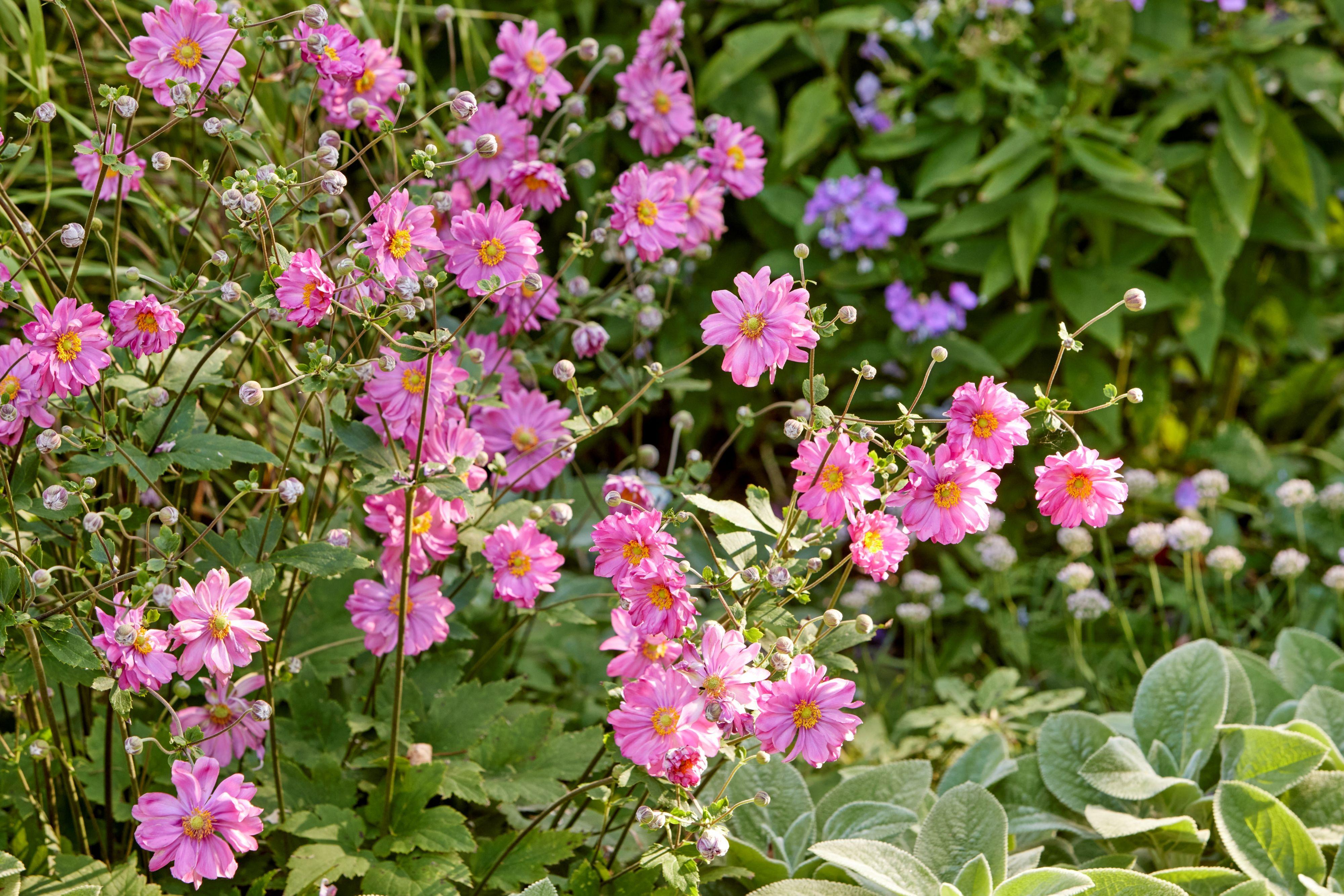
The flowers of Japanese anemone (Anemone hupehensis) fill a midsummer-to-fall gap in the garden when few perennials are in bloom. The spectacular flowers appear on long stems in shades of white and pink. These beauties are at home in cottage gardens or woodland settings and grow well under trees as long as they aren’t in full shade.
Growing Conditions: Part sun to part shade in rich, well-drained soil
Size: Up to 5 feet tall
Zones: 4–8
Toad Lily
Add flair to a fall garden with toad lily (Tricyrtis spp.). The plants are soft and fuzzy, and their arching stems bear clusters of upright flowers in fall when other shade plants have finished blooming. Common toad lily bears orchid-like blooms that are white with dark purple spots, but other varieties are lavender or white without spots. These plants do well in cold weather.
Growing Conditions: Part shade in rich, moist, well-drained soil
Size: Up to 3 feet tall
Zones: 4-9
Threadleaf Bluestar
Low-maintenance threadleaf bluestar (Amsonia hubrichtii) offers three-season garden interest beginning in spring with its pale blue, star-shaped flowers. Attractive green foliage sets off other plants in summer, and in fall, the plant displays a lovely yellow-gold color. These are perfect for a perennial border or near patios or decks.
Growing Conditions: Full to partial sun in fertile, slightly acidic, well-drained soil
Size: Up to 3 feet tall
Zones: 5-9
Agastache
Agastache, also known as anise hyssop (Agastache spp.) is a group of more than 30 species of plants with long-lasting blooms in shades of pink, red, orange, purple, blue, and white. These fragrant perennials are at home in a cottage garden, garden border, along walkways, and in a butterfly garden, where their sweet fragrance attracts hummingbirds and butterflies. These summer bloomers are heat- and drought-tolerant.
Growing Conditions: Full sun and well-drained soil
Size: Up to 3 feet tall
Zones: 4–10
Sneezeweed
Matthew Benson
Despite its name, sneezeweed (Helenium autumnale) won't make you sneeze, nor is it a weed. This native perennial produces beautiful daisy-like flowers late in summer into fall, just when many other plants are winding down for the season. Varieties offer shades of orange, yellow, and red petals. Deadheading helps encourage more blooms and limits this plant's tendency to self-sow.
Growing Conditions: Full sun and well-drained soil
Size: 3-5 feet tall
Zones: 3–9

 English
 Arabic
 French
 Spanish
 Portuguese
 Turkish
 Dutch
Dutch
 Italiano
 Russian
 Romaian
 Portuguese (Brazil)
 Greek
Greek