


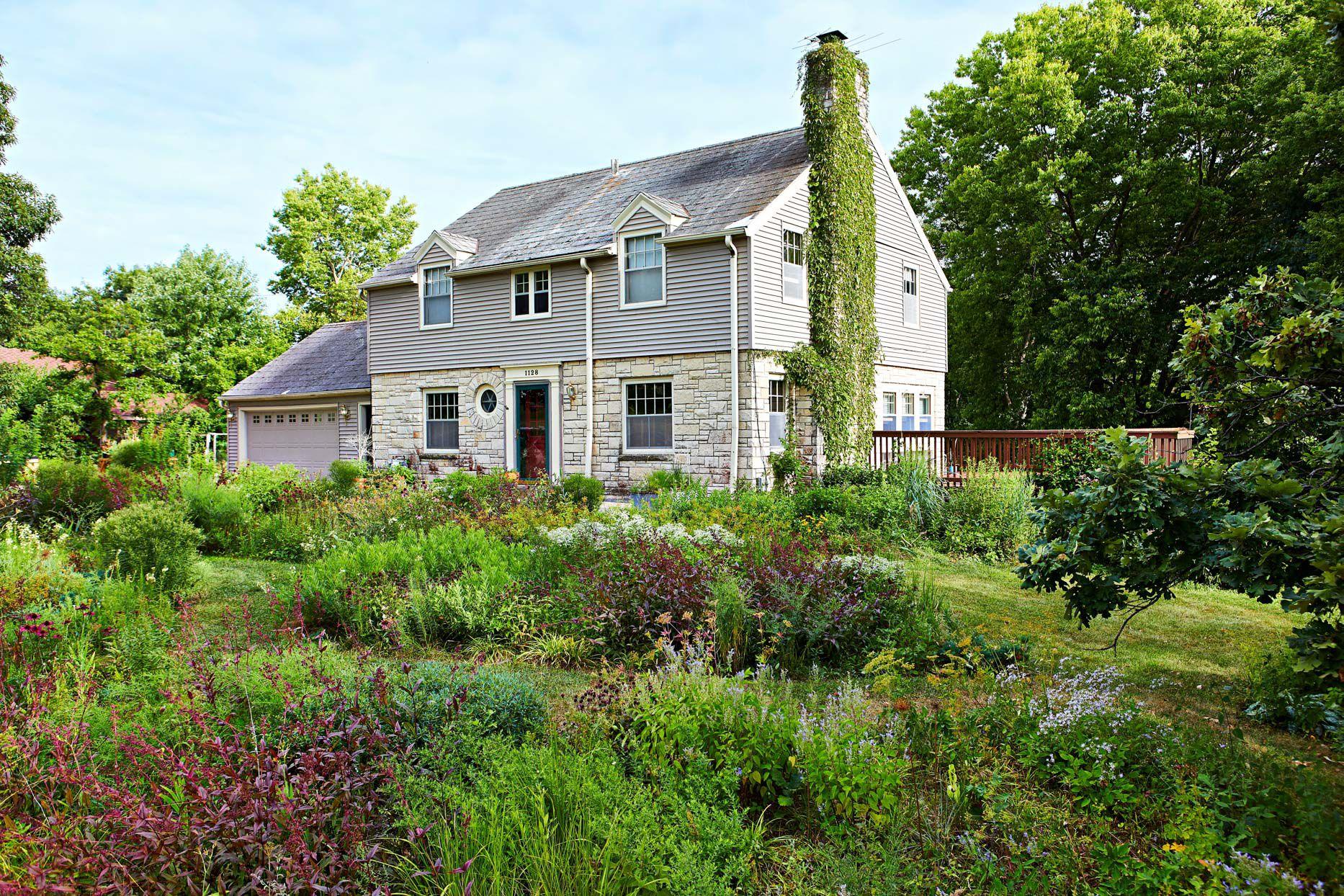
Maybe you're thinking about replacing some lawn with something more sustainable. Perhaps you have a shady spot where nothing grows. Or you may be looking to create more habitat for wildlife such as birds and butterflies. A natural garden or landscape is an increasingly popular solution for all of these situations, but perhaps you're worried it will look too weedy or messy. Here are five design tips that will help you create a space that appeals to both people and wildlife.
1. Choose Compatible Native Plants
You’ve probably heard the adage of “right plant, right place,” and never has this been more true than in natural garden design. What this saying means is that if a plant grows in dry clay in full sun in the wild, that’s where you should place it in your landscape. Sometimes we force plants into conditions they don’t like because we find the plant beautiful, but that is antithetical to natural design. With a little research, you can find all kinds of cool native plants you never knew about that would work well for your site instead.
Further, if you have a smaller front yard or garden bed, it’s wise to select species that are behaved clumpers. This means they don’t self sow or shoot out runners aggressively. In addition to creating maintenance headaches, unruly plants in a too-small space are the ones that truly look weedy.
Further, if you have a smaller front yard or garden bed, it’s wise to select species that are behaved clumpers. This means they don’t self sow or shoot out runners aggressively. In addition to creating maintenance headaches, unruly, spreading plants in too small a space are the ones that truly look weedy.
2. Repetition Is Your Friend
Our eyes have evolved to seek out patterns in nature to make sense of the seeming chaos. In fact, our eyes move in a pattern of fractal geometry (which also defines how plants and animals grow, and helps us map coastlines and forests). Walk through a meadow and try it. You’ll soon notice how you’re viewing repeated flower masses across the space.
To get that natural look in your landscape, group each type of plant in 3-5 of a kind, then repeat that 3, 5, or 7 times. The repetition helps our eyes "read" the landscape and see purpose rather than a chaotic mess.
In a natural meadow or woodland, you’ll also notice how plants are almost growing on top of one another, in close quarters and in layers. So plant everything 12 inches apart to cover open ground. This will help shade out weeds and create habitat for birds, frogs, and other wildlife.
3. Don't Overdo Flowers
Aim to have no more than three types of flowering perennials in bloom at one time. Why only three? It helps not overwhelm the space with color. But isn't that what we want–tons of blooms and color? Yes, except that too much will appear messy and unorganized.
Don't worry, you’ll still have plenty of flowers throughout the growing season with this rule of three. At the same time, you’ll be meeting traditional garden design and aesthetic expectations in the middle, which is what you want to do if you're hoping to encourage neighbors to follow you down the wilder path (or at least appreciate its beauty). You can always add more later as you gain experience and as our wilder spaces gain more acceptance.
Related
4. Stay on the Shorter Side
This strategy goes for foundation beds as well as entire front yards. Generally, selecting species that are under 2-3 feet tall will help provide continuity to the space as well as help folks see over, into, and through the landscape.
Seeing this way is comforting; after all, we evolved in grasslands looking into the distance for predators, where anything blocking the view would be disconcerting. The same principle applies to busy street corners where cars need to see oncoming traffic and kids on bikes. Keep it low and go with the flow.
5. Include Plants for All Seasons
This last design strategy almost takes care of itself because it’s what plants do: they change leaf color in autumn (even herbaceous perennials), and many have attractive seed heads and umbels in winter. And if you have 15-20 species in your landscape, you’ll almost by default have bloom succession.
Still, the hardest period of the year to have blooms are the in-between shoulder seasons–late spring into early summer, and late summer into early fall. So especially pay attention to species that fit your site and bloom during these times, even if it’s just one or two. And don’t forget that winter is a season full of design possibility, and brown is a color, too, with many rich hues.
A natural garden may be born from wilder roots but it's still a garden that requires planning and thought. It can be beautiful to all species who come through the space, human and bird and spider and bee, without losing any of its power or resonance to support for the environment.

 English
 Arabic
 French
 Spanish
 Portuguese
 Deutsch
 Turkish
 Dutch
Dutch
 Italiano
 Russian
 Romaian
 Portuguese (Brazil)