


New Africa/Shutterstock
Without question, menus are a necessary tool for any restaurant's success. They're an establishment's welcome letter to its patrons, providing them with its branding and essential information, such as the fare and the expected cost for each item. However, menus also serve as marketing tools, acting as a patron's informant, a storyteller, and a restaurant's salesperson.
Though it may not seem apparent, menus are among the ways restaurants play mind tricks on their patrons. Indeed, restaurants put forward an illusion of choice through their menu's verbiage, presentation, and even the backstory of a dish. These work in tandem to trick customers into spending more than intended on their next meal. Thankfully, there are ways to identify them and avoid these sneaky tricks.
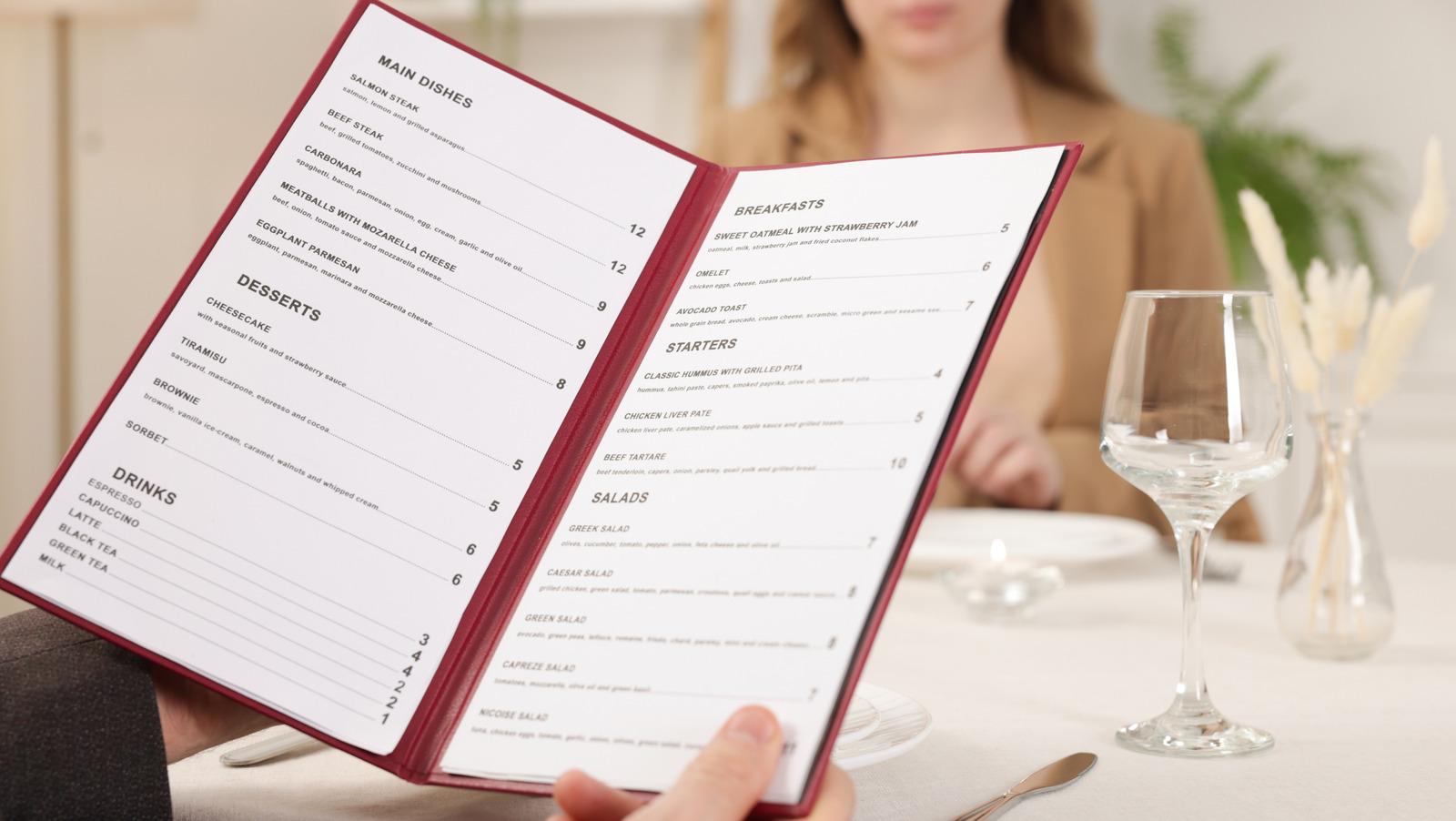
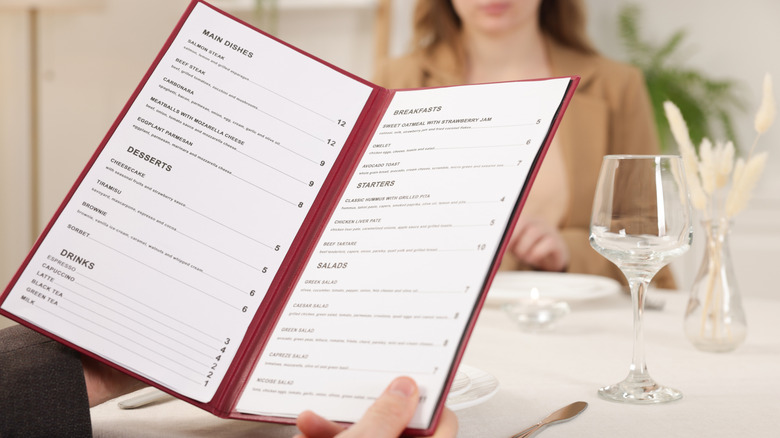
Starting with layout, menus employ organizational tactics to control a customer's focus and steer them toward certain items, placing less profitable dishes at the bottom of a menu page or more expensive items within a lined box. While they may seem too obvious to influence anyone's decision, these tricks sometimes pull double duty, using the sticker shock of a high-cost item to make the other prices seem more reasonable.
Additionally, menus often list their prices as a whole number without a dollar sign, and in a "nested" format, presenting the price in the same font size or smaller than the dish description. These work together, with the higher price serving as a decoy and making the other menu prices appear less imposing and more reasonable.
Menus use fancy verbiage and tricky deals to overcharge patrons
Korhil65/Getty Images
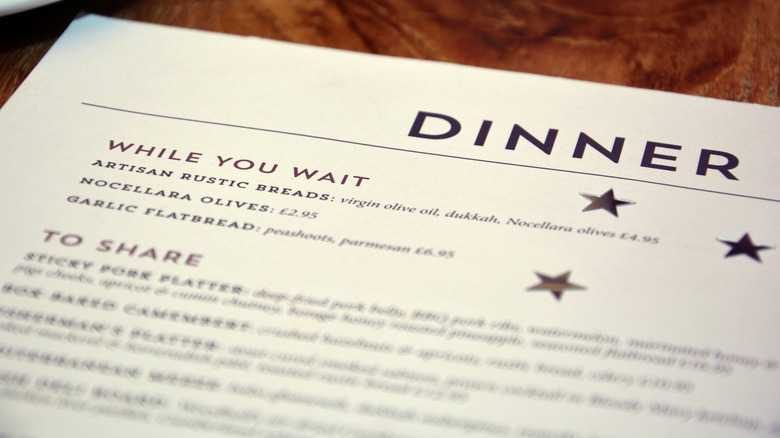
Along with the layout, a menu's purposeful wording is another sketchy restaurant practice to know about. Here, descriptive buzzwords like "slow-roasted" and "extra-crispy" aren't just used to tell patrons how the food is prepared; they're meant to stimulate senses and whet readers' appetite by telling them what to expect.
Menus may include other terms like "artisanal" or "handcrafted" to justify a premium charge for an item, or relatable connections like "Aunt Rosa's Puttanesca" to make dishes more appealing. The latter, especially, is an extension of how a menu's storytelling convinces customers that the dish is a family recipe passed down across generations, thereby making it worth an upcharge or adding to an order. Similar to buzzwords, vague descriptions like "full" or "half" portions can also be potentially deceitful. Given how generic these words are, customers may receive a half portion and only pay a few dollars less, rather than half the cost.
Fancy words and crafty layouts aren't the only tricks to be aware of, as one of the most deceptive practices is the prix fixe menu. Casual and high-end restaurants alike present these as bundled deals, often combining an appetizer, entrée, and dessert at a lesser, fixed cost. Certainly, prix fixe menus are becoming popular for good reason; they can save patrons money and offer them the opportunity to try something new. However, it's worth noting that customers could have saved money by ordering à la carte and skipping the appetizer or dessert, instead of being tricked into paying more for the sake of a deal. Given this information and greater awareness, overpaying at a restaurant doesn't have to be on a customer's menu.

 Arabic
 French
 Spanish
 Portuguese
 Deutsch
 Turkish
 Dutch
Dutch
 Italiano
 Russian
 Romaian
 Portuguese (Brazil)
 Greek
Greek