15 Bizarre Foods From History We Would Never Eat Today - History Collection
9. Calf’s Foot Jelly: Wobbly Victorian Dessert
Victorian-era calf’s foot jelly, a delicate, translucent dessert made from simmered calves’ feet.
A wobbly, clear dessert popular in British Victorian times, calf’s foot jelly was made by boiling calves’ feet to extract gelatin. It was sometimes mixed with wine or lemon. The labor-intensive creation fell out of favor with the rise of powdered gelatin products (kristinholt.com).
10. Blood Soup (Czernina): Polish Tradition
Czernina, traditional Polish duck blood soup, served with noodles and garnished with fresh herbs.
Czernina, also known as czarnina or czarna polewka, is a traditional Polish soup made from duck blood and clear poultry broth. The soup is characterized by its sweet and sour flavor, achieved by balancing sugar and vinegar. It is often served with noodles, dumplings, or boiled potatoes. Historically, czernina was also a symbol in Polish culture; it was served to young men applying for the hand of their beloved ones after the parents rejected their proposal. It is a plot element in Pan Tadeusz, a famous Polish epic poem by Adam Mickiewicz (traditionsacrosseurope).
11. Beaver Tails: Lenten Fare
Beaver tails served as a Lent-approved dish, reflecting unique Catholic dietary classifications.
European settlers and Native Americans enjoyed beaver tail, especially during Lent. The Catholic Church classified beavers as fish, making their fatty tails a church-approved meal. Today, beaver is rarely eaten, and this strange classification is a culinary relic. Smithsonian details the practice.
12. Stuffed Camel: The World’s Largest Roast
A lavish Arabian banquet dish: whole camel stuffed with lamb, chicken, eggs, and rice.
A legendary Arabian feast dish, stuffed camel involves filling a whole roasted camel with lambs, chickens, eggs, and rice. The extravagant recipe appears in records of royal banquets but is seldom, if ever, prepared today for practical and ethical reasons. (vagabondish.com).
13. Kiviak: Fermented Auk Meat
Fermented auks encased in seal skin, kiviak is a celebrated Greenlandic Inuit winter delicacy.
Kiviak is a traditional Greenlandic Inuit delicacy prepared by fermenting whole little auks (a type of seabird) inside a seal skin. The process involves tightly packing up to 500 auks into the seal skin, sewing it shut, and burying it under stones to ferment for several months. The result is a pungent, acquired taste enjoyed during Arctic winters, especially during celebrations like birthdays and weddings. Explore kiviak in The Guardian.
14. Toasted Ants: Aristocratic Snack
Edible ants, once a delicacy for European elites, now spark curiosity and hesitation worldwide.
In South America, edible ants have been revered as delicacies for centuries. Toasted ants once served European elites as an exotic treat, but their use outside traditional regions is rare today. Modern diners are often squeamish about insect-based foods. Smithsonian Magazine on edible ants.
15. Aspic: Savory Meat Jelly
Elegant molded aspic encases meats and vegetables, reflecting centuries of Western culinary tradition.
From the 18th through the mid-20th century, aspic—a beautifully molded jelly enclosing meats, eggs, or vegetables—dominated Western banquet tables. Once an elegant party food, aspic’s gelatinous texture and savory flavor are out of step with current appetites. The earliest detailed recipe for aspic is found in “Le Viandier,” a collection of haute cuisine recipes produced in the 1300s. (en.wikipedia.org)
Conclusion
Historic delicacies reveal shifting culinary values, reflecting evolving ethics and advancements in food preservation.
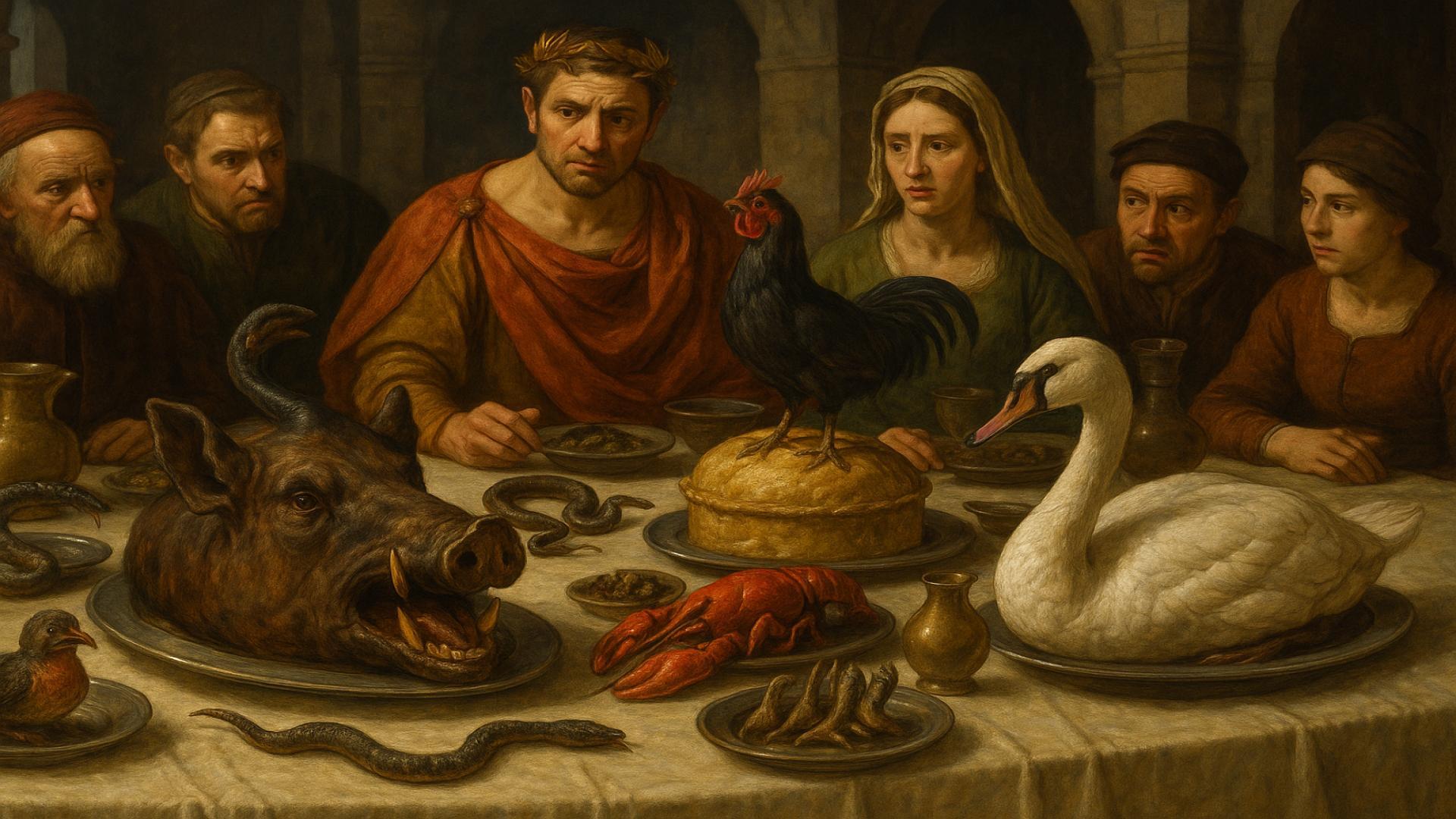
Throughout history, culinary preferences have evolved dramatically, with many once-celebrated dishes now considered unthinkable. This shift is often due to changing ethical standards and advancements in food preservation techniques. Exploring these historical delicacies offers insight into the cultural and societal norms of their times, highlighting how food practices adapt to new knowledge and values. Such explorations underscore the dynamic nature of cuisine and its reflection of human progress.





 English
 Arabic
 French
 Spanish
 Portuguese
 Deutsch
 Turkish
 Dutch
Dutch
 Russian
 Romaian
 Portuguese (Brazil)
 Greek
Greek