


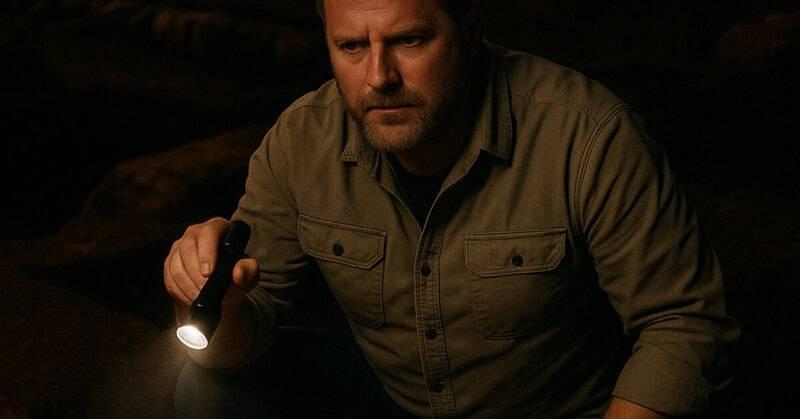
The flashlight beam sweeps left, catches nothing, sweeps right — and then there it is: a carved edge emerging from centuries of silt, the geometry too deliberate to be geology, too old to be anything but history reaching up through the dark to grab you by the collar. That is the feeling Expedition Unknown has delivered to millions of viewers for over a decade. With Josh Gates returning for a new season premiering Wednesday, June 24, 2026 on Discovery Channel, it is worth pausing before the cameras roll to ask the harder question serious viewers should always bring to adventure television: how much of what the show uncovers is genuinely, verifiably real — and why does the answer matter more than most people realize?
What Separates Expedition Unknown from Adventure Theater

Adventure television has a long tradition of treating history as wallpaper — exotic scenery behind a charismatic host, impressive to look at but fundamentally decorative. Expedition Unknown has operated on a different premise from its earliest seasons. The production regularly embeds licensed archaeologists, regional historians, and government heritage officials into the fieldwork itself, turning the camera into something closer to a documentary instrument than a drama prop. The result is a show where the phrase “real discoveries” circulates in archaeology-adjacent communities and university forums, not merely in fan threads debating Gates’s best one-liners.
The production model is worth understanding. Rather than building sets or staging dramatic recreations, the show routinely partners with active academic digs and governmental heritage bodies. Cameras sometimes roll at genuine moments of first contact — a trowel striking something untouched since the reign of a long-dead king. That is not a guarantee of scientific rigor. The show’s dramatic conventions do compress timelines and occasionally overstate uncertainty for pacing reasons. But the baseline commitment to real coordinates, real scholars, and real artifacts places it categorically apart from treasure-hunting theater, and that distinction earns it a different standard of engagement from viewers who care about the history underneath the drama.
A new promo dropped around June 4, 2026, building anticipation for the destinations and mysteries the new season intends to chase. Then, on June 9, Discovery Channel made it official: Josh Gates returns with an action-packed new season on Wednesday, June 24. Before those episodes air, the most useful thing a curious viewer can do is understand the documented, verifiable history behind the show’s most jaw-dropping moments — the archaeology, the scholarship, and why these finds actually matter beyond a sixty-minute runtime.
Lost Cities and Sunken Worlds: The Science Behind the Drama

Among the show’s most enduring contributions to popular historical awareness is its sustained engagement with submerged and buried sites tied to ancient coastal civilizations. The historical argument here is not speculative. Sea levels at the end of the last glacial maximum, roughly twelve thousand years ago, sat somewhere between 300 and 400 feet lower than they do today. Coastlines that once supported dense human settlement — fishing communities, trading ports, ceremonial sites — now lie under open water. Entire chapters of human habitation have been effectively hidden by geology, and the archaeological discipline of underwater survey is still catching up to the scale of what lies below.
When Expedition Unknown teams have worked alongside dive archaeologists and sonar specialists to document submerged structures in the Caribbean and along the Mesoamerican coast, they have done something with lasting value: they have pointed cameras at real coordinates that researchers can return to, generating survey footage and positional data that is categorically different from dramatized speculation. The Mayan world rewards this kind of investigation in particular. Cenotes — the natural sinkholes that served as sacred portals in Mayan cosmology — have yielded human remains, jade offerings, and ceremonial objects that directly corroborate what the written codices describe. When the show has explored these underwater chambers with proper archaeological oversight, it has connected living audiences to a civilization that built cities of extraordinary complexity more than a thousand years before European contact.
The point is not that every dive sequence produces a museum-quality artifact. It is that serious on-location investigation, documented on camera with scholarly partners present, moves the needle of public understanding in a direction that no studio recreation can match. The show’s verified finds, when evaluated fairly, include genuine contributions to the documented record of where humanity has lived, worshipped, and buried its dead.
When the Legend Had a Historical Core

The second great category of the show’s historical value is the one that makes for the most compelling television: the moment when a legend — something dismissed for generations as folklore or wishful thinking — turns out to have a verifiable kernel of truth buried inside it.
Consider the persistent legend of Alexander the Great’s tomb. Alexander died in Babylon in 323 BCE, and the location of his burial has been contested ever since. Ancient sources describe an elaborate gold sarcophagus, a procession of extraordinary pageantry, and a final resting place in Alexandria, Egypt — but the tomb has never been conclusively identified despite centuries of searching. When Expedition Unknown investigated this mystery, the episode functioned as a genuine survey of competing scholarly theories: the hypothesis that the tomb lies beneath the medieval city of Alexandria, obscured by later construction; the argument that it was moved during dynastic struggles in the early Ptolemaic period; the documentary evidence preserved in papyri and ancient accounts that narrows the geographic range without resolving it. No smoking-gun discovery emerged, but the episode’s value lay in its honest accounting of what the historical record actually supports — considerably more than most viewers knew going in.
The same dynamic plays out with episodes investigating buried treasure fleets, vanished explorers, and lost payroll caches. Myths persist because they encode real events. A Spanish galleon did sink. A general did bury his army’s silver. A city did fall and its population did scatter. The historiographical work — separating the historical core from the accumulated folklore that centuries of retelling deposit around it — is exactly what field investigation makes visible. When the show surfaces a physical artifact, a documentary trace, or a site feature that corroborates the kernel of a legend, it is doing something historians take seriously: testing the oral and written record against the physical one.
The Episodes That Hold Up to Scholarly Scrutiny

Among the deep catalog of Expedition Unknown episodes, a handful stand out from a credibility standpoint — moments where the historical community acknowledged the significance of a find, where a site was revisited by researchers, or where a discovery generated discussion beyond the entertainment press.
The show’s investigation into the fate of the lost colony of Roanoke belongs in this category. The 1587 English settlement on the Outer Banks of what is now North Carolina vanished within three years, leaving behind only the carved word “CROATOAN” and a historically documented mystery that has resisted clean resolution for more than four centuries. When production teams worked alongside archaeologists using ground-penetrating radar and documentary analysis, the episode surfaced genuine scholarly debate about whether the colonists dispersed into local Indigenous communities — a theory that physical evidence, including the discovery of European artifacts at Croatoan sites, increasingly supports. The history here is 16th-century colonialism in miniature: a story about the fragility of early European settlement, the complexity of Indigenous-European contact, and the limits of the written record when the people keeping it disappear.
The show’s engagement with Civil War-era lost gold — the Confederate treasury that allegedly vanished in the final chaotic weeks of the war in 1865 — demonstrates how the best episodes use a legendary mystery to illuminate the documented history surrounding it. The Confederate treasury did exist. Jefferson Davis did flee Richmond with it. The historical record does go genuinely cold in a way that supports the mystery’s longevity. Whether the gold was spent, hidden, or simply dissipated in the confusion of a collapsing government remains unresolved. But the episode’s real finds are less about recovered gold than recovered context: the precise geography of the Confederate retreat, the documentary evidence of what was taken and when, and the testimony embedded in period records that narrows the historical argument without closing it.
A third example is the show’s recurring investigation into shipwrecks from the age of European expansion. A 16th-century galleon is not simply old — it is a vessel from the precise historical moment when Spanish and Portuguese naval power was reshaping global trade routes, when silver extracted from Andean mines was flowing across the Pacific and Atlantic to fund European wars, and when entire Indigenous civilizations were being upended by contact with diseases, weapons, and economic systems they had never encountered. When Expedition Unknown dive teams document a wreck with archaeological partners, they are touching the physical evidence of one of the most consequential centuries in human history.
Why the New Season Arrives at a Significant Moment

New Expedition Unknown episodes are set to premiere on June 24, with Gates and his team targeting what the promo frames as fresh geographic theaters and unresolved historical enigmas. The new season appears to continue the show’s established pattern: choosing mysteries with genuine scholarly weight, pairing them with on-location investigation in regions where physical evidence has a reasonable chance of survival, and bringing in regional expertise to contextualize what the cameras find.
The timing matters for a reason that has nothing to do with television scheduling. In 2026, the tools available to field investigators are genuinely transforming what is possible. LiDAR — the laser-based remote sensing technology that revealed the full extent of Mayan cities hidden beneath jungle canopy — has become more accessible and more precise. Underwater robotics have extended the effective depth range for archaeological survey. Environmental DNA analysis can now detect biological traces of human presence in sediment cores and cave deposits, effectively reading the past from soil samples. What Gates and his team find on camera this season carries more evidentiary weight than equivalent television searches did even ten years ago, because the instrumentation behind the drama has fundamentally improved.
The unresolved historical questions that make the best episodes compelling have not gone away. The locations of major historical figures’ tombs, the fate of lost expeditions, the physical extent of civilizations known largely through fragmentary texts — these are genuine scholarly puzzles. The new season will almost certainly engage at least some of them with the combination of narrative drive and on-site rigor that defines the show at its best.
The Honest Case for Popular History Television

Popular history programming, when it does its job honestly, creates something no academic monograph can replicate at scale: a pipeline of public emotional investment in the past. Museum attendance, heritage site funding, and archaeological dig budgets all benefit when millions of people feel a personal stake in what happened before living memory. The viewer who watches an Expedition Unknown episode about a submerged Mayan city and then spends two hours reading about pre-Columbian civilizations has been served by the medium in a way that matters — not because television replaced scholarship, but because it created the appetite that scholarship can satisfy.
The criticism deserves fair acknowledgment. The show is television. It has pacing demands that compress years of academic debate into a single dramatic conversation. It has narrative conventions that occasionally require overstating the significance of a find in the moment of discovery. The music swells when it should probably stay quiet. These are real limitations, not minor quibbles. But the net effect of a show with Expedition Unknown‘s track record — real sites, real scholars, real coordinates — is more historical literacy in its audience, not less. That is a defensible claim, and the show’s catalog supports it.
Consider the viewer who watches the June 24 premiere, finds themselves genuinely unsettled by what Gates uncovers, and goes searching for what was real — who discovers that the history behind the episode is richer, stranger, and more consequential than even the hour of television conveyed. That gap between the show and the full story is not a failure of the medium. It is an invitation. The new season of Expedition Unknown premieres Wednesday, June 24 on Discovery Channel. Go in knowing the history, and the discoveries will hit twice as hard.

 Arabic
 French
 Spanish
 Portuguese
 Deutsch
 Turkish
 Dutch
Dutch
 Italiano
 Russian
 Romaian
 Portuguese (Brazil)
 Greek
Greek