


As Amazon embraces Unreal Engine for Fallout, one legendary director says it's filmmaking's "greatest slip backwards"

As Amazon embraces Unreal Engine for Fallout, one legendary director says it's filmmaking's "greatest slip backwards"
January 21, 2026: 11:26am PT: Epic Games' VFX supervisor has responded to Verbinski's claims, stating that "it's inaccurate for anyone in the industry to claim that one tool is to blame for some erroneously perceived issues with the state of VFX and CGI."
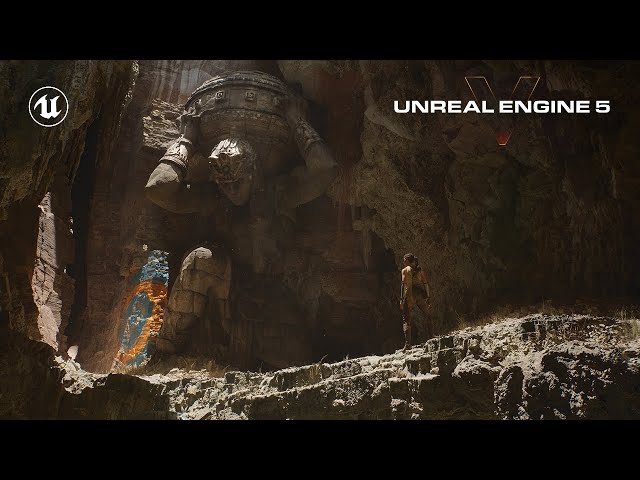
Unreal Engine 5 remains one of the most controversial topics in PC gaming. While its cutting-edge toolset can certainly help to enhance realism, perceived performance issues and a general feeling that lots of UE5 games look distractingly similar hasn't endeared most gamers to the tech. It's reductive to say there's one homogenous UE5 look, but from Avowed to Oblivion Remastered to Clair Obscur: Expedition 33, we're seeing a lot of similar tech deployed time and again, rekindling memories of the years where so many games had that UE3 look.
But Unreal Engine isn't just used in videogames. You've seen it in the background of The Mandalorian. You're probably watching it right now in Amazon Prime's Fallout. It's something that most viewers wouldn't really know about, but it's very much here to stay.
Legendary director Gore Verbinski, however, isn't a fan. The man behind the first three Pirates of the Caribbean films (the only ones you really need to care about), 2002's The Ring remake, and Rango, Verbinski has now criticized Unreal's use in filmmaking, calling it a "step backwards" for VFX development.

Speaking to But Why Tho? ahead of the release of Good Luck, Have Fun, Don't Die on Friday January 30, Verbinski is asked "why don't [movies] look as good" these days. Well, he places some of the blame on an overreliance on Unreal tech.
"I think the simplest answer is you've seen the Unreal gaming engine enter the visual effects landscape. So it used to be a divide, with Unreal Engine being very good at videogames, but then people started thinking: 'maybe movies can also use Unreal for finished visual effects.' So you have this sort of gaming aesthetic entering the world of cinema.
Noting that said "gaming aesthetic" works well for movies like Marvel's Avengers because "you kind of know you're in a heightened, unrealistic reality," he believes that it "doesn't work from a strictly photo-real standpoint. I just don't think it takes light the same way; I don't think it fundamentally reacts to subsurface, scattering, and how light hits skin and reflects in the same way. So that's how you get this uncanny valley when you come to creature animation, a lot of in-betweening is done for speed instead of being done by hand."
The 'uncanny valley' criticism has been levied at AI voice acting as well - most recently by Baldur's Gate 3 star Neil Newbon in our Game Awards interview. It's uncomfortable to hear, and uncomfortable to watch.
But Verbinski believes that studio executives "think no one will care that the ships in the ocean look like they're not on the water. In the first Pirates movie, we were actually going out to sea and getting on a boat.
"I think that Unreal Engine coming in and replacing Maya (once-industry standard) as a sort of fundamental is the greatest slip backwards," he summarizes, concluding. "You can make a very real helicopter. But as soon as it flies wrong, your brain knows it's not real. It has to earn every turn; it has to move right. It's still animation, sometimes it's not just the lighting and the photography, sometimes it's the motion."

In a new statement provided to PCGamesN, Epic Games' VFX supervisor Pat Tubach (known for his work on Star Wars: The Force Awakens, and Star Trek Into Darkness), has responded to Verbinski's claims, stating that "it's inaccurate for anyone in the industry to claim that one tool is to blame for some erroneously perceived issues with the state of VFX and CGI.
"It's true that there are a lot more people making computer graphics than ever before, and with that scale comes a range of successes and failures - but aesthetic and craft comes from artists, not software."
"Unreal Engine is primarily used for pre-visualization, virtual production, and in some cases final pixels. I can guarantee that the artists working on big blockbuster VFX films like Pirates of the Caribbean ten to 15 years ago could only dream about having a tool as powerful as Unreal Engine on their desks to help them get the job done - and I should know - I was one of them!"

Given the amount of videogame-based films and shows we've seen pop up in the past few years - Fallout, League of Legends: Arcane, Minecraft, the Elden Ring movie - I suspect we'll keep seeing Unreal in film. While I too believe it's perfect for bringing sprawling, fantastical worlds to life, I still long for the days of practical effects. Give me a rubber bat on a string any day, or a robotic, remote-control Dalek.

 English
 Arabic
 French
 Spanish
 Portuguese
 Deutsch
 Dutch
Dutch
 Italiano
 Russian
 Romaian
 Portuguese (Brazil)
 Greek
Greek