


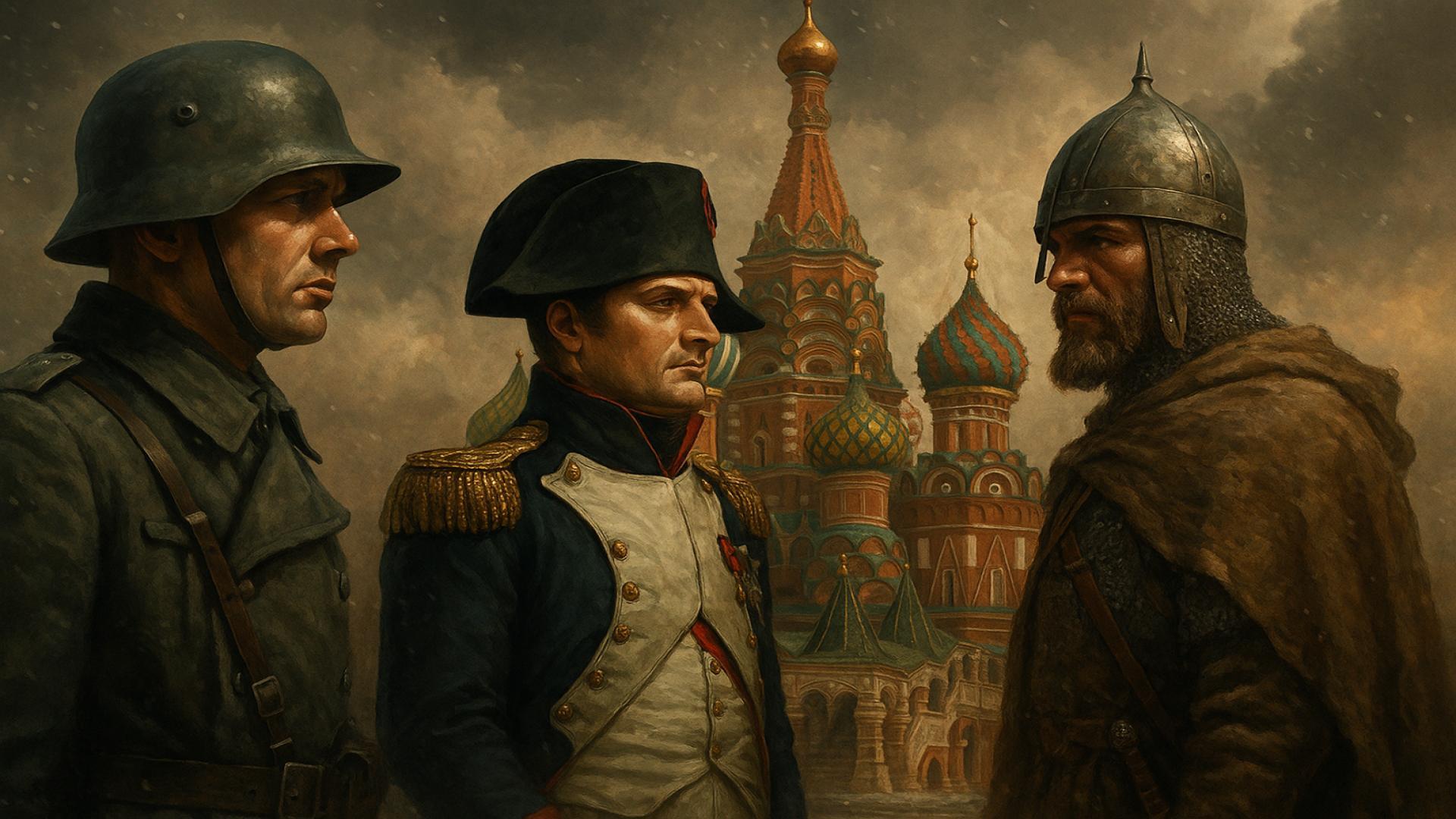
2: The Resilience and Resourcefulness of the Russian People

Throughout history, Russia’s ability to mobilize its population and harness its resourcefulness has been a decisive factor in repelling foreign invasions. This resilience is evident in various historical episodes where the Russian populace, from soldiers to civilians, demonstrated unwavering determination and ingenuity in the face of external threats. During the Time of Troubles in the early 17th century, Russia faced a period of political instability and foreign intervention. The Polish-Lithuanian Commonwealth took advantage of the situation, leading to the Battle of Klushino in 1610. Despite being outnumbered, the Polish-Lithuanian forces achieved a decisive victory over the Russian army. However, this victory did not lead to the subjugation of Russia. The Russian people, under the leadership of figures like Prince Dmitry Pozharsky and Kuzma Minin, organized the militia known as the People’s Volunteer Army. This grassroots movement successfully expelled the Polish-Lithuanian forces from Moscow in 1612, restoring Russian sovereignty. The unity and determination of the Russian populace during this period highlight the nation’s capacity for self-defense and resilience against foreign domination.
In the 20th century, during the Russian Civil War (1917-1923), the Yaroslavl Uprising of 1918 stands out as a testament to the Russian people’s resistance against foreign intervention. The uprising was initiated by the Union for the Defense of the Motherland and Freedom, a group of anti-Bolshevik forces, in the city of Yaroslavl. Despite being heavily outnumbered and facing a well-equipped Bolshevik army, the insurgents held their ground for several weeks. The resilience of the Yaroslavl defenders, though ultimately suppressed, demonstrated the Russian spirit of resistance against foreign-backed forces.
In more recent times, during the Second Chechen War (1999-2000), Russian forces faced significant challenges in the city of Grozny. The Chechen fighters, familiar with the urban terrain, employed guerrilla tactics, including the use of tunnels, to counter the Russian military’s superior firepower. This form of tunnel warfare allowed the Chechens to infiltrate Russian positions, conduct surprise attacks, and evade detection. The Russian military’s struggle to adapt to these tactics underscores the resourcefulness of the Chechen fighters and the challenges posed by unconventional warfare.


 Arabic
 French
 Spanish
 Portuguese
 Deutsch
 Turkish
 Dutch
Dutch
 Italiano
 Russian
 Romaian
 Portuguese (Brazil)
 Greek
Greek