


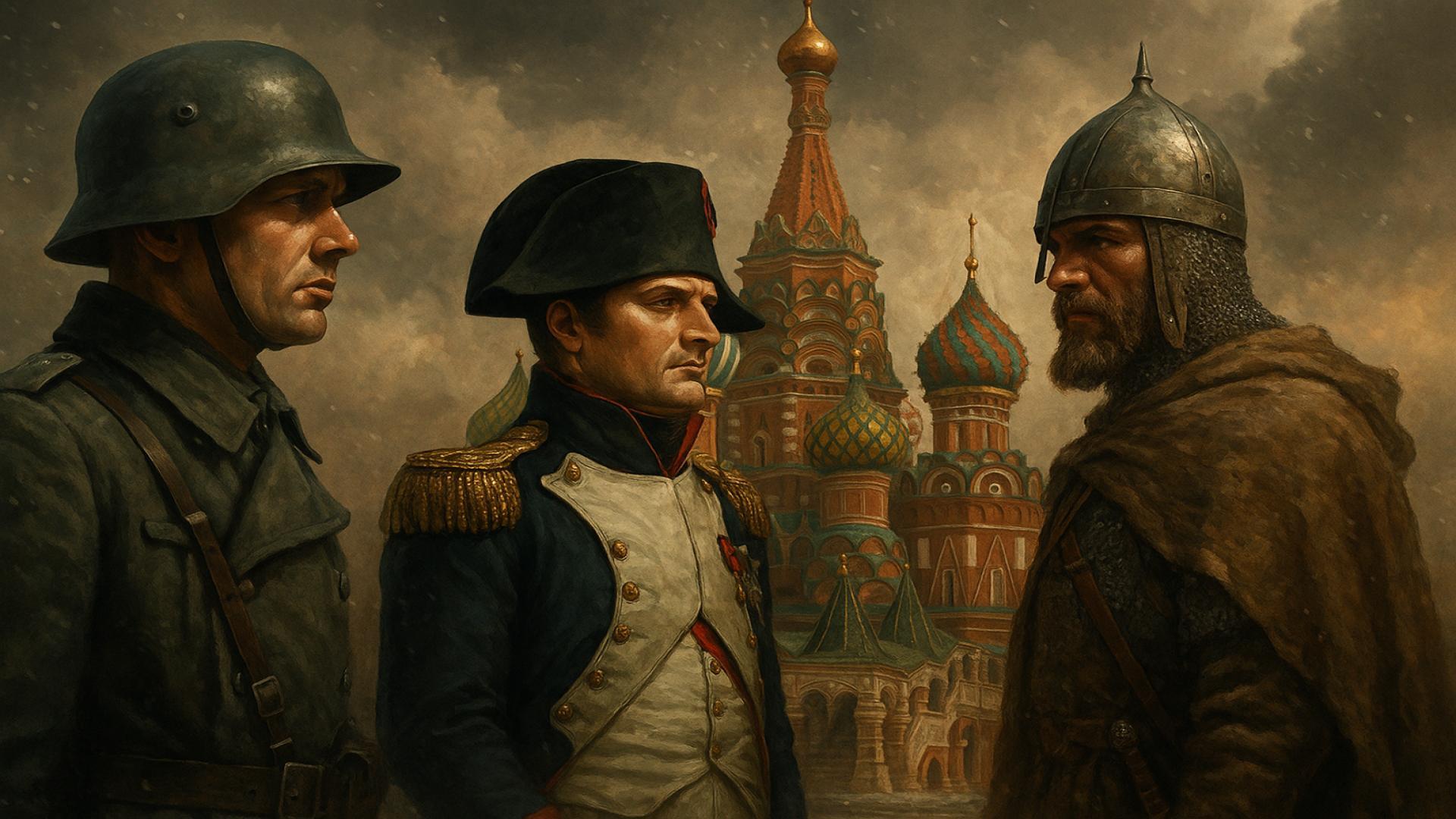
10 Historical Reasons Why Invading Russia is Always a Bad Idea

0
51

10 Historical Reasons Why Invading Russia is Always a Bad Idea - History Collection

2: The Resilience and Resourcefulness of the Russian People

10 Historical Reasons Why Invading Russia is Always a Bad Idea
Snow-covered Russian landscape with distant tanks stalled, under a gray, ominous winter sky.

Throughout history, Russia’s ability to mobilize its population and harness its resourcefulness has been a decisive factor in repelling foreign invasions. This resilience is evident in various historical episodes where the Russian populace, from soldiers to civilians, demonstrated unwavering determination and ingenuity in the face of external threats. During the Time of Troubles in the early 17th century, Russia faced a period of political instability and foreign intervention. The Polish-Lithuanian Commonwealth took advantage of the situation, leading to the Battle of Klushino in 1610. Despite being outnumbered, the Polish-Lithuanian forces achieved a decisive victory over the Russian army. However, this victory did not lead to the subjugation of Russia. The Russian people, under the leadership of figures like Prince Dmitry Pozharsky and Kuzma Minin, organized the militia known as the People’s Volunteer Army. This grassroots movement successfully expelled the Polish-Lithuanian forces from Moscow in 1612, restoring Russian sovereignty. The unity and determination of the Russian populace during this period highlight the nation’s capacity for self-defense and resilience against foreign domination.

In the 20th century, during the Russian Civil War (1917-1923), the Yaroslavl Uprising of 1918 stands out as a testament to the Russian people’s resistance against foreign intervention. The uprising was initiated by the Union for the Defense of the Motherland and Freedom, a group of anti-Bolshevik forces, in the city of Yaroslavl. Despite being heavily outnumbered and facing a well-equipped Bolshevik army, the insurgents held their ground for several weeks. The resilience of the Yaroslavl defenders, though ultimately suppressed, demonstrated the Russian spirit of resistance against foreign-backed forces.

In more recent times, during the Second Chechen War (1999-2000), Russian forces faced significant challenges in the city of Grozny. The Chechen fighters, familiar with the urban terrain, employed guerrilla tactics, including the use of tunnels, to counter the Russian military’s superior firepower. This form of tunnel warfare allowed the Chechens to infiltrate Russian positions, conduct surprise attacks, and evade detection. The Russian military’s struggle to adapt to these tactics underscores the resourcefulness of the Chechen fighters and the challenges posed by unconventional warfare.

3: The Strategic Depth and Defensive Infrastructure of Russia

10 Historical Reasons Why Invading Russia is Always a Bad Idea
Snow-covered tanks stranded in a vast, frozen landscape under dark, ominous clouds.

Russia’s vast territorial expanse and its strategic depth have historically provided a formidable defense against foreign invasions. This extensive space allows for the establishment of layered defensive positions, the relocation of critical resources, and the ability to regroup and counterattack, thereby complicating the efforts of invading forces.

During World War II, the Soviet Union’s strategic depth played a pivotal role in the defense against Nazi Germany’s Operation Barbarossa. As German forces advanced deep into Soviet territory, they faced extended supply lines and the challenge of maintaining control over vast areas. The Soviet strategy involved retreating strategically, drawing German forces further into the interior, and then launching counteroffensives. This approach not only exhausted German resources but also allowed the Soviets to regroup and reinforce their positions. The Battle of Stalingrad (August 1942 – February 1943) exemplifies this strategy, where the Soviet defense, combined with encirclement tactics, led to a significant turning point in the war.

In more recent times, Russia’s strategic depth has been evident in its military operations in Ukraine. The use of extensive artillery bombardments and missile strikes has been a hallmark of Russian tactics. For instance, during the 2022 invasion, Russia employed a combination of guided missiles, artillery, and rocket systems to target Ukrainian military positions and infrastructure. This approach aimed to degrade Ukrainian defenses from a distance, leveraging Russia’s superior firepower and the vast distances over which it could operate (washingtonpost.com).

Additionally, Russia’s adaptation to modern warfare technologies, such as the deployment of drones and electronic warfare systems, has enhanced its defensive capabilities. The use of drones for reconnaissance and targeted strikes allows Russian forces to gather intelligence and deliver precision attacks without exposing personnel to direct combat. Electronic warfare systems have been employed to disrupt enemy communications and navigation, further complicating the operational environment for adversaries (foreignaffairs.com).

Furthermore, Russia’s ability to mobilize and deploy large numbers of troops across its vast territory provides a strategic advantage. The sheer scale of its military resources allows for rapid reinforcement of threatened areas and the ability to launch counteroffensives. This capacity to concentrate forces at critical points has been a decisive factor in repelling invasions and maintaining territorial integrity.

4: The Evolution and Integration of Advanced Military Technologies

10 Historical Reasons Why Invading Russia is Always a Bad Idea
Snow-covered battlefield with abandoned military equipment and dense, misty forests under a gray sky.

Throughout its history, Russia has demonstrated a remarkable ability to adapt and integrate advanced military technologies, enhancing its defensive capabilities and complicating the efforts of potential invaders. This continuous evolution underscores the challenges faced by foreign powers attempting to conquer Russian territory.

During the Russo-Ukrainian War, Russia’s military innovation was particularly evident in its extensive use of unmanned aerial vehicles (UAVs), commonly known as drones. Initially, Russia’s drone capabilities were limited, but over time, the country significantly expanded its drone fleet, incorporating both domestically produced and foreign-sourced models. This expansion allowed Russia to conduct a wide range of operations, including reconnaissance, targeted strikes, and electronic warfare. The integration of drones into Russian military strategy provided real-time intelligence and precision targeting, enhancing the effectiveness of its forces (foreignaffairs.com).

In response to the increasing threat of Ukrainian drone attacks, Russia developed and deployed countermeasures to protect its assets. One notable adaptation was the introduction of “cope cages,” a form of improvised vehicle armor designed to intercept and neutralize incoming loitering munitions and top-attack missiles. These structures, resembling cages mounted atop vehicles, aimed to disrupt the guidance systems of incoming threats, thereby reducing the risk of damage to Russian equipment. While the effectiveness of cope cages varied, their widespread adoption highlighted Russia’s proactive approach to countering emerging threats.

Furthermore, Russia established the Unmanned Systems Forces in 2025, a dedicated branch within the Russian Armed Forces focused on the development and deployment of unmanned systems. This strategic move underscored the critical role of unmanned technologies in modern warfare and Russia’s commitment to maintaining a technological edge. The formation of this branch facilitated the centralized coordination of drone operations, ensuring more effective integration of unmanned systems into Russian military doctrine. In addition to UAVs, Russia’s military modernization efforts encompassed the development of advanced electronic warfare (EW) systems. These systems were designed to disrupt or neutralize enemy communications, navigation, and targeting capabilities, thereby degrading the effectiveness of adversary operations. The deployment of EW systems allowed Russian forces to establish electronic dominance on the battlefield, complicating the operational environment for potential invaders (armyupress.army.mil).

Russia’s integration of artificial intelligence (AI) into its military operations further enhanced its defensive capabilities. AI technologies were employed to analyze vast amounts of battlefield data, enabling rapid decision-making and adaptive strategies. The use of AI in drone operations, for instance, allowed for more autonomous and efficient targeting, reducing the cognitive load on human operators and increasing the speed of response to emerging threats (lemonde.fr).

5: The Impact of Historical Military Defeats on Russian Military Strategy and National Resolve

10 Historical Reasons Why Invading Russia is Always a Bad Idea
Snow-covered tanks abandoned in a vast, wintry landscape under a dramatic, stormy sky.

Throughout its history, Russia has faced significant military defeats that have profoundly influenced its military strategies and bolstered national resolve. These experiences have instilled a deep-seated determination to prevent future invasions and have shaped Russia’s approach to defense and warfare.

One notable example is the Battle of Mukden during the Russo-Japanese War (1904-1905). Fought from February 20 to March 10, 1905, near Mukden (modern-day Shenyang, China), this battle was one of the largest land engagements prior to World War I, involving approximately 610,000 combatants. The Japanese forces, commanded by General Ōyama Iwao, achieved a decisive victory over the Russian army led by General Aleksey Kuropatkin. The battle resulted in significant casualties on both sides, with the Japanese suffering 77,504 total casualties and the Russians 88,352. The defeat had far-reaching consequences, leading to the loss of southern Manchuria to Japan and contributing to the eventual end of the Russo-Japanese War. This loss exposed weaknesses in Russian military leadership and logistics, prompting extensive reforms in the Russian military to modernize and strengthen its forces.

Another significant defeat occurred during World War II, with the Battle of Stalingrad (August 23, 1942 – February 2, 1943) serving as a pivotal turning point. The German Wehrmacht’s advance into the Soviet Union was halted and reversed in this brutal confrontation. The Soviet victory, achieved at a tremendous cost, marked the beginning of a series of successful offensives that eventually led to the defeat of Nazi Germany. The immense human and material losses suffered during this battle galvanized the Soviet Union’s resolve to defend its territory at all costs, instilling a sense of national unity and determination that persists in Russian military doctrine today (apnews.com).

These historical defeats have had a lasting impact on Russian military strategy and national consciousness. The lessons learned from these experiences have led to a focus on strategic depth, the fortification of defensive positions, and the development of a resilient and determined military ethos. The memory of these defeats continues to influence Russia’s approach to defense, serving as a powerful motivator to prevent future invasions and to maintain a strong and capable military force.

6: The Integration of Nuclear Deterrence and Escalation Management in Russian Military Doctrine

10 Historical Reasons Why Invading Russia is Always a Bad Idea
Snow-covered battlefield with retreating soldiers and abandoned equipment under a cold, ominous sky.

Russia’s military doctrine places significant emphasis on nuclear deterrence and escalation management, viewing nuclear weapons as a pivotal component of its defense strategy. This approach aims to deter potential adversaries from initiating conflict and to manage the escalation of hostilities, thereby complicating the strategic calculations of any nation considering an invasion of Russian territory.

In November 2024, Russia formally updated its nuclear doctrine, lowering the threshold for the use of nuclear weapons. The revised doctrine permits a potential nuclear response not only to nuclear attacks but also to conventional attacks on Russia, particularly if such attacks are supported by a nuclear power. This strategic shift underscores Russia’s intent to deter adversaries by signaling a readiness to escalate conflicts to the nuclear level if its sovereignty is threatened (apnews.com).

Central to this doctrine is the concept of strategic deterrence, which encompasses nuclear weapons, strategic conventional weapons, and non-military measures. This comprehensive approach aims to influence the behavior of potential adversaries by presenting a multifaceted threat that extends beyond traditional military capabilities. By integrating various elements of power, Russia seeks to create a complex deterrent environment that complicates the decision-making processes of potential invaders (congress.gov).

Furthermore, Russia’s military strategy incorporates the principles of “New Generation Warfare,” emphasizing the use of information and psychological operations to achieve strategic objectives. This approach involves leveraging information as a weapon to influence the beliefs and behaviors of adversaries, thereby achieving objectives without resorting to conventional military force. By integrating these non-military tools into its defense strategy, Russia aims to create a comprehensive deterrent that extends beyond traditional military capabilities.

The integration of nuclear deterrence, strategic escalation management, and New Generation Warfare into Russia’s military doctrine presents a formidable challenge to any nation contemplating an invasion. The multifaceted nature of this strategy complicates the potential costs and risks associated with military aggression against Russia, serving as a significant deterrent to foreign powers.

Section 7: The Soviet-Afghan War and Its Impact on Russian Military Doctrine

10 Historical Reasons Why Invading Russia is Always a Bad Idea
Snow-covered battlefield with abandoned tanks and distant, ominous Russian forests under a gray sky.

The Soviet-Afghan War (1979-1989) stands as a pivotal chapter in Russian military history, profoundly influencing its military doctrine and strategic approach. The conflict not only exposed the challenges of engaging in prolonged counterinsurgency operations but also instilled a deep-seated aversion to foreign military interventions, shaping Russia’s defense policies for decades to come.

In December 1979, the Soviet Union intervened in Afghanistan to support the faltering pro-Soviet government of the People’s Democratic Party of Afghanistan (PDPA). The initial operation, known as Operation Baikal-79, involved approximately 30,000 Soviet troops and aimed to secure key installations and eliminate resistance. Despite the swift military successes, the operation marked the beginning of a protracted and grueling conflict. The Soviet forces faced formidable resistance from the Afghan mujahideen, who were bolstered by support from the United States and other nations. The rugged terrain, coupled with the mujahideen’s guerrilla tactics, rendered conventional military strategies ineffective. The Soviet military’s inability to adapt to these unconventional warfare methods led to significant casualties and a protracted stalemate (britannica.com).

By the time of the Soviet withdrawal in February 1989, the human cost was substantial. Official Soviet records reported 14,453 military fatalities, with an additional 312 soldiers missing in action or taken prisoner. The conflict also resulted in over 469,000 Soviet soldiers being wounded or falling ill, highlighting the severe toll on personnel. The economic and political repercussions were equally profound. The war drained Soviet resources, contributing to economic stagnation and public disillusionment. The failure to achieve a decisive victory in Afghanistan eroded the credibility of the Soviet government and military leadership, leading to widespread criticism and calls for reform (globalsecurity.org).

In response to the lessons learned from the Soviet-Afghan War, Russian military doctrine underwent significant revisions. The emphasis shifted towards avoiding prolonged engagements in foreign conflicts, particularly those involving counterinsurgency operations. The experience underscored the importance of understanding the socio-political dynamics of conflict zones and the necessity of adapting military strategies to unconventional warfare. (globalsecurity.org)

8: The Legacy of World War I and II in Shaping Russian Military Resilience

10 Historical Reasons Why Invading Russia is Always a Bad Idea
Snow-covered Russian landscape with distant military vehicles advancing under a cold, ominous sky.

Russia’s experiences in World War I and World War II have profoundly influenced its military resilience and strategic doctrines, instilling a deep-seated determination to defend its sovereignty against foreign invasions. The immense human and material costs endured during these conflicts have left an indelible mark on Russia’s national consciousness, reinforcing its commitment to national defense and shaping its approach to military engagements. In World War I, Russia faced significant challenges, including inadequate equipment, logistical difficulties, and strategic missteps. The Russian military suffered approximately 1.8 million soldiers killed, with millions more wounded or missing, marking the highest number of casualties among the nations involved in the conflict. These staggering losses were exacerbated by poor military strategy, inadequate equipment, and a lack of effective medical care. The immense toll on its military personnel had lasting ramifications for Russian society, as families mourned the loss of loved ones and the war’s brutality became increasingly evident (luxwisp.com).

Despite these hardships, Russia achieved notable successes, such as the Battle of Galicia in 1914, where Russian forces inflicted a significant defeat on the Austro-Hungarian army, capturing substantial territory. This victory demonstrated Russia’s capacity to mobilize and execute large-scale operations effectively, despite the challenges faced. World War II further solidified Russia’s military resilience. The Soviet Union’s victory over Nazi Germany, achieved at a tremendous human cost, remains a defining moment in Russian history. The Battle of Stalingrad (August 23, 1942 – February 2, 1943) stands as a testament to Soviet determination and strategic acumen, marking a turning point in the war. The Soviet victory, achieved at a tremendous cost, marked the beginning of a series of successful offensives that eventually led to the defeat of Nazi Germany. The human toll was staggering, with estimates of Soviet military and civilian deaths ranging from 20 to 27 million. This immense sacrifice has been commemorated annually on May 9th, known as Victory Day, a national holiday in Russia that honors the memory of those who perished and celebrates the resilience of the Russian people (time.com).

9: The Strategic Depth and Defensive Infrastructure of Russia

10 Historical Reasons Why Invading Russia is Always a Bad Idea
Snow-covered battlefield with retreating soldiers and abandoned military equipment under a bleak, overcast sky.

Russia’s vast territorial expanse and its strategic depth have historically provided a formidable defense against foreign invasions. This extensive space allows for the establishment of layered defensive positions, the relocation of critical resources, and the ability to regroup and counterattack, thereby complicating the efforts of invading forces. During World War II, the Soviet Union’s strategic depth played a pivotal role in the defense against Nazi Germany’s Operation Barbarossa. As German forces advanced deep into Soviet territory, they faced extended supply lines and the challenge of maintaining control over vast areas. The Soviet strategy involved retreating strategically, drawing German forces further into the interior, and then launching counteroffensives. This approach not only exhausted German resources but also allowed the Soviets to regroup and reinforce their positions. The Battle of Stalingrad (August 1942 – February 1943) exemplifies this strategy, where the Soviet defense, combined with encirclement tactics, led to a significant turning point in the war. (ausa.org)

In more recent times, Russia’s strategic depth has been evident in its military operations in Ukraine. The use of extensive artillery bombardments and missile strikes has been a hallmark of Russian tactics. For instance, during the 2022 invasion, Russia employed a combination of guided missiles, artillery, and rocket systems to target Ukrainian military positions and infrastructure. This approach aimed to degrade Ukrainian defenses from a distance, leveraging Russia’s superior firepower and the vast distances over which it could operate. Additionally, Russia’s adaptation to modern warfare technologies, such as the deployment of drones and electronic warfare systems, has enhanced its defensive capabilities. The use of drones for reconnaissance and targeted strikes allows Russian forces to gather intelligence and deliver precision attacks without exposing personnel to direct combat. Electronic warfare systems have been employed to disrupt enemy communications and navigation, further complicating the operational environment for adversaries. Furthermore, Russia’s ability to mobilize and deploy large numbers of troops across its vast territory provides a strategic advantage. The sheer scale of its military resources allows for rapid reinforcement of threatened areas and the ability to launch counteroffensives. This capacity to concentrate forces at critical points has been a decisive factor in repelling invasions and maintaining territorial integrity.

In summary, Russia’s strategic depth and defensive infrastructure, combined with its adaptability to modern warfare technologies and its capacity for large-scale mobilization, present significant challenges to any foreign power considering invasion. These factors have historically and continue to serve as formidable deterrents against external aggression (ausa.org).

10. Conclusion

10 Historical Reasons Why Invading Russia is Always a Bad Idea
Failed invasions of Russia highlight the perils of underestimating its vastness, resilience, and strategic depth.

Throughout history, numerous military powers have attempted to invade Russia, only to face catastrophic failures. These historical instances underscore the critical importance of understanding and respecting Russia’s vastness, resilience, and strategic depth. Invaders who have underestimated these factors have faced significant challenges, highlighting the peril of underestimating the complexities involved in engaging with Russia. The lessons drawn from these historical events continue to serve as a formidable deterrent to any would-be invader, emphasizing the need for thorough strategic planning and respect for Russia’s enduring strength and determination.

Αναζήτηση
Κατηγορίες
Διαβάζω περισσότερα
Religion
Hammer Mill Market: Opportunities and Forecast 2025 –2032
Global Executive Summary Hammer Mill Market: Size, Share, and Forecast CAGR Value The...
από Pooja Chincholkar 2025-10-09 08:49:32 0 1χλμ.
Παιχνίδια
SGDQ 2025 is here, with speedruns going from Monster Hunter Wilds to Blue Prince
SGDQ 2025 is here, with speedruns going from Monster Hunter Wilds to Blue Prince As an Amazon...
από Test Blogger6 2025-07-06 17:00:12 0 2χλμ.
Παιχνίδια
Marvel Rivals Season 4 reveal confirms new hero that's something of an outsider
Marvel Rivals Season 4 reveal confirms new hero that's something of an outsider As an Amazon...
από Test Blogger6 2025-09-03 19:00:12 0 1χλμ.
Science
JWST Reveals Dust Being Destroyed In The Galaxy’s Most Extreme Colliding-Wind Binary
JWST Reveals Dust Being Destroyed In The Galaxy’s Most Extreme Colliding-Wind BinaryThe JWST has...
από test Blogger3 2025-07-28 12:00:15 0 2χλμ.
Food
A Year Later, The Cinnamon Lead Recall Still Isn't Over (The List Of Brands Keeps Growing)
A Year Later, The Cinnamon Lead Recall Still Isn't Over (The List Of Brands Keeps Growing)...
από Test Blogger1 2025-10-15 21:00:06 0 932