


Alaska Saw More Wildfires In The Last Century Than In The Previous 3,000 Years
Alaska Saw More Wildfires In The Last Century Than In The Previous 3,000 Years
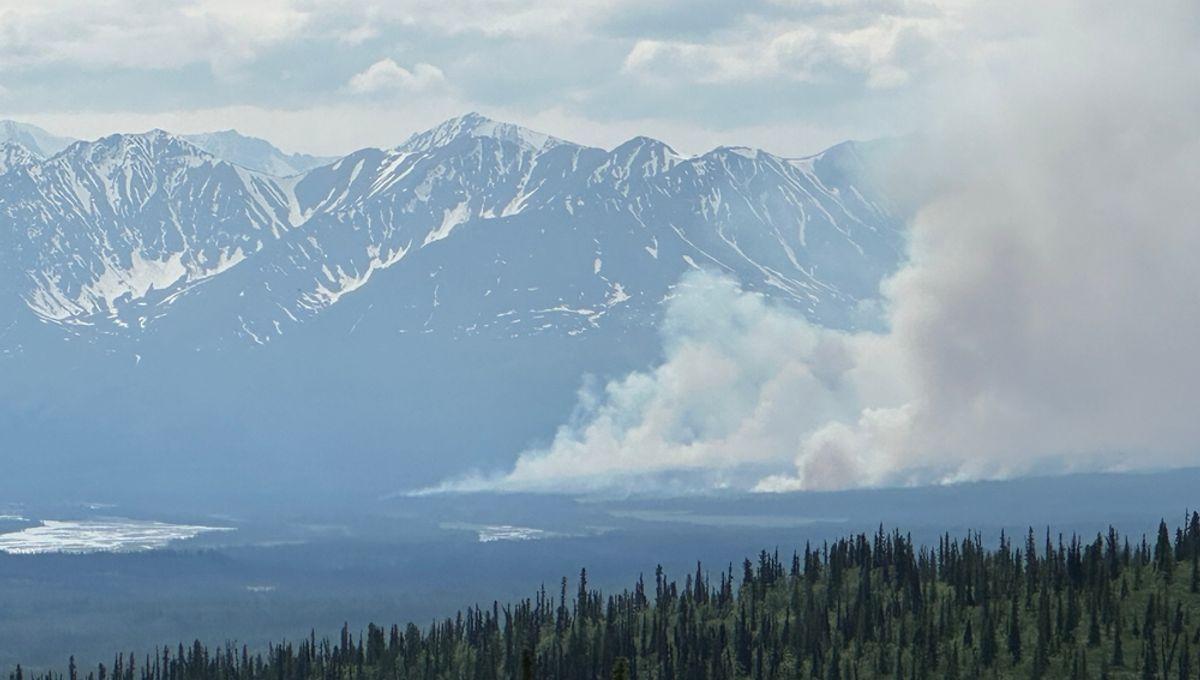
Alaska is perhaps better known for snow and ice than it is fire. But new research shows the Last Frontier has been hit by more wildfires over the last century than at any other time since the rule of Ramses the Great.
The rest of this article is behind a paywall. Please sign in or subscribe to access the full content. The study’s authors put this down to the impact of global warming, which is causing soil dry out and woody plants to proliferate, providing the perfect conditions for wildfires to flourish. This suggests the recent spurt of wildfires are not an anomaly but a sign of things to come. “The interlinked changes across millennia mean recent fires are indicators of a system undergoing rapid transformation,” lead author Angelica Feurdean, a senior researcher at Goethe University, Germany, said in a press release. Feurdean and co came to this conclusion after reconstructing 3,000 years of fire history in Alaska’s permafrost. Recent satellite data has already shown the number, size and intensity of wildfires have increased in Alaska over recent decades, as has the length of the fire season, but this only paints part of the picture. To understand the wider context, the team dug into the earth and collected nine 20-inch (50-centimeter) core samples. The peat contained within these samples store charcoal, pollen, microbes and plant fossils, some as far back as 1000CE, providing a kind of geological time capsule up to 2015 (when the samples were collected). Charcoal, vegetation and hydrological records show that aside from a (geologically) brief interlude of two hundred years between 1000 CE and 1200 CE, fire activity remained relatively low for 2,900 years, from 1000 BCE to 1900 CE. It was only at the turn of the twentieth century that the tide turned and fire activity trended upwards, reaching record levels by the midcentury. It has continued to climb upwards ever since - a finding that correlates with satellite data showing 36 fires occurred in the region between 1969 and 2023. Notably, the researchers observe that recent large fires have coincided with lower charcoal levels. This “may be indicative of these fires burning hotter, consuming more fuel and leaving behind less charcoal,” co-author Randy Fulweber, geographic information systems and remote sensing manager at University of Alaska Fairbanks (UAF) Toolik Field Station, said in a press release. Adding, “It may suggest a shifting fire regime, one in which fires are really burning hot.” The study is published in the journal Biogeosciences.

 English
 Arabic
 French
 Spanish
 Portuguese
 Deutsch
 Turkish
 Dutch
Dutch
 Italiano
 Russian
 Portuguese (Brazil)
 Greek
Greek