


Why Do Little Birds Always Ride On Rhinos? It's An Incredibly Deep Relationship
Why Do Little Birds Always Ride On Rhinos? It's An Incredibly Deep Relationship
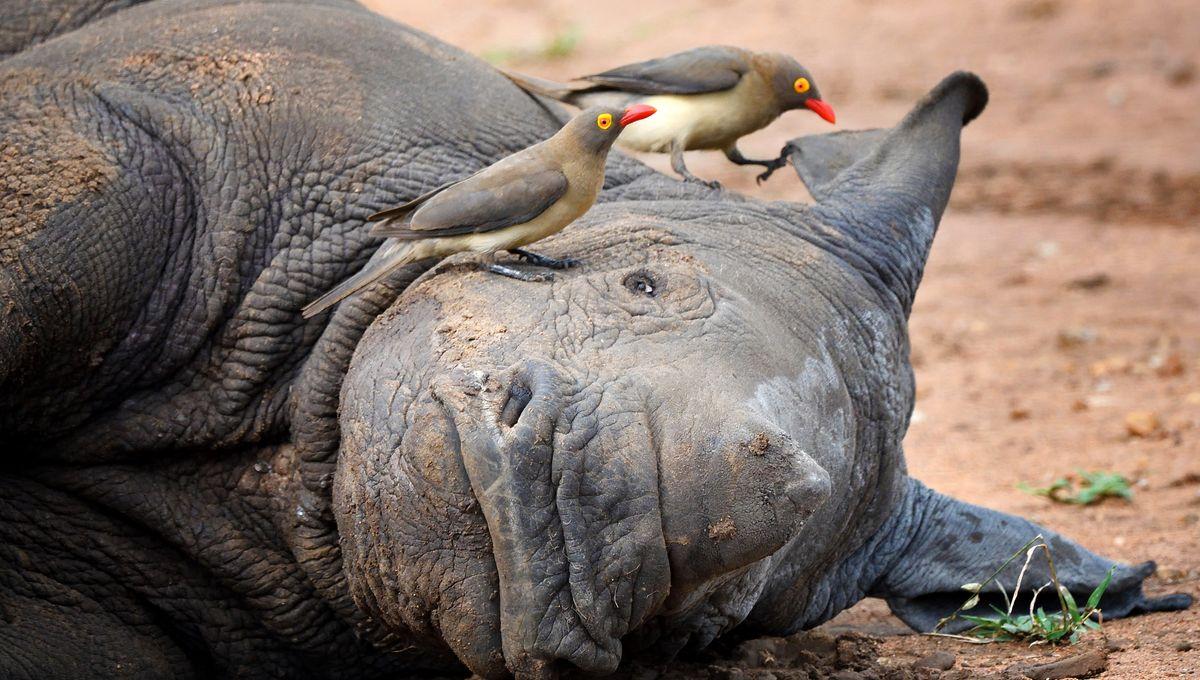
Picture a rhinoceros and you might imagine a pointy-beaked bird perching on its back. These birds aren’t simply there to eat ticks and other tiny nuisances; this unlikely alliance is a complex relationship that blurs the line between parasitic and symbiotic.
The rest of this article is behind a paywall. Please sign in or subscribe to access the full content. Oxpeckers are the “ride-or-die” companions of Africa’s megafauna. They most famously hitch a ride on rhinos, but they accompany a host of other large mammals like cattle, zebras, impalas, hippopotamuses, and giraffes. Scientists divide these birds into two species: the yellow-billed oxpecker, found in small pockets across sub-Saharan Africa, and the red-billed oxpecker, native to parts of East Africa. The Swahili name for the latter is Askari wa kifaru, which means “the rhino's guard.” Some researchers have quibbled that the birds are actually more of a pest than a protector, but recent research has suggested that the Indigenous name is an accurate representation of their relationship. It was previously believed that oxpeckers primarily feed on the ticks that live on the rhino's body as part of a mutually beneficial relationship: the bird gets a good meal, while the rhino is cleansed of parasites. Oxpeckers, and indeed all species within a symbiotic relationship, can and do push the boundaries with their hosts. Dr Roan Plotz However, studies have shown that the oxpeckers don’t actually lower the number of ticks on mammals. In fact, their habit of pecking at wounds can even slow healing, actively harming the rhinos. One paper on the topic concludes: “These results suggest that the oxpecker-mammal relationship is more complex than was previously thought.” Along with feasting on ticks, oxpeckers also drink the blood of mammals, nipping at their skin to open fresh sores and guzzling the outpour. If that’s the case, what’s in it for the rhino? A 2020 study uncovered a fascinating answer. Close-up of a red-billed oxpecker on a rhino. Image credit: Gunter Nuyts/Shutterstock.com Scientists at Victoria University in Australia tracked black rhinos (Diceros bicornis) living in South Africa’s Hluhluwe-iMfolozi Park. They noticed that the presence of red-billed oxpeckers significantly improved the chances of rhinos evading humans and other animals. "Black rhinos are virtually blind. Their smell is incredible, and hearing is good, but sight is terrible. I can attest to getting very close to them under the right conditions," Dr Roan Plotz, lead author of the 2020 paper and behavioral ecologist, currently at Deakin University, told IFLScience. Plotz and the team suggested that the oxpeckers effectively acted like an alarm system for the ill-sighted rhinos. If any threat approached, the birds would let out an alarm call, alerting the rhino to danger. "Our experiment found that rhinos without oxpeckers detected a human approaching only 23 percent of the time. Due to the bird's alarm call, those with oxpeckers detected the approaching human in 100 percent of our trials and at an average distance of 61 meters – nearly four times further than when rhinos were alone. In fact, the more oxpeckers the rhino carried, the greater the distance at which a human was detected," Plotz said in a 2020 statement. The rhinos were incredibly adept in this process. After noticing the bird's alarm call, they tended to move themselves to face downwind, which is their sensory blind spot. Plotz added: "Rhinos cannot smell predators from downwind, making it their most vulnerable position. This is particularly true from humans, who primarily hunt game from that direction." While the oxpeckers do harm the rhino by pecking their bodies and opening wounds for fresh blood, it seems this is a price worth paying. Like any relationship between biological beings, it is governed by a subtle balance of costs and benefits. “Oxpeckers, and indeed all species within a symbiotic relationship, can and do push the boundaries with their hosts as to what could be deemed costly versus beneficial in any interaction," said Plotz, speaking to IFLScience. “My work suggests that black rhino, who I observed being completely tolerant of the birds feeding on their lesions, accept this because they get a much-needed sentinel benefit of having the birds around, when humans have all but exterminated them as a species,” he explained.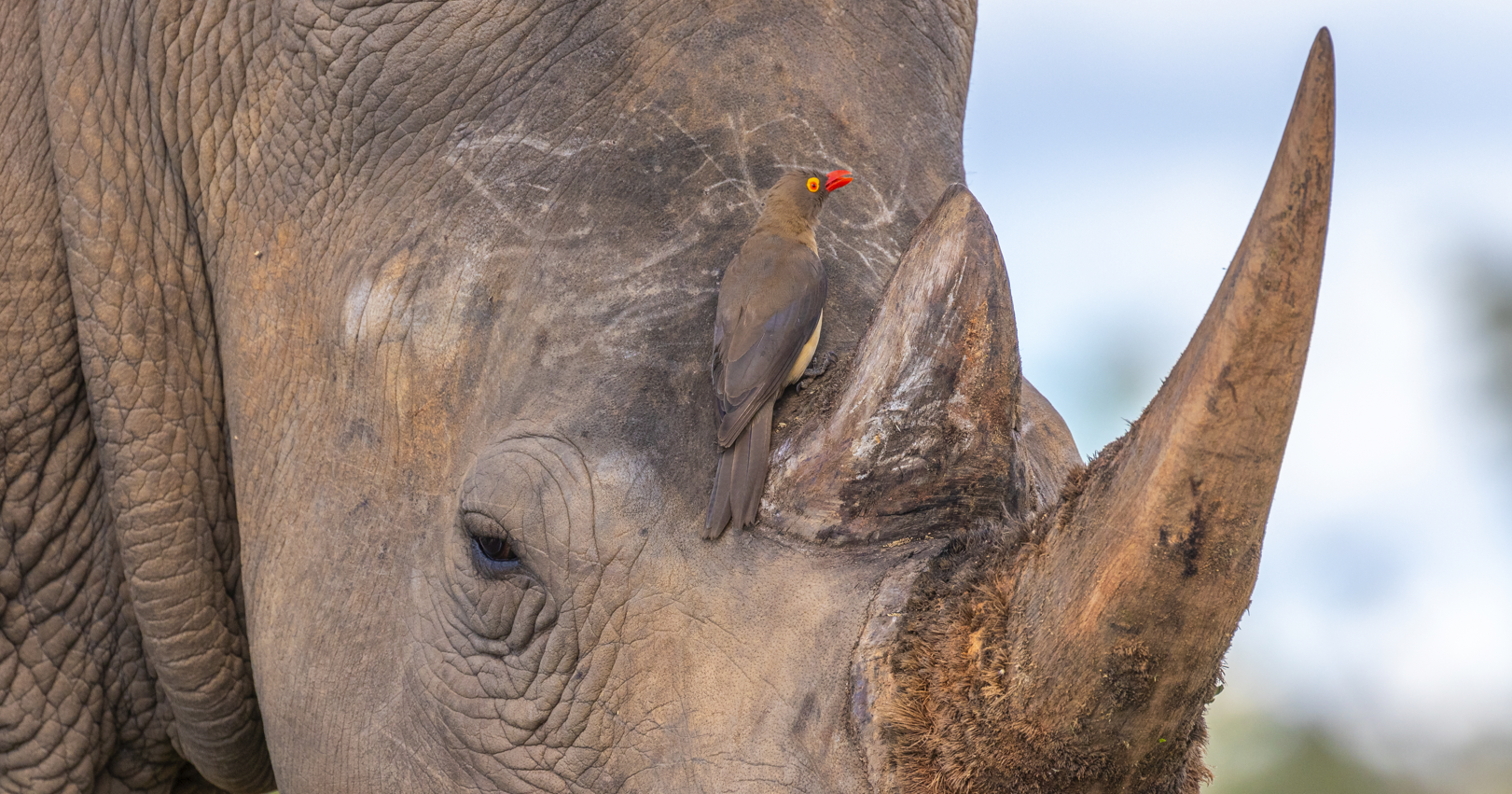

 English
 Arabic
 French
 Portuguese
 Deutsch
 Turkish
 Dutch
Dutch
 Italiano
 Russian
 Romaian
 Portuguese (Brazil)
 Greek
Greek