


Steven Luna/Mashed
Have you ever noticed how many different ways there are to make hot chocolate? One recipe calls for milk while another recipe calls for water and still another recipe calls for cream. None of that even touches all of the sources that chocolate can come from; sometimes it's grocery store prepackaged hot chocolate mixes with tiny marshmallows that makes everything warm and cozy, and sometimes it's a recipe that starts with an empty pot and ends up with a lush and heavenly beverage. Everyone is likely to have their opinion about which one is best, and nobody is wrong about any of them.
Still, there has to be some sort of hierarchy to which methods of making hot chocolate work the best and which are worth skipping. After all, if you've only known the taste of powdered hot chocolate mix, trying freshly made hot chocolate featuring melted candy bars or fudge sauce might be a paradigm shift you didn't know you needed. And who among us couldn't use a more indulgent way to conjure up such a comforting and warm winter quaff?
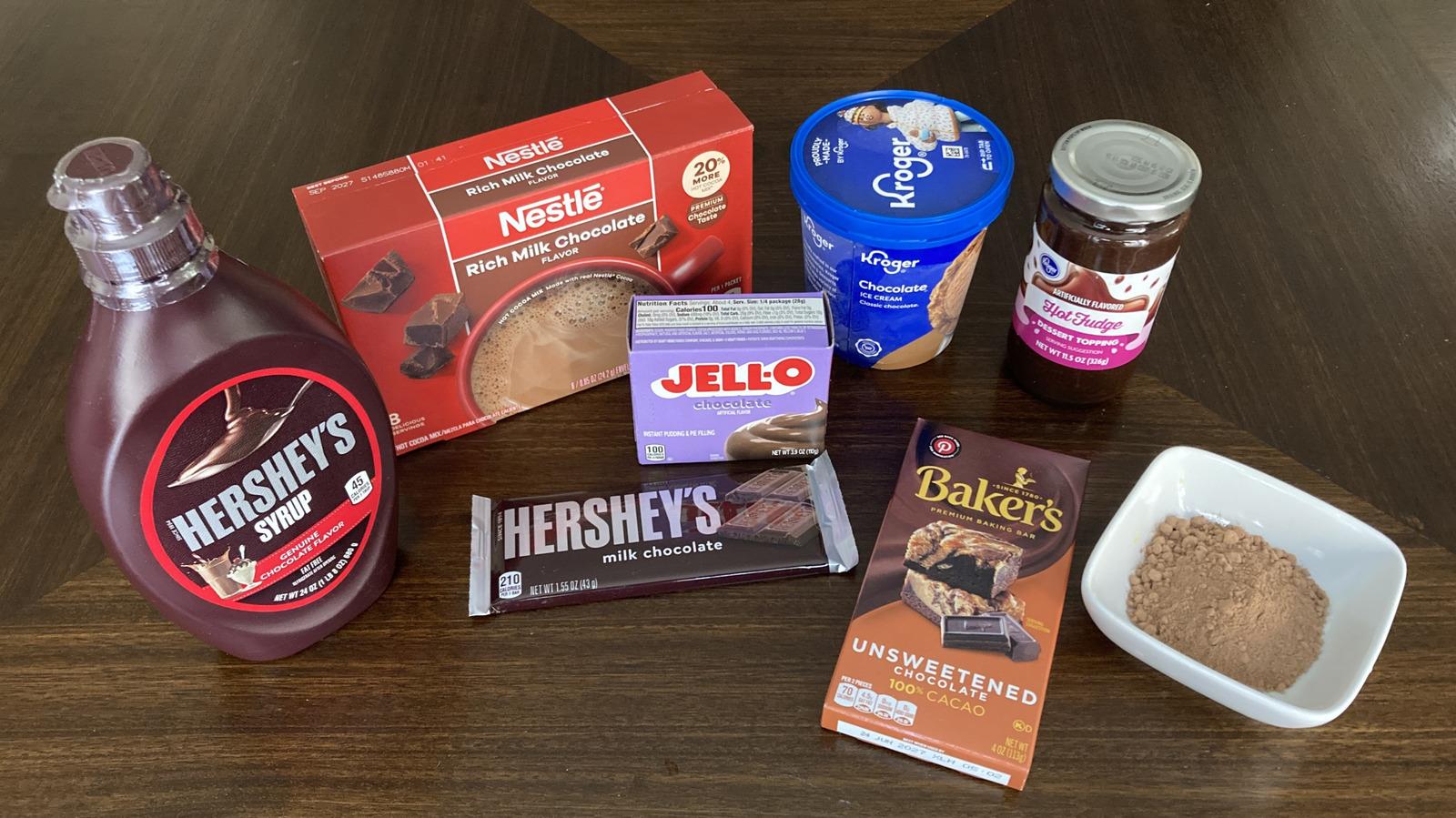
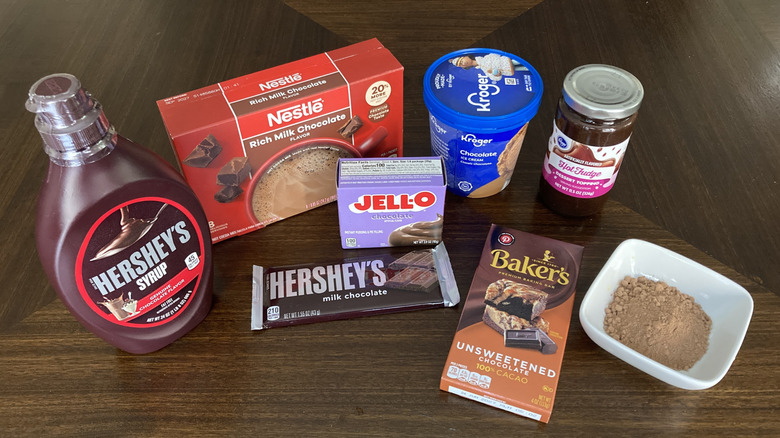
I want everyone to have the happiness they deserve in life, so I put on my food science smock and got down to business, creating 11 different forms of hot chocolate to see which version delivers the most premium example of what this drink can be. One of them even uses melted ice cream as a chocolatey contribution ... how's that for a plot twist?
11. With water
Steven Luna/Mashed
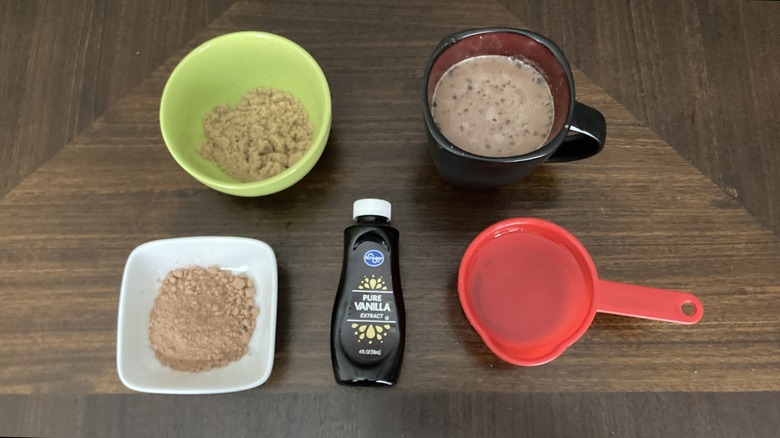
This is the most straightforward way to make hot chocolate, using baking cocoa powder and a splash of vanilla extract, plus as much sweetener as your taste buds tell you to. It's a simple recipe that utilizes things most home cooks have on hand, which means it's ready as quickly as you can get water to boil. It can also be made in the microwave if you're more interested in a single serving.
You may already know where this one is headed ... the results are predictably thin, considering the only fat in the recipe comes from the chocolate powder. Using water is a great option for the premade mixes that include powdered milk, but unless you grease the wheels with at least a splash of milk or cream, water-based hot chocolate is flimsy and disappointing.
Since it's easy enough to avoid making the plainest form of hot chocolate known to the beverage world, I can't emphasize strongly enough to give any other option a try before settling for this mediocre cocoa. You owe your taste buds better.
10. With chocolate syrup
Steven Luna/Mashed
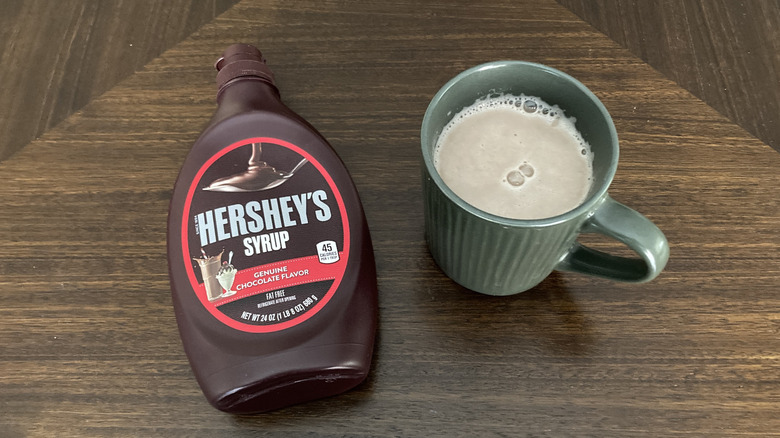
The younger crowd may get by with making hot chocolate simply by stirring chocolate syrup into milk and heating it in the microwave. And why wouldn't they? This version is ready to go in seconds and is essentially mess-free once you get the hang of working the squeeze top bottle. Home cooks of a certain age may even remember using cans of Hershey's syrup, the kind that you puncture with a can opener, to make old-fashioned cocoa back in the day. Thanks to Nestlé Quik and Hershey's chocolate syrup, today's grocery stores have no shortage of convenient chocolate syrup that can easily become hot chocolate in a pinch.
I had high expectations when I revisited this childhood favorite, but instead of going hard in the wild I decided to follow the instructions on the label and use just a tablespoon of syrup for 8 ounces of a mix of milk and water. When that turned out to be too subtle a chocolate flavor, I added a second tablespoon, only to find that it then tasted like sugar but still lacked a chocolatey kick.
This might be a great option for less sophisticated palates, or when you're craving a hit of nostalgia. But if you know your hot chocolate from a hole in the ground, you're probably not going to get what you're looking for here.
9. With hot fudge sauce
Steven Luna/Mashed
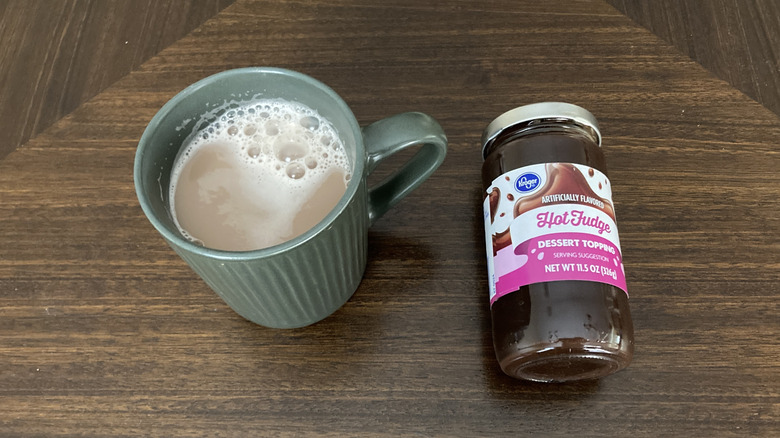
If you have a jar of hot fudge sauce in the fridge or pantry, you have a starter for a fantastic form of hot chocolate. After all, the chocolate and sweetener (in this case, more likely to be corn syrup than sugar) are inherent in the sauce, as is the oil that would enrich the liquid. Since the sauce is designed to melt down into a sludgy goo, milk is a more welcoming foundation for this version of hot chocolate. And there's no reason you can't incorporate a spoonful of caramel or chocolate mint sauce to upgrade your hot chocolate if you have those on hand as well. They're bound to make the occasion even tastier.
Similar to chocolate syrup, hot fudge sauce offers a lighter chocolate flavor, possibly due to the other ingredients in the jar. I started this one out with 2 tablespoons instead of one, not having a baseline for how much to use. It took a little stirring to dissolve it into my hot milk and water mixture, but once it got going it became smooth and silky.
However, the deep fudginess you get when the sauce is applied to ice cream just wasn't present in hot chocolate. I would choose this one over Hershey's syrup, but it wouldn't be high on my list of hot chocolate options.
8. With milk
Steven Luna/Mashed
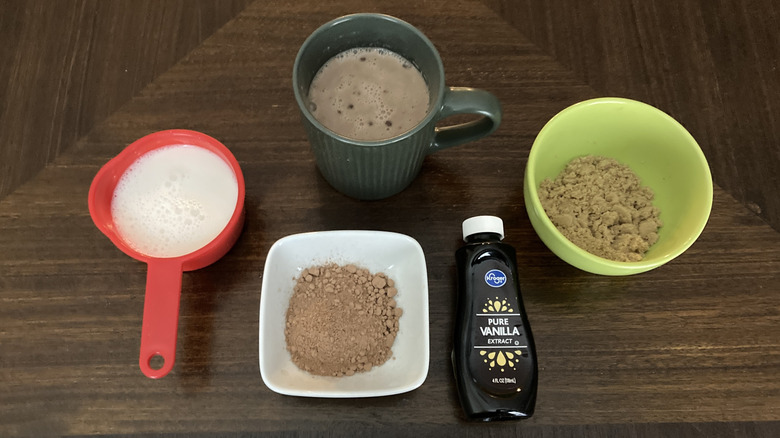
Depending on which form of milk you use, you can get a light and frothy cup of cocoa or a rich and decadent cup of deeply chocolatey elixir. Whether you use skim milk, whole milk, or some fat content in between makes all the difference. Your choice of chocolate can also help determine the results; usually it's a powdered form of packaged cocoa that produces the best finish product, though creative hot chocolate makers are likely to have all kinds of twists to jazz things up.
I repeated the same formula as I used for water-based hot chocolate using milk instead, and the results for much more pleasing. Even 2% milk lends body and texture to the core ingredients. I happened to use full fat almond milk, which turns out to be around 5% fat. With brown sugar and vanilla to make the flavor more complex, this turned out to be the most pleasing homemade version of hot chocolate that I've found. It doesn't try to be anything more than what it is, but it also provides a great starting point for a jazzed-up version that can even serve as a starter for boozy cocoa or mocha drinks at your home coffee station.
That said, while I like it just fine as my preferred method, that doesn't mean it'll work for everyone. Especially with more luxurious forms of hot chocolate out there.
8. With cream

Steven Luna/Mashed
This is obviously the richest liquid base you can choose to make your hot chocolate with. Half-and-half or whipping cream creates a silky texture due to higher fat content, which always leads to a more decadent mouth feel. That doesn't mean that everyone prefers cream-based hot chocolate, especially if your palate is already used to a thinner, more fluid consistency. Sometimes shifting from regular hot chocolate to the cream version can overwhelm a cocoa lover's sensibilities.
To keep my plant-based sensibilities in play, I opted for Country Crock plant-based heavy cream instead of full-blown dairy. I used four ounces of this with a little water to make the consistency rich but not overpowering. The result wasn't much different from using milk, which wasn't too surprising, considering cream and milk are essentially the same thing. The extra fat didn't do enough to elevate the concoction, so I doubt I'll be revisiting this technique anytime soon.
Since cream is usually more expensive than milk, my advice is to work with the cheaper ingredient since you don't get much more magic out of the added expense.
7. With baking cocoa powder
Steven Luna/Mashed
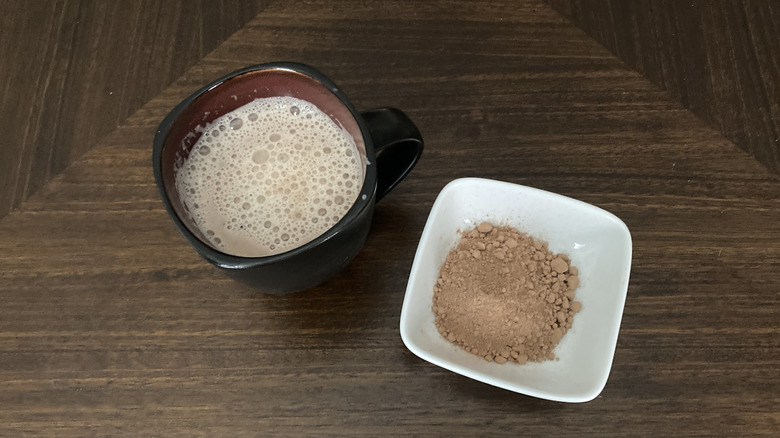
Preparing a homemade hot chocolate mix usually involves combining powdered baking cocoa with sugar and vanilla extract in boiling milk or water. This allows you to control the sweetness and chocolate factor to create a flavor and texture profile that is precisely to your taste. It also allows you to make a batch of prepared mix that you can keep on hand for future hot chocolate occasions, rather than starting from scratch every time.
My basic cocoa powder is the Kroger generic version, which is sure to impact flavor quality. But this is one of the most dependable versions of hot chocolate, especially when you learn to mix it up on the fly. My go-to recipe is a tablespoon in 8 ounces of water or almond milk with a teaspoon of brown sugar and a sprinkle of cinnamon. I created that to test against the more ready-made versions, and it held its own admirably.
This method is simple, affordable, and leaves your options open for doctoring the base creation with all sorts of goodies, from Torani syrups to your favorite coffee creamer.
6. With solid baking chocolate
Steven Luna/Mashed
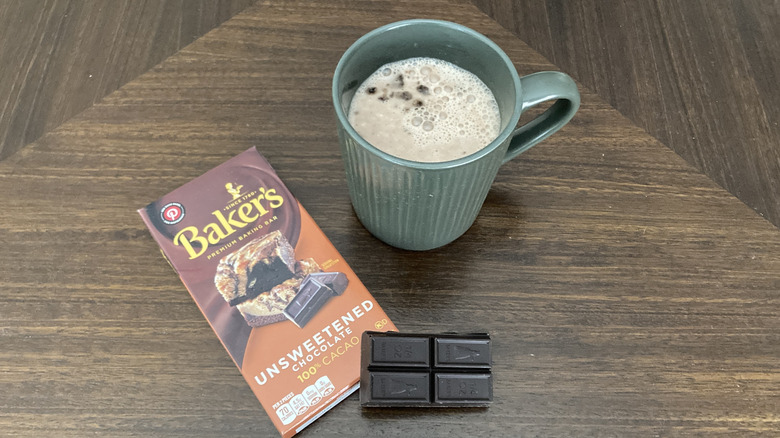
Similar to using powdered baking cocoa, making hot chocolate with solid baking chocolate is a home cook's secret trick that infuses the beverage with undeniable richness while allowing control over how sweet the concoction gets. In this method, blocks of unsweetened or semi-sweet chocolate are chopped and melted into boiling milk to create a rich, almost fudgy base. Either granulated or brown sugar can be added gradually to turn up the sweetness a little at a time, or you can use simple syrup and flavored extracts or oils to add extra dimensions of flavor like mint or almond.
What I liked best about this hot chocolate technique was the smooth incorporation of the unsweetened chocolate into the liquid. It breaks up easier than cocoa powder, which can leave residue at the bottom and minimize the cocoa flavor. It was also nice to be able to control the sweetness, though the tinkering involved to get it right may extend beyond the recipes you find online.
Anyone who likes fiddling around with kitchen chemistry to get the formula right will adore using solid unsweetened baking chocolate as their hot chocolate base.
5. With instant pudding mix
Steven Luna/Mashed
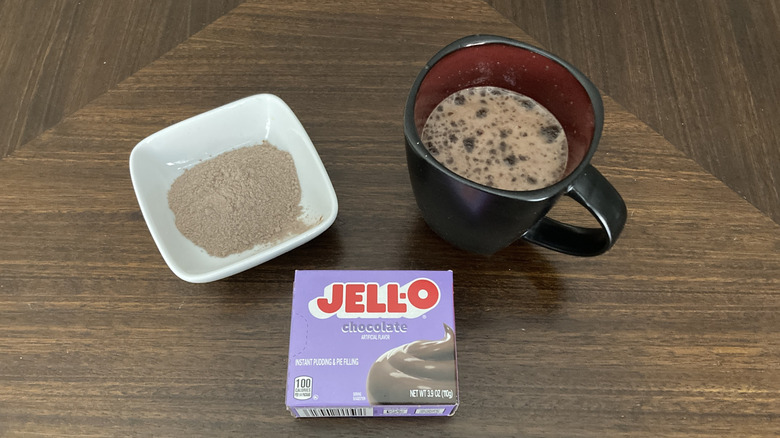
One of the trickier versions of hot chocolate uses packaged instant pudding mix from the baking section of the grocery store. This is another pre-made combination of cocoa powder and sweetener, combined with solids that turn creamy when mixed with milk. The result is a richer hot chocolate than you might be able to achieve with basic powdered mix. Odds are, if you have ever created jarred hot chocolate to give as holiday gifts, you have run across a recipe that incorporates pudding mix. The reasons are pretty simple: It provides everything you need in one package, and it's cheap enough to buy in multiples.
I started with a single tablespoon to see what the mix had to offer. It wasn't chocolatey enough, so I dumped another tablespoon in and found the perfect balance, with fudge notes so heavy it almost tasted like a cup of pudding. I consider that a good thing, though I did have trouble dissolving the corn syrup solids fully in the cup.
If you don't mind a few chewable bits floating around, a box of Jell-O chocolate instant pudding mix will get you pretty far. You can also experiment by adding vanilla, butterscotch, or banana cream pie pudding mixes to the recipe.
4. With store-bought mix
Steven Luna/Mashed
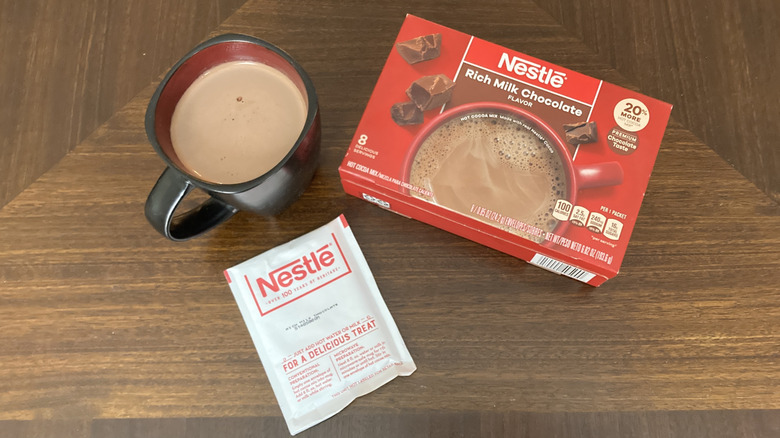
Maybe the most common way to have hot chocolate ready in a jiffy, packaged mix from the store is always a safe bet. The combination of cocoa powder, powdered milk, sugar, and any extra flavorings always strikes the perfect balance, as long as you add it to the right amount of liquid.
Some choose to use warmed milk for added richness, though most brands recommend using water, since everything you need is already in the packet. The sugar content is already pretty high, so there is a very real chance of making your hot chocolate too sweet by using dairy or non-dairy milk. Since you often find these packets around coffee stations where only hot water is available, I stuck with that approach for this taste test.
This method is a straight-up success, which is good to know, since it's supposed to be a foolproof way to enjoy hot chocolate. It's smooth and creamy and almost chocolatey to a fault, if hot chocolate can actually be that chocolatey. It's a great one to have on hand when you don't want to mess around with chocolate mixology.
2. With melted candy bars

Steven Luna/Mashed
One of the most indulgent forms of hot chocolate involves melting candy bars into milk to provide as rich a chocolate element as possible. This is also one of the simplest techniques, since all it takes is half a Hershey bar, whatever milk you have on hand, and any additional flavorings or whipped topping you'd like to add. Once the melted chocolate mixes with the milk, the sugar from the candy bar provides all the sweetness required.
The adjective that came to mind when I tried this mug was "deluxe." Rather than just being a warmed-up version of chocolate milk, it feels like an extravagant gourmet beverage. The silky texture and high-voltage chocolate flavor are what I imagine Italian sipping chocolate would be like, though Hershey bars probably aren't part of that equation. It doesn't matter; you have an affordable supply of chocolate you can transform into a high-end treat whenever you like — especially when you find post-holiday clearance candy to stock up on at bargain prices.
The real fun comes from having so many different types of chocolate bars to use to achieve a variety of flavors and consistencies. A Special Dark bar will give you more of a bittersweet experience, while something like a Symphony bar with toffee bits ensures a silky smooth and buttery sip in your mug. There's essentially no limit to the range of hot chocolate you can make simply by shopping in the candy aisle at the grocery store.
1. With melted ice cream
Steven Luna/Mashed
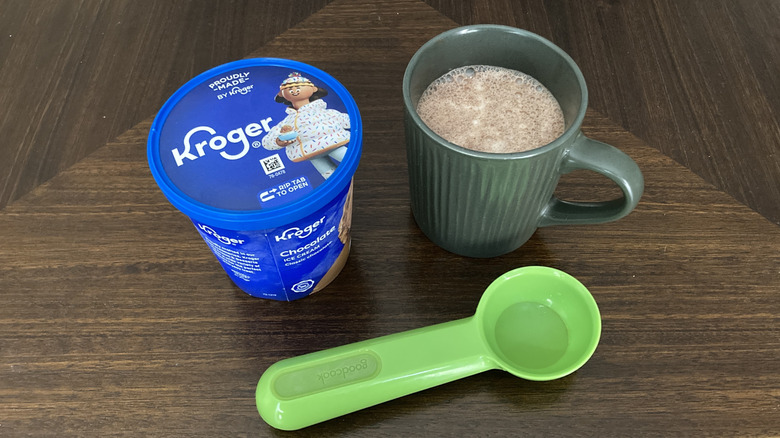
If you're going to get clever with your hot chocolate endeavors, you might as well go for broke and try using melted ice cream as your cocoa base. There's nothing in the ice cream carton that wouldn't also be in a proper hot chocolate recipe. You'll have milk with whatever fat content you prefer, chocolate flavoring, and even chocolate chips or candy bits to make your mug more interesting. You can also make your ice cream purchase do double duty if you have summer leftovers on hand when hot chocolate season swings back into full gear. Why shop for all the separate ingredients for your winter beverage when you already have them in your freezer?
To get a full mug, I melted two scoops of real dairy chocolate ice cream melted in the microwave and thinned it down with water to make it drinkable. I thought milk would add too much heaviness to an already-thick concoction. It turned out to be the most fudge-forward, creamy version of hot chocolate in my collection. It is, in a word, incredible, and my new favorite way to make hot chocolate.
I'm eager to re-create this one with plant-based ice creams to see if the results are the same. If they're even half as delicious is this, my hot chocolate game has gotten a serious upgrade.
How I tasted and ranked these hot chocolate creations
Steven Luna/Mashed
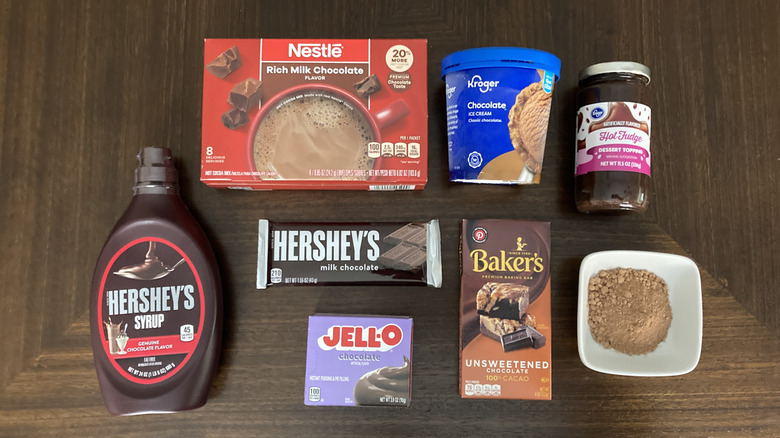
Since my tasting team was unavailable and it was only me drinking down 11 different types of hot chocolate, I opted for the single serving approach rather than making an entire pot of the from-scratch recipes. The prepackaged and melted candy bar versions were already single servings to begin with so they were easy enough to customize without overindulging. All of my heating was done in the microwave, which made it quicker and easier to work through the entire list and left much less of a mess in my kitchen.
I was looking for a silky mouthfeel combined with an adequate chocolate presence that didn't overwhelm my palate with too much sweetness. Of course, everyone will have their own take on what constitutes the best version of hot chocolate. But it's easy to agree that there's a middle ground where the various opinions of hot chocolate fans of all stripes converge; a sweet spot that allows you to enjoy an entire mug without feeling like you've been socked in the gut once you finish. It was that delicate balance that I was aiming for each recipe, and I ranked the experience of each cup using this middle ground as a benchmark.

 English
 Arabic
 French
 Spanish
 Portuguese
 Deutsch
 Dutch
Dutch
 Italiano
 Russian
 Romaian
 Portuguese (Brazil)
 Greek
Greek