


Key Takeaways
- Brown, crispy leaf tips, wilting and leaf drop, and spider mites indicate too little humidity.
- Move plants away from heat sources, adjust watering, and group plants together to mitigate dry air.
- Use a humidifier near groups of houseplants or place single plants on a pebble tray.
When fireplaces and heating systems begin to run in winter, the air in your home can become super-dry and take a toll on your houseplants. Although some houseplants don’t mind dry air, low humidity levels put stress on certain tropical plants and ferns, and leave plants looking bedraggled, or, in the worst case, slowly kill them.
This guide explains the top signs that will let you know your houseplants need more humidity, and give you tips on how to raise humidity levels so your plants don't turn brown.
How Much Humidity Do Houseplants Really Need?
Most succulents and cacti, as well as some tropical plants, are perfectly fine with standard indoor humidity levels and can even tolerate a drop in humidity during winter. But many houseplants hail from steamy rainforests where humidity levels are always high. Indoor ferns are notoriously picky about humidity. Many of these plants need consistent humidity levels between 40 to 60% year-round, but some plants require even higher levels of humidity to grow properly.
During winter, air naturally gets drier, and fireplaces and other heating units cause humidity levels to drop even further. Depending on what type of houseplants you have, you may not need to adjust humidity at all. However, if your plants are displaying signs of stress, it may be time to raise humidity levels deliberately to improve the growth of your plants.
Related
Top 3 Signs Houseplants Need More Humidity
Houseplants can give subtle signs that they need more humidity, like slowed growth and dull-looking leaves. But there are 3 much clearer ways to tell when houseplants are struggling with low humidity levels. If you watch for these symptoms, you’ll know exactly which of your plants need more humidity than they’re currently getting.
1. Brown and Crispy Leaves
One of the surest signs that houseplants need more humidity is when their leaves start turning brown, yellow, or dry and brittle. This usually occurs around the leaf margins first, and may progress towards the interior of the leaf as the plant gets drier and drier. Indoor palms, calatheas, and ferns are particularly susceptible to drying out as their leaves are naturally thin and delicate, but many other houseplants also develop crispy leaves when humidity levels fall too low.
2. Wilting and Leaf Drop
As houseplants continue to be stressed by low humidity levels, their stems and leaves may start to wilt and droop. If you don’t take action to raise humidity, eventually, entire leaves will dry out and naturally drop off the plant. These symptoms typically affect the lower leaves first and work their way up as the plant gets more stressed.
3. Spider Mites
Spider mites may occur in any season and even when indoor humidity levels are high; however, these pests are particularly likely to occur in dry homes in winter. Like their name implies, spider mites are tiny arachnids, though they are so small that they look like white, brown, or red dots on your plants. Spider mites cover affected plant leaves with delicate spider-like webbing and sticky residue. Affected plants will begin to take on a dull-looking appearance and look dried out even when you’re watering them regularly.
How to Raise Humidity Levels
Although low humidity makes houseplants look rough, plants that have been stressed by dry air will usually recover if you take a few steps to raise the humidity in your home. Here are a few easy ways to boost humidity around your plants and help stressed houseplants recover fast:
- Move your plants. If your plants are positioned near a vent or other heating unit, move them to a new location where the temperature doesn’t fluctuate significantly. Plants that are placed too close to a source of hot air are much more likely to suffer from humidity stress.
- Adjust your watering schedule. Many gardeners overwater plants that just need more humidity. This can lead to root rot and plant decline. If your plants are looking crispy and their soil feels bone dry, they may indeed need more water.
- Position plants in groups. Placing houseplants close together in groups can keep humidity levels a little higher and reduce the need for a humidifier. Just make sure your plants are positioned far enough apart to ensure a good airflow.
- Add a humidifier. The most reliable way to raise humidity levels around plant collections is to add a cool mist humidifier near your plants. The humidifier you use should be sized appropriately for the number of plants in your collection and the size of your room. Depending on the actual humidity level in your home, setting it on a timer for part of the day (or night) may be sufficient, and it also saves energy.
- Experiment with a pebble tray. While humidifiers are a better choice for houseplant collections, a pebble tray is an economical alternative to raise humidity around a single plant or two. Layer some pebbles on a low tray or saucer, fill the tray with water to just below the pebble line, and position your plant with its saucer on top of the pebbles.
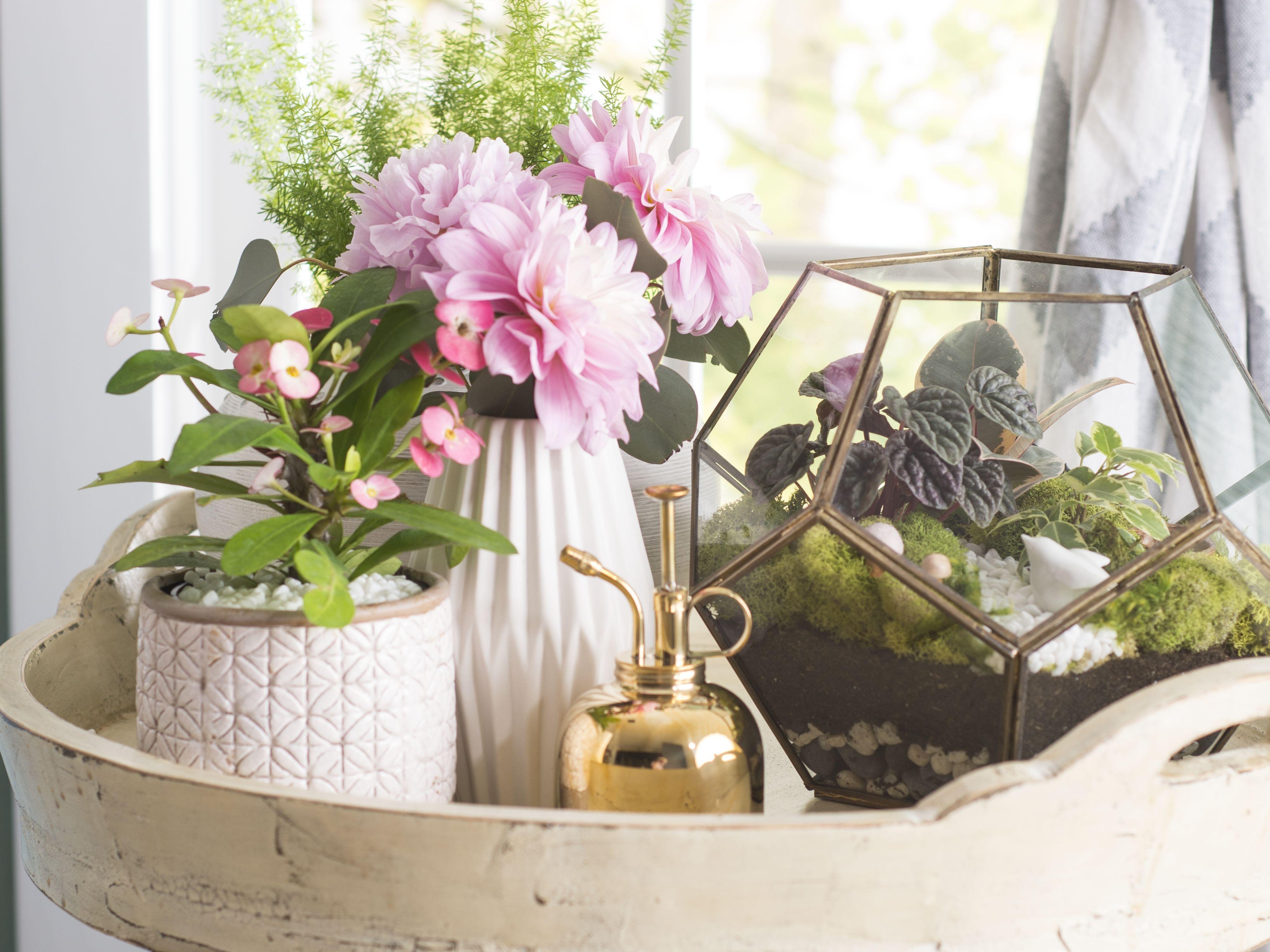
- Try a terrarium or grow cabinet. Plants that are very demanding about humidity are often much easier to maintain in a terrarium or larger grow cabinet. This includes many ferns, as well as delicate plants like fittonia, waffle plants, and polka dot plants.

 English
 Arabic
 French
 Portuguese
 Deutsch
 Turkish
 Dutch
Dutch
 Italiano
 Russian
 Romaian
 Portuguese (Brazil)
 Greek
Greek