


Animals With “Urban Superpowers” Lurk In London’s Underground, And Some Of Them Want To Drink Your Blood
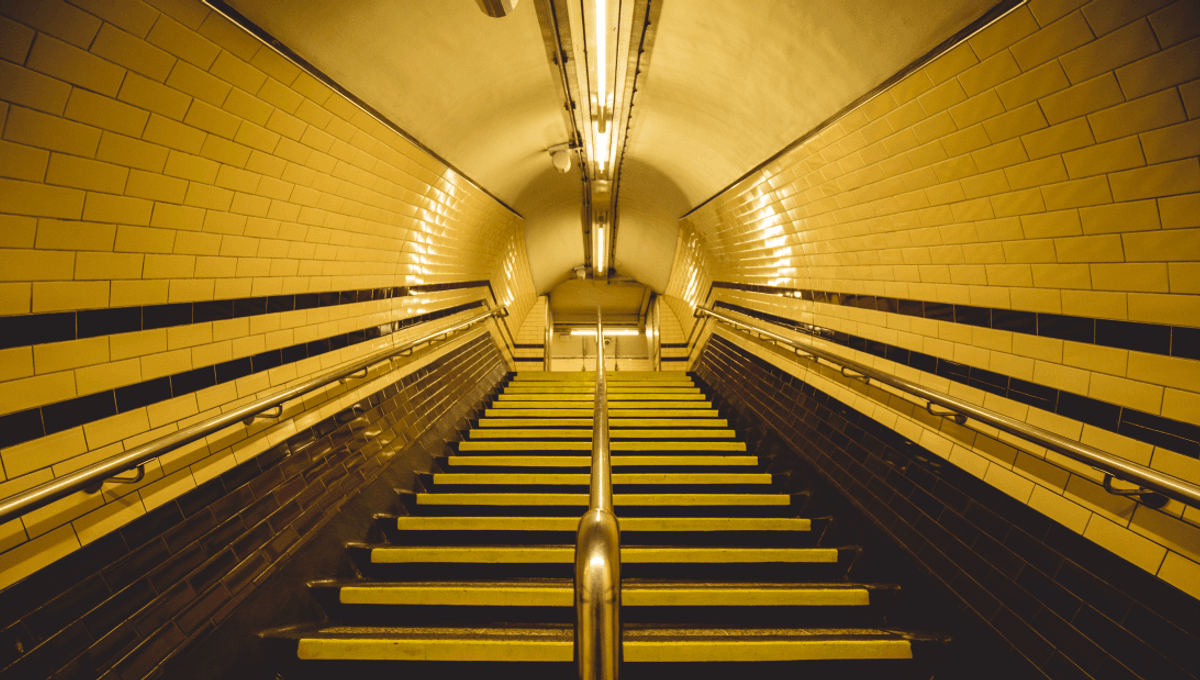
Animals With “Urban Superpowers” Lurk In London’s Underground, And Some Of Them Want To Drink Your Blood
England’s capital city of London is a place of wonder, but head below the streets to the underground Tube stations and things get a bit, well, grim. It’s loud, crowded, and always seems to smell of burnt hair, and yet a host of curious creatures have made a home in those long and winding tubes (and no, we’re not talking about you, pint gremlins).
The rest of this article is behind a paywall. Please sign in or subscribe to access the full content. Stand for a moment between trains and you might be lucky enough to spot the darting black dots that are London’s Tube mice. Sit for too long, however, and you might be unlucky enough to get bitten by the “London Underground mosquito,” an overseas visitor that’s adapted to a life subterranean by *checks notes* developing a taste for human blood. Yep, sounds like London. Why on Earth would you choose to live on a Tube? It’s a question I used to ask myself daily as I commuted 15 stops to the office and home again, but there are creatures that have taken to the Underground far better than I ever fared: Mus musculus domesticus, the humble house mouse. It hardly seems a fitting habitat for these animals, but it's estimated there are as many as 500,000 of them darting around the Underground. As Professor William Wisden from Imperial College London told The Londonist, "Tube mice are amongst the toughest of their species. They forage for food on the tracks, survive the deafening noise of the tube trains, and evade [Transport For London's] efforts to eradicate them." Wisden's work on the effect of histamine and GABA (the "go" and "stop" neurotransmitters implicated in sleep) suggested that these mice would "evolve to be more stress resistant" when London's Night Tube was introduced, even if that did come at the cost of an "even shorter and more brutal life." ⓘ IFLScience is not responsible for content shared from external sites. The tension, it seems, may be getting to them, as demonstrated in wildlife photographer Sam Rowley’s unforgettable image that showed two mice fighting on a station platform like a scene straight out of The Good Liar. Rowdy? Sure, but that's London for you. In World War II, Londoners started noticing that as they sheltered in the city’s Underground, they were getting bitten by some kind of insect (honestly, as if there wasn't enough to worry about). Britain has been home to mosquitoes for hundreds, if not thousands, of years (skeletal evidence suggests Anopheles were spreading malaria during the Roman occupation), but the "London Underground mosquito" was so keen on biting humans they had biologists wondering if they'd actually evolved down there some time in the last 200 years. Now, that myth has been debunked as it was discovered that the bloodsuckers on London’s Underground date back thousands of years. Of course, London’s Underground wasn't built until 1863, so that means the mosquitoes moved in, rather than evolving down there. Still, they are behaviorally unique from their aboveground counterparts. One obvious difference found in the London Underground mosquito (Culex pipiens form molestus) compared to the pipiens form is that it's adapted to bite humans and bite a lot. However, they are not morphologically distinct, which made working out where they came from a little tricky. Using whole-genome data from hundreds of mosquito specimens, a new study was able to establish that the human-biting molestus is a branch of the Mediterranean bird-biting pipiens group that diverged at least 2,000 years ago, likely in the Middle East. Not only does this shed fresh light on the origins of the London Underground mosquito, but it has important ramifications for understanding disease spread in urban environments. "As we navigate through the planetary emergency, understanding how and why species adapt to urban environments is fundamental to predicting potential ecological changes and disease risk," said Dr Erica McAlister, Principal Curator at the Natural History Museum, London, in a statement. "The data held in museum collections, like ours, presents huge potential to better understand the natural world and our relationship with it." Britain’s public transport and underground tunnels are home to a host of other subterranean specialists, such as cockroaches and cave spiders, but if it's true troglobites you’re after? Might we direct you to this cave of mummified, never-before-seen, eyeless invertebrates.Urban superpowers
The London Underground mosquito

 English
 Arabic
 French
 Spanish
 Portuguese
 Deutsch
 Turkish
 Dutch
Dutch
 Russian
 Romaian
 Portuguese (Brazil)
 Greek
Greek