The Reason Charles Martel Became Known as The Hammer
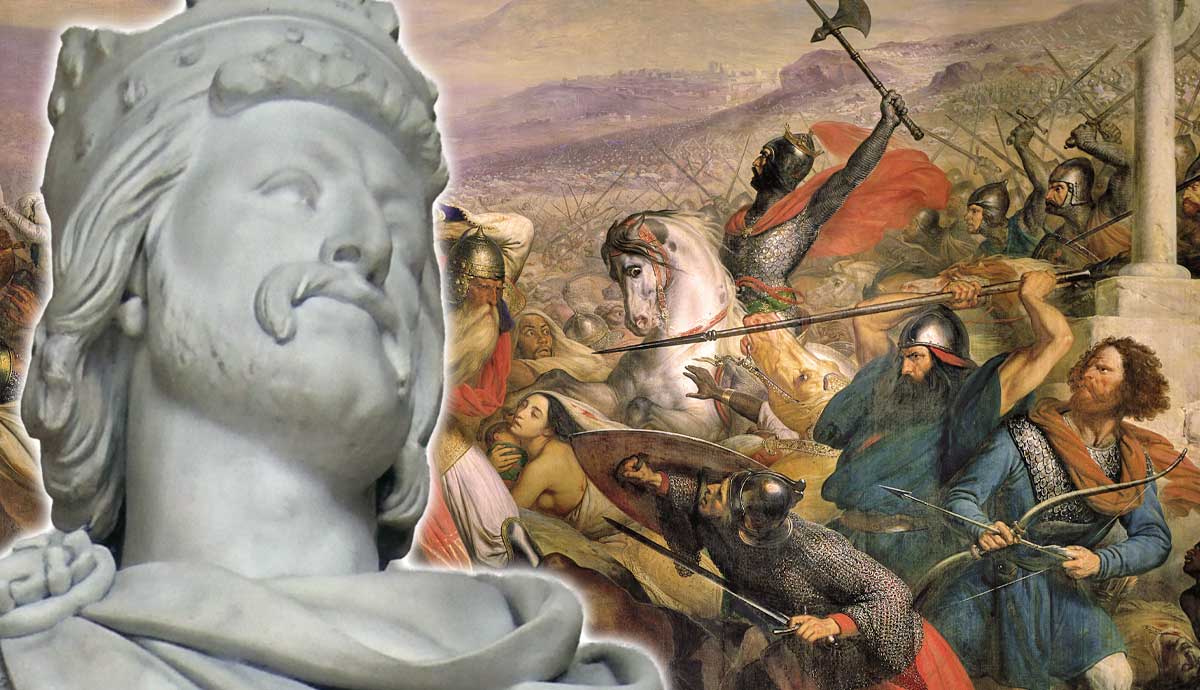
In the 700s AD, the European region called Gaul (consisting mostly of the country now known as France) was divided into kingdoms, each vying for dominance over the other. Emerging from the strife was one of Europes greatest military leaders, Charles Martel. He earned the nickname the Hammer during his lifetime, but why?Earning the Legendary Hammer TitleMap of the Umayyad Caliphate at its largest. Source: historyoftheworldpodcast.comCharles Martel earned the nickname The Hammer for his general military achievements, having lost only one battle in his military career, and that was his first. Martel is also credited with halting the northward advance of the Muslim Umayyad Caliphate, which had conquered Spain and was seeking to expand into Europe.Winning the Historic Battle of ToursBataille de Poitiers, Octobre 732 by Charles de Steuben, 1837. Source: The Palace of VersaillesIn October of 732, Charles Martel had turned southward, seeking to conquer areas in the southeast of France. In the midst of fighting over the region of Aquitaine, Martel met the raiding armies of Abd al-Rahman ibn Abd Allah al-Ghafiqi, a Muslim military leader who was pushing out of Muslim-ruled Spain in an effort to conquer Gaul for the Umayyad Caliphate. The Battle of Tours (also known as the Battle of Poitiers) was fought traditionally on October 10, 732, somewhere between Tours and Poitiers.Most of the details regarding the battle are unknown. The precise location of the battle, as well as the number of soldiers who fought, are generally unknown. Western sources place Martels army around 30,000 men and outnumbered by the Muslims, while Muslim sources claim that they were outnumbered by Martel. Whatever the case, the Umayyads, which boasted one of the most successful militaries at the time, underestimated Martels numbers and capabilities, leading to their loss at Tours and effectively stopping the northward advance of Muslim forces. Muslims call it the Battle of the Highway of the Martyrs. It was at this point that the Muslim advance through western Europe was halted.His First and Only Military DefeatCharles Martel battling Chilperic II at Cologne, Great Chronicles of France. Source: Wikimedia CommonsCharles Martel had one of the most successful military careers of any medieval military leader, with multiple victories in large battles. He had only one significant loss, which was his first battle, the Battle of Cologne in 716 AD. Charles was warring with other nobility following the death of his father, Pepin of Herstal, over control of the region in northern Gaul called Neustria. The young Charles had little time to gather an army and supplies, and was forced to retreat to Eifel. There, he trained and supplied an army and was able to advance on his enemies and begin the process of conquering Gaul, eventually declaring himself Duke and Prince of the Franks.Grandfather of Emperor CharlemagneStatue of Charlemagne Louis Jehotte (18031884). Source: Wikimedia CommonsThe grandson of Charles Martel is none other than Charlemagne, the first Holy Roman Emperor. Both Charles Martel and Charlemagne were members of what is called the Carolingian Dynasty, a family that ruled the Franks for several hundred years. Carolingian is named after the Latinized version of Charles, Carolus.His Role as a Medieval Christian RulerStatue of Charles Martel at Versailles. Source: Wikimedia CommonsCharles was baptized as an infant by St Rigobert, Bishop of Reims, whom Charles would later depose for political reasons. He also allied with St. Boniface, placing the monk under his protection in 723, and the Frankish church saw growth and reforms under Bonifaces leadership. Boniface also served as the papal legate between Charles and the papacy, strengthening that relationship, and the two were the primary impetus behind the growth and strength of the Christian church on mainland Europe in the early medieval period.




 English
 Arabic
 French
 Spanish
 Portuguese
 Deutsch
 Turkish
 Dutch
Dutch
 Russian
 Romaian
 Portuguese (Brazil)
 Greek
Greek